Catacombs of Syracuse: Early Christian Burial Grounds
Site at a Glance
- Rating
- 4.4
- Popularity
- Very High
- Country
- Italy
- Primary era
- Classical
- Eras represented
- Classical, Medieval
- Civilizations
- Ancient Greek, Byzantine, Norman, Roman
- Site type
- Burial
- Remains
- Catacomb
On this page16 sections
History
The Catacombs of Syracuse are a group of early Christian underground burial grounds in Syracuse, Italy. They were used from the early imperial period, the first centuries of Roman rule, through late antiquity, the later Roman era and its transition toward the early Middle Ages. Christian communities used them while Christianity was still prohibited, and some later became places of worship. The Syracuse complexes are described as second in extent only to those of Rome, although historian Moses Finley judged Syracuse’s grandest catacombs to surpass Rome’s.
Early cemeteries and persecution
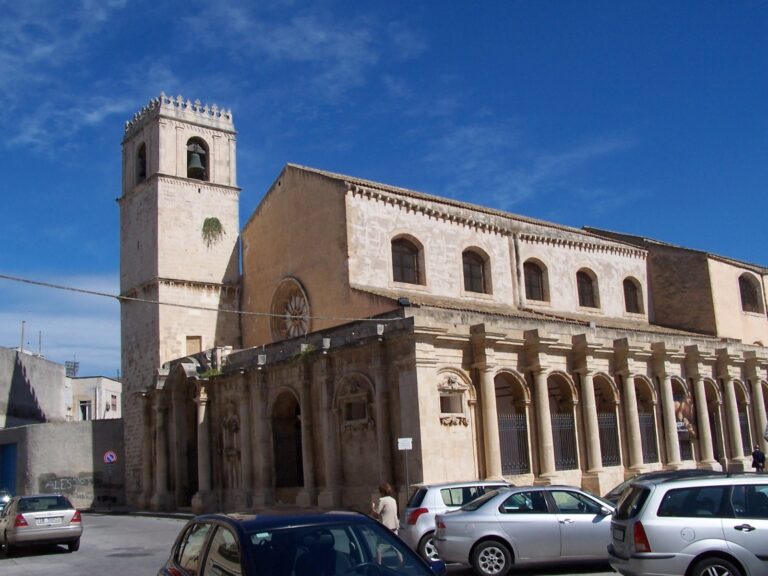
Use of the Catacombs of Santa Lucia began around AD 220–230. Christian tradition places the martyrdom of Saint Lucy, an early Christian martyr, at the church above the catacombs in the fourth century. After the cemetery fell out of use, a place of worship was established underground, and its oratory, or small chapel, continued in use until the thirteenth century.
The Vigna Cassia complex took its name from the owner of the vineyard above it when it was discovered. Its Santa Maria di Gesù and San Diego sections originated around AD 256, during persecutions under the Roman emperor Valerian. The Marcia section dates to the fourth century, after Christian persecution had ended.
Marcian and the Catacombs of San Giovanni
Tradition identifies Marcian as Syracuse’s first bishop and says the apostle Peter sent him from Antioch to preach in the city in AD 39. Marcian is said to have died as a martyr in the middle of the first century, and the Catacombs of San Giovanni developed around his tomb. Built between AD 315 and 360, they served as a cemetery until the end of the fifth century. Syracuse’s first cathedral was built above Marcian’s tomb in the fourth century.
The adjacent Crypt of San Marciano is traditionally associated with a visit by the apostle Paul, who is said to have preached there to early Christians in the West. Marcian’s remains were placed in a niche in the sixth century and removed in the ninth century for protection from Arab forces.
The church of San Giovanni, dedicated to John the Evangelist, served as the cathedral of the diocese from the third to the seventh century. Arab forces destroyed it during their conquest of Syracuse. The Normans, a medieval people who established rule in parts of southern Italy, built a replacement church. An earthquake destroyed that building in 1693. A smaller church was later rebuilt, then destroyed during the Napoleonic Wars.
Later use and investigation
Searches for saints’ remains and treasure altered the Catacombs of San Giovanni. Pietro Della Valle described them and noted traces of frescoes. Jean Houel reproduced a plan by the Syracuse antiquarian Mirabella, which Houel considered inaccurate, and sketched burial practices. He also depicted a Greek well beneath the Church of San Filippo in Ortigia but did not identify its function, comparing it with catacomb structures. Vivant Denon wrote enthusiastically about San Giovanni, but confused the catacombs with Greek monuments and portrayed them as burial places dug by enslaved people, despite their uses beyond burial.
Archaeologist Paolo Orsi carried out extensive investigations at Santa Lucia from 1916 to 1919. Systematic investigations at San Giovanni took place from 1893 to 1919. During the Second World War, the San Giovanni catacombs also served as air-raid shelters.
Remains
Santa Lucia
Underground layout
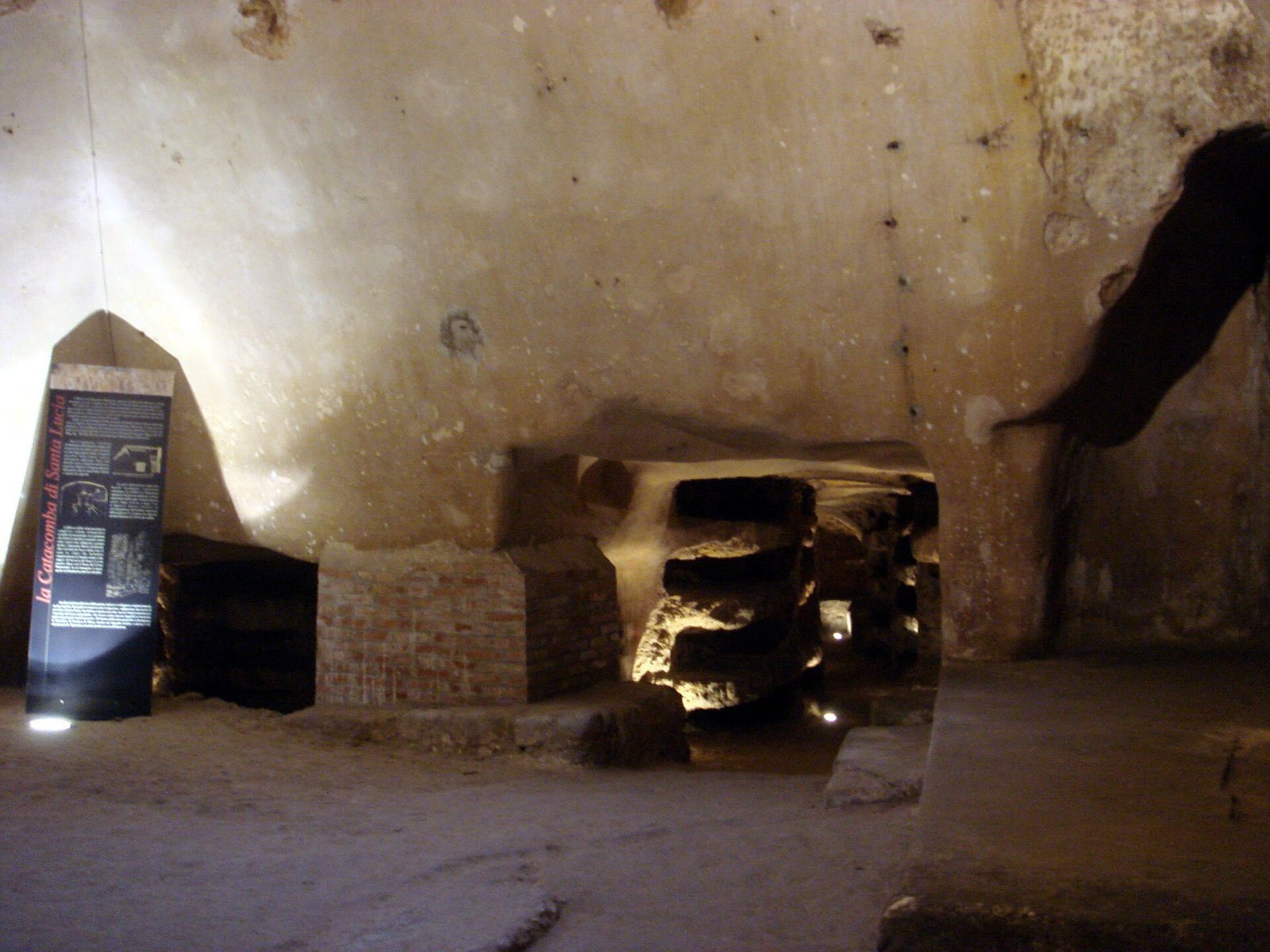
The Catacombs of Santa Lucia extend beneath the Church of Santa Lucia al Sepolcro and a former monastery. Their complex layout has three levels, and the catacombs have not been fully excavated.
Oratory and associated features
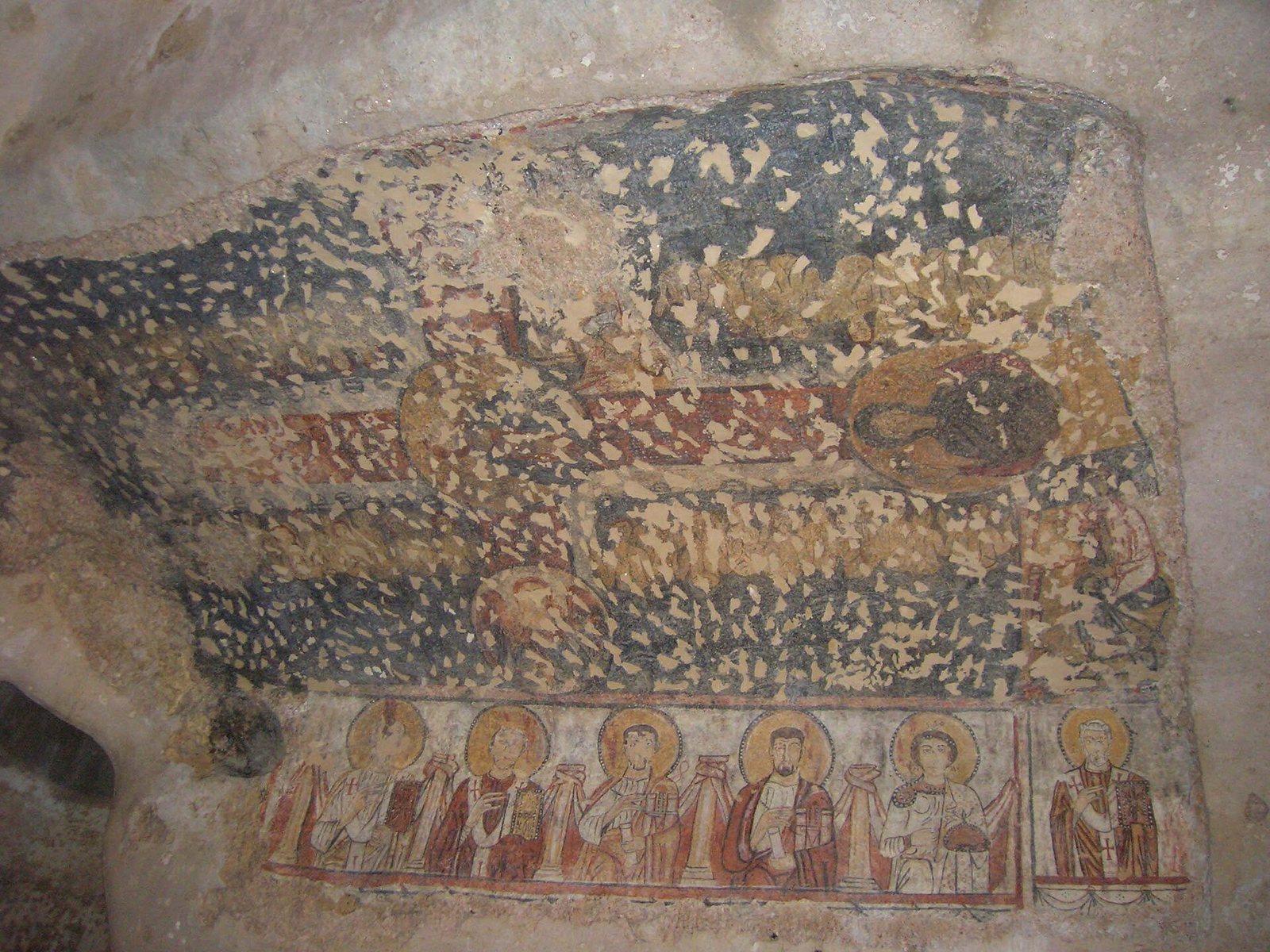
An arm of the catacombs contains a Byzantine oratory, a small chapel from the culture and period of the eastern Roman Empire. A fresco there depicts the Forty Martyrs of Sebaste, Christian soldiers commemorated for their martyrdom, and dates to the late eighth or early ninth century. The complex also includes a feature identified as an oratory or cistern and a rotunda, a circular chamber.
Baptistery and painting
An octagonal baptistery, a place used for Christian baptism, stands beside the church and incorporates Saint Lucy’s tomb. Caravaggio’s painting The Burial of Saint Lucy is displayed in the Church of Santa Lucia.
Vigna Cassia
Three cemetery sections
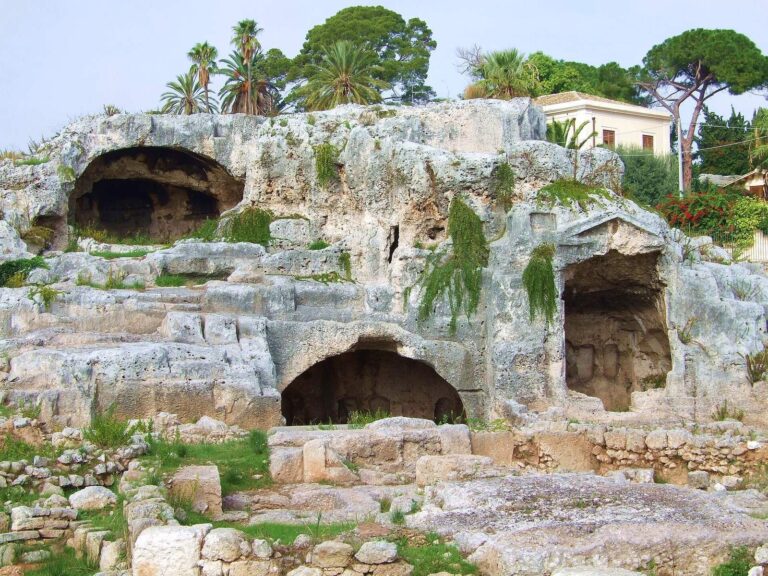
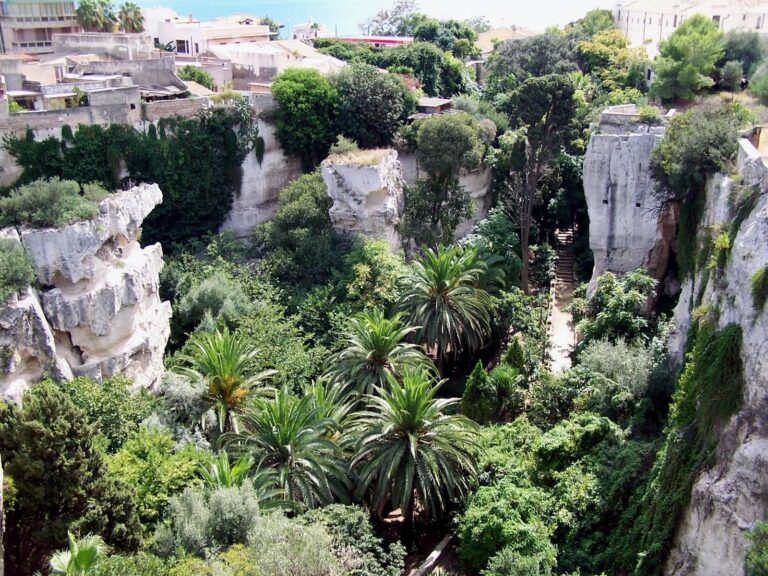
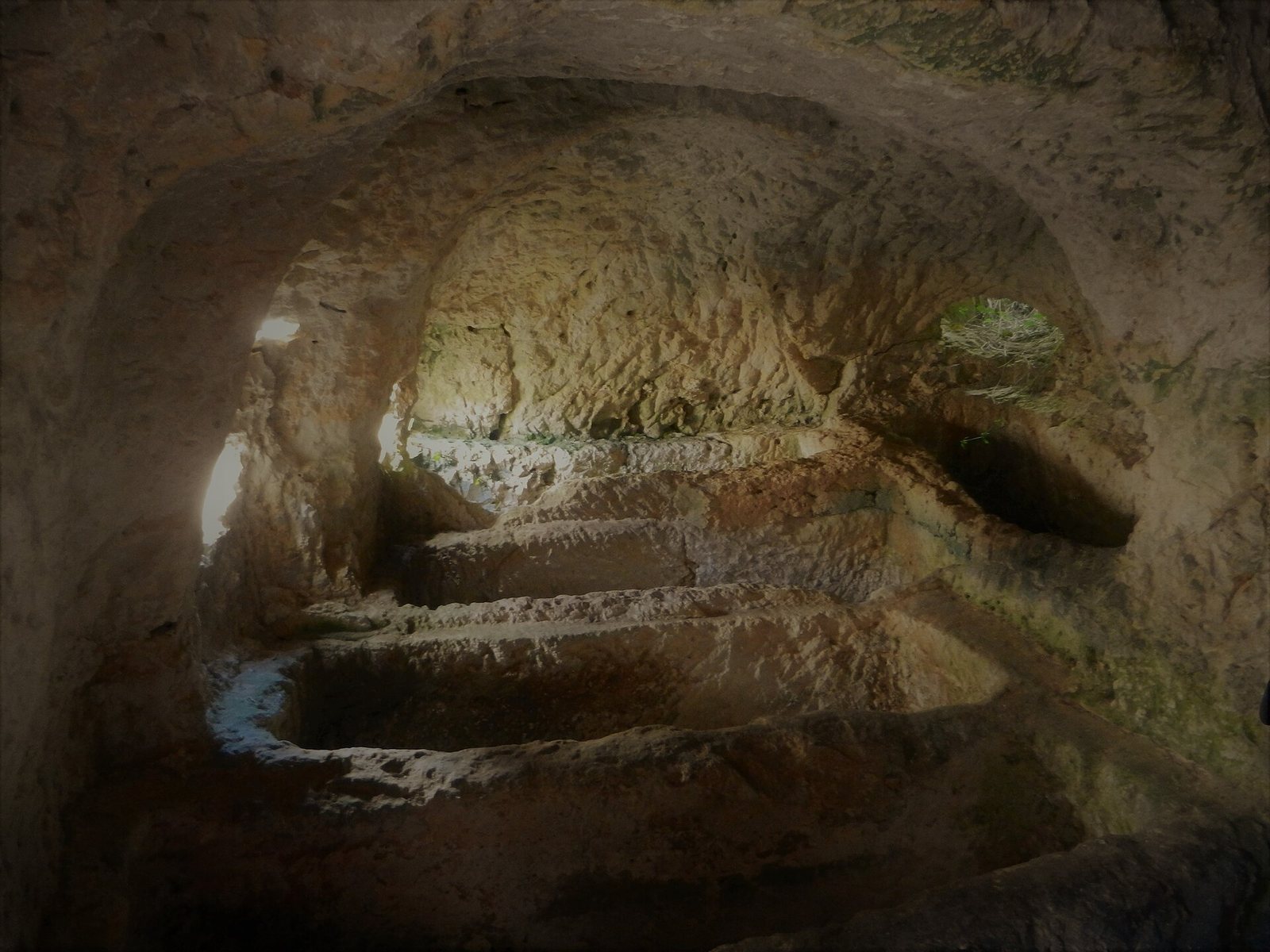
Vigna Cassia is divided into the Santa Maria di Gesù, San Diego, and Marcia sections. The Santa Maria di Gesù cemetery expanded through an abandoned Hellenistic aqueduct, a water channel from the period following Alexander the Great’s conquests, when Greek culture spread across the eastern Mediterranean. Graves were cut into the aqueduct walls. Several disused water cisterns were converted into small, round private structures, while the Marcia cemetery has a more regular layout. Vigna Cassia and Santa Lucia are both among Sicily’s largest catacomb complexes, though their relative extent is uncertain.
San Giovanni and the Crypt of San Marciano
Main gallery and graves
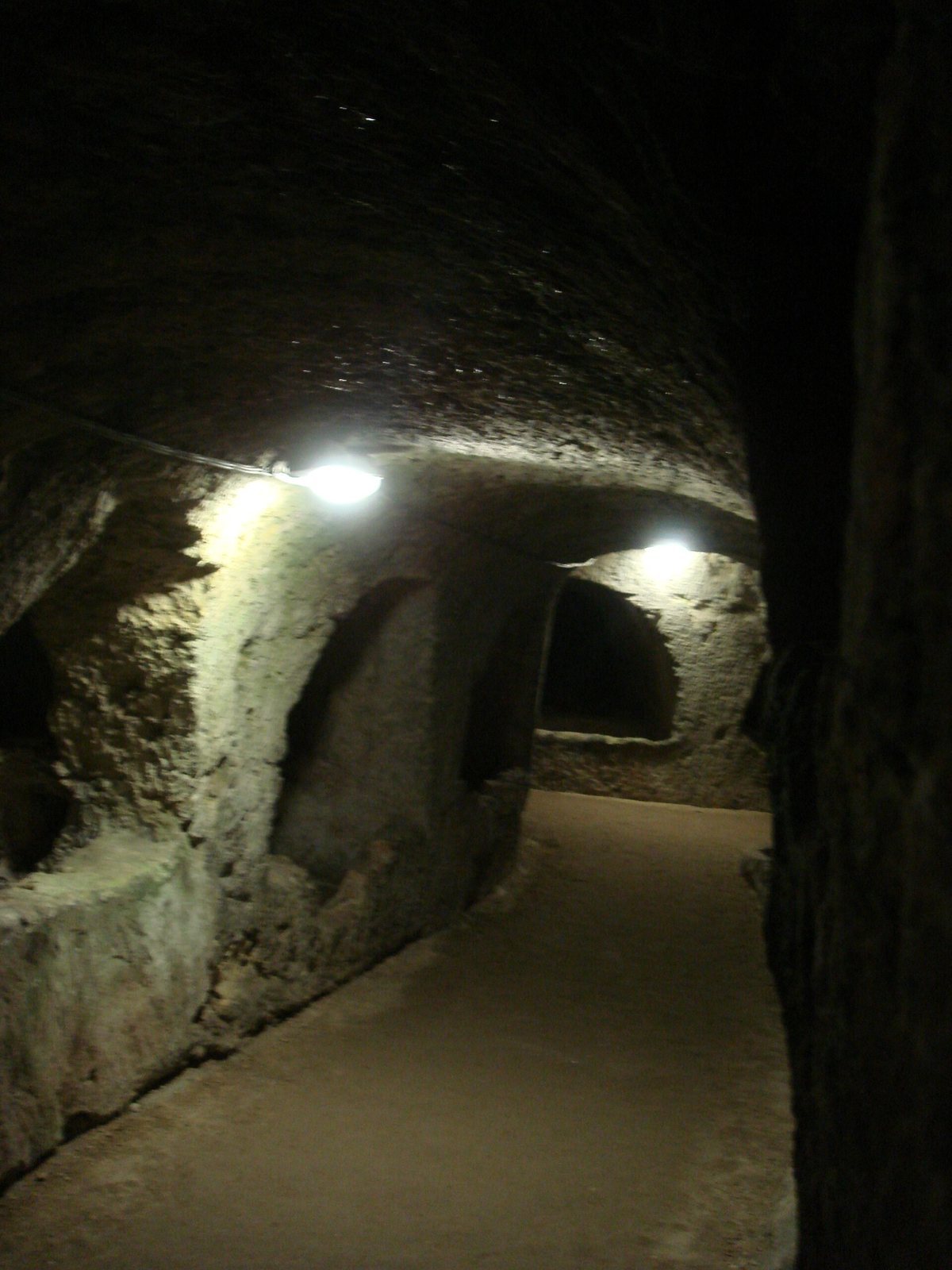
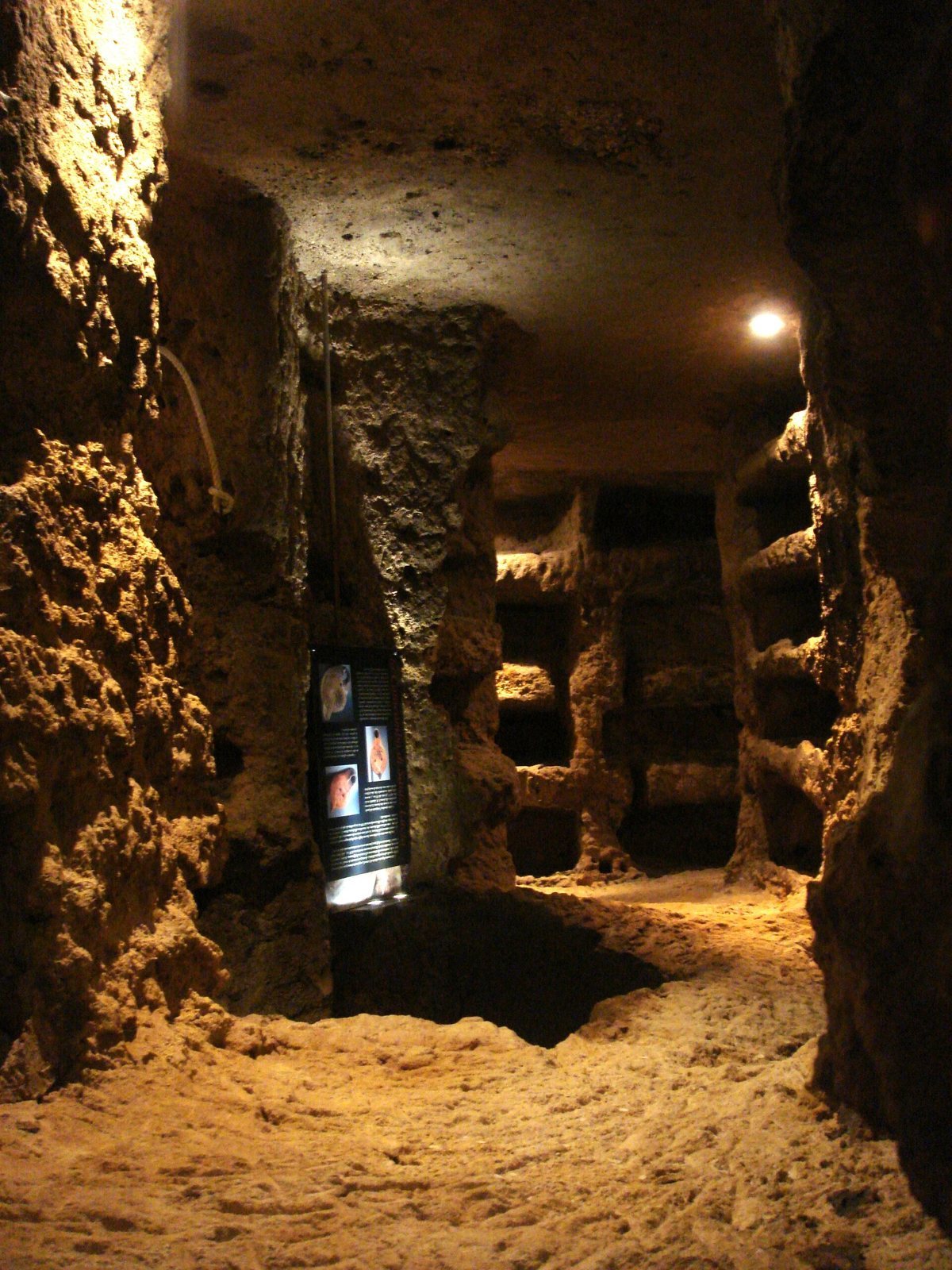
The Catacombs of San Giovanni cover about 10,000 square metres and contain around 10,000 family and communal graves cut into walls and floors. In some places, the graves form rows of twenty. A Greek aqueduct was extended lengthwise to create the main gallery, called the decumanus maximus, a name for the principal east–west street in Roman town planning. Traces of the aqueduct remain visible in the gallery vault, and side galleries branch from the main passage. Little of the former wall decoration survives.
The sarcophagus of Adelphia was found in the catacombs in 1872. It is now held at the Paolo Orsi Regional Archaeological Museum in Syracuse.
Chambers and rotundas
Five enlarged chambers associated with saints or martyrs are circular or square. They are identified as Eusebius, Adelfia, Antioch, the Seven Virgins, and the Anonymous chamber. The five rotundas served first in the removal of excavated material during construction, then as chapels and sources of light and ventilation. The catacombs also contain arcosolia, arched recesses for tombs.
Church of San Giovanni
A surviving façade with a rose window formed the side wall of a small church rebuilt after the earthquake of 1693. A stairway descends from the church remains to the Crypt of San Marciano below.
Crypt of San Marciano
The crypt contains a single column traditionally identified as the place of Marcian’s martyrdom. Its central area has four columns dating to the Norman period, with capitals depicting the four Evangelists. The room has a Greek-cross plan, with four arms arranged around a central point. Wall frescoes date from the fifth century onward.