Castro of Fazouro: A Roman-Period Fortified Settlement in Galicia
Site at a Glance
- Rating
- 4.1
- Popularity
- Medium
- Country
- Spain
- Primary era
- Classical
- External website
- Open
- Eras represented
- Classical
- Civilizations
- Unclassified
- Site type
- Military
- Remains
- Fortified Town
On this page13 sections
History
Settlement and Romanization
Castro of Fazouro is an ancient fortified settlement in Foz, Galicia, Spain, occupied from the first to the third century AD during the period of Romanization. A castro was a fortified settlement of the pre-Roman and Roman periods in the northwestern Iberian Peninsula, often formed by clustered buildings and defensive earthworks. The site’s archaeological evidence places it near the period when local communities gradually adopted Roman cultural, economic, and social practices.
Material from the infill layers of Structure 7, including a clothing fastener known as a fibula, a coin, and pottery fragments, dates part of the occupation to the late first or early second century AD. These objects indicate gradual cultural influence from a more developed external population rather than a sudden or violent change. They are also associated with more intensive exploitation of the surrounding area through mining.
The excavated buildings represent the settlement’s final occupation at the end of the third century AD. Their layers show continuity in construction and use before abandonment. Stratigraphy, the study of deposited or built layers to establish a site’s sequence, provides the basis for tracing this continuity from occupation to abandonment.
Excavation and preservation
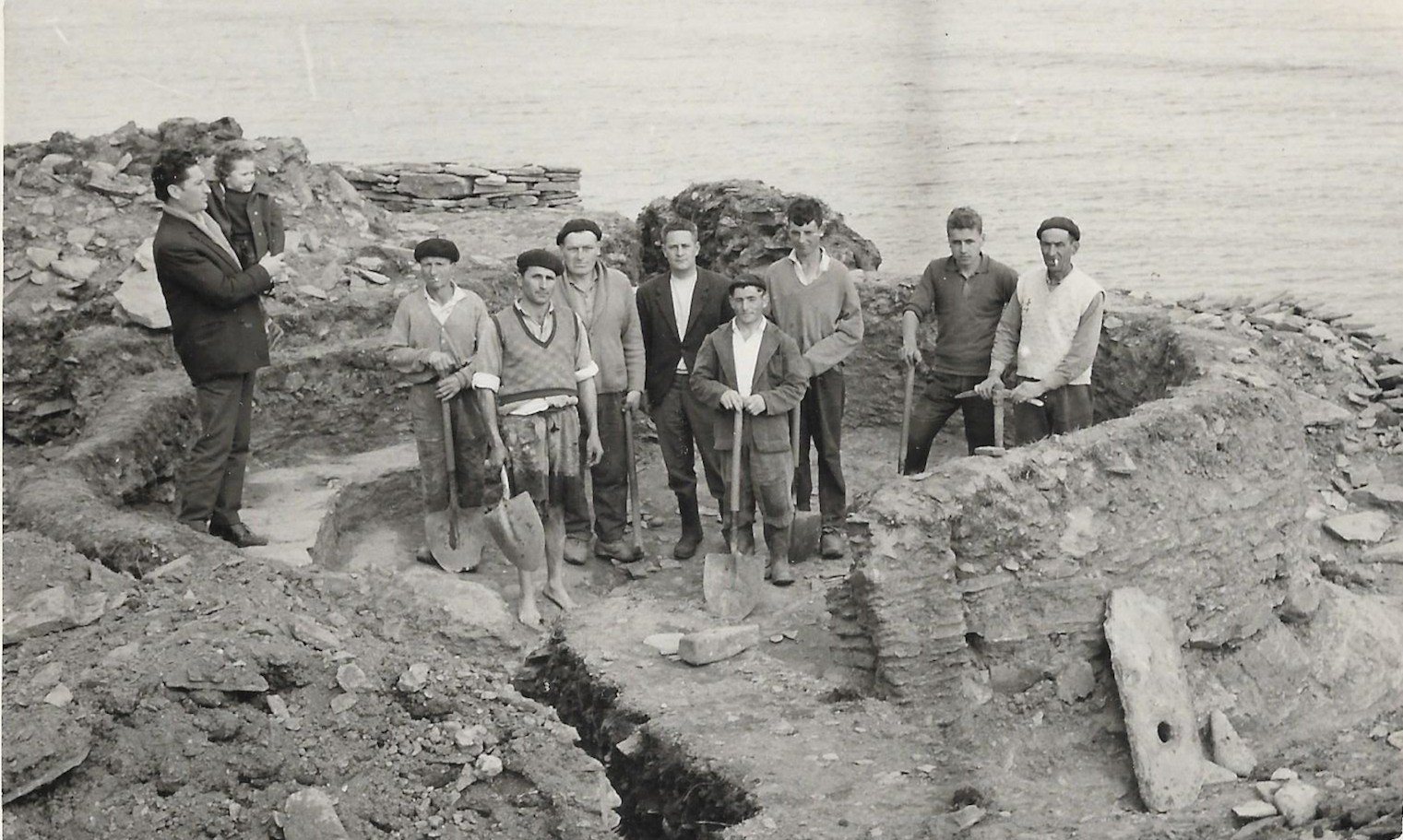
Leopoldo Carro Moledo identified the site and worked to secure its protection by contacting José María Beltrán Veiga, then mayor of Foz. Carro Moledo also helped organize and supervise the first excavations, which were carried out by municipal workers. Excavation and study took place in 1963 and 1965. The specialists José González de Sela y Torres and J. J. Suárez Acevedo took responsibility for the archaeological work, and the first excavation findings and conclusions were published in 1963.
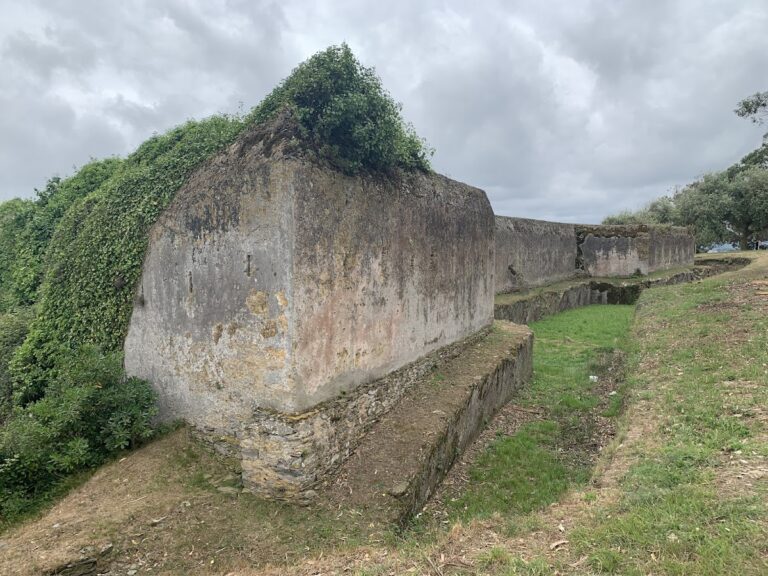
Interventions between 1988 and 1993 consolidated and restored the remains for open-air conservation and museum presentation. Castro of Fazouro is preserved as a museum and is the only castro preserved in this form on the Galician Cantabrian coast. In 2017, the Government of Galicia declared it an Asset of Cultural Interest in the category of archaeological site.
Remains
Setting and settlement layout
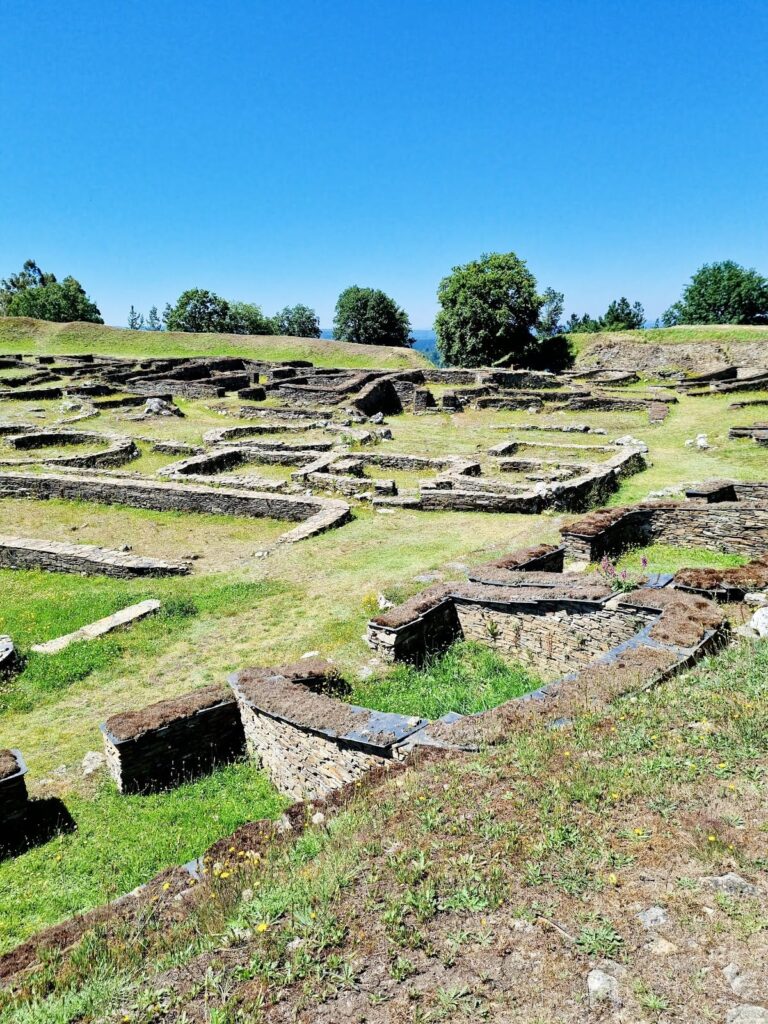
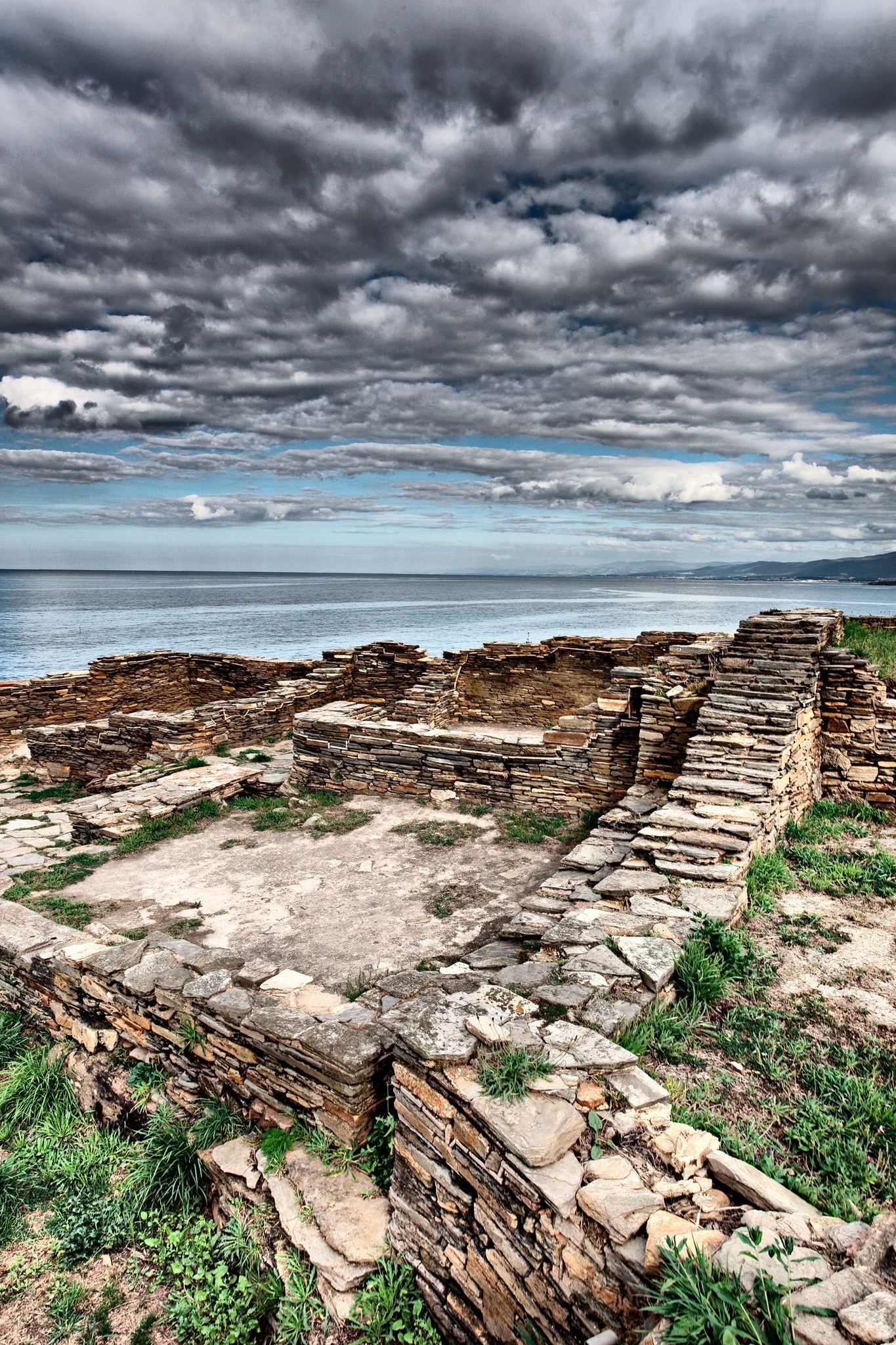
Castro of Fazouro occupies gently sloping ground beside the Cantabrian Sea at an elevation of about 14 metres. A distinct ditch marks access from the landward side. It is partly filled with earth and the embankment of a track. The settlement covers approximately 700 square metres, with the excavated area concentrated in its northern part. Marine erosion has removed an estimated 25 to 30 metres of ground toward the sea and destroyed some of the settlement structures.
Buildings and circulation spaces
Most of the buildings are square in plan, with angular or rounded corners, while one has an oval plan. Paved patios and passageways run between the structures. The buildings probably formed small groups associated with individual family units, creating a compact settlement of connected domestic spaces.
Raised platform and upper level
A square building near the sea retains its entrance and paving. Nine steps were attached to its exterior wall and led to a stone platform that probably supported a second storey. The surviving steps provide evidence for vertical access within one of the settlement’s buildings.
Domestic features
Benches and hearths
Some buildings contain stone benches fixed against the inner faces of their walls. They probably served as places to sit, work, or store objects. The houses also preserve stone hearths, generally square in plan and placed toward the centre of the usable interior space. Traces of interior rendering survive on some walls.
Archaeological finds
Pottery
The pottery is highly fragmented, although small vessels could be partly reconstructed. The assemblage includes cooking pots, dishes with red slip, and a few jars and cups. Very deteriorated fineware fragments include terra sigillata, a fine Roman pottery with a smooth surface, one piece of which retains part of a concentric-circle decoration. The recorded decorative techniques include burnishing, incision, and raised applied decoration.
Metal objects and coins
Numerous metal remnants were recovered, but only six nails and several shapeless fragments could be identified. Bronze objects include an omega-shaped ring fibula and a hairpin. The fibula was a brooch-like fastener used to secure clothing. An antoninianus, a Roman coin introduced in the third century AD, was found while the paving was being cleaned and dates to the middle of that century. Another coin was minted at Clunia, an important Roman city in Hispania with its own mint, although the circumstances of that coin’s arrival at Fazouro are undetermined.
Animal remains
Organic remains from the settlement include cattle bones, adding evidence for animal use within the occupied community.