Castlekirk: A Historic Tower House on Lough Corrib


Site at a Glance
- Rating
- 4.3
- Popularity
- Very Low
- Country
- Ireland
- Primary era
- Medieval
- External website
- Open
- Eras represented
- Medieval
- Civilizations
- Irish, Norman
- Site type
- Military
- Remains
- Castle
On this page6 sections
History
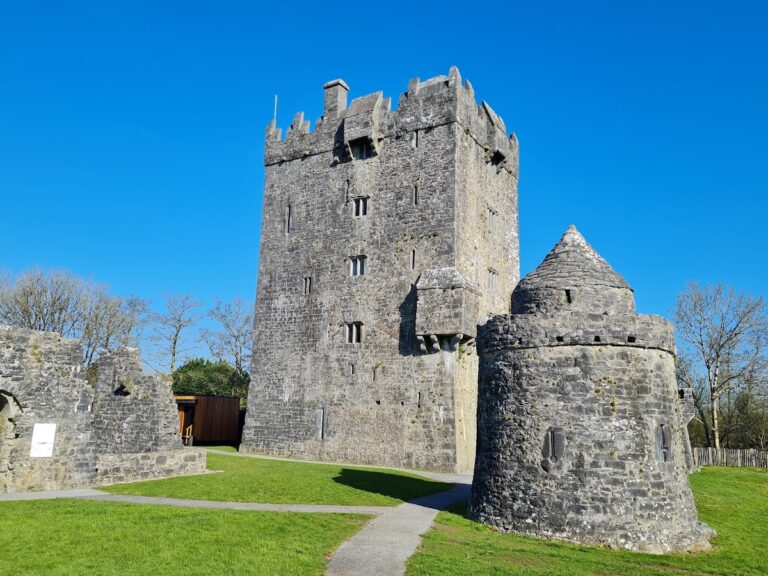
Castlekirk is a ruined tower house on Castlekirk Island in Lough Corrib, Ireland, built by the Irish clans O’Connor and O’Flaherty in the eleventh or early twelfth century. A tower house was a fortified residential tower that combined domestic accommodation with defensive features. Castlekirk is described as one of Ireland’s oldest mortared castles and among the oldest castles of its type in the country. It became associated with the regional power of the O’Flaherty clan and with Irish resistance to the gradual expansion of English authority in Connacht, the western province of Ireland.
Origins and medieval conflict
The castle may have replaced an older fortification. Another tradition attributes its construction to the sons of Ruaidrí na Saide Buide, with assistance from William FitzAldelm. FitzAldelm, a Norman feudal lord connected with the de Burgh family, later developed the castle. Although he belonged to the Norman feudal establishment, he became an ally of the Irish kings during their resistance to English conquest.
Castlekirk entered the political struggles of Connacht in the thirteenth century. In 1225, Lord Justice Sir Edmond Butler compelled Odo O’Flaherty to surrender the castle to Aedh Ua Conchobair, King of Connaught, as a pledge of loyalty. In 1233, Fedlimid, son of Cathal Crobhdearg Ua Conchobair, demolished it.
O’Flaherty resistance and later destruction
The stronghold was repeatedly attacked and besieged after its rebuilding and development. In 1546, Gráinne Ní Mháille, later widely known as Grace O’Malley, married Dónal an-Chogaidh O’Flaherty. He was killed while fighting for Castlekirk, and Gráinne subsequently became leader of the O’Flaherty clan. Her determined defence of the castle helped associate it with the name Hen’s Castle rather than Cock’s Castle. Gráinne was a sixteenth-century Irish clan leader and seafarer associated with resistance to English authority under Elizabeth I.
Castlekirk remained occupied and served as a stronghold until Oliver Cromwell’s forces took it in 1654. Cromwell was the English republican military and political leader whose forces conquered large parts of Ireland during the mid-seventeenth century. The castle’s history is therefore tied to the weakening of Connacht during Elizabeth I’s divide-and-rule policy and to the longer conflict between Irish clans and expanding English power.
Local traditions give the castle a more legendary origin. One says that a cock and a hen built it in a single night. Another tells of O’Flaherty chiefs, Lords of Connacht, who employed a witch to create the castle by magic. She left behind a magical hen whose care supposedly guaranteed its security. During a siege, the inhabitants ate the hen after their provisions ran out, allowing the Norman feudal lord de Burgh to storm and destroy the castle.
The castle stood in ruins until the nineteenth century. During that period, its masonry was dismantled and reused in houses or mansions built on the shores of the lake. Castlekirk is now a state-owned National Monument of Ireland, officially designated Castlekirk Castle under reference number 245.
Remains
Island setting and defensive form
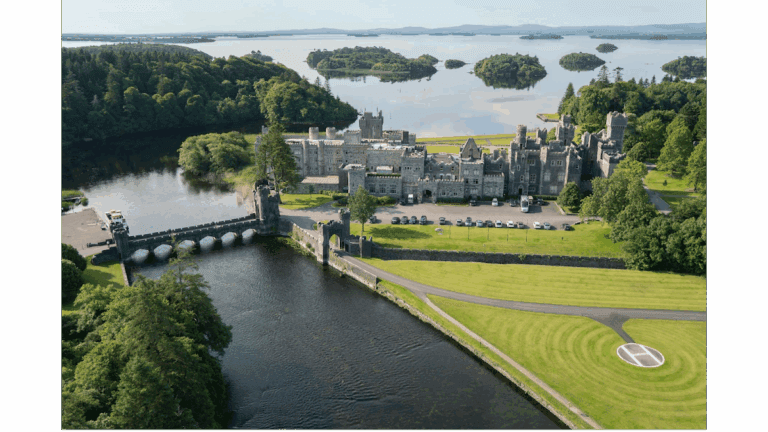
Castlekirk occupies a rocky island in Lough Corrib, between Maum and Dun, in the northwestern corner of the lake on the approach to Maum. The island covers approximately 0.18 hectares, or half an acre. Its sides slope abruptly into the water, giving the tower house a naturally defensive position. Strong walls, high towers, and substantial food stores reinforced that setting and supported the castle’s use as a fortified residence and stronghold.
Surviving fabric
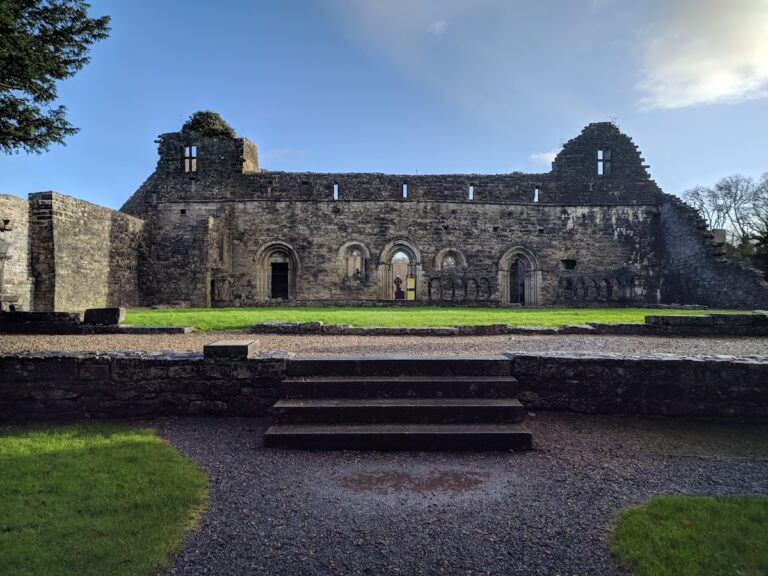
The remaining structure consists of poor ruins overgrown with grass and bushes. Nineteenth-century removal of masonry for nearby building projects substantially reduced the castle’s visible fabric. The surviving remains nevertheless preserve the location and character of a tower house built on a small, steep-sided island in the lake.