Castle of Soto: A Medieval Noble Residence and Fortress in Asturias


Site at a Glance
- Rating
- 4.3
- Popularity
- Low
- Country
- Spain
- Primary era
- Medieval
- Eras represented
- Medieval
- Civilizations
- Crown of Castile, Kingdom of León
- Site type
- Military
- Remains
- Castle
On this page8 sections
History
Origins and Noble Residence
Castle of Soto is a medieval fortress in Spain, located in Soto de Aller in the municipality of Aller, Asturias. It originated in the twelfth century, while most of the surviving remains date from the fourteenth century, when the castle was rebuilt to serve the defensive and residential needs of the local nobility. Further reconstruction took place during the fourteenth and fifteenth centuries.
The castle became the residence of influential noble families, especially the García de Soto family, which played an important role in the history of the region. Its architecture and use brought together the protection expected of a fortress with the domestic requirements of an aristocratic household.
Urraca of Asturias and Later Use
Urraca of Asturias spent periods at the castle. She was an illegitimate daughter of Alfonso VII, the twelfth-century monarch of León and Castile, and married García Ramírez, King of Pamplona. Alfonso granted her the title Queen of Asturias, although Asturias remained subject to the Kingdom of León. After an attempted movement for independence by Asturian nobles, in which her participation alongside her second husband remains uncertain, she was deprived of the title. The couple withdrew to Palencia, where García Ramírez held several territories, and Urraca was buried in the cathedral there after her death.
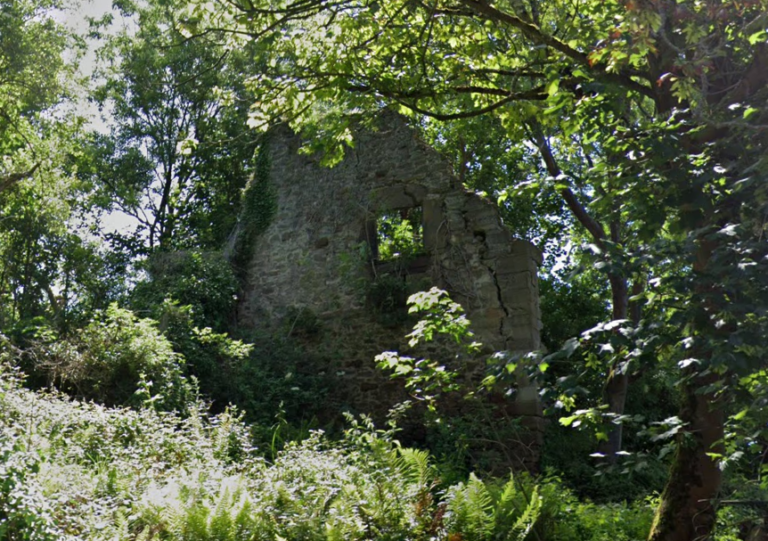
During the Spanish War of Independence, the conflict in which Spain resisted Napoleon’s occupation and the rule of his forces in the early nineteenth century, local guerrillas used the castle as a refuge. From the nineteenth century onward, however, the building fell into disuse and deteriorated progressively until it became a ruin seriously threatened by collapse.
Protection and Restoration
Castle of Soto was declared a Bien de Interés Cultural, a Spanish designation protecting important cultural heritage, on 10 July 1975. A major restoration between April and August 2022 sought to stabilize the surviving structure and preserve the remains.
Remains
Fortification and Residential Architecture
The surviving castle combines the solid construction of a late Gothic medieval fortification with the requirements of a noble residence. Its structure is formed by cylindrical towers and robust walls, preserving the principal architectural expression of the building’s defensive character while reflecting its domestic role.
Cylindrical Towers
The cylindrical towers are among the defining surviving elements of Castle of Soto. They belong to the fortified structure associated with the castle’s medieval defensive function and contribute to its late Gothic character.
Robust Walls
The castle’s robust walls complete the defensive framework around the residence. Their substantial construction reflects the need for protection, while the wider arrangement of the building shows how military and residential purposes were combined. Before the 2022 intervention, the remains were ruinous and in serious danger of collapse.