Castell de Montfalcó: A Medieval Frontier Castle in Spain


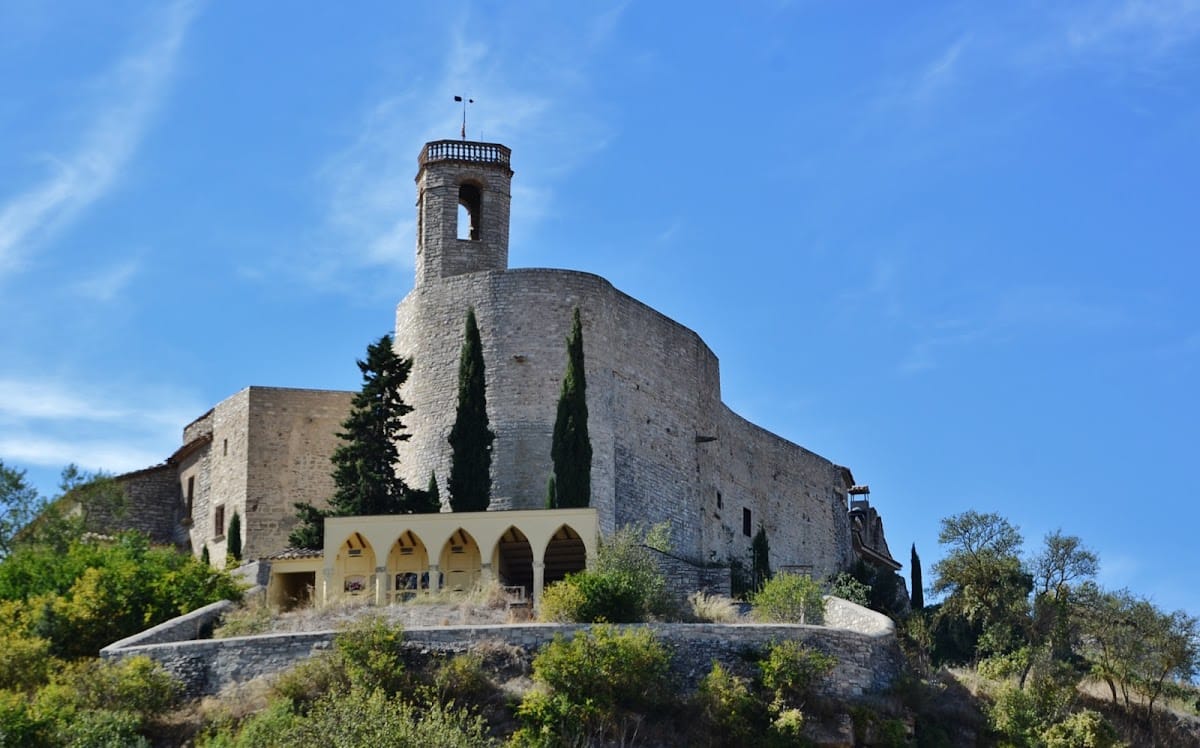
Site at a Glance
- Rating
- 4.5
- Popularity
- Medium
- Country
- Spain
- Primary era
- Medieval
- External website
- Open
- Eras represented
- Medieval
- Civilizations
- Unclassified
- Site type
- Military
- Remains
- Castle
On this page8 sections
History
Castell de Montfalcó is a medieval frontier castle in Spain, within the walled settlement of Montfalcó Murallat. It was probably built in the mid-eleventh century after Bernat, Count of Berga, conquered and repopulated the area around the confluence of the Vergós stream and the Sió River. The fortress formed part of the frontier march of the County of Cerdanya, a militarized border territory linked to a larger medieval county or kingdom.
Foundation and Cerdanya overlordship
The feudal castle appears in a record from 1043 under the name Monte Falconi. It was probably first held under the authority of the Counts of Cerdanya, who granted control of the castle and its lands to successive nobles in return for service. Ramon Miró was its lord in 1079. In 1095, Dalmau Bernat, Viscount of Berguedà, held it for Guillem Ramon, Count of Cerdanya. In 1135, Guillem de Berguedà paid homage to Ramon Berenguer IV, making a formal declaration of loyalty to the superior lord, for this and other castles.
Montfalcó continued to appear in records during the second half of the twelfth century. Berenguer d’Altés’s testament of 1157 referred to it as ipso castro de Monte Falconis. Ramon de Cervera’s first testament, written in 1172, left the site and castle to his son Guillem. In 1179, Ramon de la Guàrdia bequeathed certain rights over the fortress to his daughter Berenguera. Ramon de Cervera’s second testament, issued in 1182, confirmed the earlier inheritance to Guillem and directed that, if Guillem died without legitimate children, it should pass to his daughter Timbor.
Inheritance and Cardona rule
Further transfers connected the castle to the Guàrdia and Cardona families. In 1189, Ramon de Cervera left Montfalcó to Marquesa, the wife of Guillem de la Guàrdia. In 1234, Guillem de la Guàrdia’s will assigned the castle to Isabel de Torroja, wife of Ramon Folc IV of Cardona.
Montfalcó later became part of the Viscounty, and then the County and Duchy, of Cardona, within the administrative district of Torà. A viscounty was a territory governed by a viscount, while a county and duchy were jurisdictions ruled by a count and duke. The castle remained within this seigneurial system until lordships were abolished in Spain during the nineteenth century.
Frontier warfare
Both Muslim and Christian forces valued the fortress for its defensive position. It was used in the defense of the region during the wars with Peter I of Castile, the fourteenth-century king whose reign was marked by internal conflict and warfare.
Remains
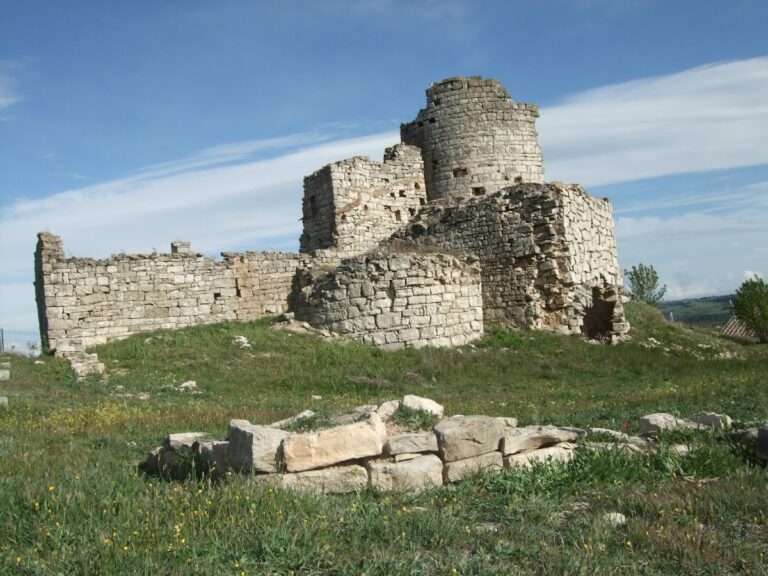
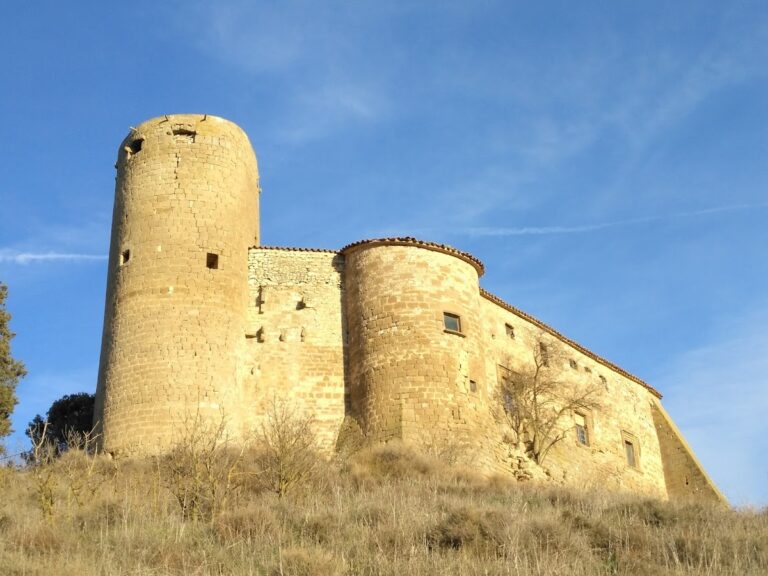
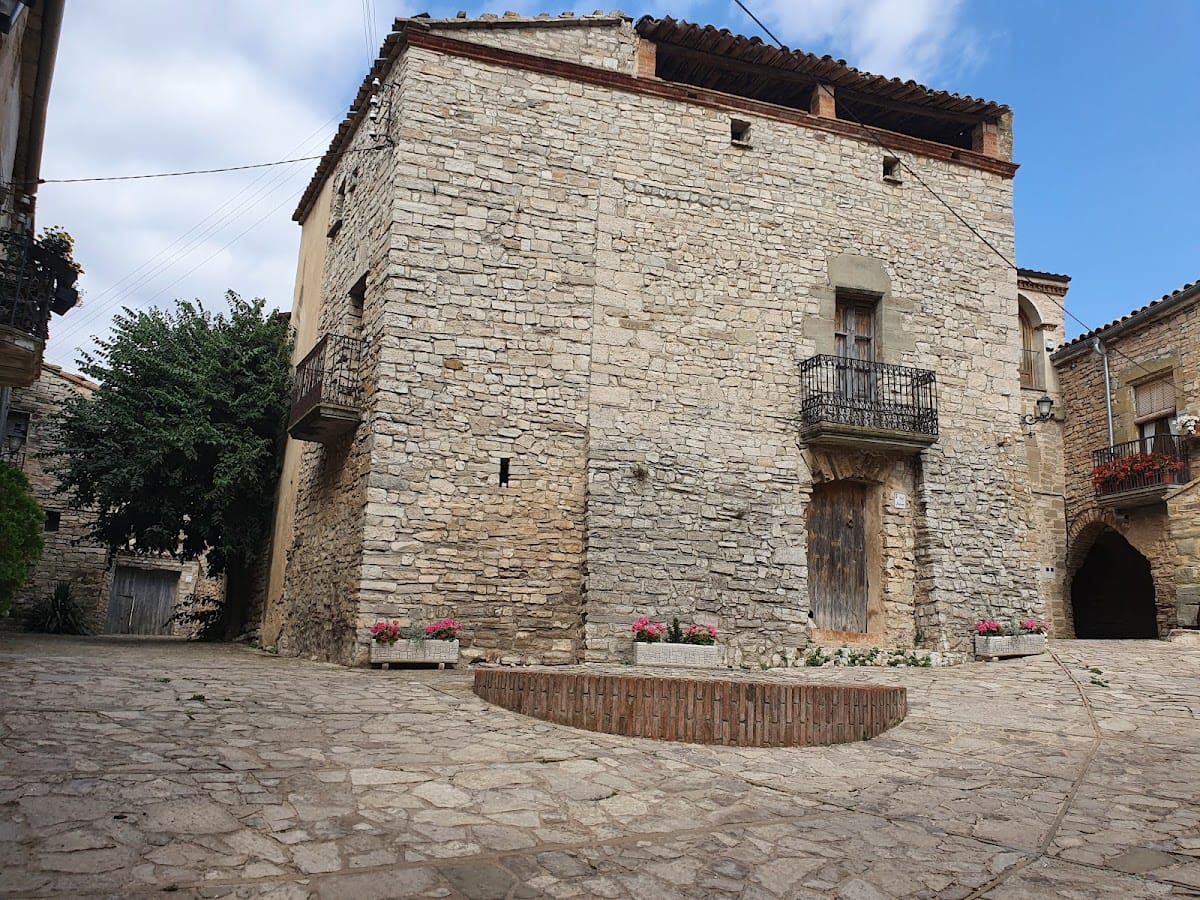
Castell de Montfalcó stands at about 602 metres above sea level on a hill within Montfalcó Murallat, northeast of Cervera. The settlement overlooks the meeting point of the Vergós stream and the Sió River. Its physical setting and defensive enclosure preserve the form of a fortified medieval community, with houses built directly against the inner face of the surrounding wall.
Walled enclosure
Perimeter wall and eastern entrance
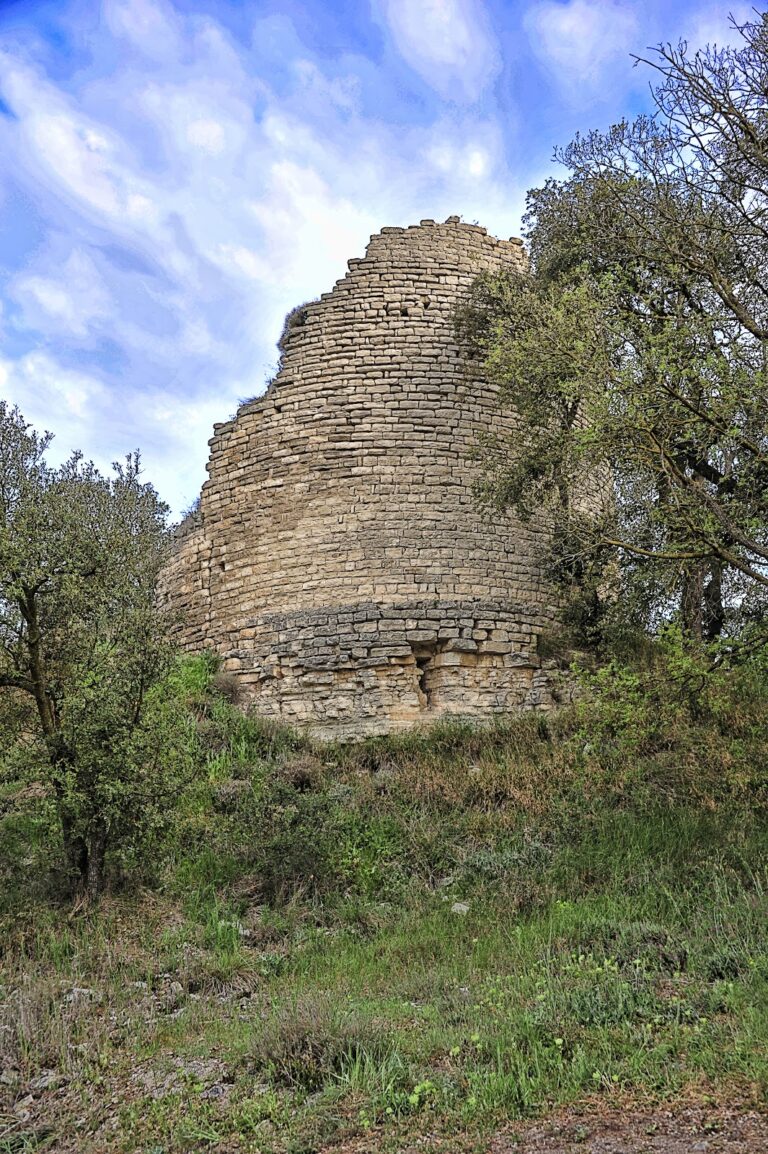
The enclosure is surrounded by a perimeter wall about 8 metres high and 1 metre thick, built on the hill’s natural limestone bedrock. It survives in fairly good condition. The outer face uses rectangular ashlar blocks joined with lime mortar, with occasional gaps left for scaffolding. Rectangular blocks alternate with square ones, creating a regular masonry pattern.
A single entrance on the eastern side provides access to the enclosure. Its double opening is formed by voussoired arches, whose wedge-shaped stones create the curved structure of the gateway. The entrance opens toward the central square of Montfalcó Murallat.
Central square and arcaded section
A cistern for storing water survives in the central square. At the northwest of the settlement, an arcaded section forms its most architecturally notable area. The large area enclosed by the walls makes the date of the settlement’s defensive circuit difficult to establish. Its construction probably belongs to an advanced phase of the Middle Ages rather than to the settlement’s beginnings immediately after the Christian conquest.
Nearby sites