Castle of Saint Mary: A Duchy of Milan Fortress in Tirano, Italy

Site at a Glance
- Rating
- 4.1
- Popularity
- Very Low
- Country
- Italy
- Primary era
- Medieval
- Eras represented
- Medieval
- Civilizations
- Duchy of Milan, Holy Roman Empire
- Site type
- Military
- Remains
- Castle
On this page11 sections
History
The Castle of Saint Mary, also known as Castellaccio, is a hillside fortress in Tirano, Italy, built by the Duchy of Milan in 1492–1493 as part of the city’s late fifteenth-century fortifications. Planning for the castle and its surrounding enceinte, or defensive enclosure, had begun around 1487. Ludovico Sforza, a member of Milan’s ruling dynasty and Duke of Milan during the period of the project, commissioned the work from Giovanni Antonio Amadeo, an Italian-Swiss Renaissance sculptor, architect, and engineer.
Tirano and the Alpine routes
Tirano developed on the left bank of the Adda below the earlier Castle of Dosso, which stood in the nearby Dosso district by the eleventh century. The Castle of Dosso was probably destroyed by the people of Graubünden in 1487. The later Castle of Saint Mary formed part of a new defensive response in a region where routes between the Po Valley and the northern Alpine area passed through Tirano and the surrounding valleys of Chiavenna, Valtellina, and Bormio.
These valleys also lay across contested political and geographical connections between Vienna and the major centers of Milan, Paris, Venice, and Rome. Tirano’s fortifications had openings at the surviving Porta Poschiavina, which faced the Bernina route, Porta Milanese, and Porta Bormina. The castle itself provided another means of access through the fortified system. Its name came from a nearby chapel dedicated to Mary that no longer survives.
Wars, repair, and dismantling
After Graubünden occupied Tirano in 1512, much of the city’s fortification system was destroyed. During the Valtellina Massacre, a violent conflict in the valley, the walls and castle were rapidly repaired or rebuilt. Spanish forces later used the defenses to protect the city after Swiss troops captured it in the battle of 11 September 1620.
From 1627, authorities ordered the dismantling of the remaining fortifications. The Castle of Saint Mary consequently survived in a ruined form. Part of the ruin was restored between 1938 and 1940, followed by another restoration campaign in 2000 and continuing renovation work. The castle is recognized as Italian national heritage.
Remains
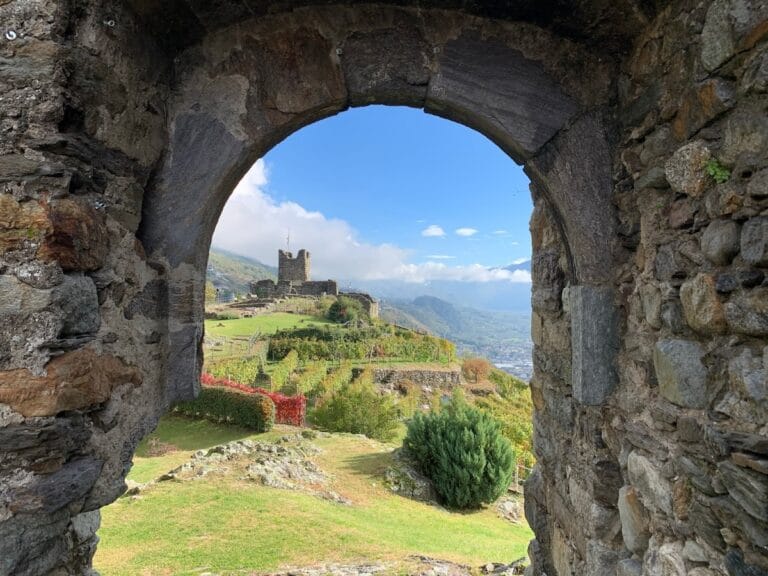
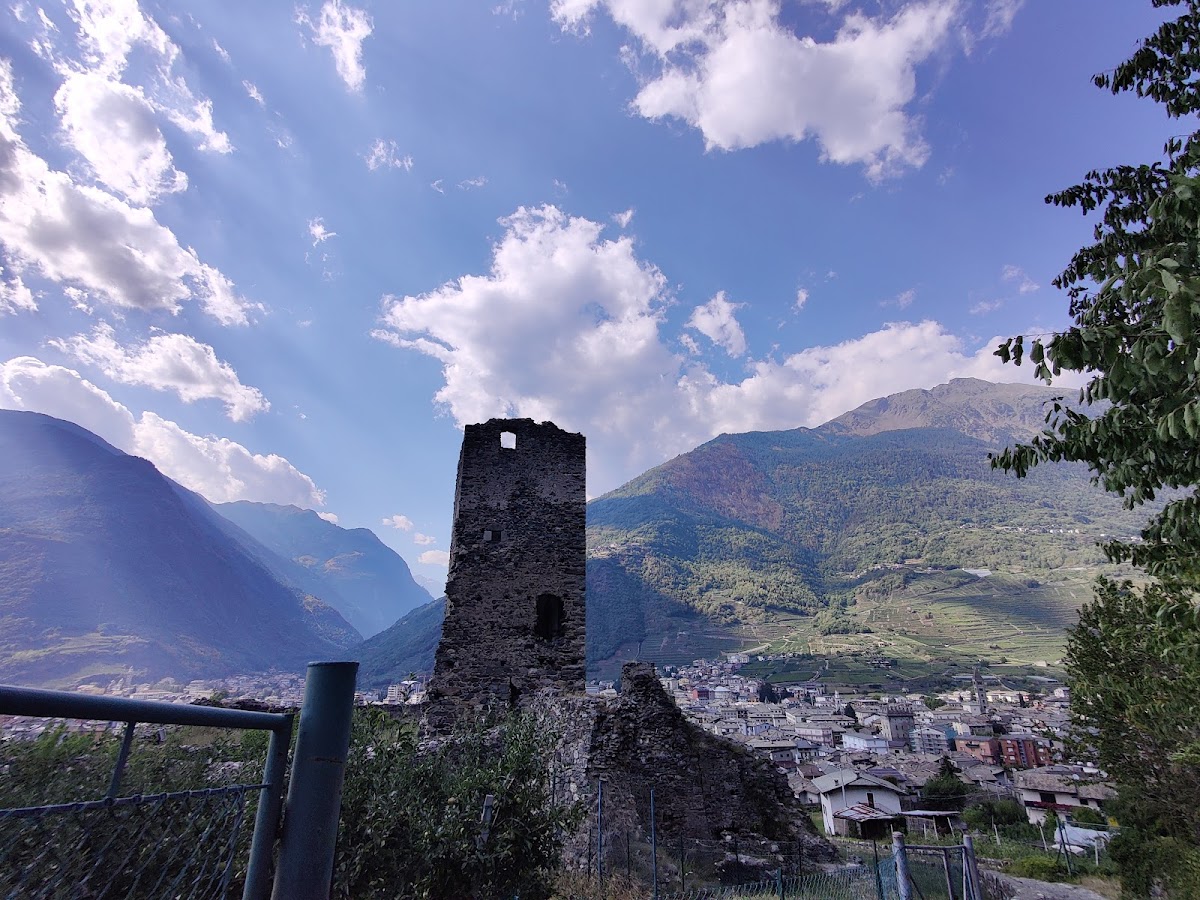
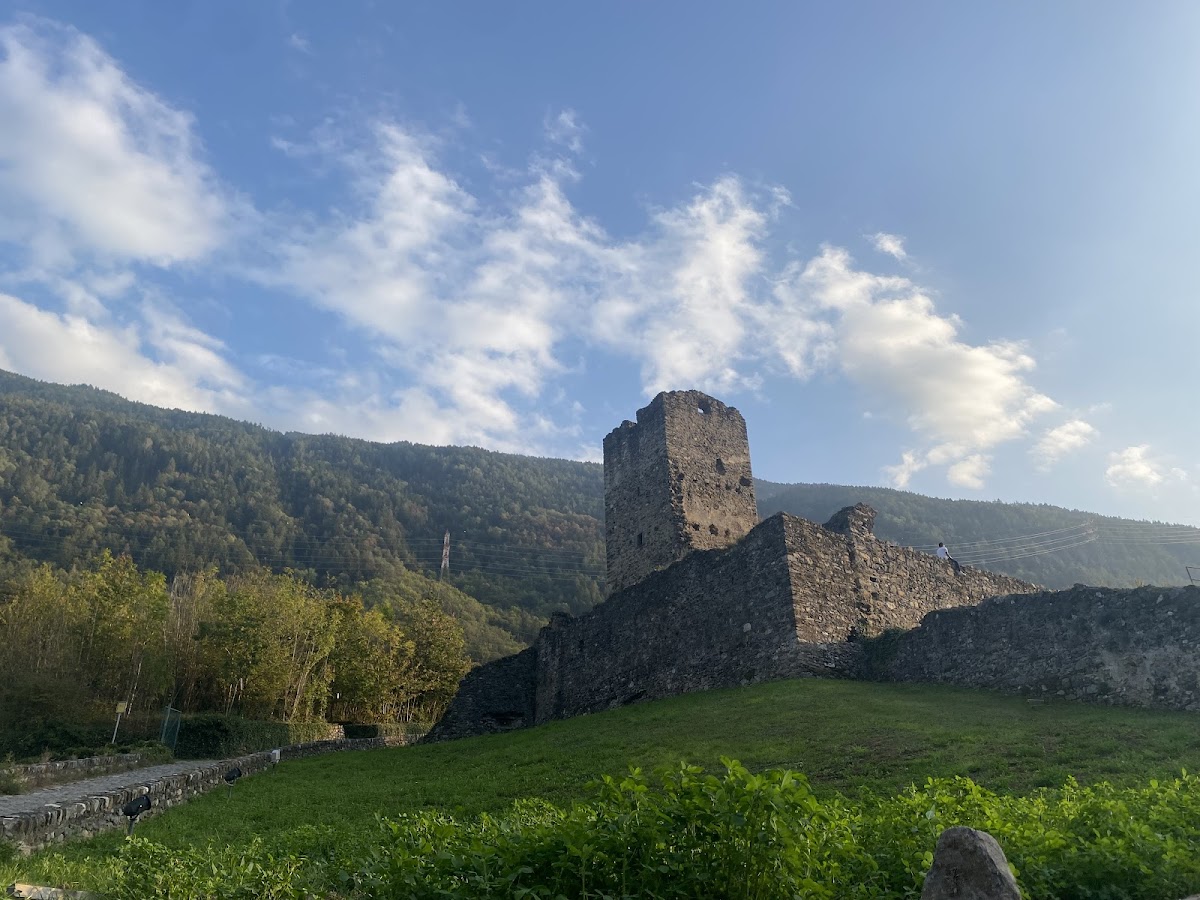
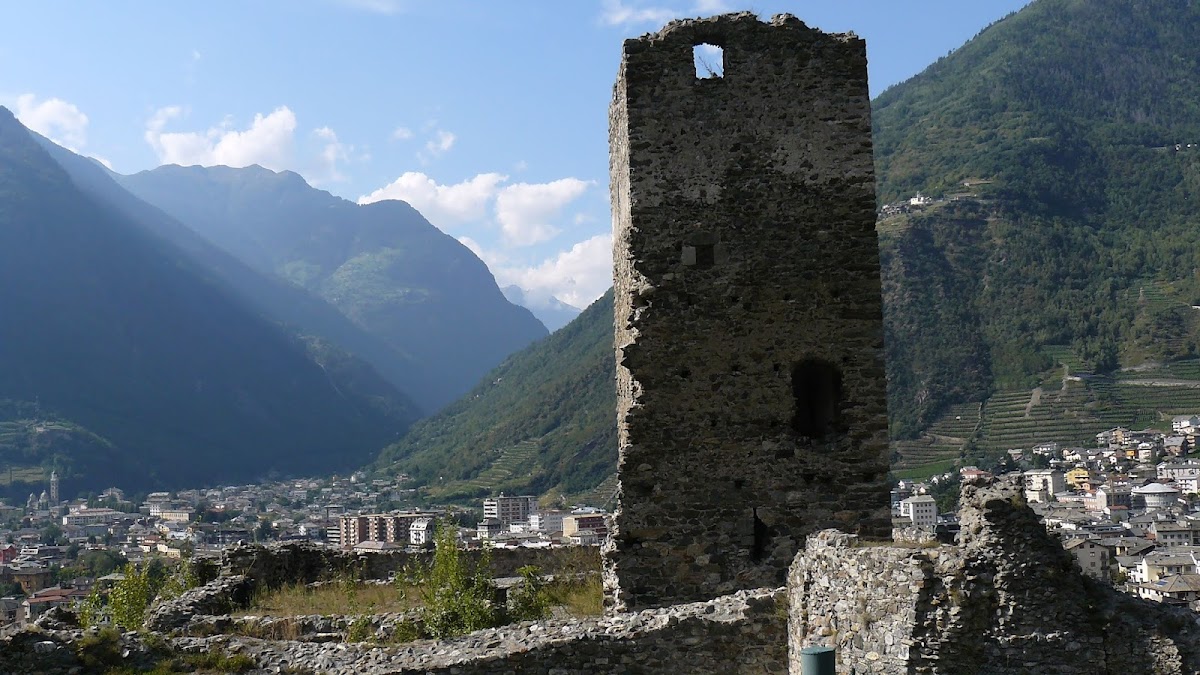
The surviving complex occupies a hillside at approximately 480 metres above sea level and consists of a partially restored ruin. A central tower stands within the remains of an inner castle, while a second defensive enclosure surrounds it. Connecting walls extended toward the town and created an enclosed defensive passage between lines of fortification.
Inner castle and outer defenses
Central tower
A rectangular tower rises four storeys at the center of the complex. It has a gabled roof and formed the principal structure of the inner castle. Remnants of the inner curtain wall enclose the tower and preserve part of the relationship between the central strongpoint and its immediate defenses.
Outer curtain wall and bastion
A second curtain wall surrounds the inner castle. On the uphill side, this outer wall incorporates a semicircular corner bastion, a projecting fortified structure designed to allow defensive fire along the wall faces. The bastion retains identifiable gun chambers with artillery loopholes, openings intended for the use of defensive weapons.
Defensive passage
Two connecting walls linked the castle with the city and formed a zwinger, an enclosed defensive zone between two lines of fortification. This passage, also known in Italian as a ricetto, helped integrate the castle with Tirano’s wider defensive arrangement.
City fortifications
Wall circuit and towers
The city’s enceinte followed the slope of the valley toward Porta Bormina in the east, continued north to the Adda, ran westward along the river, and then rose southward toward the castle. At least ten rectangular defensive towers formed part of the fortifications, and three remain identifiable.
Surviving gateways and setting
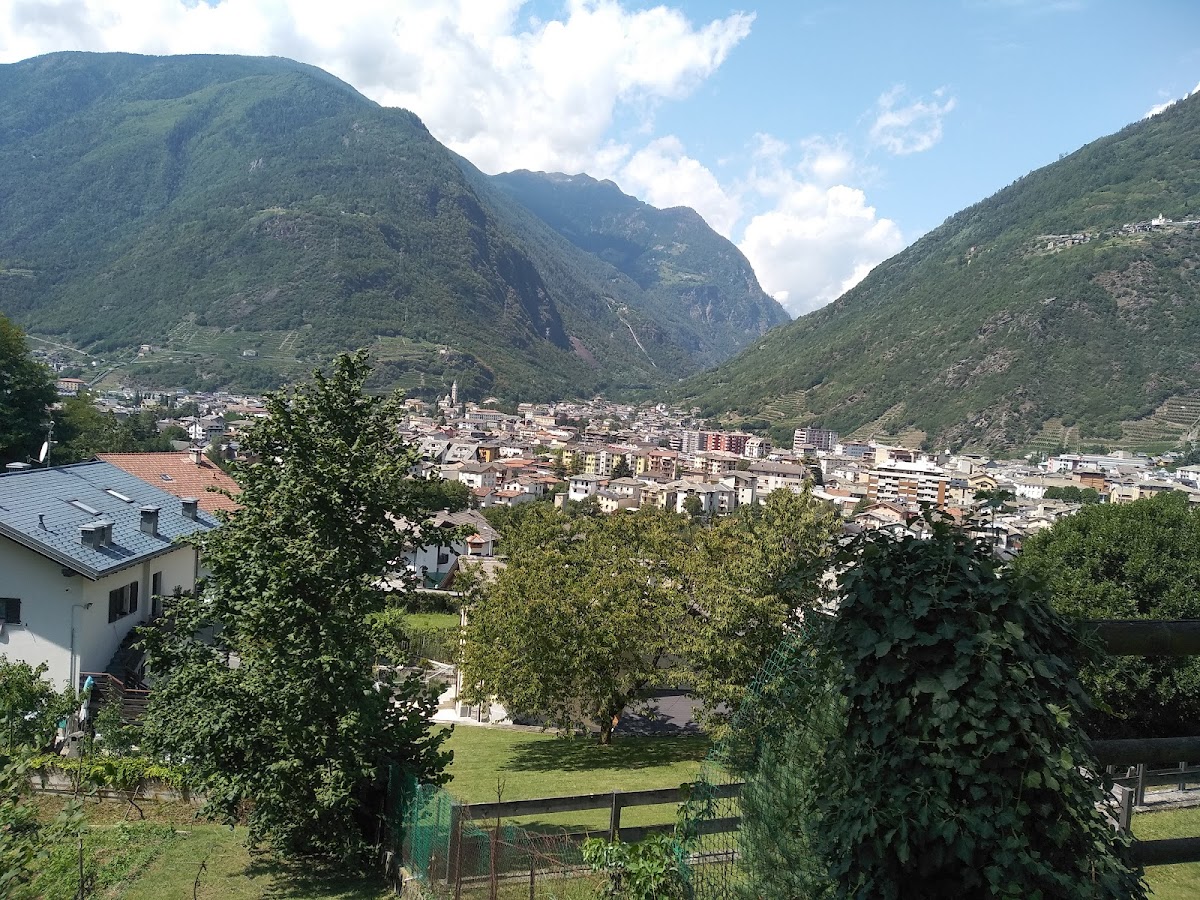
Porta Poschiavina, facing the Bernina route, is the surviving named gateway of the city defenses. Porta Milanese and Porta Bormina were also openings in the fortification system. From its elevated position on the mountainside, the Castle of Saint Mary overlooked Tirano, the surrounding valleys, and the defensive circuit below.