Castle of Rennes-le-Château: A Medieval Fortified Residence in France


Site at a Glance
- Rating
- 4.3
- Popularity
- Very Low
- Country
- France
- Primary era
- Early Modern
- External website
- Open
- Eras represented
- Medieval, Early Modern
- Civilizations
- French, Visigothic
- Site type
- Domestic
- Remains
- Castle
On this page8 sections
History
The Castle of Rennes-le-Château, also known as Château des Hautpoul, is a medieval fortified residence in Rennes-le-Château, France. Established in the thirteenth century within an earlier oppidum, or fortified settlement, it formed part of the medieval town.
Medieval Fortifications and the Albigensian Crusade
Rennes-le-Château originally possessed two castles. Simon de Montfort destroyed one during the Albigensian Crusade, a thirteenth-century campaign against Cathar communities and their supporters in southern France. The surviving castle later passed from the Trencavel family to the Gilbert de Voisins family, which was allied with Simon de Montfort. Pierre II de Voisins repaired damage caused during the crusade.
A siege in 1361 damaged the defenses of both the castle and the town. In 1376, Henri de Trastamarre, a Castilian dynastic claimant and military leader, besieged Rennes-le-Château with his troops. Pierre III de Voisins surrendered, after which the town was razed and the castle suffered further damage.
The Hautpoul Succession
During the late fourteenth century, Jeanne de Voisins brought the village to Sicard de Marquetave as her dowry. Their daughter, Blanche de Marquetave, married Pierre d’Hautpoul in 1422, and the castle then came into the hands of the Hautpoul family.
French Protestants known as Huguenots sacked Rennes-le-Château in 1573, but the castle escaped damage during that attack. It was renovated and enlarged during the sixteenth and seventeenth centuries. François d’Hautpoul, Marquis de Blanchefort and lord of Saint-Just, Bézu, Rennes-les-Bains, Granès, and Rennes-le-Château, was the last lord of Rennes-le-Château.
Decline and Restoration
In 1816, François d’Hautpoul’s daughter, Marie-Anne Élisabeth d’Hautpoul, the last heiress of the Hautpoul-Rennes branch, became bankrupt. The castle was sold for the benefit of her domestic servants, although she continued to live there alone with two servants until her death on 20 May 1820.
After her death, the castle passed to other owners and fell into disrepair. Restoration is now underway.
Remains
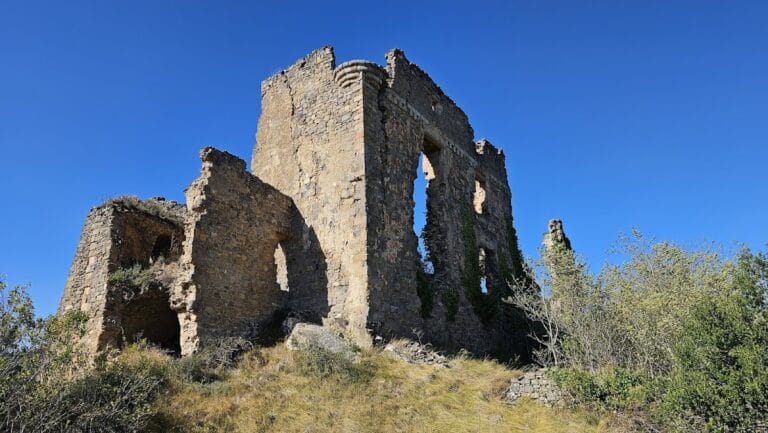
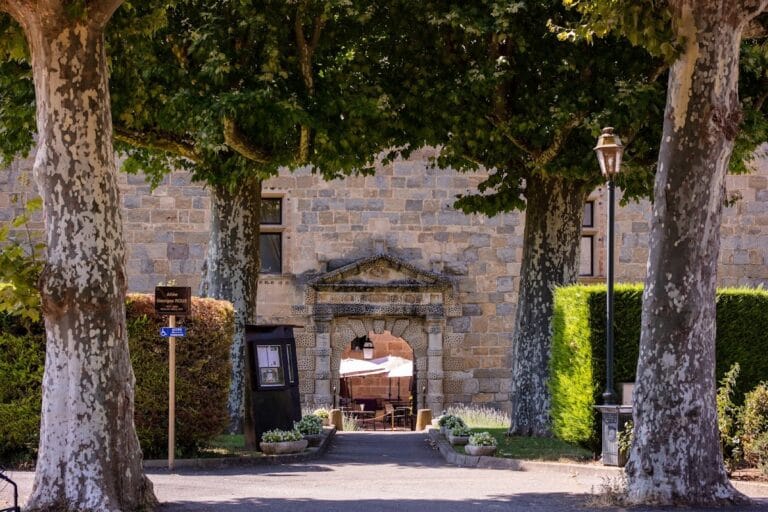
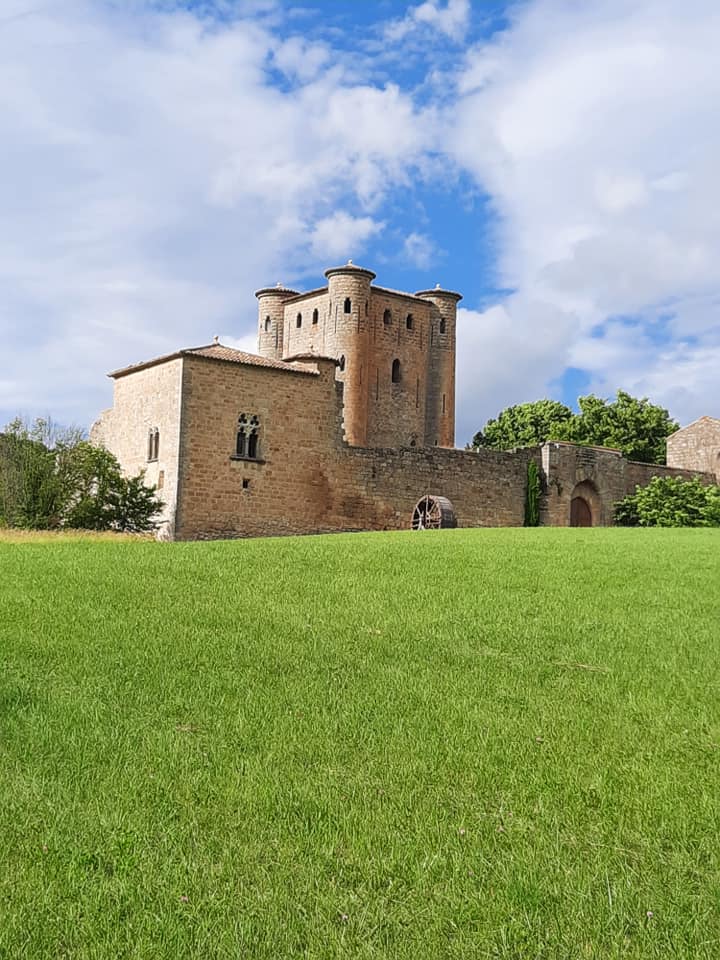
The castle is a fortified building within the town, near the Church of Sainte-Marie-Madeleine. It is described as the last surviving building from the former medieval town. Its fabric combines thirteenth-century origins with later remodeling, producing a residence that appears more domestic than defensive while retaining elements of its fortified character.
Castle Structure
Medieval and Early Modern Fabric
The earliest stones date from the thirteenth century, although very little of the original medieval structure remains. Sixteenth-century remodeling gave the building its more residential appearance, and later enlargement continued the transformation begun in that period. Gun ports survive as evidence of its defensive function.
Vaulted Basement Rooms
The basement contains vaulted rooms dating from the Visigothic period. The Visigoths were a Germanic people who established a kingdom in parts of southwestern Gaul and Iberia during late antiquity. These rooms represent an earlier phase than the visible thirteenth-century castle fabric.
Nearby sites