Castle of Montemayor del Río: A Medieval Fortress in Salamanca
Site at a Glance
- Rating
- 4.3
- Popularity
- Low
- Country
- Spain
- Primary era
- Medieval
- Eras represented
- Medieval
- Civilizations
- Crown of Castile
- Site type
- Military
- Remains
- Castle
On this page6 sections
History
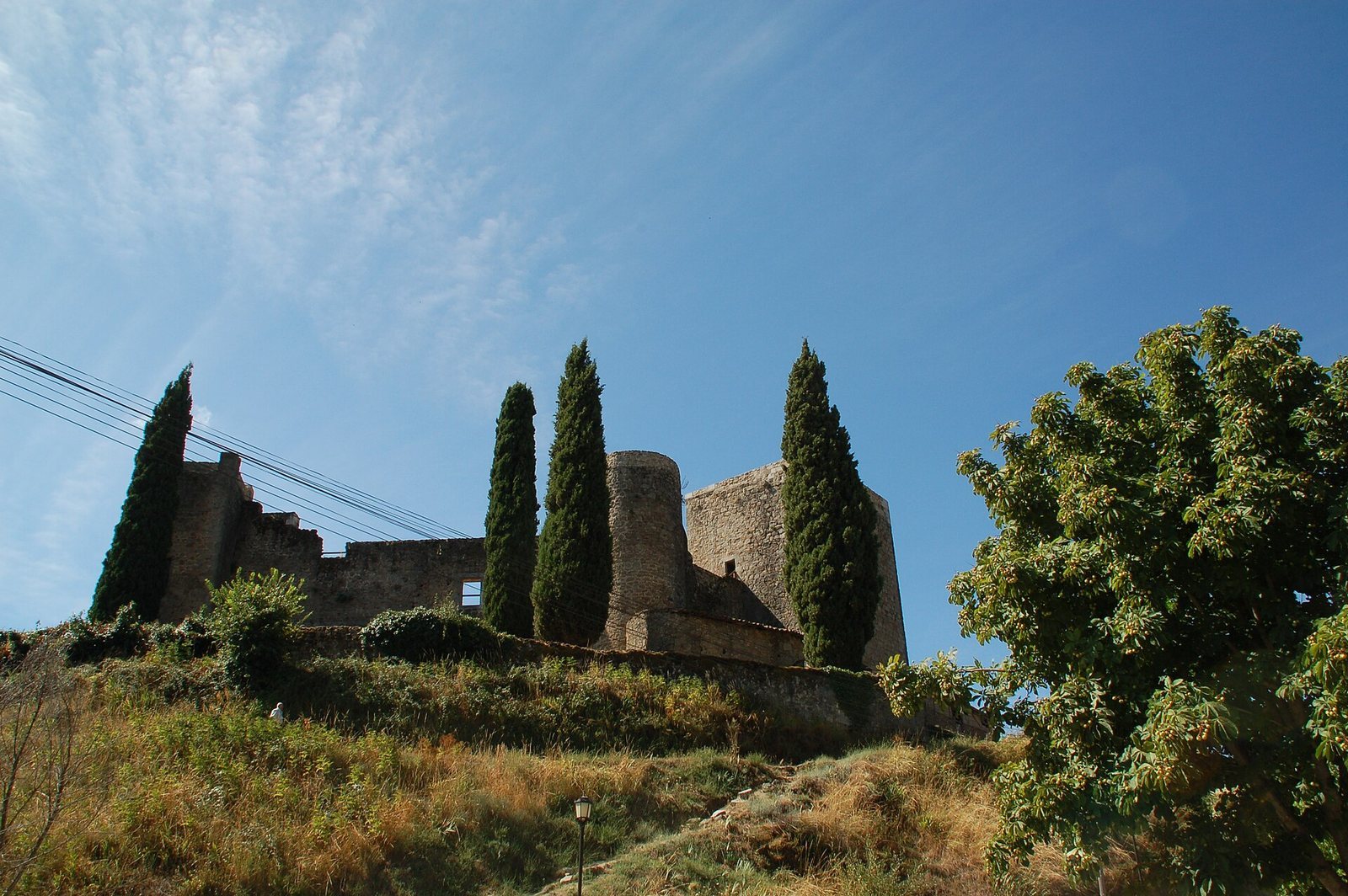
The Castle of Montemayor del Río is a medieval fortress in Salamanca, Spain, whose present ensemble was probably built during the 14th and 15th centuries. It may have been constructed by the Infante Pedro, a Spanish royal prince, or by his son Sancho.
Medieval ownership and construction
Around 1220, Sancho I of Portugal and his son Afonso II, known as “the Fat,” held the town and its castle. Around 1285, Don Pedro, eldest son of Alfonso X of Castile and León, was lord of the town. The present castle remained royal property until 1458, when Prince Enrique, later King Enrique IV, donated it to the Castilian nobleman Juan de Silva.
Protection and restoration
A decree of 22 April 1949 designated the castle an Asset of Cultural Interest, a Spanish status for protected cultural heritage. After a 20-year renovation, it reopened in June 2009 and became home to a medieval interpretation center.
Remains
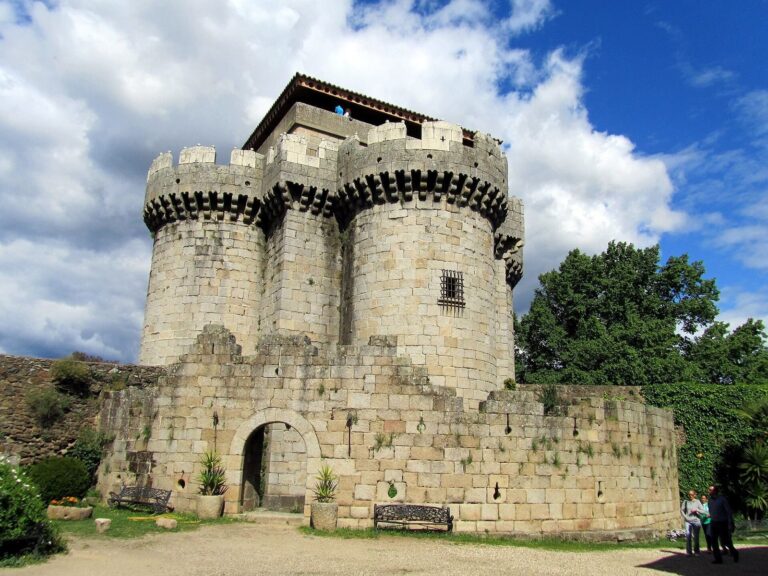
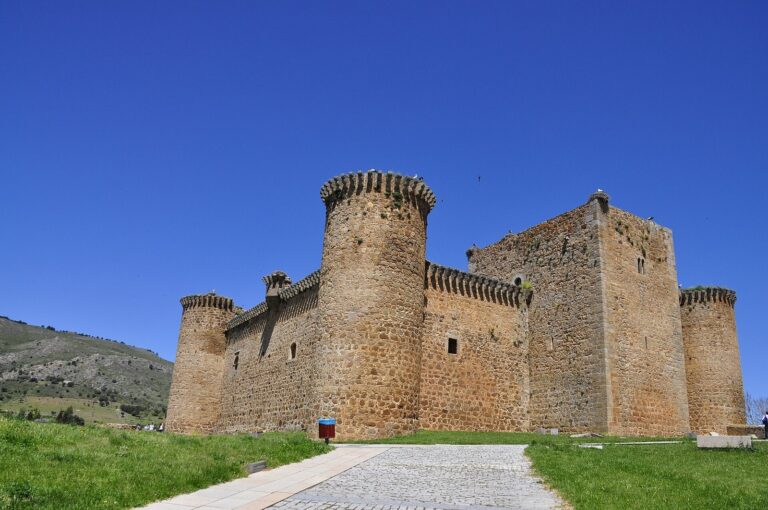
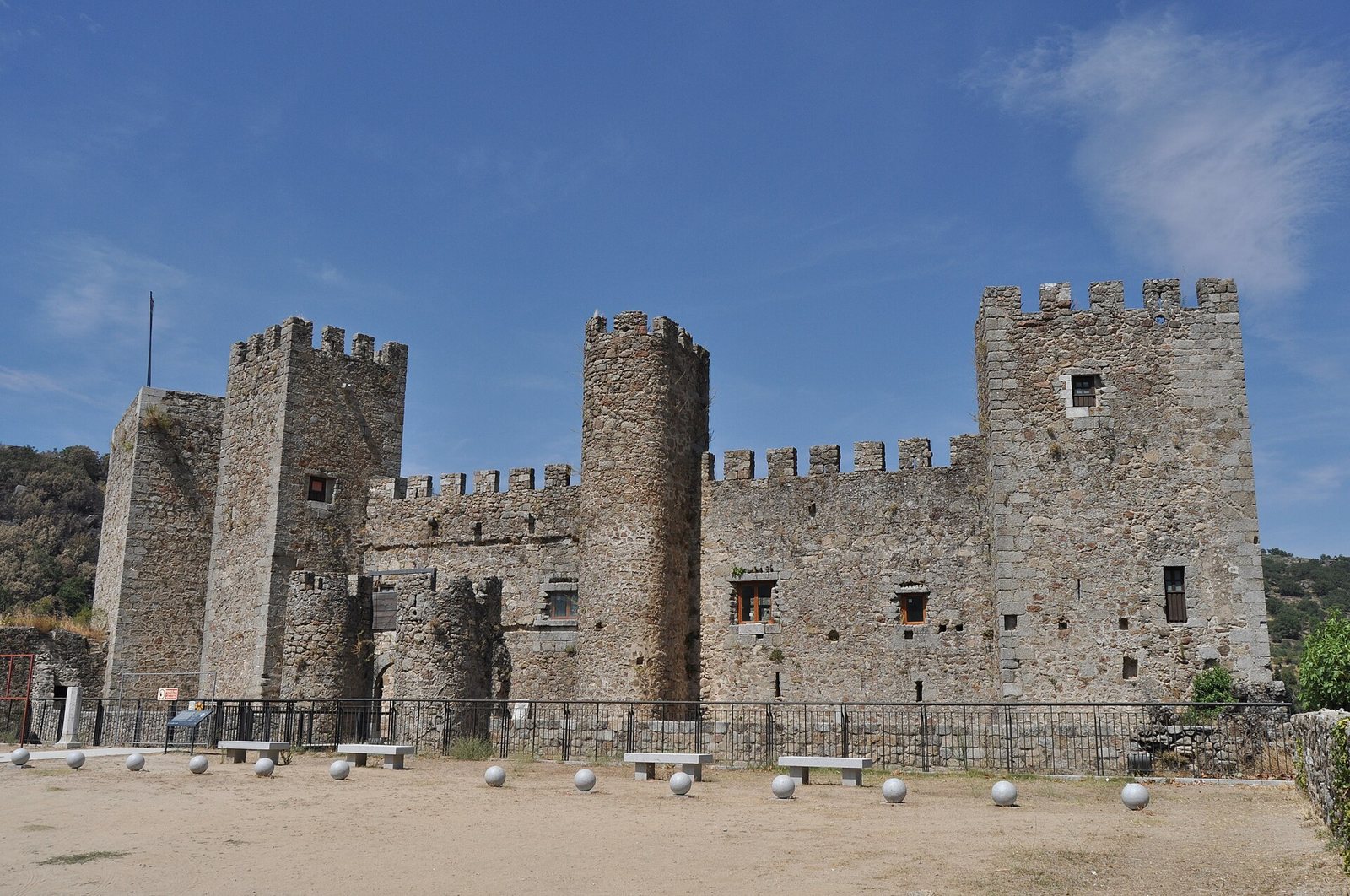
The castle stands on a hill above a valley near the boundary with Cáceres Province. Its original defenses comprised two enclosures and four corner towers, two of which survive.
Outer enclosure and village
A relatively simple outer wall has a western gate associated with the defense of a bridge. The village’s houses extend downhill from this side. Inside the wall, the area containing the parish church and adjoining houses is called El Cortinar.
Castle and palace enclosure
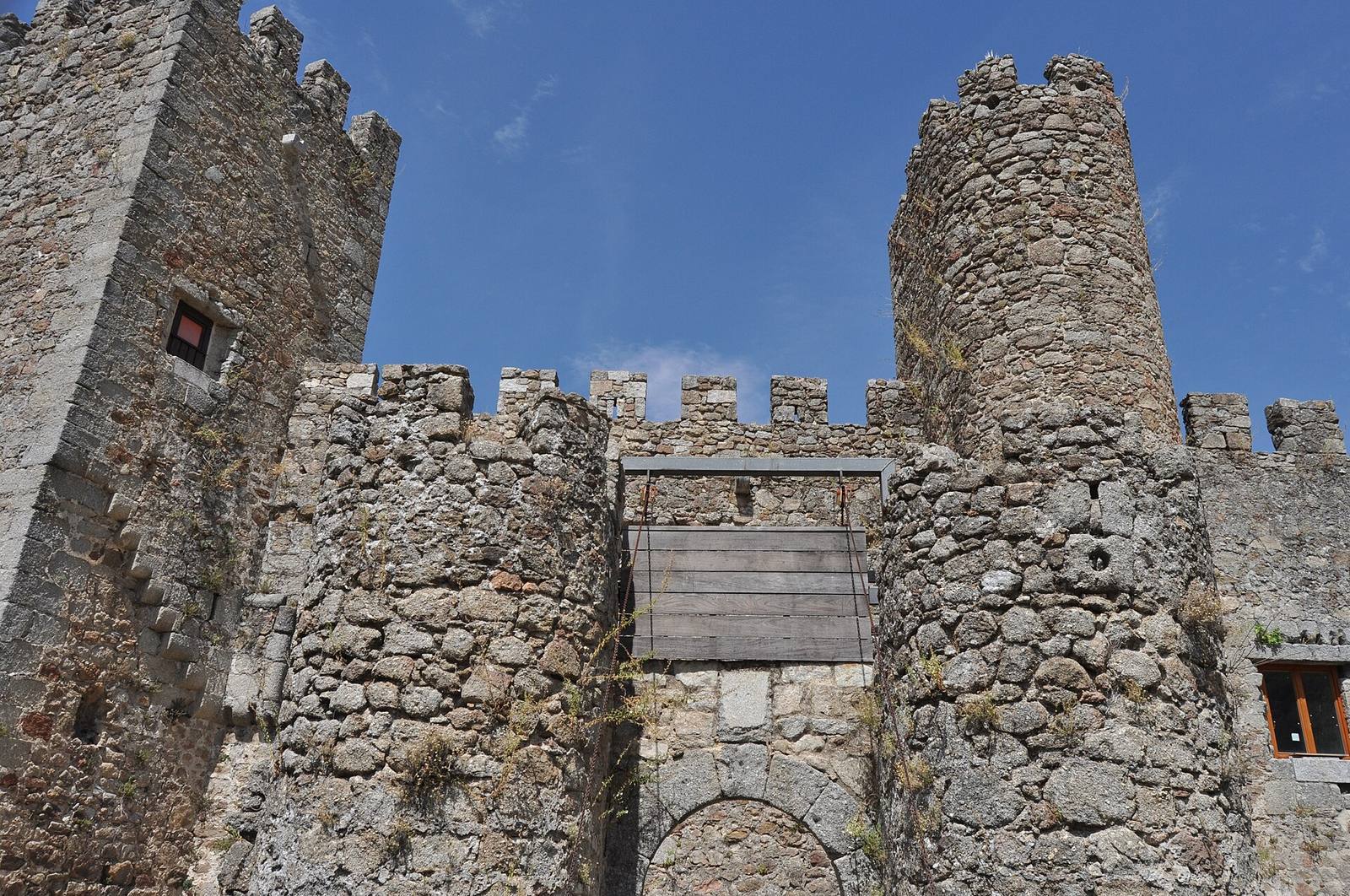
On the eastern side, the castle proper, also described as a palace, has a moat and an outer defensive wall. A small semicircular arch between small towers marks this wall; behind it lies the main enclosure. The enclosure has round and square towers, including a keep, or principal fortified tower, rising to the north. Its entrance is set at an angle within a tower and flanked by defensive towers. The doorway combines a pointed arch with a shallow curved arch, and a small guard turret stands above. The windows have lintels. Battlements remain along the walls, with round gunloops (openings for firing weapons) and arrow slits (narrow openings for shooting arrows).