Castle of Annecy: Museum of Art and History in France



Site at a Glance
- Rating
- 4.1
- Popularity
- Medium
- Country
- France
- Primary era
- Unclassified
- External website
- Open
- Eras represented
- Unclassified
- Civilizations
- Unclassified
- Site type
- Military
- Remains
- Castle
On this page18 sections
History
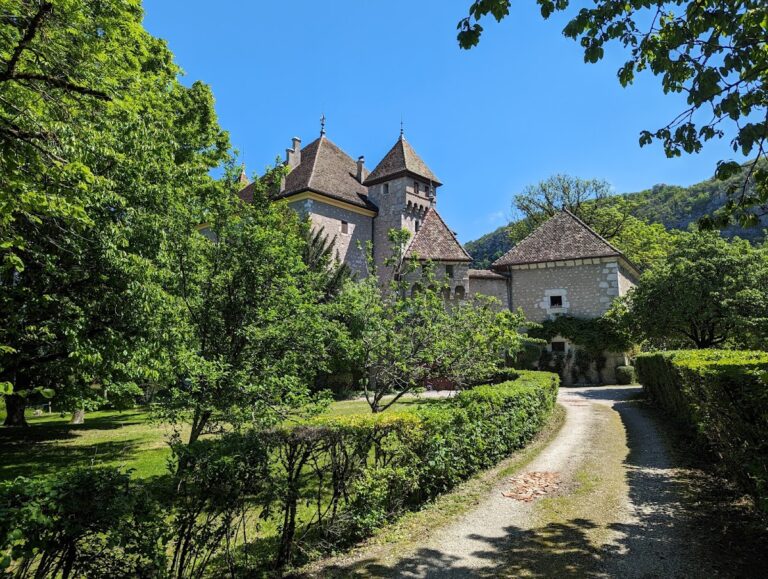
The Castle of Annecy in Annecy, France, houses the Museum of Art and History of Haute-Savoie, whose collections have occupied parts of the castle since 1956. The museum grew from an initiative begun in 1798 and developed through the work of Abbé Favre, the city librarian, and the Florimontane Society, a learned society concerned with antiquities, art, ethnology, and natural history. The castle has been protected as a classified historic monument, France’s highest level of statutory historic-monument protection, since 1959.
Origins of the museum
The project to establish a museum in Annecy began in 1798. It took more definite form in 1842, when Abbé Favre and the Florimontane Society helped create an institution initially housed in the library. The museum later moved to premises in the Town Hall. Its first objects came from Abbé Favre’s donations, followed by deposits from the Florimontane Society. These early collections included antiquities, graphic arts, ethnology, coins, paintings, and sculpture.
Ethnological collecting also began in 1842, with the aim of preserving rural traditions and ways of life believed to be at risk of disappearing. In 1941, Jean-Pierre Laurent initiated a large acquisition program devoted to popular arts and traditions. Archaeological discoveries made during Annecy’s urban expansion added further depth to the collections. Excavations, particularly in the late nineteenth and early twentieth centuries, revealed remains of the ancient settlement of Boutae.
Transfer to the castle
The municipality purchased the Castle of Annecy in 1952. Curator Jean-Pierre Laurent then proposed transferring the museum into the castle. Renovation work began, temporary exhibitions were arranged in the building, and the collections were permanently installed there in 1956. Since that time, the museum has occupied the Old Lodge, Nemours Lodge, and Perrière Lodge.
The institution became part of the Annecy Museums and the Medieval Art in the Alps network. During the early 1970s, curator Jean-Pierre Courent placed the museum at the centre of Annecy’s cultural life through exhibitions, lectures, concerts, and other activities. In the 1990s and 2000s, curators William Saadé and Brigitte Liabeuf expanded the contemporary-art program through acquisitions and cooperation with artists. Since 2019, the museum has been revising its cultural program through a Scientific and Cultural Project developed with the municipality and the French Museums Service, while a major modernization project has proceeded.
Collections and cultural role
The museum’s holdings now cover archaeology, fine art, contemporary art, rural traditions, extra-European art, natural history, and geology. Its archaeological collections trace human occupation in Haute-Savoie from the Paleolithic onward, including prehistoric lakeside settlements, Boutae, and Early Medieval burials. The first contemporary artworks entered the collection in 1968. Later works have addressed climate change, urbanization, and the changing use of the Alpine landscape, with some produced in the castle or its surroundings during residencies, commissions, and exhibitions.
Temporary exhibitions have examined Haute-Savoie’s history, local artists, animation cinema, Roman treasures from Annecy, navigation on Lake Annecy, and archaeological discoveries. The museum generally presents one or two such exhibitions each year.
Remains
Castle lodges and archaeological displays
Old Lodge, Nemours Lodge, and Perrière Lodge
The museum is arranged within three named parts of the castle: the Old Lodge, Nemours Lodge, and Perrière Lodge. These spaces contain collections ranging from prehistoric material to contemporary installations, bringing archaeological, artistic, ethnological, and natural-history displays together within the historic building.
Prehistoric lakeside settlements
Archaeological displays include material from the Baré Cave at Onnion and from prehistoric pile dwellings around Lake Annecy. A pile dwelling, or palafitte, was a lakeside settlement built on or supported by wooden piles. The waterlogged conditions of these sites preserved ceramics, stone and metal objects, textiles, and wood dating from the Neolithic to the Bronze Age.
A pile-dwelling oven discovered at Sévrier and recovered from the lake in 1974 is displayed in the museum. Objects from settlements around Lakes Bourget, Geneva, and Neuchâtel complement the presentation and place the local material within a wider Alpine archaeological setting.
Ancient Boutae
The remains of Boutae preserved in the museum include a forum, baths, and a theatre. These structures represent the ancient settlement uncovered through archaeological work carried out during Annecy’s urban expansion, with discoveries made mainly in the late nineteenth and early twentieth centuries.
Early Medieval burials
The museum also presents objects from Early Medieval burials found across Haute-Savoie from the nineteenth century onward. Among them are scramasaxes, single-edged knives or short swords, and decorated belt plaques. Together, these objects form part of the archaeological record of early medieval funerary practices in the region.
Fine art and Alpine landscapes
Medieval and modern art
The fine-art collections extend from the Middle Ages to the first half of the twentieth century. They include works portraying Annecy, its surrounding territory, its inhabitants, and their ways of life. The first object entered in the museum inventory, in 1860, was a diptych showing the Virgin and the blessing Christ.
Sculptures associated with the cult of saints in Haute-Savoie form another part of the collection. A polychrome wooden statue of Saint Anthony dates approximately to 1455–1460. Saint Anthony was traditionally associated with healing and protection against ergotism, historically known as the “holy fire.” A polychrome wooden statue of Saint Maurice dates approximately to 1470–1480. Saint Maurice was a Christian martyr venerated in Alpine regions and associated with the protection of the House of Savoy.
Paintings and photographs of the Alps
The landscape holdings include mountain views made by painter-alpinists from the late eighteenth century onward, together with nineteenth-century representations of Lake Annecy. Works include Mont Blanc Seen from the Chamonix Valley by William Delamotte, Donati’s Comet by Gabriel Loppé, and Lake Annecy Seen from the Heights of Talloires by Paul Cabaud.
Mountain scenery and views of Lake Annecy also appear in substantial photographic holdings associated with Gabriel Loppé, Henri Cameré, Paul Mysse, Henri Bussillet, and Victor de Gaudemaris.
Rural, global, and natural-history collections
Rural life in Haute-Savoie
More than 10,000 objects dating from the sixteenth century to the first half of the twentieth century document rural life in Haute-Savoie. The collection includes costumes, chests and cupboards, butter moulds, spinning wheels, woodworking and textile tools, and pottery. These objects reflect the ethnological collecting program begun in the nineteenth century and expanded through Jean-Pierre Laurent’s work in 1941.
Extra-European art and archaeology
The castle museum holds approximately 3,000 works from Asia, the Americas, Oceania, and Africa. Savoyards who served as missionaries, diplomats, or scientists involved in colonial expeditions sent these objects to the museum during the nineteenth century. Other archaeological acquisitions from that period came from parts of France, including Dordogne, as well as Italy, Greece, and Crocodilopolis in Egypt. They were assembled particularly under Louis Revon to provide a broad view of world archaeology.
Natural history and geology
Nearly 20,000 natural-history specimens are preserved in the museum. They include fauna, flora, fossils, and minerals intended to illustrate local biodiversity. The displays also address fishing, Alpine lake environments, and freshwater biodiversity.
Contemporary art within the castle
The contemporary-art collection includes drawings, sculptures, assemblages, and installations. Some works respond directly to the castle and its collections, while others examine transformations of the Alpine landscape, including climate change, urbanization, and the exploitation of territory. The collection continues the contemporary-art direction developed after the first acquisitions in 1968.