Castle of Trésum: A Historic Residence and Episcopal Seat in Annecy
Site at a Glance
- Rating
- 4
- Popularity
- Very Low
- Country
- France
- Primary era
- Modern
- Eras represented
- Early Modern, Modern
- Civilizations
- Duchy of Savoy, French
- Site type
- Religious
- Remains
- Palace
On this page9 sections
History
Foundation and the de Sales family
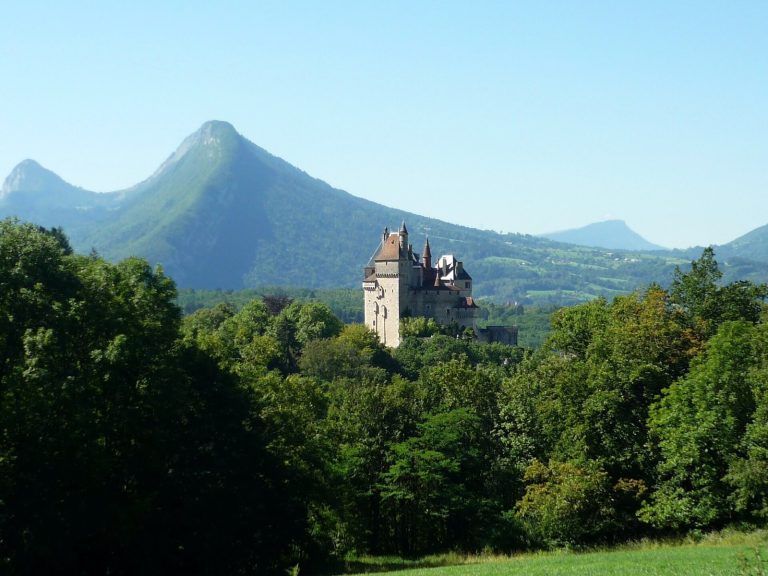
The Castle of Trésum is a historic residence in Annecy, France, begun in 1653 for Charles-Auguste de Sales, prince-bishop of Geneva, an office combining a bishop’s religious role with temporal authority. In 1649, Charles-Auguste had bought a house from the Mermillod family, along with its orchard, vineyards, woods, and garden, intending to establish a residence there. Construction was still unfinished when he moved in for the feast of the Holy Trinity in 1656.
After Charles-Auguste died in 1660, the property passed to his brother Jean-François de Sales, count of Thorens. It remained with the de Sales family until the French Revolution. Jean-François also had the date 1601 engraved on the doors.
Revolution and political use
Confiscated from Marquis Benoît-Maurice de Sales, the château first accommodated French troops. It was then rented to Jean-Claude Burnod, a lawyer and Annecy’s municipal syndic-prosecutor, a local administrative officer. Burnod made the building the base of the Jacobin Club, a prominent political organization during the French Revolution.
On 21 August 1793, the château was ransacked during an anti-revolutionary riot known as the Bagarre d’Annecy, led by Count d’Alex, François-Marie de La Fléchère. Recordon bought it soon afterward. In January 1796, Dubouloz, a refractory vicar general who rejected the state’s reorganization of the church, met there with François-Thérèse Panisset, a constitutional bishop who accepted it.
Restoration to the present
During the Restoration, the return of monarchies after Napoleon’s rule, prefect Félix de Roussy reacquired the property, which had belonged to his wife Pauline de Sales’s family. A prefect was an appointed representative of central government in a department. The king of Sardinia made de Roussy a marquis, and the château later passed by marriage to the Pontgibaud family.
In the early twentieth century, the château was the residence of Baron Bardet de Thieux. It was later bequeathed to the Visitandines, members of the Catholic Order of the Visitation of Holy Mary, and then became a residence for Jesuits, members of the Society of Jesus. Since 1993, when Bishop Hubert Barbier moved the seat of the Diocese of Annecy there, it has housed the bishopric.
Remains
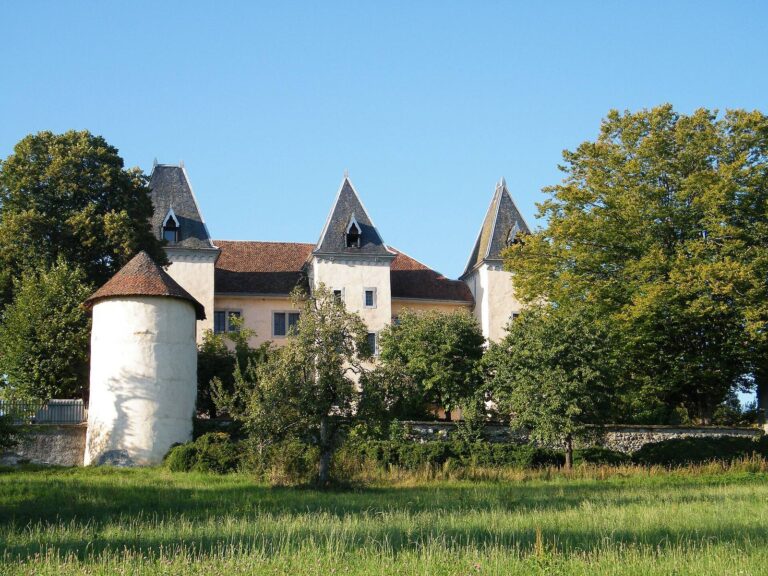
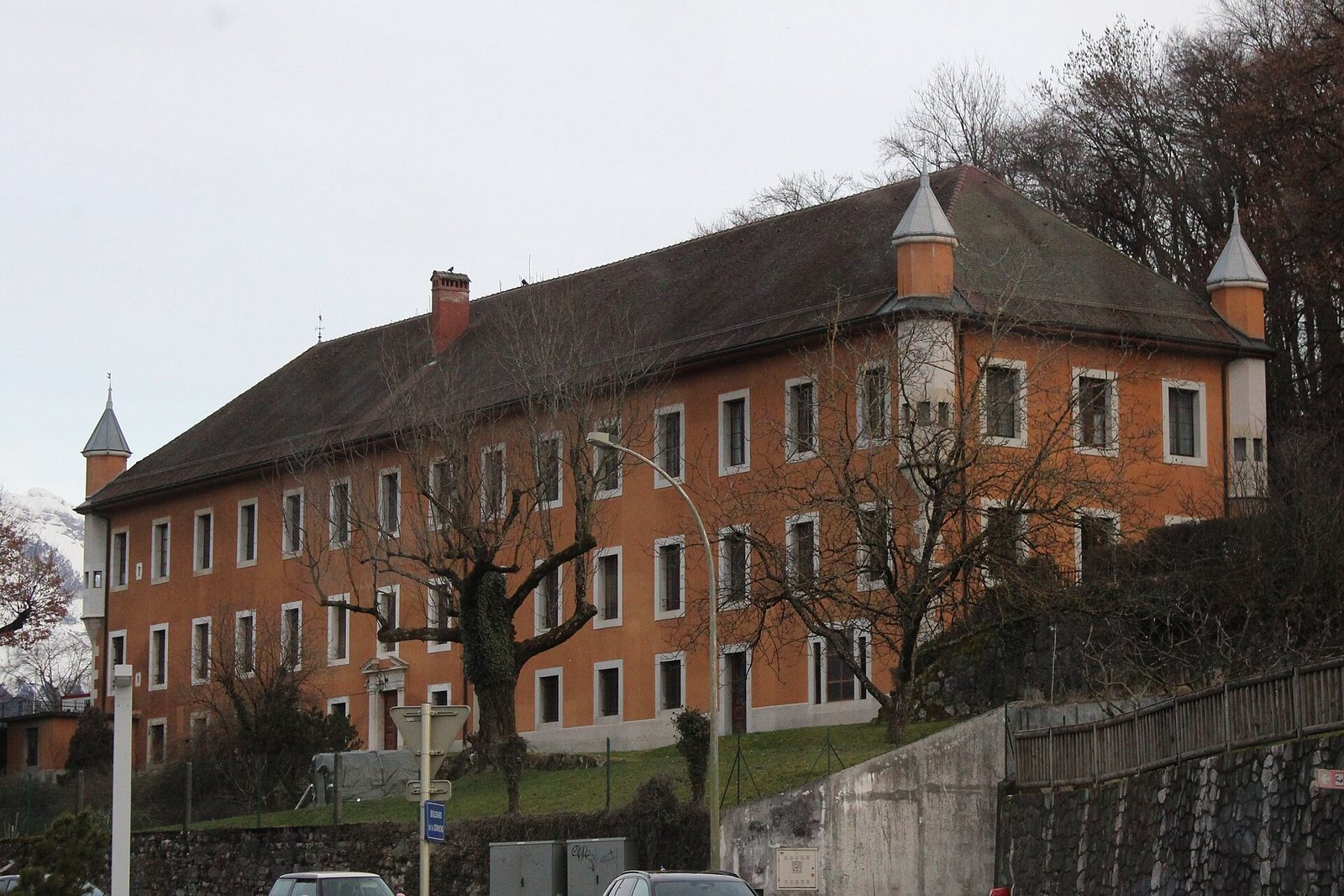
The château stands on the northern slopes of Semnoz, on a hillside overlooking Lake Annecy. Its quadrangular form has a small projecting watch turret at each corner. The eastern section dates to the seventeenth century, while the rest was built in the first half of the twentieth century, when the building was completed.
Main château
Entrances and exterior
Jean-François de Sales had the date 1601 engraved on the doors. The pediments above both entrances carry an inscription chosen by Charles-Auguste, “Tres Unum Sunt nomen V.S. salus,” in honor of the Holy Trinity, the Christian doctrine of one God in three persons. The inscription gave the château its name, also rendered Trésun, and later the surrounding neighborhood its name.
Interior and finds
Earlier interior decoration included a full-length portrait of Charles-Auguste’s father, Louis de Sales, portraits believed to represent provosts of the Geneva cathedral chapter, and paintings of mythological subjects. A painted ceiling from the de Sales period was rediscovered in 1992. Its shield-shaped motifs are said to recall the traditional clothing of local mushroom gatherers. A medal associated with Domitian, Roman emperor from AD 81 to 96, was found during construction work in 1653.
Woodland pavilion
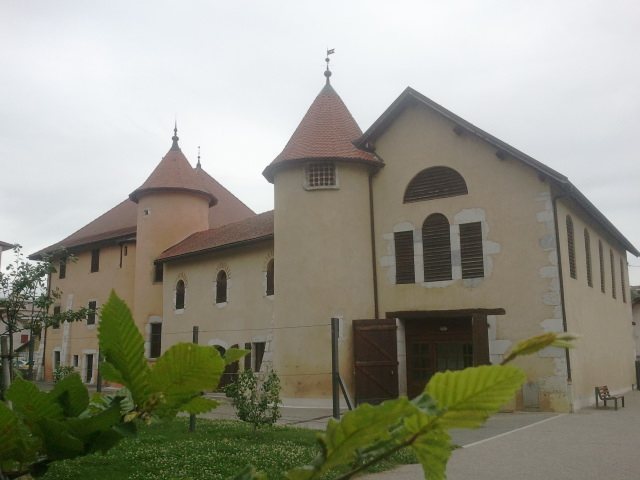
A pavilion built by Charles-Auguste stands at the edge of the woods south of the château. Its large ground-level porch shelters a well, and the upper floor contains a vaulted room with the de Sales family arms on its vault. Beneath the porch, the Jesuits placed a wooden statue of Blessed Pierre Favre, a sixteenth-century Catholic priest and early member of their order.