Escamilla Castle and Walls: A Medieval Fortified Complex in Spain

Site at a Glance
- Rating
- 4.6
- Popularity
- Very Low
- Country
- Spain
- Primary era
- Medieval
- Eras represented
- Medieval, Early Modern
- Civilizations
- Crown of Castile, Spanish, Umayyad
- Site type
- Military
- Remains
- Castle
On this page7 sections
History
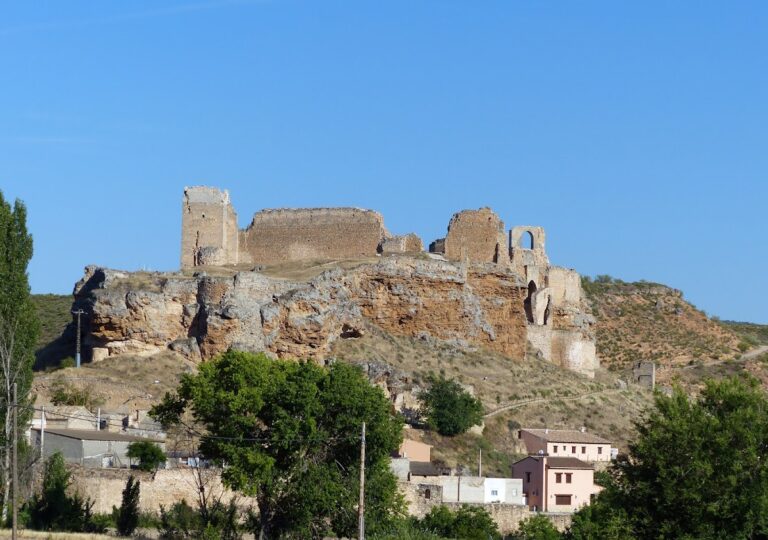
Escamilla Castle and Walls form a fortified complex in Escamilla, Spain, built during the ninth-century Andalusi period, when Al-Andalus was the Muslim-ruled region of the Iberian Peninsula. The fortress defended the agricultural lowlands of the Tajo and Guadiela rivers and developed alongside the town’s defensive enclosure.
Andalusi origins
The original castle and town walls date from the ninth century. The complex remained in use through successive medieval phases, with the castle later rebuilt and adapted between the late fourteenth and early fifteenth centuries. During this transformation, it became a seigneurial palace, reflecting the changing role of the fortress within the political and social structures of late-medieval Castile.
Seigneurial ownership and Gothic rebuilding
At the end of the fourteenth century, Escamilla belonged to Contesina de Luna. She exchanged the town with Enrique Enríquez de Mendoza for Alba de Liste Castle in Losacino, in present-day Zamora. Enríquez de Mendoza’s brother, Álvaro de Luna, then adapted the castle as a temporary residence.
In 1490, Contesina de Luna sold Escamilla to her stepson, Pedro Gómez Manrique, who incorporated the property into his entail, a legally restricted inheritance intended to keep an estate within a designated family line. After several lawsuits, Álvaro de Luna was also compelled to sell him the castle.
Pedro Gómez Manrique sold the town and castle in 1498 to Juan de Silva y Meneses, Count of Cifuentes. Juan de Silva y Meneses was unable to take possession until 1508, when the castle’s definitive rehabilitation began according to Gothic designs. Gothic architecture was a medieval European tradition associated with features such as pointed arches, ribbed vaults, and strong vertical emphasis.
Abandonment and later condition
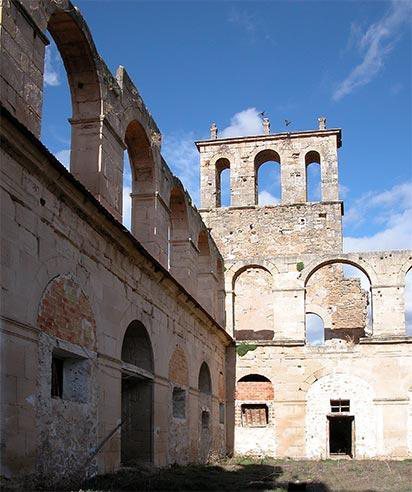
The Counts of Cifuentes used the castle as a temporary residence until the seventeenth century. Following the War of the Spanish Succession, a conflict over the Spanish monarchy that ended with a new Bourbon dynasty, the complex was completely abandoned. Tomás López’s unfinished geographical-historical dictionary stated that the castle was still habitable in 1786, but it later fell into ruin.
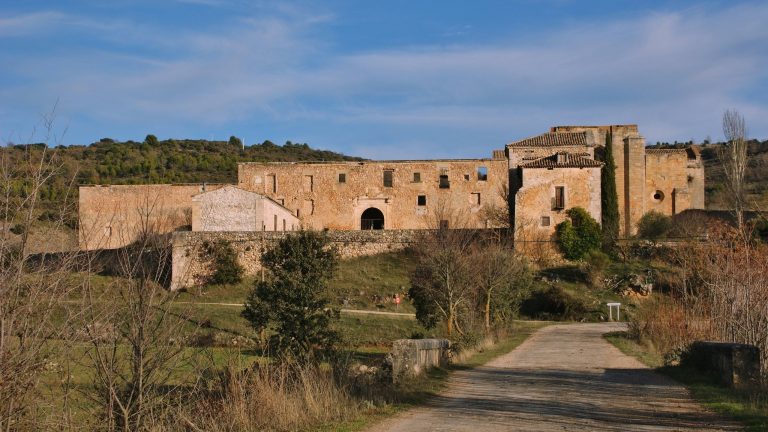
The privately owned complex is now abandoned and protected as an Asset of Cultural Interest. Its surviving fabric also reflects later agricultural reuse and the prolonged deterioration that followed abandonment.
Remains
Castle
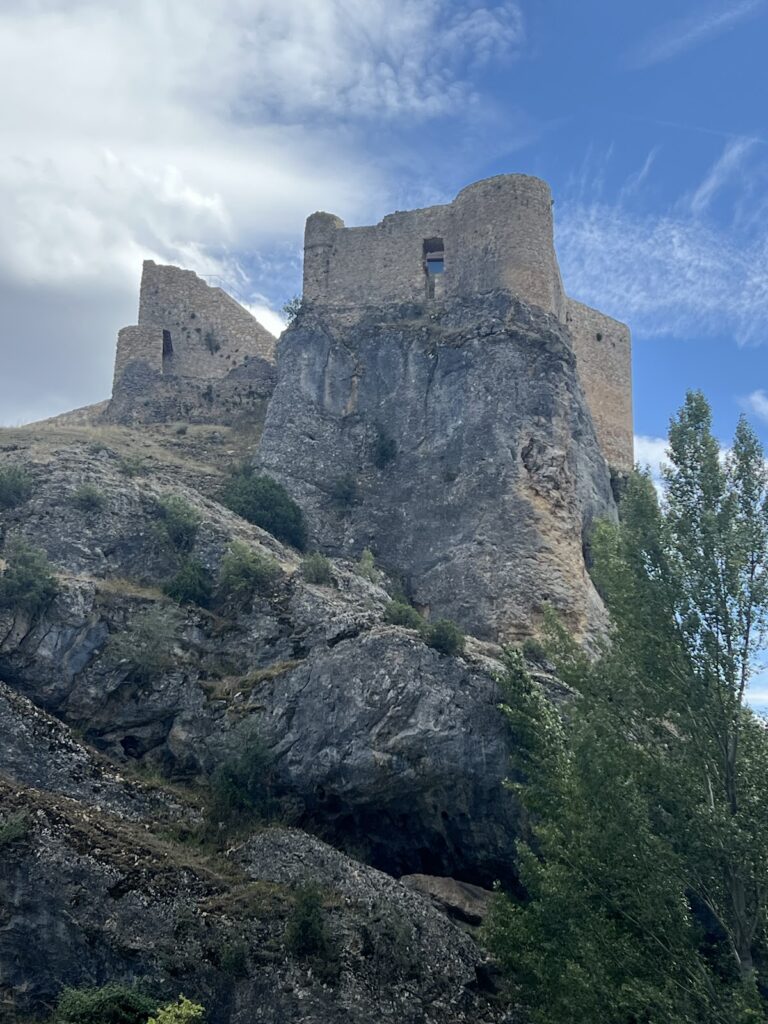
The castle occupies the upper part of Escamilla and has a square plan. Three circular corner towers are joined by the main walls, while a square keep projects toward the south. Limestone ashlar forms much of the construction, and a substantial quantity of this stone was probably obtained by partially dismantling the town walls.
The entrance gate lies between the keep and the western tower, which is larger than the other two circular towers. An external wall formerly stood before the principal castle wall. Its entrance was positioned beside the keep and controlled access to the main enclosure.
The keep was rebuilt during later phases and adapted as a dovecote, a structure for keeping pigeons. The castle survives in progressively deteriorating ruin and is currently used as an agricultural building.
Town walls
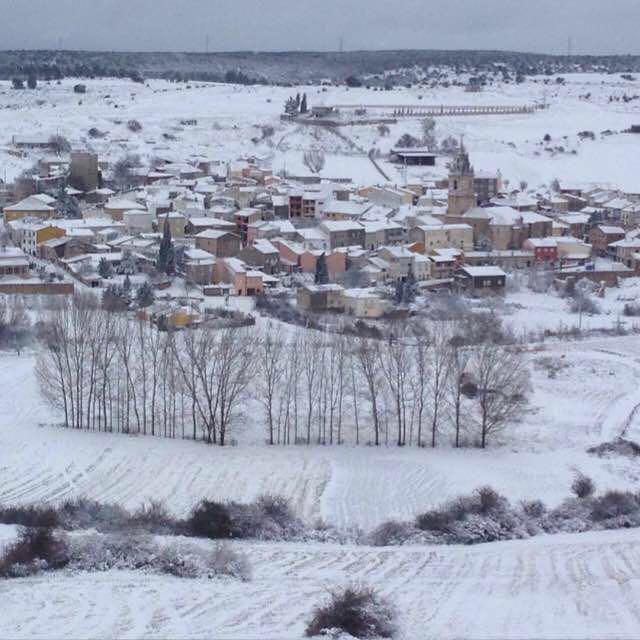
The town walls once enclosed the urban area of Escamilla. Their circuit followed the elongated shape of the settlement, which extended farther from west to east than from north to south. A moat surrounded the enclosure, and two gates provided entry, one beside the castle at the upper part of the town and another beside Calle de las Granadas at the lower part.
Only scant remains of the walls survive. Much of their masonry was reused during the reconstruction of the castle and in the construction of buildings within the town, leaving the surviving fragments closely tied to the later development of Escamilla.