Castillo de Santacara: A Medieval Castle in Navarre


Site at a Glance
- Rating
- 4.8
- Popularity
- Very Low
- Country
- Spain
- Primary era
- Medieval
- Eras represented
- Medieval
- Civilizations
- Kingdom of Navarre
- Site type
- Military
- Remains
- Castle
On this page6 sections
History
Castillo de Santacara was a medieval castle in Spain, at Santacara in Navarre, built in the thirteenth century as part of the settlement’s defenses. It is documented by 1210, when the king exempted the town’s inhabitants from royal labor duties except work connected with the town wall and castle.
Custody under the Navarrese kings
The fortress was administered through a succession of royal officials. Around 1280, the lord of Luxe was responsible for it. In 1290, Semeno Martinitz Uritzeko held the office with an allowance of 10 pounds and 50 cahices, historical measures of grain or dry capacity. In the early fourteenth century, Piarres Sotetze served as castellan, the official responsible for a castle’s custody and defense, receiving 6 pounds and 30 cahices. Around 1330, Joan Fierabras, a sergeant-at-arms, replaced him.
Under Charles II of Navarre, custody passed to Petri Gonzalitz Lizasoaini in 1351, Gil Desoioi in 1363, and Pere Oibar Soltxagako in 1366 after the death of his predecessor. When Pere died in 1375, his son Pero Gil Soltxagako succeeded him. In 1377, the king ordered that revenues from Santacara’s tax be assigned to Pero Gil, and Charles III confirmed his position in 1387.
In 1391, the king entrusted the castle to the chamberlain Beltrau Lakarra, who received the tax revenues of Santacara and Pitillas. Pero Gil instead received a wheat rent. The following year, he was granted 50 florins to repair the castle’s cistern, the water-storage structure that supplied the fortress.
From royal fortress to noble lordship
In 1404, the castle was pledged to the king of Aragon as security for the dowry of the Infanta Blanca. Martin Martinitz Soltxaga, then castellan, consequently had to render homage to Martin Umanua.
Queen Blanca II ordered the repayment of 63 pounds to Santacara’s inhabitants in 1430 for expenses they had incurred repairing the castle. Gracian Agaramont was then the town’s mayor and received Crown rents without deductions. Antso Sanluxekoa replaced him in 1438 as honorary squire. Joan Martinitz Artieda held the position briefly around 1445, followed by Diego Iharnotz in 1446.
In 1447, the Prince of Viana, the title held by the heir to the Navarrese throne, granted the lordship of Santacara and its castle to Joan Beaumont. Eneko Berberana was recorded as castellan ten years later.
Conflict and demolition
The castle became involved in the civil conflicts between the Agramonts and Beaumonts, rival political factions in late-medieval Navarre. In 1494, during fighting associated with the count of Lerín under John III of Navarre, townspeople, most of them Agramont supporters, fortified themselves in the church tower and seriously damaged the castle’s Beaumont garrison. The count came to the garrison’s aid with Castilian troops, while the inhabitants submitted numerous complaints against Grazian Beaumont, lord of Santacara.
After Ferdinand the Catholic’s conquest of Navarre in 1512, the castle was ordered to be demolished. Gracian Beaumont, then justice of Pamplona, received compensation of 1,000 pounds. The order did not immediately end the castle’s economic role. In 1536, Menaut Beaumont’s widow was still collecting dues from shepherds and raftsmen.
Castillo de Santacara is protected under the generic heritage declaration of the Decree of 22 April 1949 and Spain’s Historical Heritage Law 16/1985. It is also classified as an Asset of Cultural Interest. Recovery work has been under way since 2010.
Remains
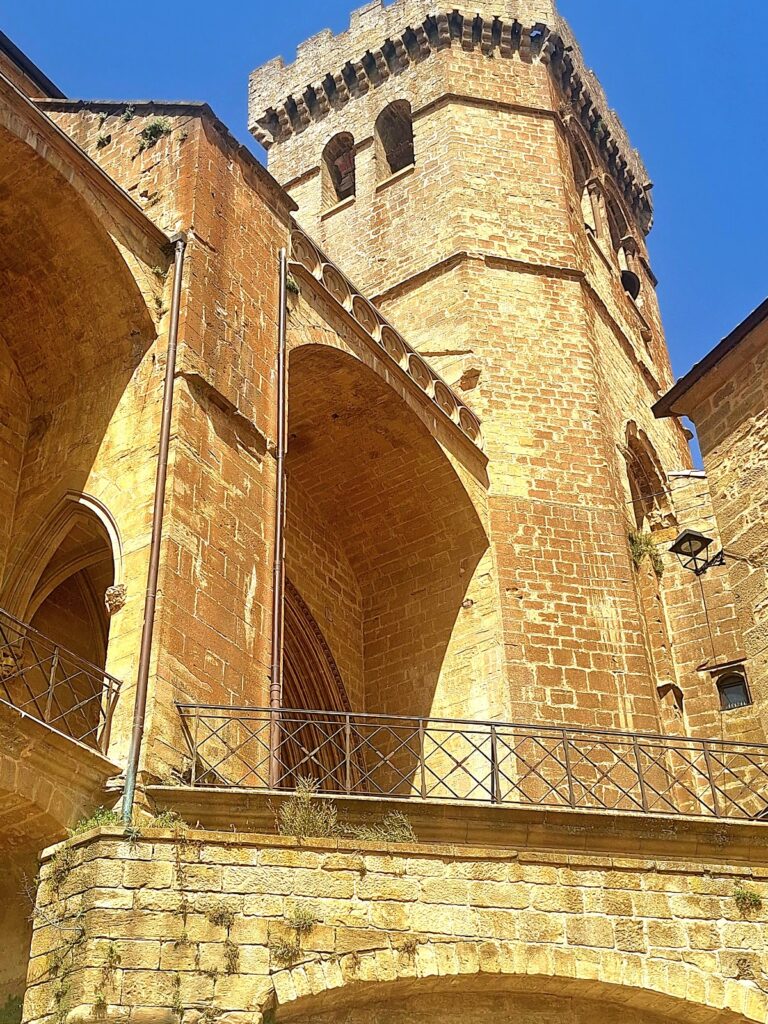
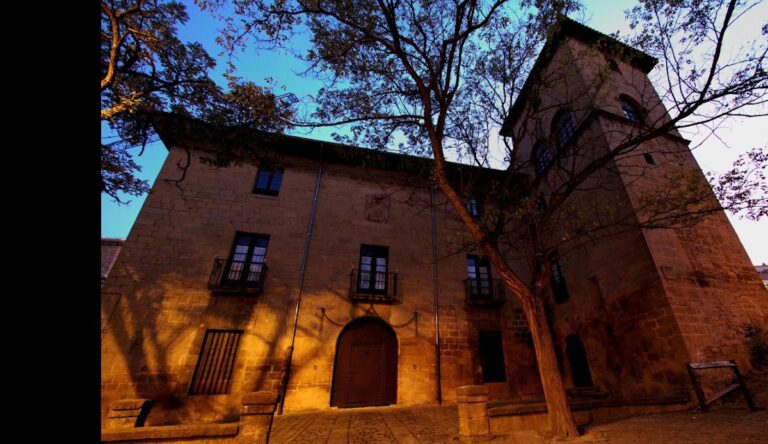
The castle stood on a hill beside Santacara and formed part of the medieval defenses of the settlement. The site is now largely ruined, with one surviving tower representing the former main tower of the castle.
The surviving tower
Also known as the Tower of Santacara, the remaining structure is the sole standing remnant of the fortress. It has deteriorated severely over time, and its condition was further affected by the reuse of stone blocks in the construction of houses. The tower preserves the principal physical evidence of the castle’s former presence on the hill.