Castillo de la Asomada: An Islamic Fortification in Murcia



Site at a Glance
- Rating
- 4.6
- Popularity
- Low
- Country
- Spain
- Primary era
- Medieval
- Eras represented
- Medieval
- Civilizations
- Taifa Kingdoms, Taifa of Murcia
- Site type
- Military
- Remains
- Castle
On this page7 sections
History
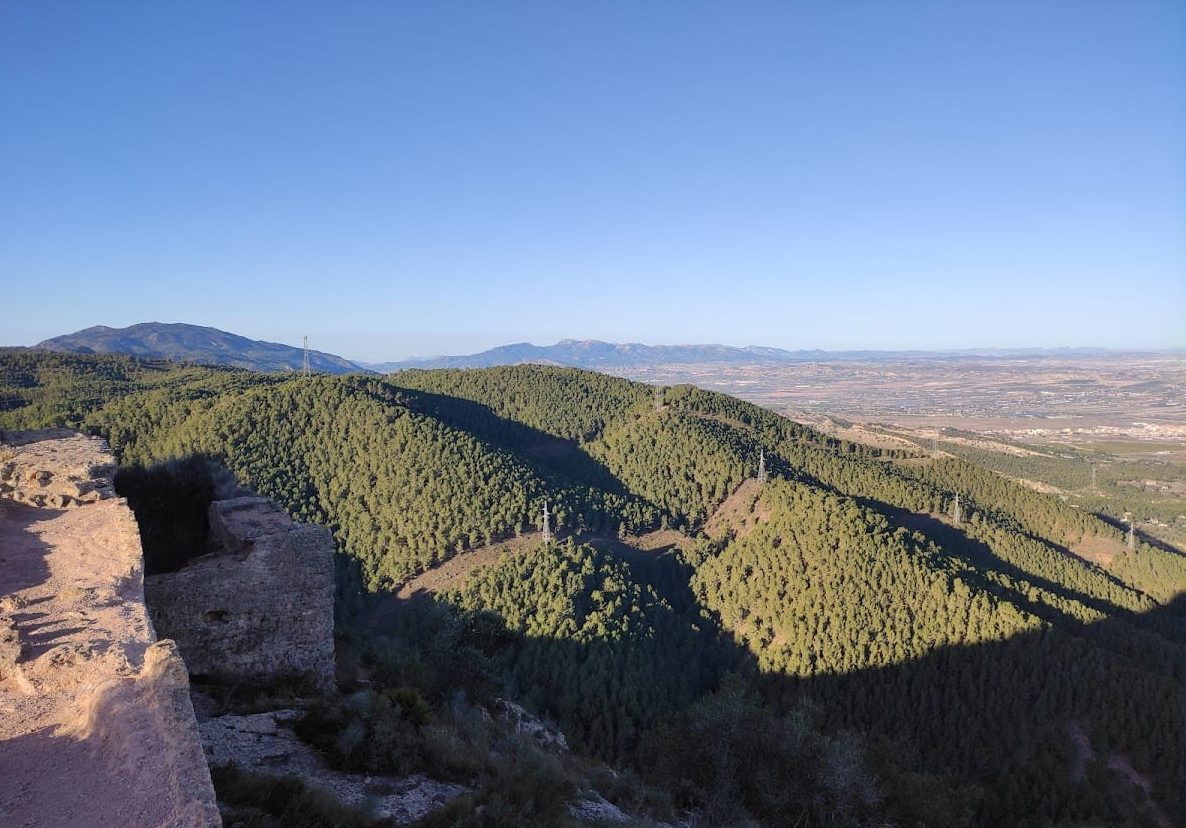
Castillo de la Asomada is an Islamic military fortification in Murcia, Spain, built on Cabezo del Puerto above the Puerto de la Cadena during the medieval period, possibly in the twelfth century. The site overlooks a natural mountain passage linking the Campo de Cartagena with the Segura valley. It was constructed over remains identified as Phoenician, making it the only archaeological point cited as evidence of occupation in the Murcia area before the medieval castles were built.
Islamic origins and strategic role
The castle emerged during the period when the taifa of Murcia was flourishing. A taifa was an independent Muslim principality formed after the fragmentation of larger Islamic states in the Iberian Peninsula. Its construction is attributed to Ibn Mardanish, a twelfth-century Muslim ruler of Murcia who is commonly known in English as the Wolf King.
Castillo de la Asomada belonged to a defensive complex with Castillo del Portazgo Inferior and Castillo del Portazgo Superior, two smaller military buildings at the foot of the mountain. Together, the three fortifications controlled movement through the Puerto de la Cadena. Their similar plans and ceramic finds support the view that they were built during the same Arab period, although a Byzantine origin or later reconstruction has also been proposed.
Fortified palace and proposed royal pantheon
The complex has been interpreted as a fortified palace. Castillo del Portazgo Inferior may have included a garden or zoological enclosure for exotic animals brought from the East, while Castillo del Portazgo Superior has also been linked to the fortified-palace function.
Archaeological investigations have raised the possibility that Castillo de la Asomada served as a pantheon for the emirs of Murcia. An emir was a Muslim ruler or governor. This interpretation remains uncertain because the internal arrangement of the proposed pantheon has not been established and no burials have been found inside the walled enclosure.
A text attributed to Jaime I of Aragon and dated to 1266 says that the kings of Murcia were buried along the mountain route to Cartagena and that Aben Hud rested on a rocky outcrop. Jaime I was a thirteenth-century Christian king whose campaigns contributed to the expansion of the Crown of Aragon in the Iberian Peninsula. The passage has been used to associate the castle with a royal pantheon, although the relevant outcrop has not been securely identified.
The unfinished condition of the building has also been connected with the possibility that Abu Bark b. Jadu, described as the last emir of Murcia, dismantled and destroyed the pantheon in 1266, perhaps taking the remains of his ancestors with him. This proposed sequence helps explain the castle’s incomplete state, but the interpretation of its original purpose remains unresolved.
Watchpoint and protected complex
Over the centuries, the walls served as a watchpoint between the Mediterranean coast and the city of Murcia. Castillo de la Asomada, the two Portazgo fortifications, and their shared cultural and chronological identity are treated as one archaeological and monumental complex.
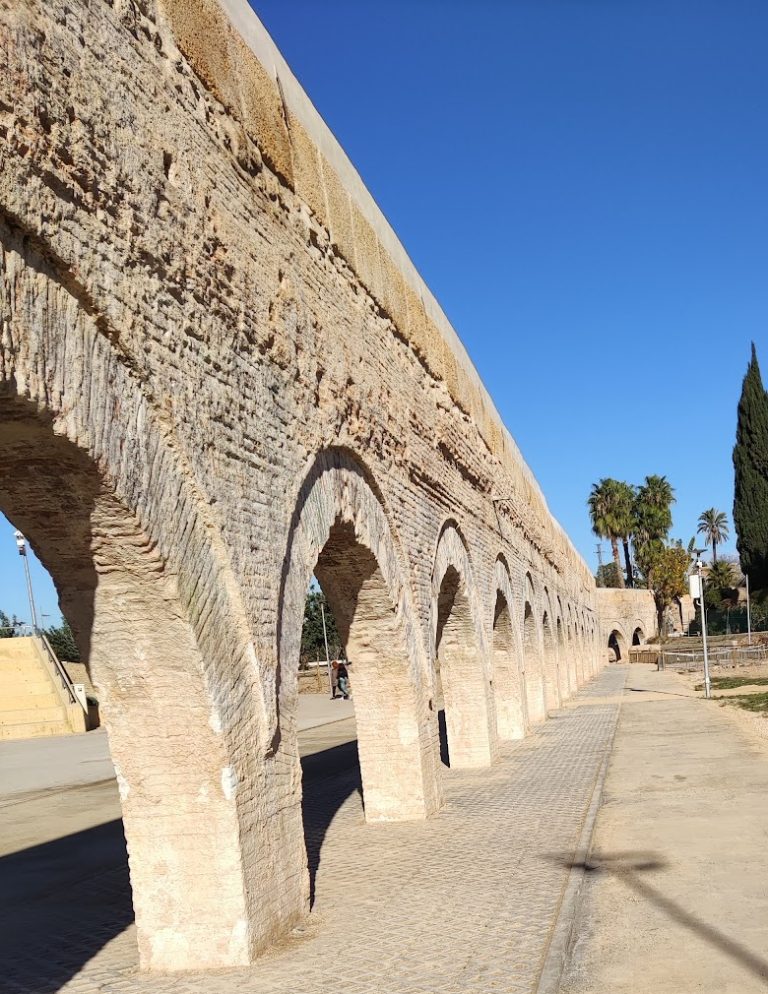
The complex is protected as a Spanish Asset of Cultural Interest under reference RI-51-0010057 and has appeared on the Red List of Endangered Heritage since 2008. It lies within Carrascoy-El Valle Natural Park, established through a regional territorial-protection law in 1992. The protected setting includes adjacent mountain areas and visual approaches, including upper elevations and the northern slope with remains of an aqueduct, as well as public woodland on the southern side extending toward the access path. The exposed position and difficult conservation conditions have prevented reconstruction, particularly because the castle’s original appearance is not known precisely.
Remains
Summit fortification
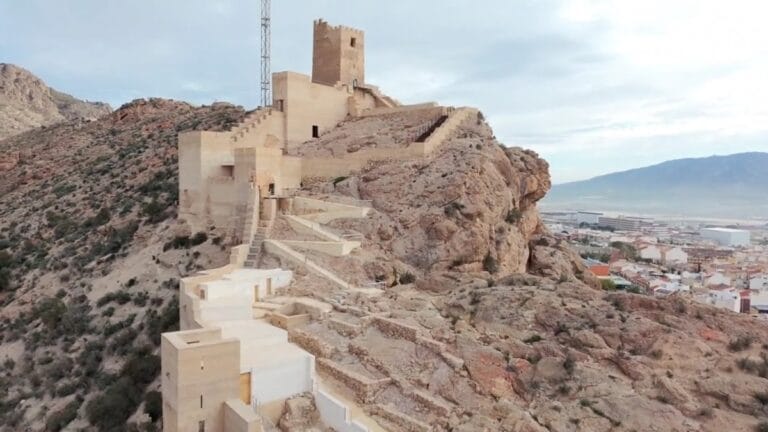
Castillo de la Asomada occupies the summit of Cabezo del Puerto at an elevation of 532 metres, overlooking the Puerto de la Cadena and the Segura valley. Its rectangular enclosure is formed by four straight curtain walls, each strengthened by three rectangular tower-buttresses. A tower-buttress is a projecting tower that reinforces a curtain wall while also providing defensive height. A possible entrance stood on the eastern side and was defined by one of the towers.
Within the walls is a large quadrangular courtyard flanked by two rectangular blocks. Each block is divided into spaces that may have been longitudinal rooms or halls. The plan may represent a corner-tower arrangement in which each corner was occupied by two rectangular towers, one at either end of the adjoining wall.
Construction and survival
The surviving walls were built with rammed mortar, a technique in which mortar is compacted inside temporary formwork to create solid wall sections. The lower wall plinths were made with mortar shuttering set directly on the site. This construction gives the remains a distinctly Muslim character.
No surviving interior feature resembles the beginning of a vault. The structure may therefore have remained unfinished, with work reaching only the leveling plinth or lower wall course. In the open air, the site preserves the plan and parts of the walls. No confirmed burial remains have been found within the enclosure.