Acueducto Park: The Historic Waterworks of Alcantarilla, Spain

Site at a Glance
- Rating
- 4.4
- Popularity
- Low
- Country
- Spain
- Primary era
- Medieval
- Eras represented
- Classical, Medieval, Modern
- Civilizations
- Crown of Castile, Roman, Spanish
- Site type
- Infrastructure
- Remains
- Aqueduct
On this page6 sections
History
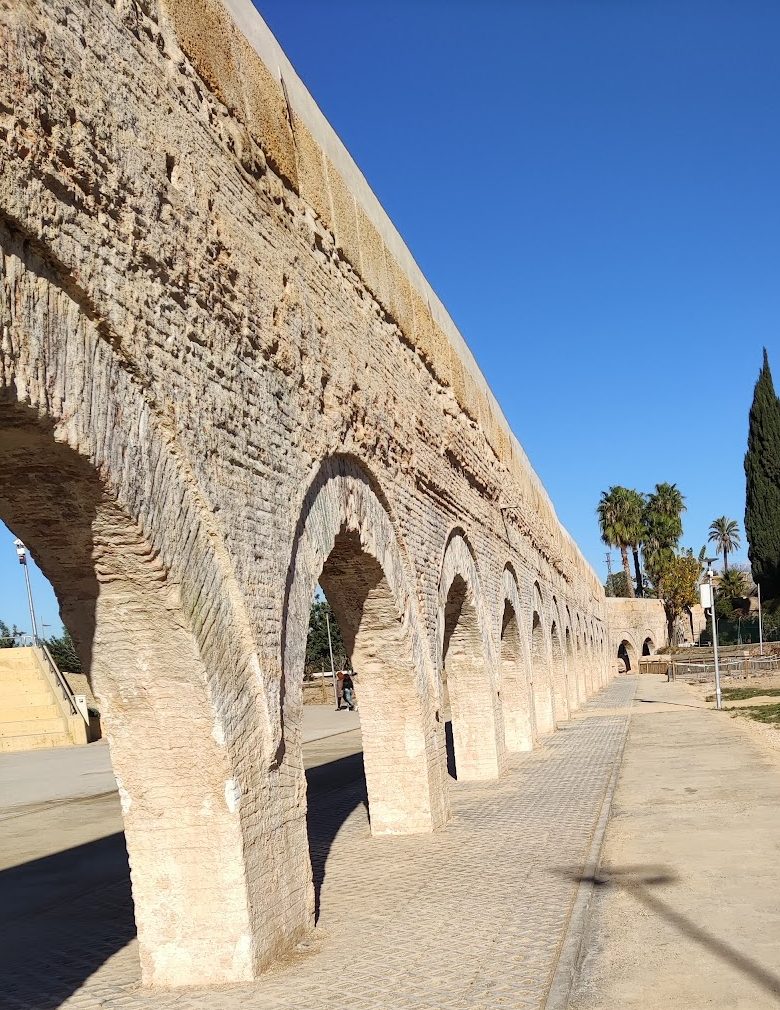
Acueducto Park is a historic waterworks site in Alcantarilla, Spain, associated with the Acueducto de los Arcos, also called the Acueducto de la Noria or Acueducto de la Cequeta. The system carried water raised by the Alcantarilla waterwheel from the Alquibla, or Barreras, irrigation channel toward BozNegra, crossing a local track before continuing beneath the urban area.
Medieval water supply
The Diocese of Cartagena asked Murcia’s council for a waterwheel in 1451, and the wheel was built in 1457. A waterwheel raises water from a lower channel to a higher one, allowing it to continue by gravity through an irrigation channel. The original wheel probably operated until 1549. After a flood devastated Alcantarilla in 1545, it was replaced, and later rebuilding of the channel reflects further changes to the water-lifting system.
Modern alterations and protection
After additional renovations, the present waterwheel was installed in 1956 by the Sociedad Metalúrgica y Terrestre de Alicante. Construction of the N-340 bypass caused the demolition of several aqueduct arches and split the surviving structure into sections on opposite sides of the road. The aqueduct received designation as a National Historic-Artistic Monument through Royal Decree 1757/1982, dated 18 June.
Remains
Aqueduct and waterwheel
The aqueduct is formed by a row of semicircular arches carrying a brick water channel. Twenty-two arches originally extended from the waterwheel, although several were demolished during construction of the N-340 bypass. The surviving aqueduct is therefore divided into sections by the road, while the present waterwheel represents the latest installation in a sequence of reconstructed wheels.
Roman archaeological remains
The archaeological area around the aqueduct contains architectural remains and ceramic materials from the first to the third centuries AD. These Roman remains form part of the physical archaeological context preserved around the later waterworks.