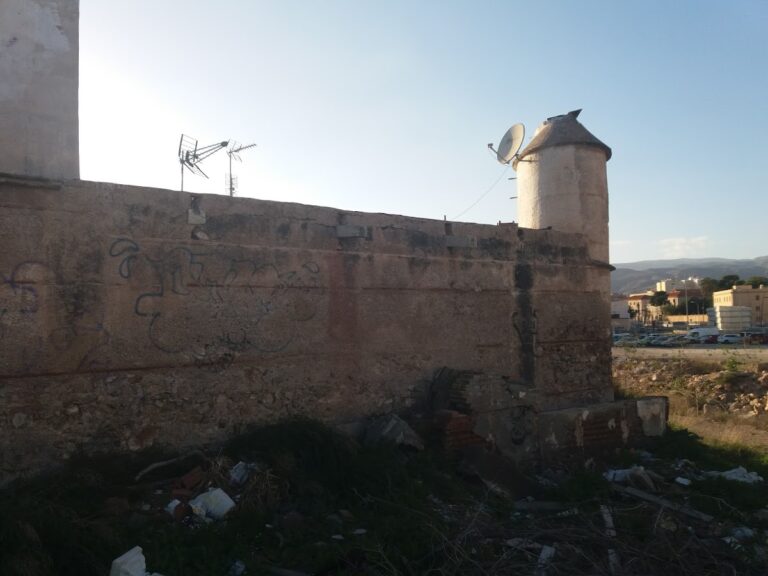
Castillo de Guardias Viejas: A Spanish Coastal Battery in Almería


Site at a Glance
- Rating
- 4.5
- Popularity
- Medium
- Country
- Spain
- Primary era
- Early Modern
- External website
- Open
- Eras represented
- Early Modern
- Civilizations
- Spanish
- Site type
- Military
- Remains
- Fort
On this page6 sections
History
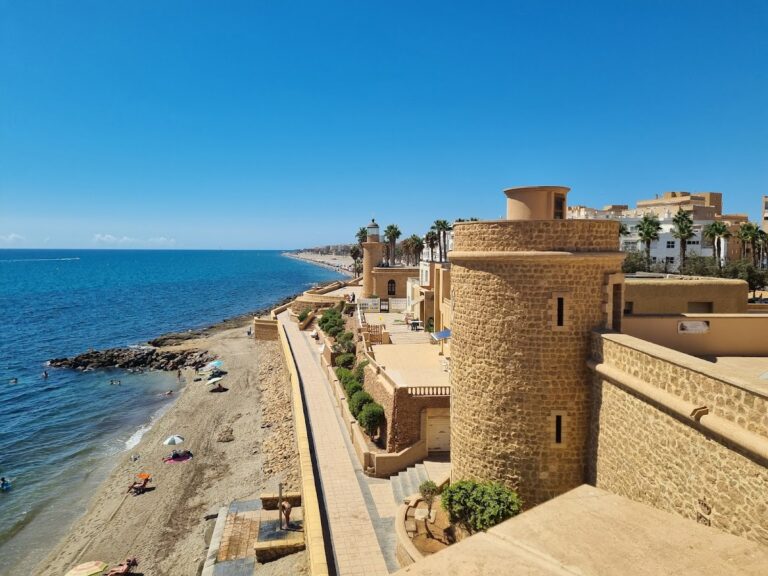
Castillo de Guardias Viejas is a Spanish coastal fortification near Balerma, within the municipality of El Ejido in Almería, Spain. Built by the Spanish Crown during the eighteenth century, it formed part of a defensive system created under Carlos III to protect the shoreline from corsairs, privately authorized seafarers who raided enemy shipping and coasts.
Construction and coastal defence
In 1764, during Carlos III’s reign, a regulation established a network of coastal defenses. José Crame, a military engineer associated with the Kingdom of Granada, designed several buildings for this system, including works resembling Castillo de Guardias Viejas and Castillo de San Felipe at Los Escullos. Construction at Guardias Viejas began around 1769.
The fortification helped control the coast between Punta del Sabinar and Balanegra. A cavalry garrison patrolled this stretch, while the guns faced east. Their fire crossed the defensive fire of Torre de Balerma to the west, linking the fort with another coastal position.
Destruction, rebuilding, and later protection
During the Spanish War of Independence, the 1808–1814 conflict in which Spain resisted Napoleonic French occupation, the English army destroyed the fortification to prevent French troops from using it. It was rebuilt in 1817.
The building was restored in 1980, followed by rehabilitation work undertaken by the Municipality of El Ejido. The Government of Andalusia now owns the fort, which houses a permanent exhibition of clothing and weapons from the Napoleonic period. Castillo de Guardias Viejas was declared an Asset of Cultural Interest in 1985. It is one of five fortifications within the municipality of El Ejido, alongside Torre de Cerro Moriscas, Torre Cuadrada, Torre de los Bajos, and Torre de Balerma.
Remains
The fortification is a coastal battery, a fortified artillery position intended to defend a shoreline, built on low rocky ground near the Mediterranean Sea. It stands at approximately 31 metres above sea level. The terrain is flat toward the northeast, hilly to the northwest, and closest to the sea on the southwest.
Fortification layout
Castillo de Guardias Viejas has a quadrangular plan organized around a central parade ground, an open military courtyard used for assembly and movement. Access to the principal entrance required crossing a moat by means of a drawbridge. Stairs rising from the parade ground lead to the roof terrace.
Interior and artillery
The interior is formed by broad rooms covered with barrel vaults, continuous tunnel-shaped ceilings made by extending an arch along a length. These spaces include separate infantry and cavalry barracks, stables, and a gunpowder magazine. A chapel and living quarters for the chaplain complete the recorded interior dependencies.
A ramp leads from the fort to a semicircular artillery battery equipped with four 24-pounder cannons. This classification refers to the approximate weight of the shot fired by each gun.