Caudilla Castle: A 15th-Century Palatial Residence in Spain
Site at a Glance
- Rating
- 4.3
- Popularity
- Medium
- Country
- Spain
- Primary era
- Medieval
- Eras represented
- Medieval
- Civilizations
- Crown of Castile
- Site type
- Domestic
- Remains
- Castle
On this page4 sections
History
Construction and Castilian politics
Caudilla Castle is a late-feudal palatial castle in Santo Domingo-Caudilla, Spain. Hernando de Rivadeneira, a Marshal of Castile and senior military officer in the crown’s service, built it in 1449–1450. Rather than serving primarily as a military stronghold, it was intended as a residence.
During the troubled reign of Juan II (1406–1454), the castle remained loyal to the king and opposed the forces of Álvaro de Luna, a powerful courtier and royal favorite who held the office of Constable of Castile. Under Enrique IV (1454–1474), the castle became a starting point for a royal expedition: Enrique set out from it with 100 knights to subdue Toledo, which supported Infante Alfonso, a Spanish royal prince who was not the heir apparent.
Damage and legal protection
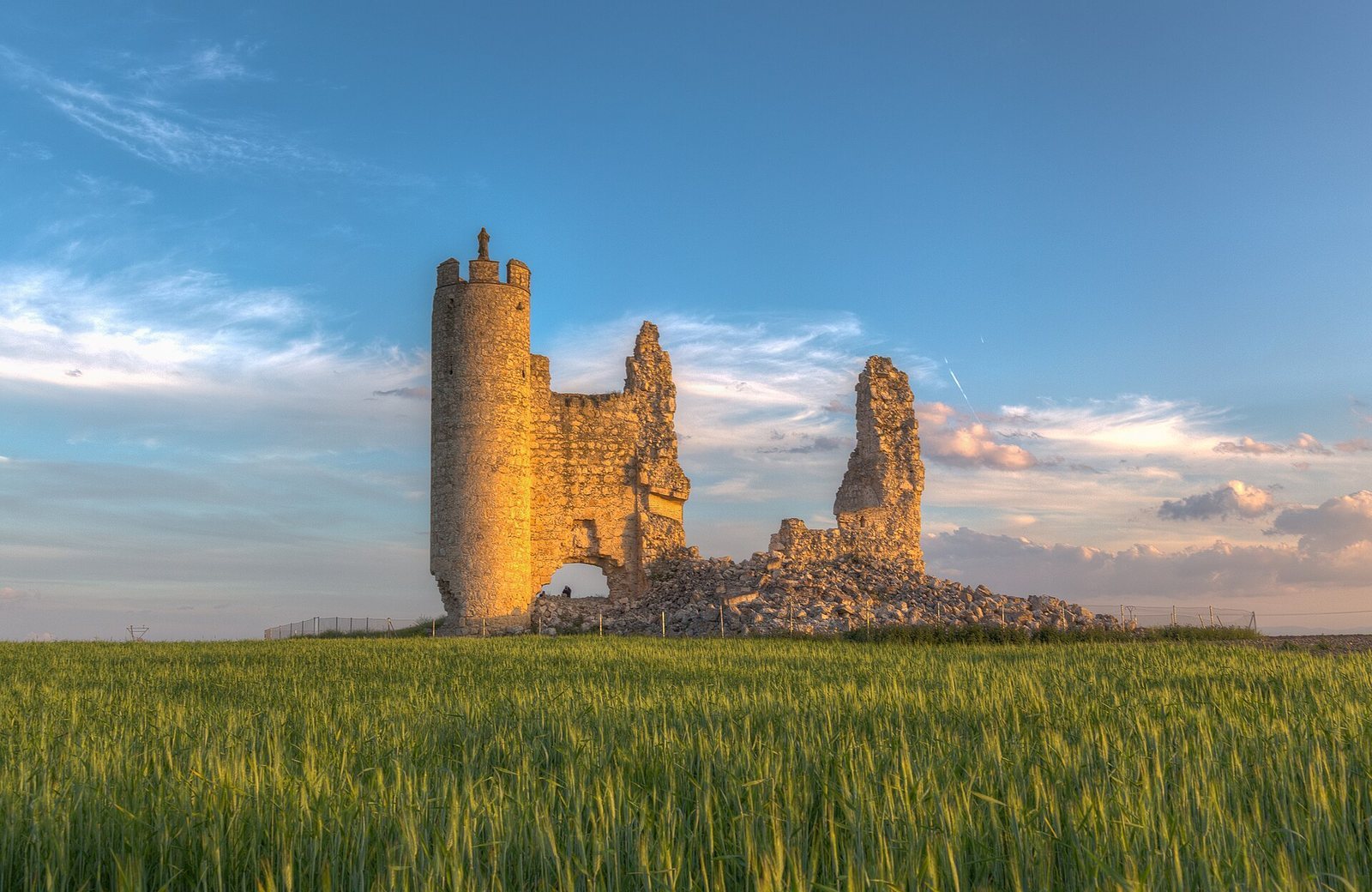
The castle’s facade collapsed in 1999, possibly after strong winds battered the area for several weeks. It is classified as an Asset of Cultural Interest and appears on the Heritage Red List. Its protection is covered by Spain’s castle-protection decree of 22 April 1949 and the Historical Heritage Law of 1985.
Remains
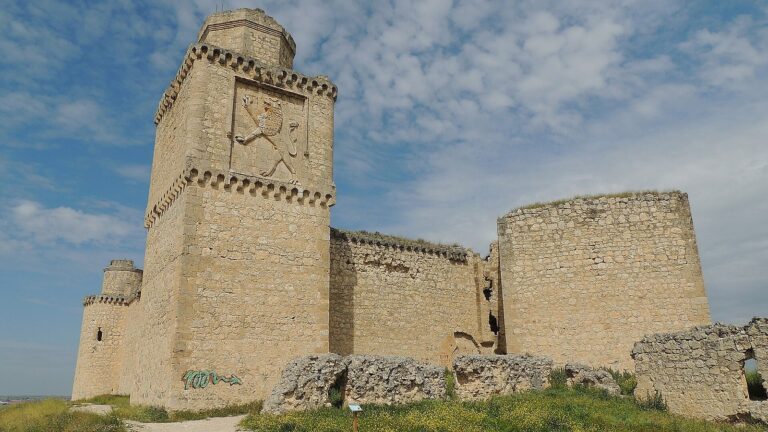
The castle was a small stone structure with a rectangular plan and a moat. Its surviving remains include part of the ruined keep, a small circular tower, and an image of Christ positioned high above ground.
The keep, the castle’s principal strong tower, had three storeys, with windows on the two middle levels. The upper storey bore the Rivadeneira coat of arms, showing a cross and five shells above waves; the emblem is now unrecognizable. The keep also had machicolations, projecting galleries with floor openings for dropping objects onto attackers, and rounded corners fitted with small turrets.