Castello di Calenzano: A Medieval Fortified Settlement in Italy

Site at a Glance
- Rating
- 4.6
- Popularity
- Low
- Country
- Italy
- Primary era
- Medieval
- External website
- Open
- Eras represented
- Medieval
- Civilizations
- Republic of Florence
- Site type
- Military
- Remains
- Fortified Town
On this page11 sections
History
Castello di Calenzano is a medieval fortified structure in Italy and the original nucleus of the settlement of Calenzano. Its hilltop position stood on the route from Florence toward an Apennine pass leading to Emilia-Romagna, giving it control over communications toward Mugello. The first fortification was probably established by the powerful Guidi family, and the castle gained strategic importance during the twelfth century as it stood between the dioceses of Florence and Pistoia and between the territories of several competing medieval powers.
Frontier stronghold and Florentine control
A diocese was an ecclesiastical district governed by a bishop, while the Guidi and Alberti were powerful comital families whose feudal lands bordered the Florentine sphere. The Ghibelline Ubaldini, a family dominant in parts of Mugello, formed another regional power. Calenzano therefore occupied a contested position between the dioceses of Florence and Pistoia and the territories of the Guidi, the Alberti counts, and the Ubaldini.
The earliest references to Calenzano as a castle date from the thirteenth century. The Libro di Montaperti of 1260 and the Libro degli Estimi of 1269, two medieval Florentine records, refer to the settlement and its condition. The latter describes the damage inflicted on the castle after Florence’s Guelph forces were defeated at the Battle of Montaperti in 1260. Guelphs and Ghibellines were opposing political factions in medieval Italy, with Guelphs generally supporting the papacy and Ghibellines generally supporting imperial authority.
The castle later passed from the Guidi to the jurisdiction of the bishop of Florence. At the beginning of the fourteenth century, it became a possession of the Republic of Florence, the Florentine city-state and its republican government. Its military role soon brought it into direct conflict with forces opposed to Florentine expansion.
Fourteenth-century attacks and reconstruction
On the night of 4–5 October 1325, Ghibelline forces commanded by Castruccio Castracani attacked and burned the fortifications without meeting resistance as they advanced toward Florence. Castracani was a prominent Luccan military leader and Ghibelline commander. In 1351, troops of the Visconti of Milan, led by Giovanni di Oleggio, besieged and damaged Calenzano. Giovanni di Oleggio was a military commander serving the Visconti, the ruling family of Milan.
Florence responded by consolidating and enlarging the defensive works. The castle was regarded as the principal western entrance to the Florentine plain, and its position made its defenses important to the security of the city’s surrounding territory. In 1363, the strengthened walls resisted an attack by the Pisans and their English mercenaries under John Hawkwood, an English captain active in the wars of medieval Italy. The fortifications also sheltered inhabitants of nearby Sesto.
That same year, Florence ordered additional defensive improvements and prohibited the construction or occupation of houses or huts against the walls or within 200 braccia of them. Violators faced a fine of 1,000 small-florin pounds. From the final decades of the thirteenth century through the beginning of the fifteenth century, the castle reached its greatest economic and military prosperity.
From military outpost to rural settlement
After Florence expanded and consolidated its power in Tuscany, Calenzano gradually lost its strategic importance. The fortified settlement changed from a military outpost into an agricultural residential center. In 1452, Florence’s Ten of Bailiffs ordered renewed repairs to the defensive structures. This magistracy was responsible for emergency and security measures. The medieval configuration of the walls then remained substantially unchanged, although the masonry deteriorated and buildings were erected against or over parts of the circuit.
Calenzano escaped the devastation caused by papal troops and Spanish mercenaries during the Sack of Prato in 1512. During the siege of Florence in 1529–1530, the castle served as a military stronghold in the Florentine countryside without suffering damage. Agnolo Anselmi, a Florentine citizen, acted as its commissioner during the siege.
After Cosimo I proclaimed the Grand Duchy of Tuscany, the castle lost its remaining strategic importance. Cosimo I was the Medici ruler who became Tuscany’s first grand duke. The towers were leased to private occupants as residences, and the surrounding land was used for agriculture. Part of the complex continued to function as a farm until the Municipality of Calenzano acquired and renovated it.
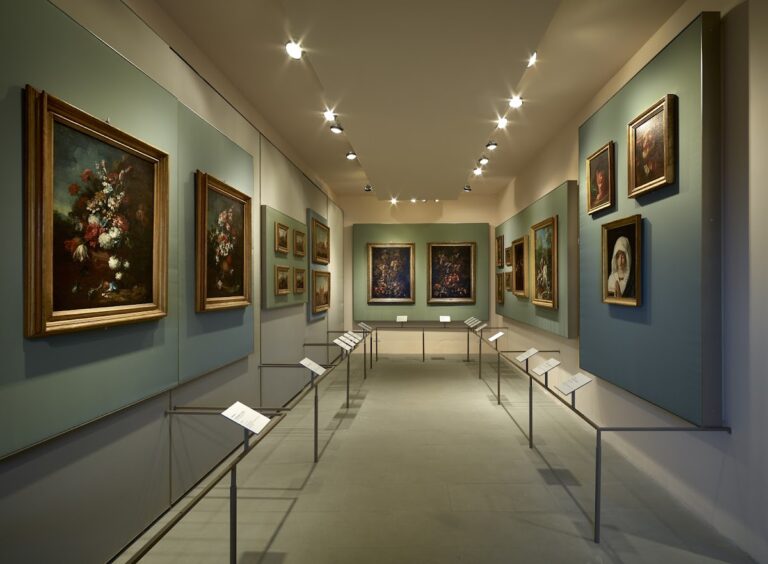
The restored rooms now house the Municipal Museum of Historical Figurines. Its displays use lead soldiers, dioramas, and models to present European and local history. The medieval village also continues to host traditional community events, including historical re-enactments, the Medieval Carnival, and the street-arts festival Maraviglia.
Remains
Fortified hilltop layout
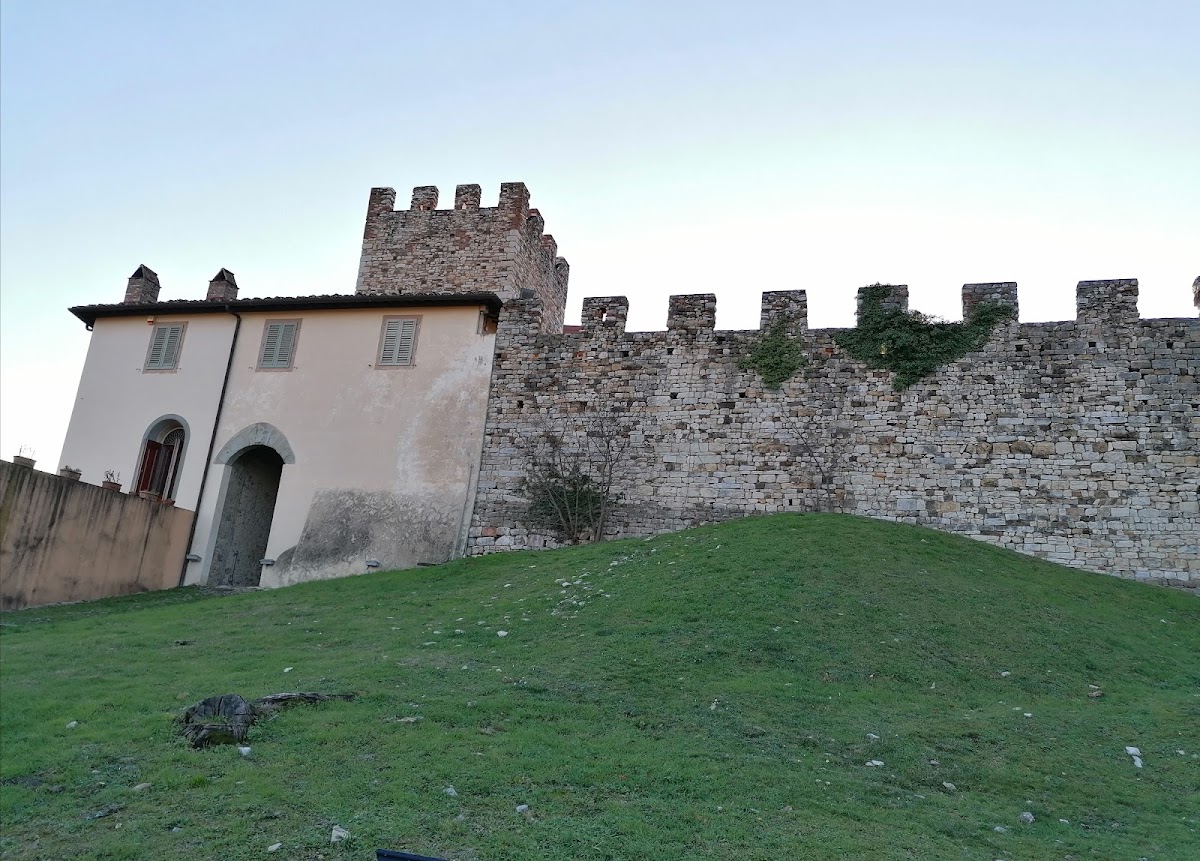
The surviving village retains the oval plan characteristic of hill settlements. It occupies an isolated hill where the valley of the Marina stream opens onto the Florentine plain, and the fortification is visible from all four cardinal directions. The walls form the principal surviving enclosure and preserve the medieval configuration established during the fourteenth century, when the Republic of Florence consolidated and enlarged the defenses after the attacks of 1325 and 1351.
Porta al Serraglio
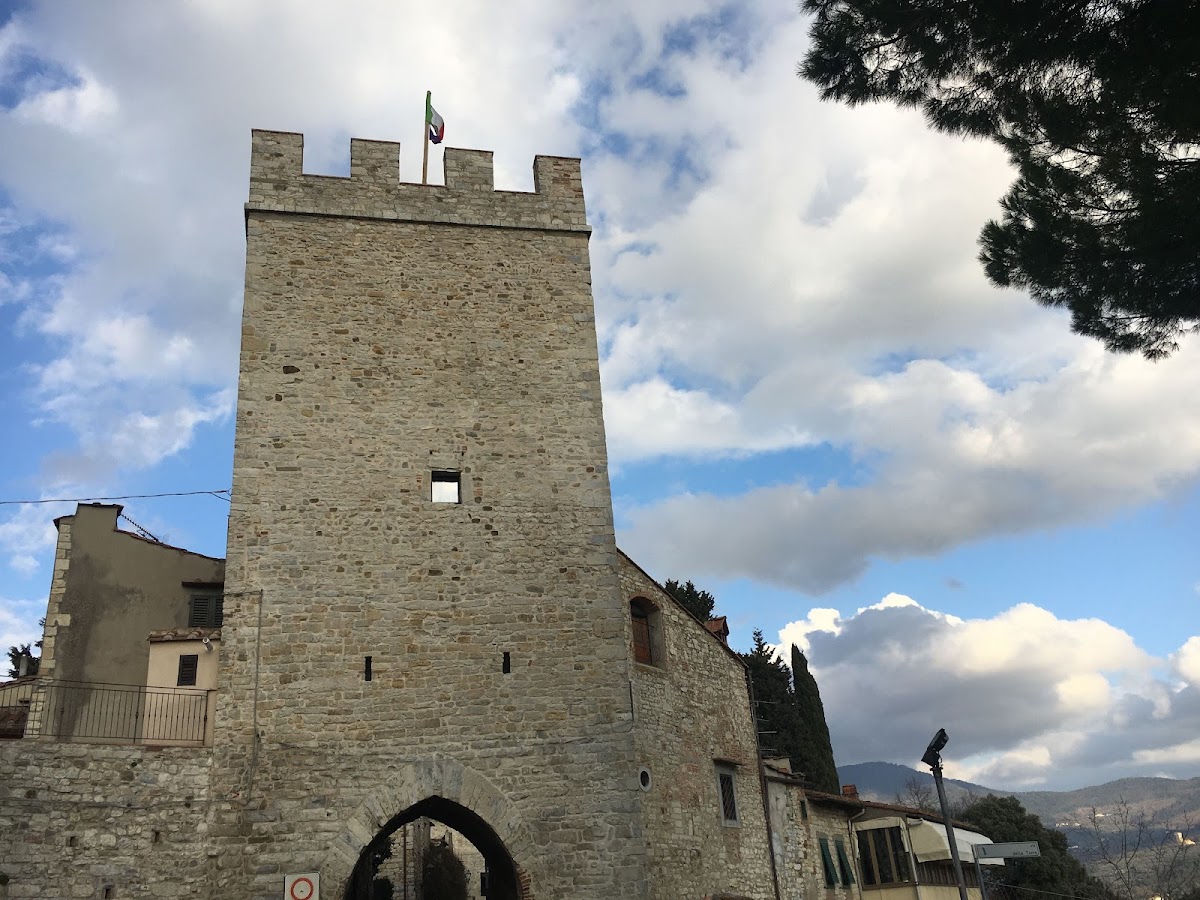
The northern entrance is formed by Porta al Serraglio, also known as Porta al Serragli. A tower rises above the gate and can be visited. Its position within the surviving defensive circuit reflects the role of the entrance as part of the fortified village rather than as an isolated building.
Bastion garden
An interior garden has been recovered within the wall circuit of a fourteenth-century bastion. A bastion is a projecting fortification designed to strengthen a defensive wall. The garden occupies space within this defensive structure and forms part of the complex’s surviving physical arrangement.
Adapted buildings and restored rooms
Gate tower altana
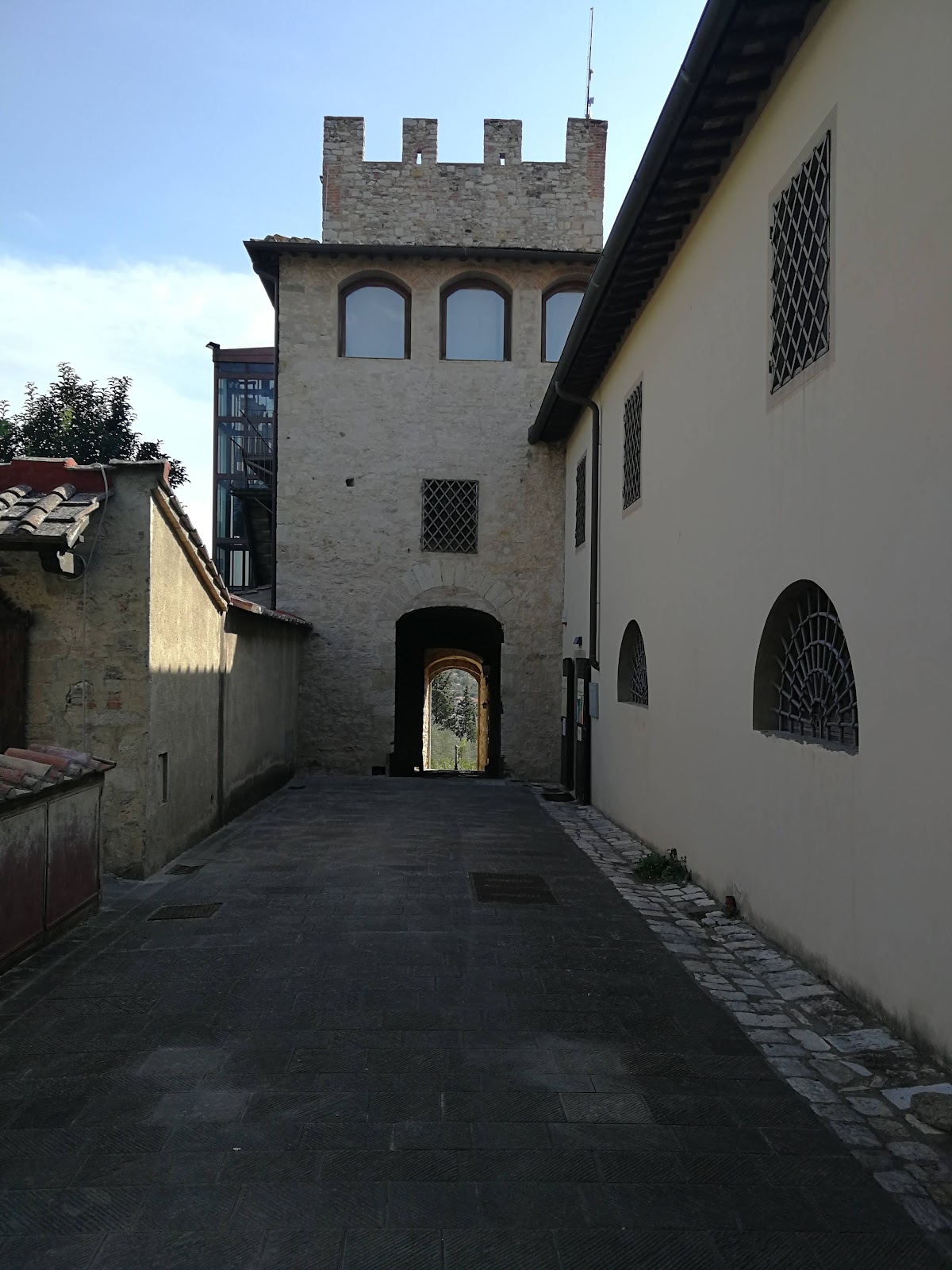
The upper part of the gate tower contains a restored altana, a raised or roof-level room or terrace often used for domestic or ceremonial purposes. Here, the restored room is used for conferences and ceremonies, preserving a later functional layer within the medieval defensive structure.
Municipal museum rooms
Part of the complex was formerly used as a farm and has been renovated for municipal purposes. The municipal museum occupies rooms associated with this restored section. Its lead soldiers, dioramas, and models provide the present interior use of spaces that belonged to the later residential and agricultural history of the castle.
After the castle’s military decline, its towers were adapted as private dwellings and the surrounding land was converted to agricultural use. These changes explain the mixture of defensive walls, residential adaptations, farm-related spaces, and restored municipal rooms that characterizes the surviving complex.