Castello Svevo: The Swabian Castle of Augusta

Site at a Glance
- Rating
- 3.4
- Popularity
- Low
- Country
- Italy
- Primary era
- Medieval
- External website
- Open
- Eras represented
- Medieval, Early Modern, Modern
- Civilizations
- Italian, Kingdom of Sicily, Spanish
- Site type
- Military
- Remains
- Castle
On this page13 sections
History
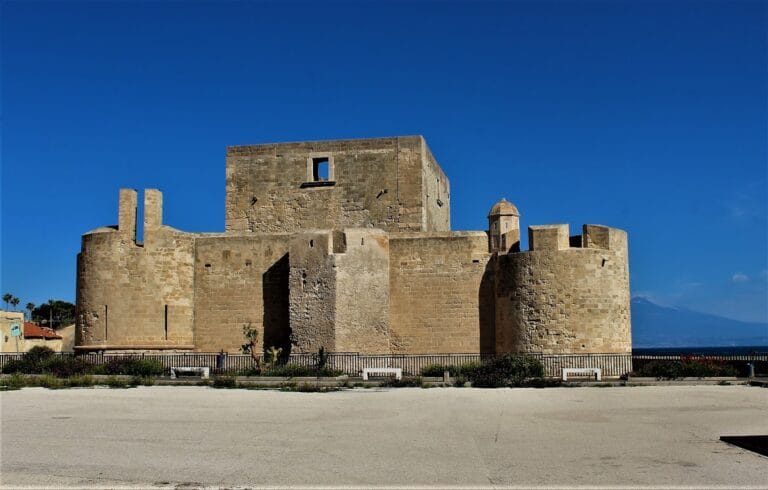
Castello Svevo, also called the Swabian Castle, is a thirteenth-century fortress in Augusta, Italy, built under Frederick II of Hohenstaufen, the ruler who was both Holy Roman Emperor and king of Sicily. Construction probably began in 1232 and was completed in 1242, using Gothic forms associated with Cistercian architecture. The castle occupied a strategic position beside the harbour of the new settlement on the Terra vecchia peninsula in the Bay of Augusta.
Foundation under Frederick II
Frederick II selected the site after reaching the sheltered bay during a storm in 1229. He decided to establish a harbour town there and named it Augusta, drawing on the imperial title Augustus. In 1231, he defined the territory in a charter issued at Melfi Castle on the Italian mainland. The site may already have contained an Arab-Norman or Norman watchtower or fortification, although the thirteenth-century castle became the principal stronghold of the new settlement.
Riccardo da Lentini directed the building work as imperial building superintendent. Augusta was populated partly with defeated rebels from Centuripe, while the castle formed part of Frederick II’s wider programme of castles and fortifications intended to secure his Sicilian kingdom and its coasts. Commercial activity had begun by 1239. Warehouses, granaries, mills, and agricultural lands in the hinterland were placed under organized administration, and the castle operated together with the harbour to protect the export of agricultural products, including trade beyond Frederick’s empire.
Angevin and Aragonese control
After the Angevin-Sicilian dynasty came to power, the castle became one of its garrisons. The Angevins descended from the rulers who governed the Kingdom of Sicily after the Hohenstaufen period. In 1282, Peter of Aragon seized the fortress from them. An Angevin army retook it in 1287, but it was then returned to Peter. Several nobles from Aragon were subsequently appointed viscounts of Augusta, reflecting the political change in control of the settlement and its harbour.
Spanish fortifications
Under Spanish rule, the castle was incorporated into the defenses of the Spanish Kingdom of Sicily. The harbour became known as Porto Spagnolo, or Spanish Harbour. The fortress first served in defense against the Ottomans during the sixteenth century and against the French during the seventeenth. Under the Bourbon regime in the nineteenth century, its military purpose shifted toward suppressing Sicilian rebels.
Ottoman pirates plundered Augusta and captured the castle in 1551. The attack prompted major fortification works under the Habsburg authorities in Madrid. In the late sixteenth century, the San Bartolomeo and Vigliena bastions were built around the Spanish Harbour. A bastion is a projecting part of a fortification designed to provide flanking fire along adjoining walls. Augusta, including Castello Svevo, then came under the direct authority of the Spanish viceroy of Sicily.
The San Filippo and San Giacomo bastions were added in the mid-seventeenth century. Together with the earlier defenses, they formed a pentagonal citadel around the medieval castle. Auxiliary forts, including Garcia and Vittoria, were also built in the surrounding area. In 1675, during the anti-Spanish revolt in Messina, a French fleet captured the castle. As French forces withdrew, François III d’Aubusson, Marquis of La Feuillade, attempted to destroy the Spanish fort with explosives, but the effort failed.
Spanish control was restored in eastern Sicily. Francisco Bazan de Bonavides, Marquis of Bayona and viceroy of Sicily, inspected the damage and appealed for donations to repair the castle. The response was associated with a wave of Sicilian patriotism directed against the expansionist policy of Louis XIV of France, who ruled from 1643 to 1715 and pursued an assertive foreign policy in Europe.
Between 1680 and 1682, the engineer Carlos de Grünenbergh enlarged the citadel with earthworks, ditches, a bridge, and ravelins. A ravelin is a detached defensive work placed beyond a main wall or gate. The earthquake of 1693 caused the powder magazine to explode, and repairs to the citadel were completed in 1702.
Bourbon and Italian periods
During the Kingdom of the Two Sicilies, King Ferdinand II strengthened the castle for operations against anti-Bourbon rebels in the surrounding area. He transferred its cannons and muskets to Castello Ursino in Catania. Rebels later held the fortress during the anti-Bourbon revolution of 1848 and the establishment of the breakaway Kingdom of Sicily in 1848 and 1849. Bourbon forces recaptured it in 1849.
When the Bourbon regime fell and Sicily was annexed to the Kingdom of Italy in 1860, the castle passed peacefully to the new Italian state. The Italian tricolour was raised over the fort. In 1870, scientists from several European countries used the citadel as a base for observing a total solar eclipse and lived in tents there.
From 1880, the Kingdom of Italy began work intended to convert the castle into a villa, but the plan was abandoned in 1890. The thirteenth-century complex was instead converted into a prison, which operated until the late 1970s. During the twentieth century, the citadel grounds and filled-in ditches were incorporated into a park. The castle became state property and was placed under the responsibility of the Syracuse cultural-heritage authority.
Restoration campaigns in the 1990s and at the end of the twentieth century repaired parts of the complex. Later institutional uses included offices of the national police and the prefecture of Syracuse, while the ravelin came to house a State Police commissariat. Concern about renewed deterioration led the Augusta section of Italia Nostra and the Syracuse branch of the Carabinieri Cultural Heritage Protection Unit to act against the danger that part of the structure might slide into the sea. In 2016, an investigation by the Syracuse public prosecutor’s office led to the monument’s seizure and inquiries involving regional officials over alleged failures to carry out official duties and repair work on a building threatened with collapse.
Remains
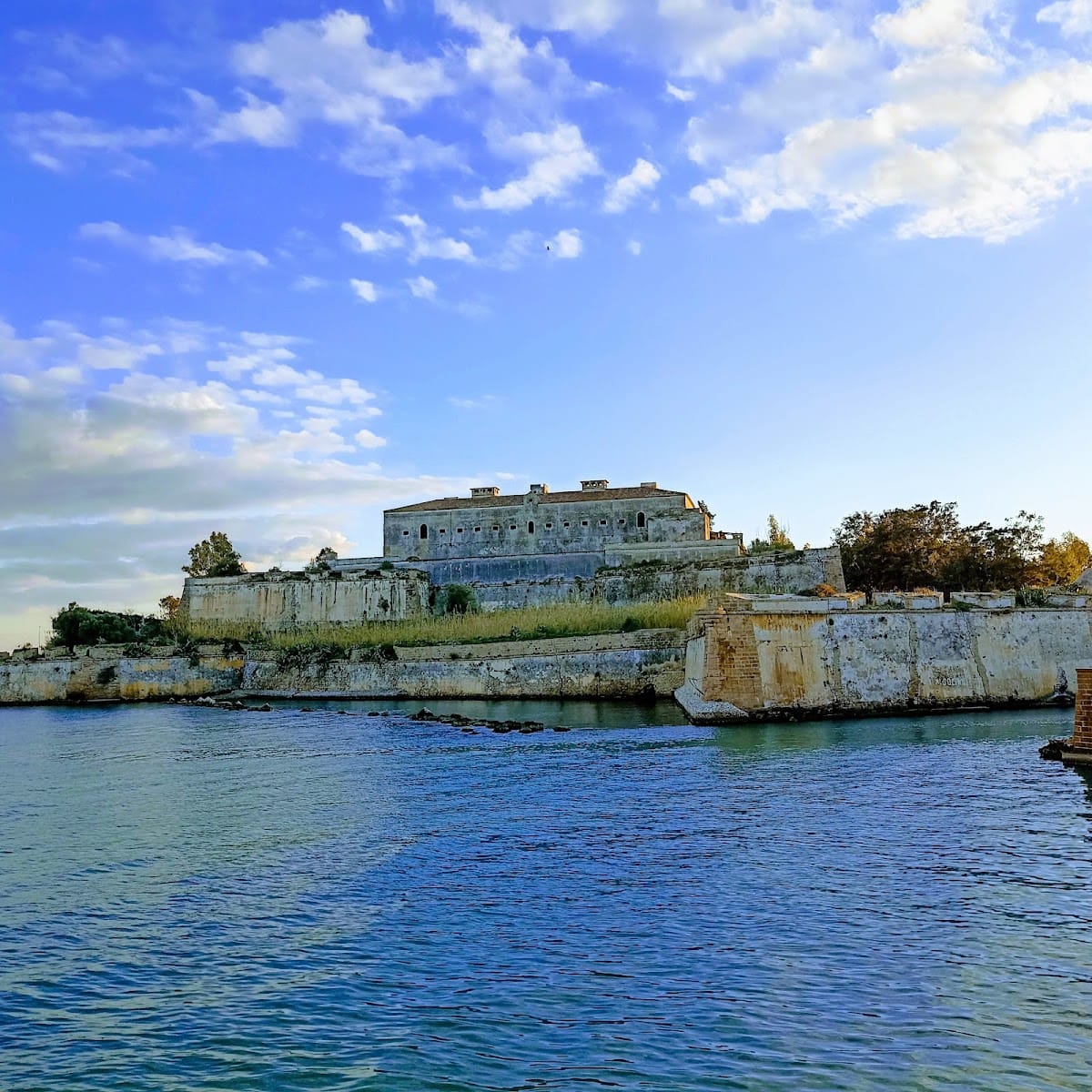
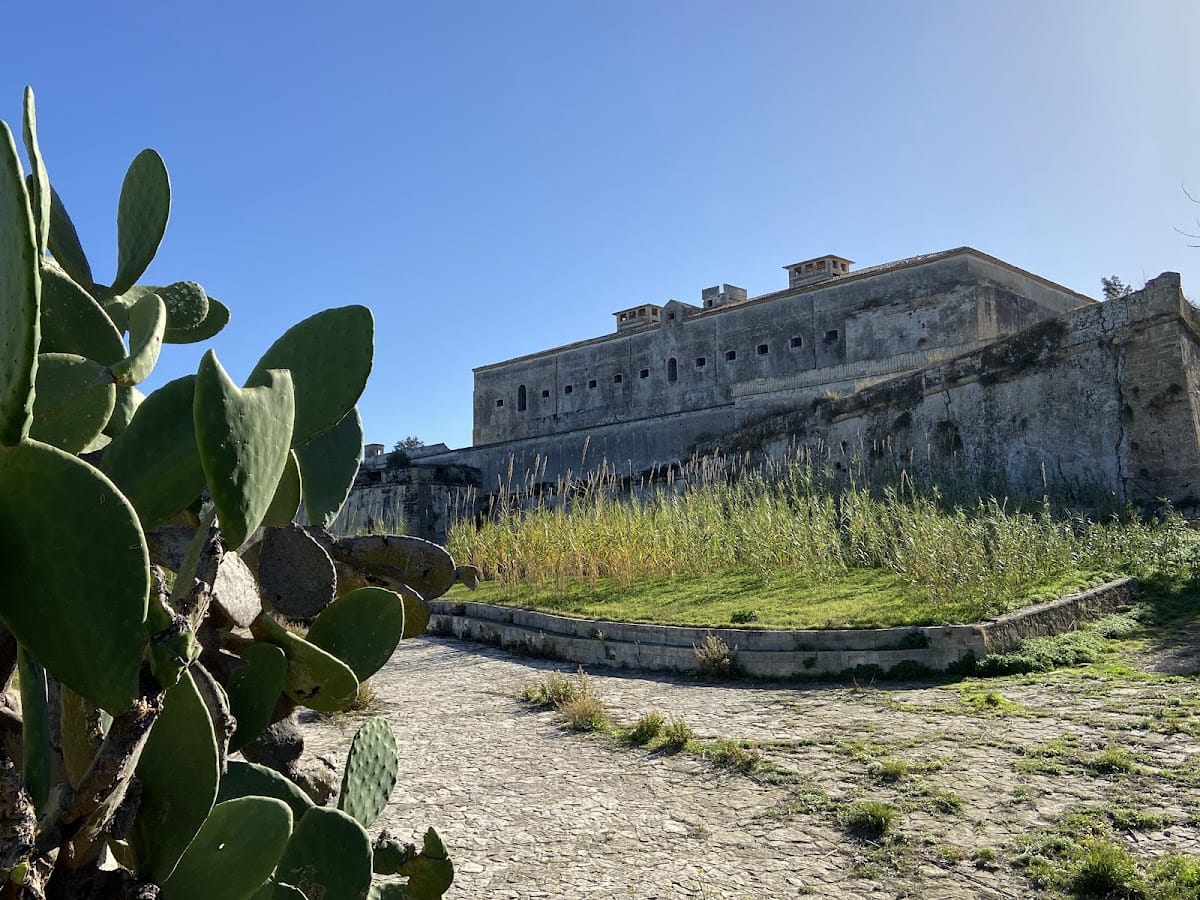
Castello Svevo occupies the northern end of the island of Augusta, on a small peninsula within the Bay of Augusta. The historic island is connected to the mainland by a bridge, while the harbour and castle occupy the peninsula before the modern city expanded. The medieval core is an approximately square fortification, with sides measuring about 62 metres and walls approximately 2.60 metres thick. Its outer faces are built from courses of giuggiulena sandstone.
Medieval fortress
Square walls and towers
The medieval fortification has eight towers arranged around its four-sided plan. Four square towers stand at the corners. Rectangular towers occupy the centres of the eastern and western walls, while polygonal towers stand at the centres of the northern and southern sides. The southern central tower, positioned beside the main entrance, is pentagonal in its present form.
Southern tower
Excavations by the local heritage authority established that the southern polygonal tower was originally octagonal. Its original geometry has been interpreted as recalling Castel del Monte, the thirteenth-century castle in Apulia associated with Frederick II, and the octagonal outer towers of Frederick’s castle at Cosenza. These comparisons connect the tower’s form with the architectural language of Frederick’s building programme in southern Italy.
Courtyard and vaulted interiors
Inside the walls is a rectangular courtyard. The interiors contain large pointed arches and Gothic ribbed cross-vaults. Their design has been linked to Cistercian forms, particularly the box-rib treatment associated with Clairvaux and monasteries affiliated with it in southern Europe. The overall arrangement has also been related to the regular, generally rectangular planning of a Roman military camp, or castrum.
Citadel and later adaptations
Outer defenses
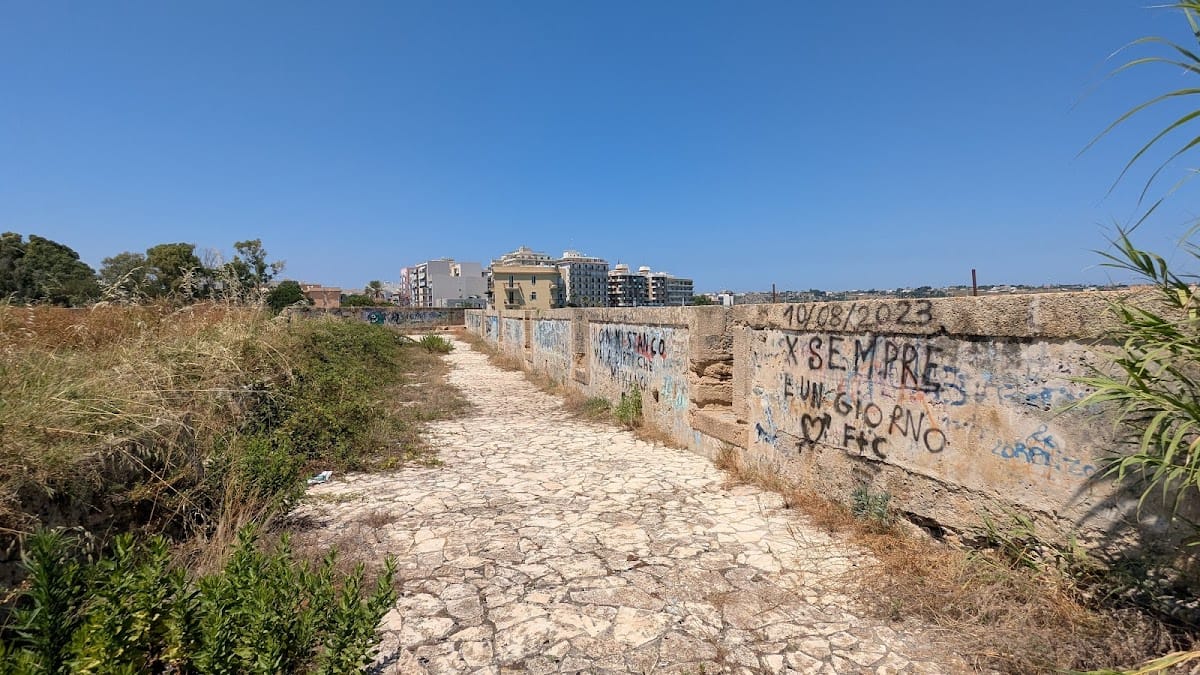
A second enclosing wall was built around the castle during Spanish rule. The later citadel incorporated the San Bartolomeo, Vigliena, San Filippo, and San Giacomo bastions, together with ditches, a bridge, and ravelins. These works transformed the medieval fortress into a larger fortified enclosure intended to control and defend Augusta and its harbour. The ravelin survives as the location of the State Police commissariat.
Military and civilian alterations
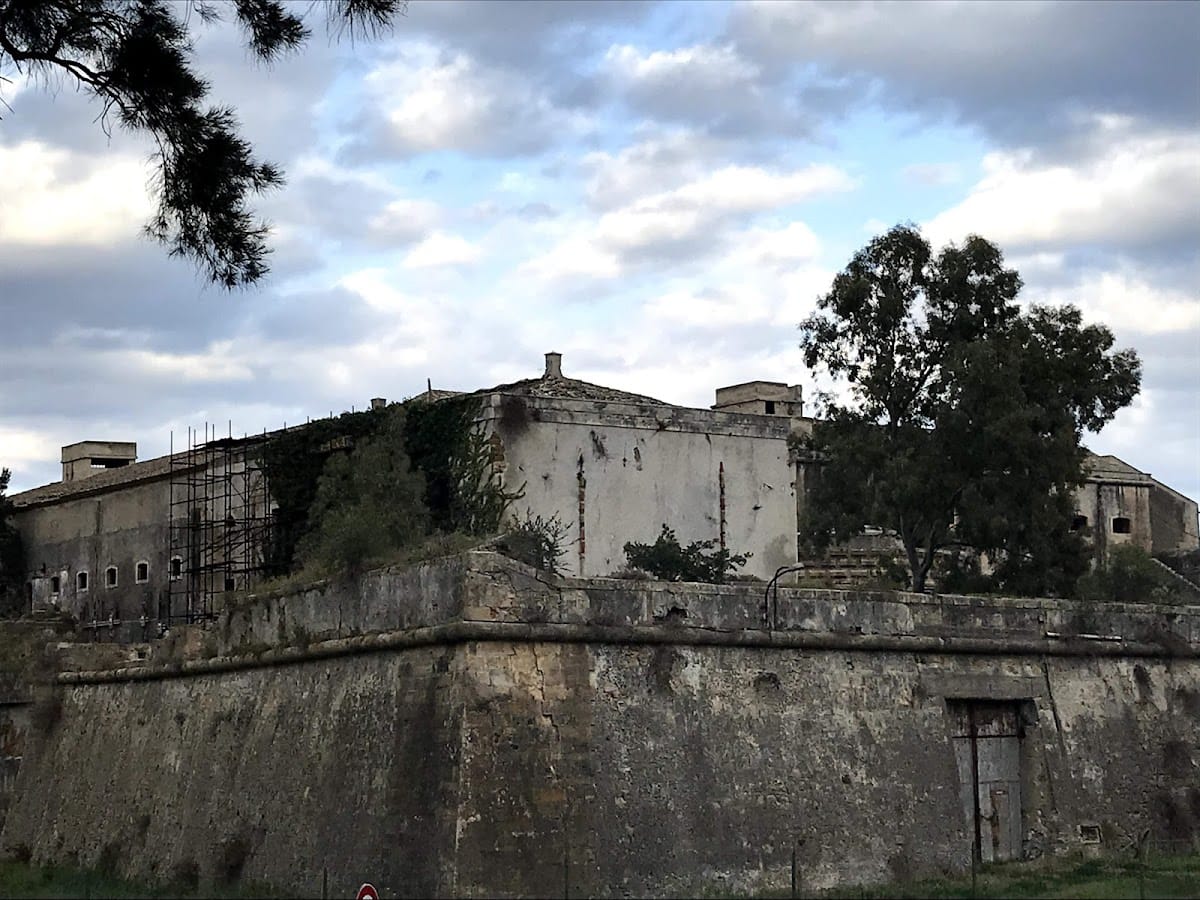
Successive military and civilian adaptations substantially changed the medieval structure, especially its interior. The complex served military purposes and also accommodated civilian functions, including the storage of customs goods. The prison conversion begun in 1890 added floors of cells above the portico. Those cell levels belong to the penitentiary adaptation rather than to the medieval castle.
The restoration campaigns of the 1990s and the late twentieth century repaired the complex, whose later condition has nevertheless been described as deteriorating and at risk of structural collapse. Part of the castle has been threatened with slipping into the sea, adding a continuing physical dimension to the history of alteration, repair, and reuse visible in the surviving fortress.