Castello Svevo in Porto Recanati: A Fortified Castle
Site at a Glance
- Popularity
- Medium
- Country
- Italy
- Primary era
- Medieval
- Eras represented
- Medieval, Early Modern
- Civilizations
- Holy Roman Empire, Papal States
- Site type
- Military
- Remains
- Castle
On this page9 sections
History
Castello Svevo in Porto Recanati is a fortified castle in Italy, developed from the thirteenth through the sixteenth century. Initially owned by the Papal States, territories governed by the papacy in central Italy, it was intended to protect the population from attacks and pirates and to defend the port.
Foundation and port privileges
The earliest construction belongs to the first half of the thirteenth century, probably around 1225, and work continued through 1575. The castle takes its name from Frederick II of Swabia, a thirteenth-century Holy Roman Emperor. In 1229, he confirmed Recanati’s possession of lands between the Musone and Potenza rivers and authorized a new port and defensive works. Pope Gregory IX confirmed the grant in 1240 for the Papal States. In 1243, during Pope Innocent IV’s pontificate, the port became a free port, with exemptions from ordinary customs duties or restrictions.
Later fortification and conservation
New walls strengthened the defenses in 1369, and a moat was added in 1404. Later conservation consolidated the circuit walls, repaired deteriorated sections, and secured routes through the site.
Remains
Fortified enclosure
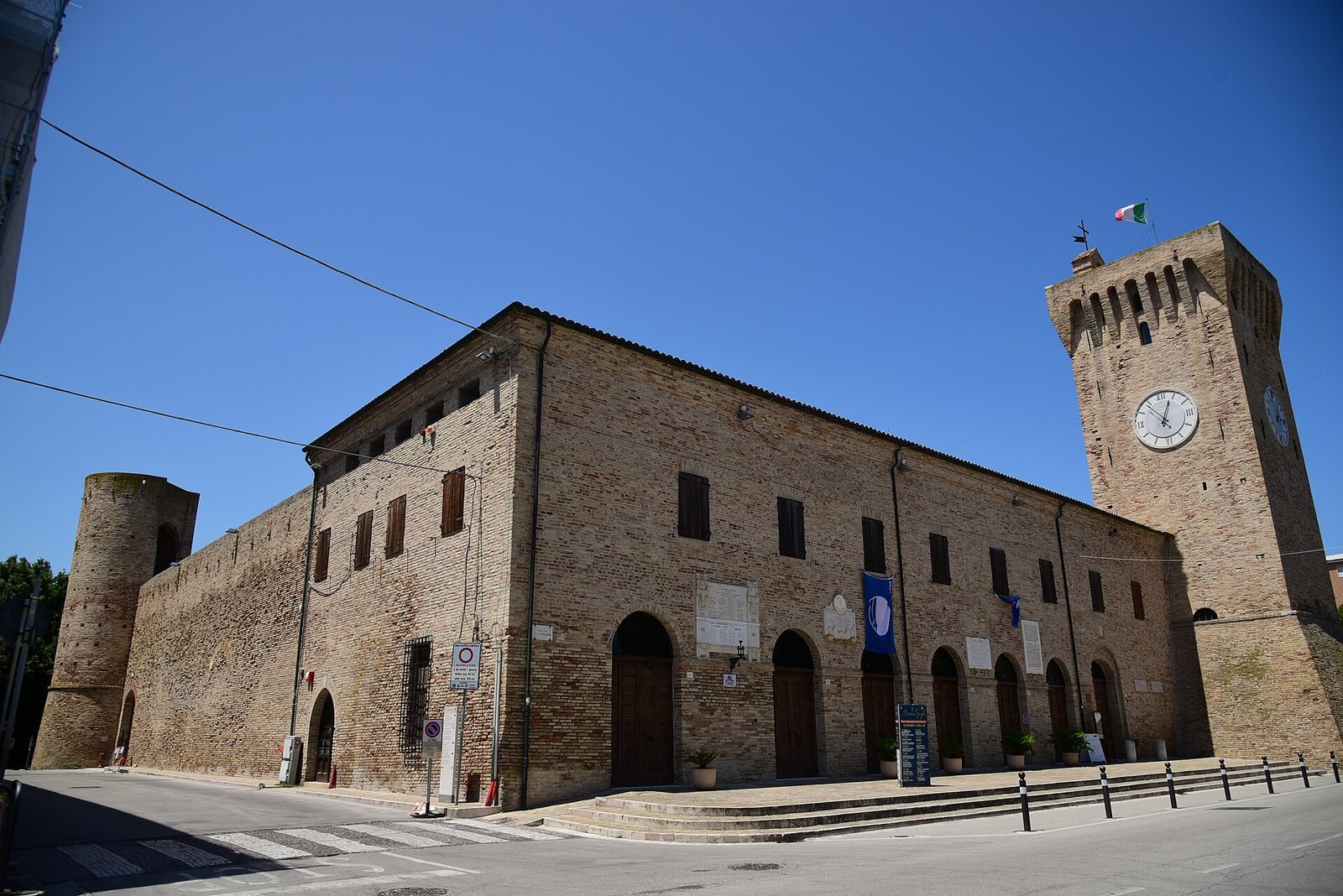
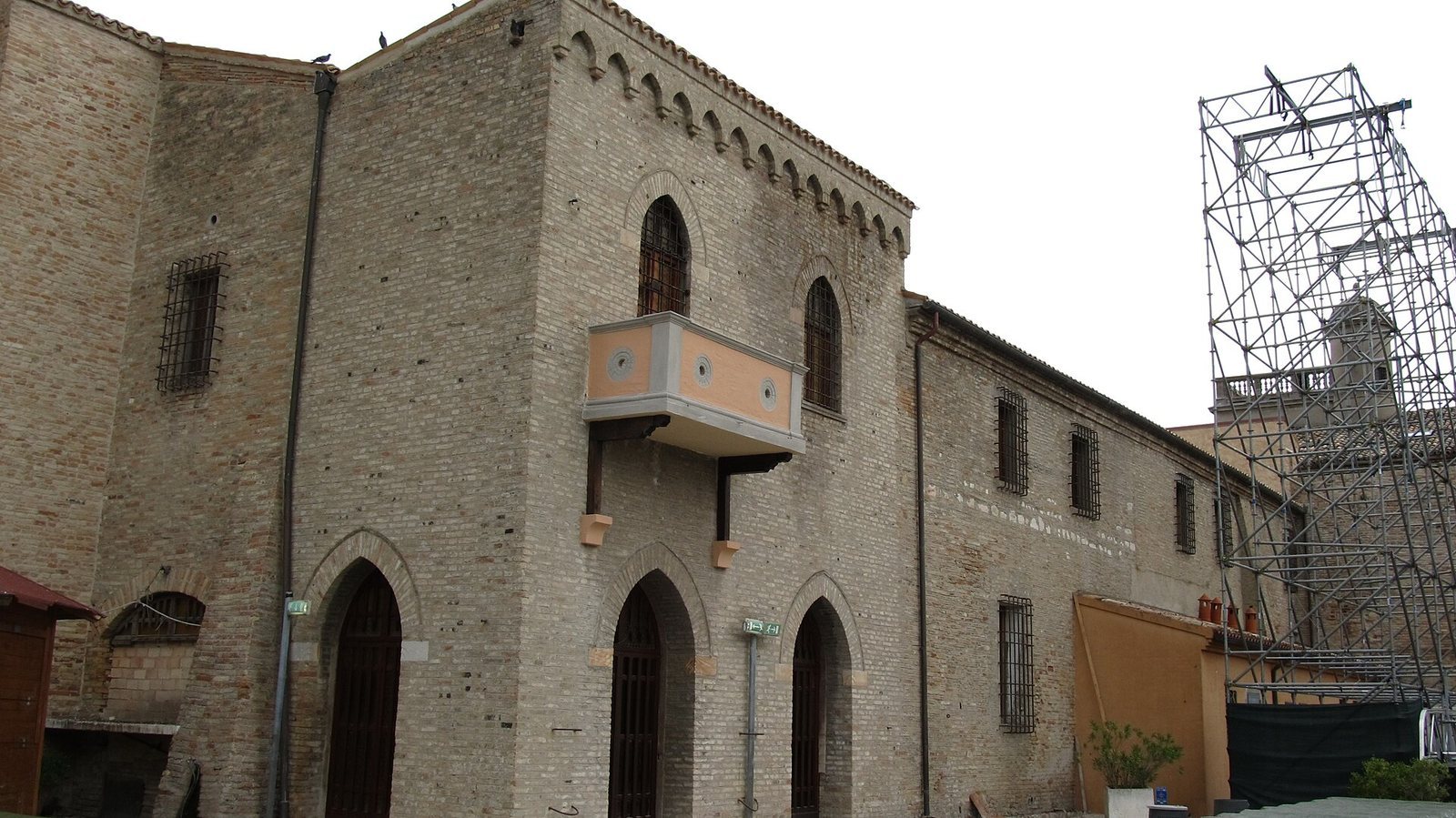
The castle forms a large quadrilateral enclosure, 25 m high, with a circuit of walls around a spacious courtyard. It is in good condition, and its defenses include towers and a wall-top walkway.
Main tower and eastern wall
The high main tower stands about midway along the east side, facing the sea. It predates the completed fortifications and served as a lookout. Some sections of the square tower date to around 1225.
Southwest tower and wall-top walkway
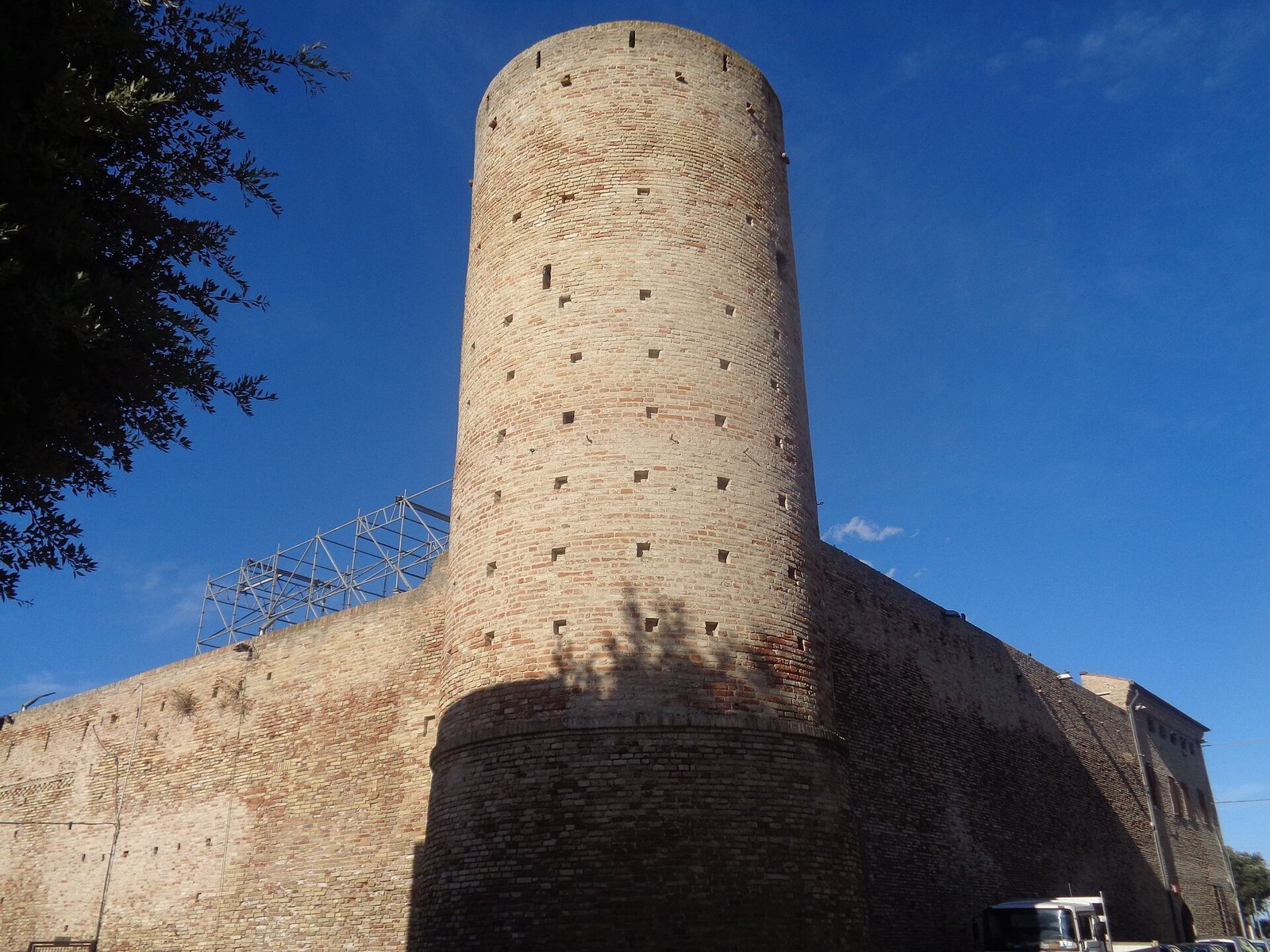
A semicircular tower occupies the southwest corner of the perimeter walls and was built around 1400. The walkway along the wall circuit allowed guards to watch and defend the castle from above.
Portal
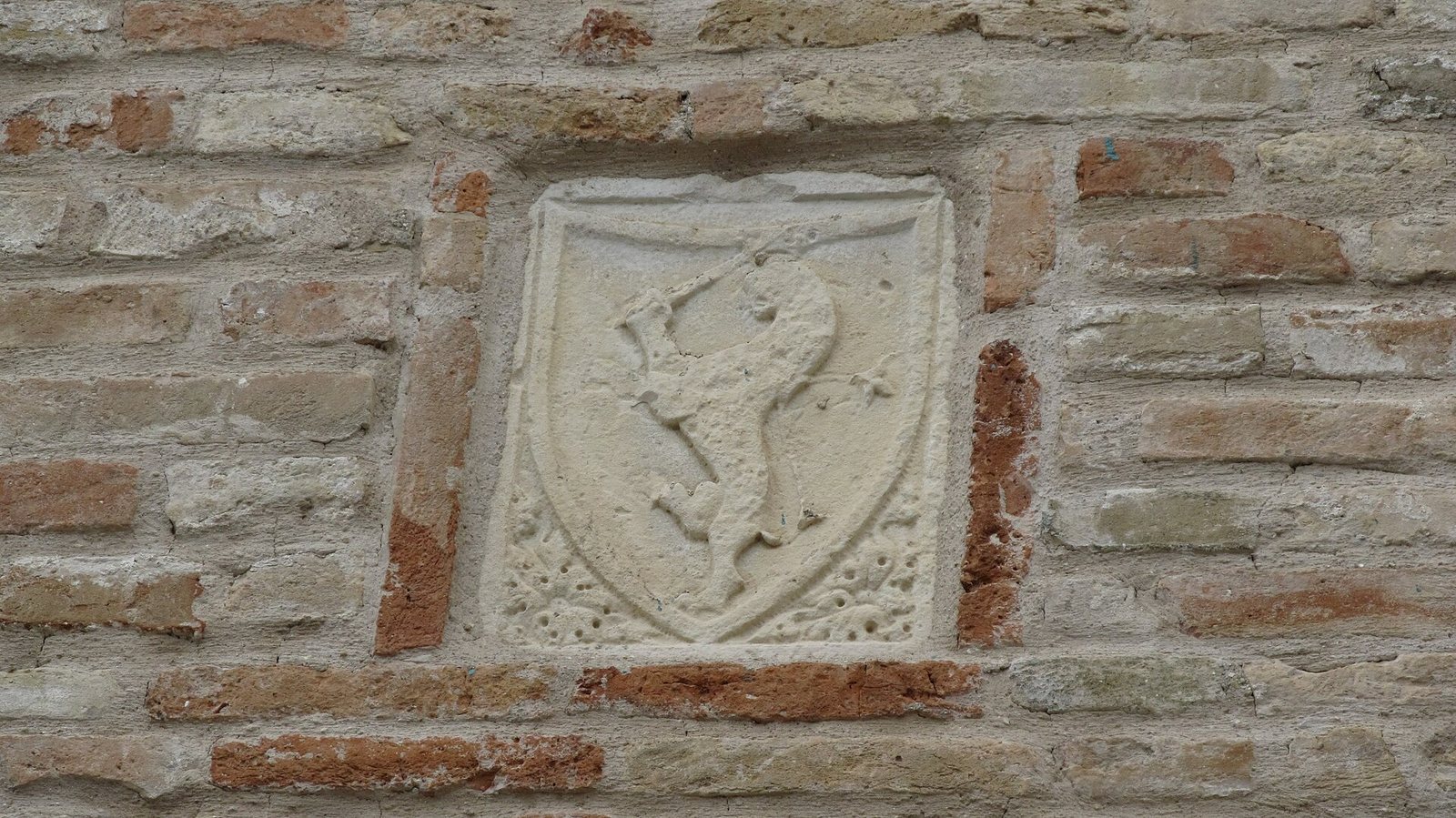
Recanati’s coat of arms is set above the castle portal.
Courtyard and residential building
The large courtyard contains the Beniamino Gigli Arena, named for the celebrated tenor from Recanati and used as a performance venue. The residential building houses a municipal art gallery on its first floor, displaying works collected by Attilio Moroni (1909–1986), a jurist, art enthusiast, and longtime rector of the University of Macerata. The entrance room is dedicated to Biagio Biagetti (1877–1948), a painter from Porto Recanati.