Castello di Vezio: A Medieval Fortress Overlooking Lake Como


Site at a Glance
- Rating
- 4.6
- Popularity
- Medium
- Country
- Italy
- Primary era
- Medieval
- Eras represented
- Medieval, Modern
- Civilizations
- Holy Roman Empire, Italian
- Site type
- Military
- Remains
- Castle
On this page12 sections
History
Castello di Vezio is an eleventh-century fortified castle in Italy, standing on a promontory above Varenna at the foot of Mount Fopp. The nearby settlement of Vezio developed around 1100, while the castle became the core of a fortified settlement and a refuge during conflicts around Lake Como.
Medieval Fortress and Regional Conflicts
The square-based tower dates from the communal period, when the castle formed part of a defensive system associated with Varenna. Residents of Varenna and refugees from Isola Comacina took shelter at the fortress during attacks by inhabitants of Como, after Isola Comacina had been completely devastated.
Walls once linked Castello di Vezio with Varenna and descended toward the lake, helping defend the settlement. The castle and Varenna later became part of an episcopal estate, an area under the administration and property of a bishop. The fortress subsequently belonged for a long period to the Lattuada family of Lierna, before passing to the Sfondrati family and, later, the Greppi family.
Military Use and Later History
During the First World War, a military position was installed below the fortress as part of the Northern Frontier fortifications. This network of Italian defensive works was built chiefly to protect northern Italy against a possible invasion. The installations at Vezio formed part of the defenses covering the valley from Porlezza to Menaggio in the event of a German advance through neutral Swiss territory.
The castle was partially restored in the mid-twentieth century. It now also houses a center devoted to the care and training of birds of prey. The center explains the history, modern practice, biology, and training methods of falconry, the trained keeping and use of birds of prey. The birds were born and raised in captivity and are not capable of surviving in the wild.
Remains
Tower and Defensive Walls
Principal Tower
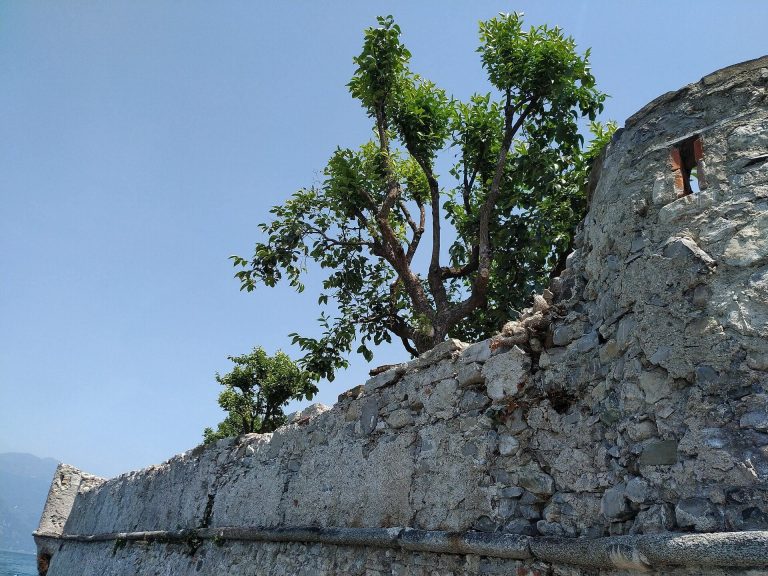
The main surviving structure is a square-based lookout tower approximately 20 metres high. A small drawbridge, reconstructed and restored, provides access to the tower, including its summit. The tower is enclosed within a quadrangular outer wall, and a partially preserved corner turret remains within the defensive circuit. The square crenellation resembles that of Castello di Cly in the Aosta Valley.
Walls and Military Outpost
The historic walls that connected the fortress with Varenna and continued toward the lake form part of the site’s wider defensive remains. The walls around the tower also contain a preserved military outpost, linking the medieval fortification with the later military use of the promontory.
Gardens and Archaeological Collections
Lake-Facing Gardens
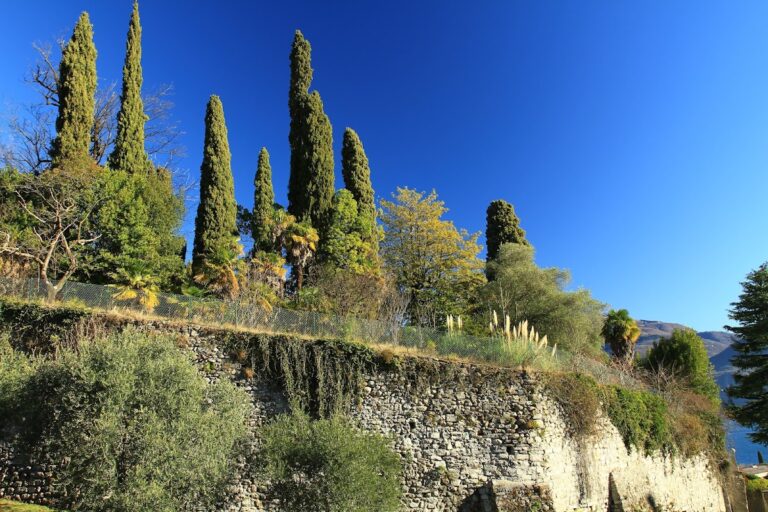
A gravel avenue follows the northern side of the castle toward the gate. That side supports continental and Alpine vegetation, including chestnut, hazel, pine, and larch. The gardens facing the lake contain Mediterranean plants such as olive trees, agaves, rosemary, and succulents. A rising staircase bordered by beds of aromatic plants leads to an olive garden. The olive grove has been described as probably the northernmost olive-growing belt in the world, and it produces extra-virgin olive oil with the protected designation of origin “Laghi Lombardi Lario.”
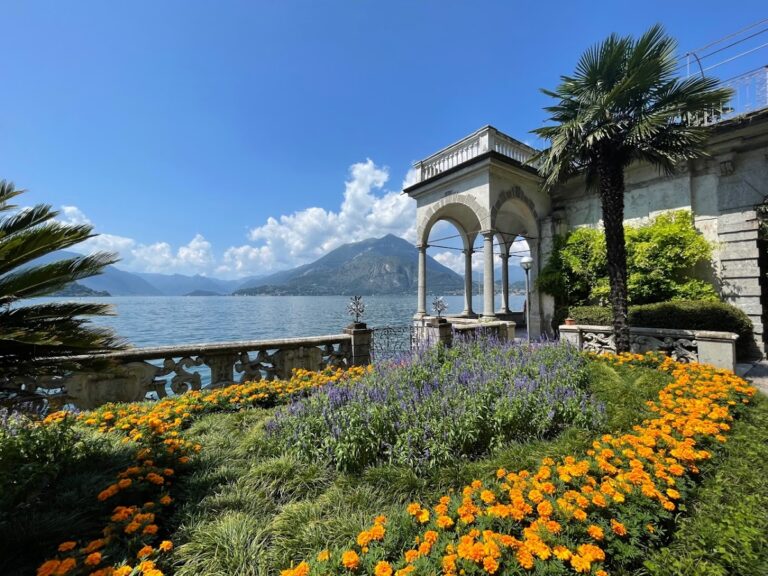
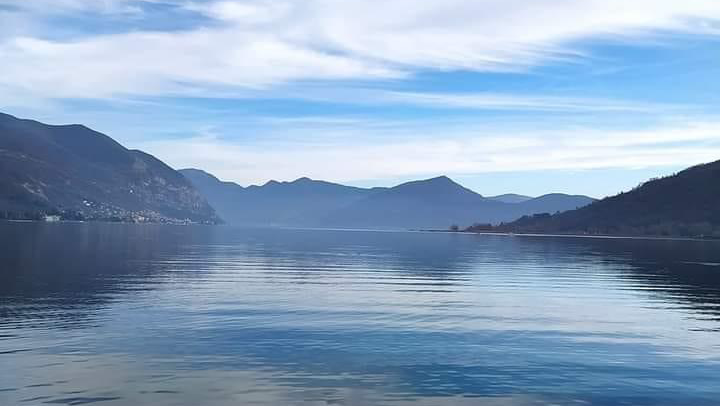
A wooden doorway leads into the walls surrounding the tower. The gardens also provide broad views over Lake Como. The Bellagio peninsula divides the lake into the Lecco branch on the left and the Como branch ahead, while the distant Ossuccio peninsula, the tip of Balbianello, Villa Carlotta, Cadenabbia, and Menaggio can be seen along the shoreline.
Lariosaurus Exhibition
Within the defensive walls, a permanent exhibition presents Lariosaurus, an extinct aquatic reptile belonging to the sauropterygian group of prehistoric marine and lagoon-dwelling reptiles. The display includes casts of specimens found around Perledo, Varese, and elsewhere. Most come from Middle Triassic deposits at Perledo, a few hundred metres from Castello di Vezio, and from Monte San Giorgio. Lariosaurus has also been reported from China.
Lariosaurus reached approximately one metre in length and had a relatively elongated neck and skull. It lived in brackish lagoons or coastal marine environments and fed on fish, which it caught with long, slender, conical teeth before swallowing them whole.
Underground Military Installations
Partially accessible underground passages survive in the gardens as elements of the Northern Frontier defensive system. The complex includes 75 mm howitzers. These installations are commonly called the Cadorna Line, although that name is not accurate for the entire system represented here.
Archaeological Finds
Iron Age tombs were found at the site in 1891. Further discoveries in 1956 included swords, helmets, and iron arrows with distinctive triangular points. A helmet dating from the late Roman period was displayed at the end of the nineteenth century and was later lost.