Castello di Senarega: A Medieval Castle-Tower in Italy

Site at a Glance
- Rating
- 4.2
- Popularity
- Very Low
- Country
- Italy
- Primary era
- Medieval
- External website
- Open
- Eras represented
- Medieval
- Civilizations
- Holy Roman Empire
- Site type
- Domestic
- Remains
- Castle
On this page11 sections
History
Castello di Senarega is a historic castle-tower in Senarega, Italy, within the municipality of Valbrevenna. Its construction developed between the thirteenth and fifteenth centuries, creating a medieval complex that served the village and its ruling lordships.
Medieval origins and expansion
An initial structure, probably the tower, was documented by the thirteenth century. It likely began as a lookout and defensive building for the small village. In the fifteenth century, the lords of Senarega added an adjoining residential palace, known as the palazzetto, whose simple square forms expanded the complex beyond its original defensive role.
Fieschi lordship
The village and castle came under the Fieschi, a powerful Genoese noble family, specifically the Counts of Lavagna of the Savignone branch. The transfer is dated to 1685, although it may have taken place as early as the fifteenth century. During the long Fieschi lordship, which continued until 1797, the complex served administrative purposes, while underground rooms were used as a prison.
Over time, the castle’s principal function became residential and administrative for the successive ruling lordships. This role ended in the eighteenth century. The Fieschi lordship itself ended in 1797, when Napoleon Bonaparte’s French rule in Liguria abolished the Imperial Fiefs, territories governed by feudal lords under the authority of the Holy Roman Empire.
Ownership and restoration
The local parish owned the castle from 1838. In the 1980s, the building was reused as a rehabilitation community for people affected by addiction. It later closed and fell into disuse. In 2014, the Ente Parco dell’Antola, the public authority administering Antola Regional Natural Park, acquired the castle and the nearby oratory through a thirty-year loan agreement. Working with the Valbrevenna municipal administration and using European funding, the park authority carried out restoration work. The castle is protected by a legal restriction imposed by the Superintendence for Archaeological Heritage of Liguria, an Italian state heritage authority.
Remains
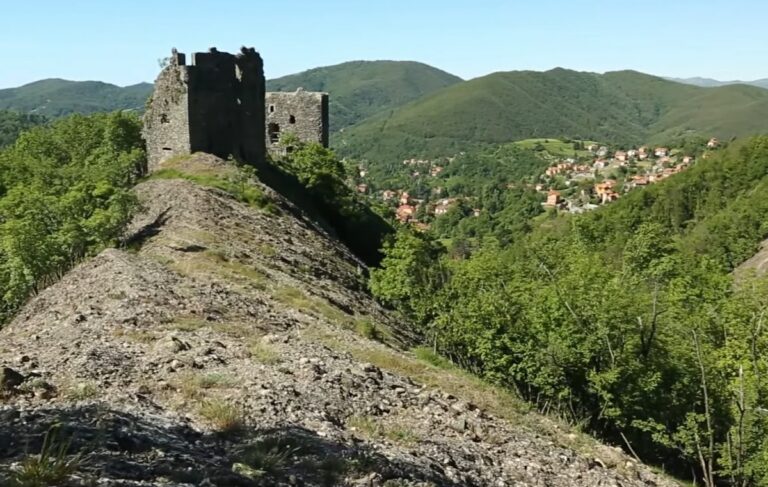
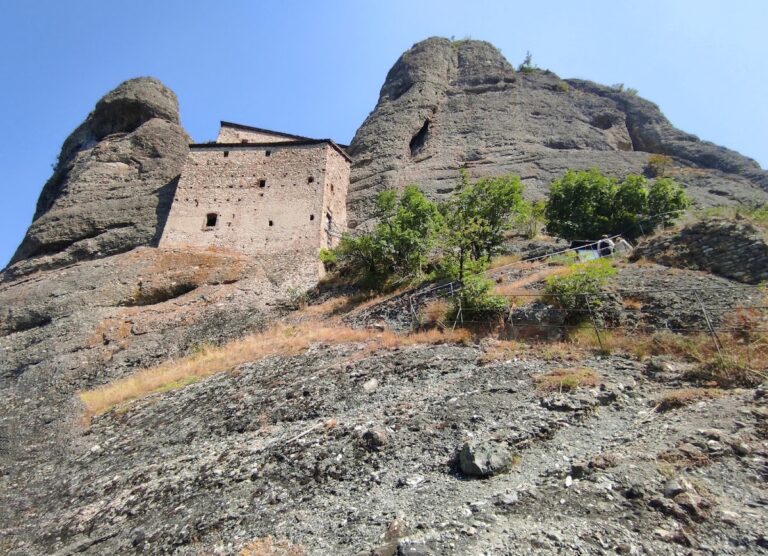
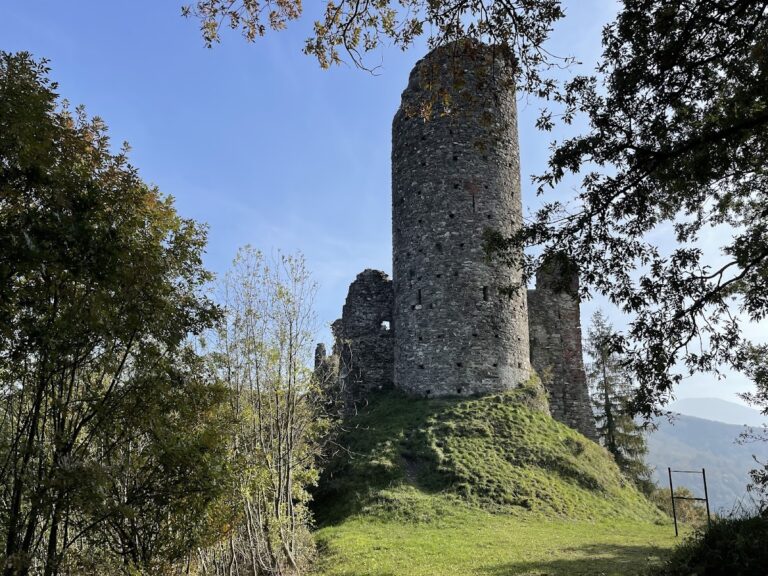
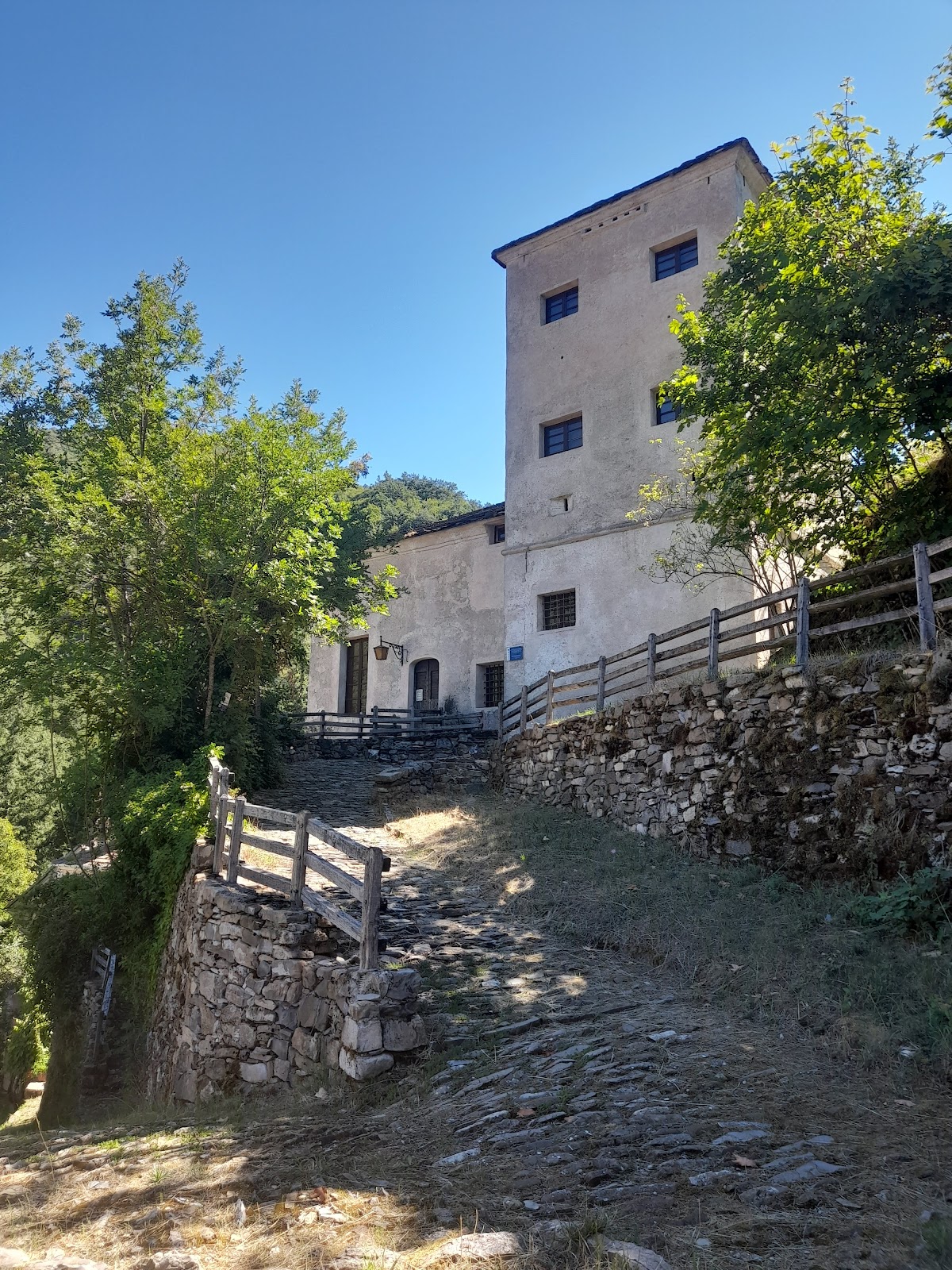
The castle-tower occupies the highest slope of the village, above the surrounding houses and narrow lanes. Its simple geometric and linear forms are integrated into the village’s group of stone buildings. The complex combines the earlier tower with the fifteenth-century residential palace and contains numerous rooms arranged for noble residence.
Castle-tower and residential palace
Medieval tower
The thirteenth-century tower forms the oldest part of the complex. Access to it was provided from the upper level of the adjoining palace. Two additional rooms on this level were fitted with loopholes, narrow openings in fortified buildings used for observation or weapons while limiting exposure to attack.
Residential rooms
The palazzetto contains rooms suitable for noble domestic life. A spacious ground-floor room has a large fireplace. The upper floor appears to have included a wood-fired oven for baking bread and cooking, an interpretation associated with the blackening of the rooms.
Underground spaces and confinement areas
Passages and prison rooms
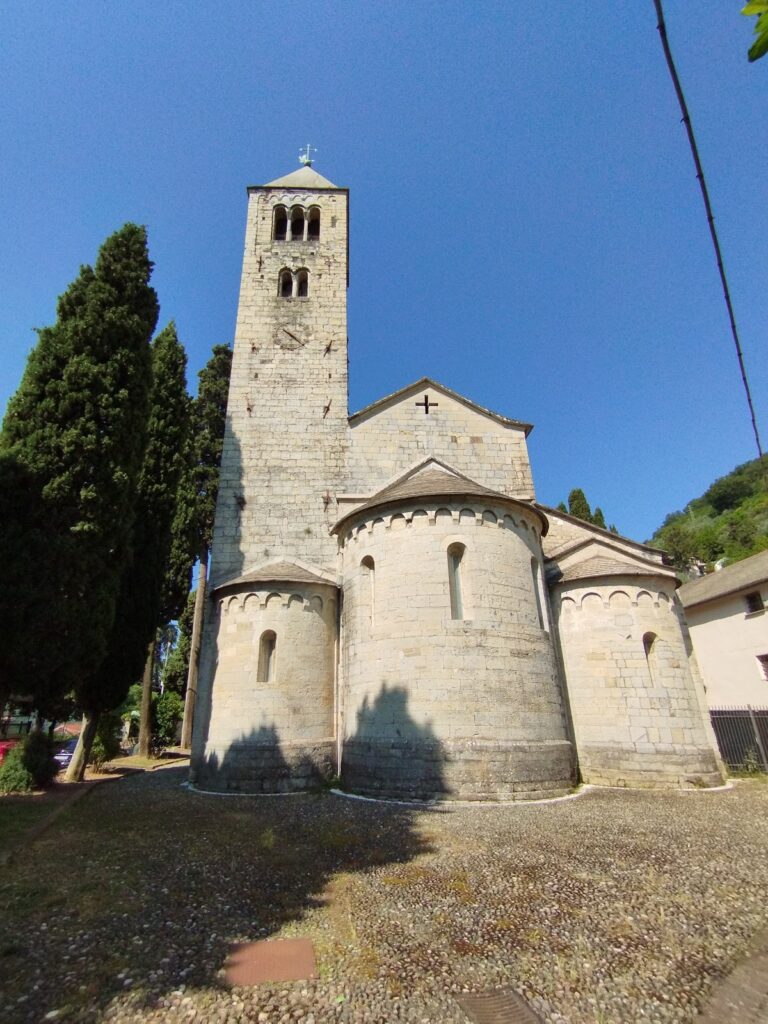
Underground passages connected the complex with the nearby parish church of Santa Maria Assunta. During the Fieschi period, underground rooms served as a prison, linking the physical remains to the castle’s administrative role.
Torture room and trapdoor
The residential palace also contains a dedicated torture room, with rings fixed to its ceiling and walls. A floor trapdoor was covered by two wooden boards. It is presumed to have been used to drop condemned prisoners into a passage resembling a chute. Horizontally arranged iron blades allegedly caused decapitation, after which the bodies were reportedly thrown into another room or outside the castle.