Montauto Castle in Impruneta: A Medieval Fortress and Renaissance Villa
Site at a Glance
- Popularity
- Medium
- Country
- Italy
- Primary era
- Medieval
- Eras represented
- Medieval, Early Modern
- Civilizations
- Duchy of Florence, Holy Roman Empire, Republic of Florence
- Site type
- Domestic
- Remains
- Castle
On this page11 sections
History
Medieval fortress and factional conflict
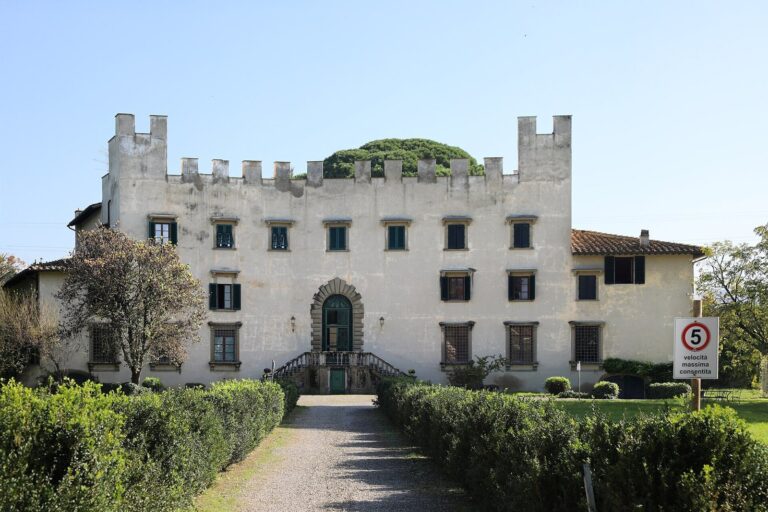
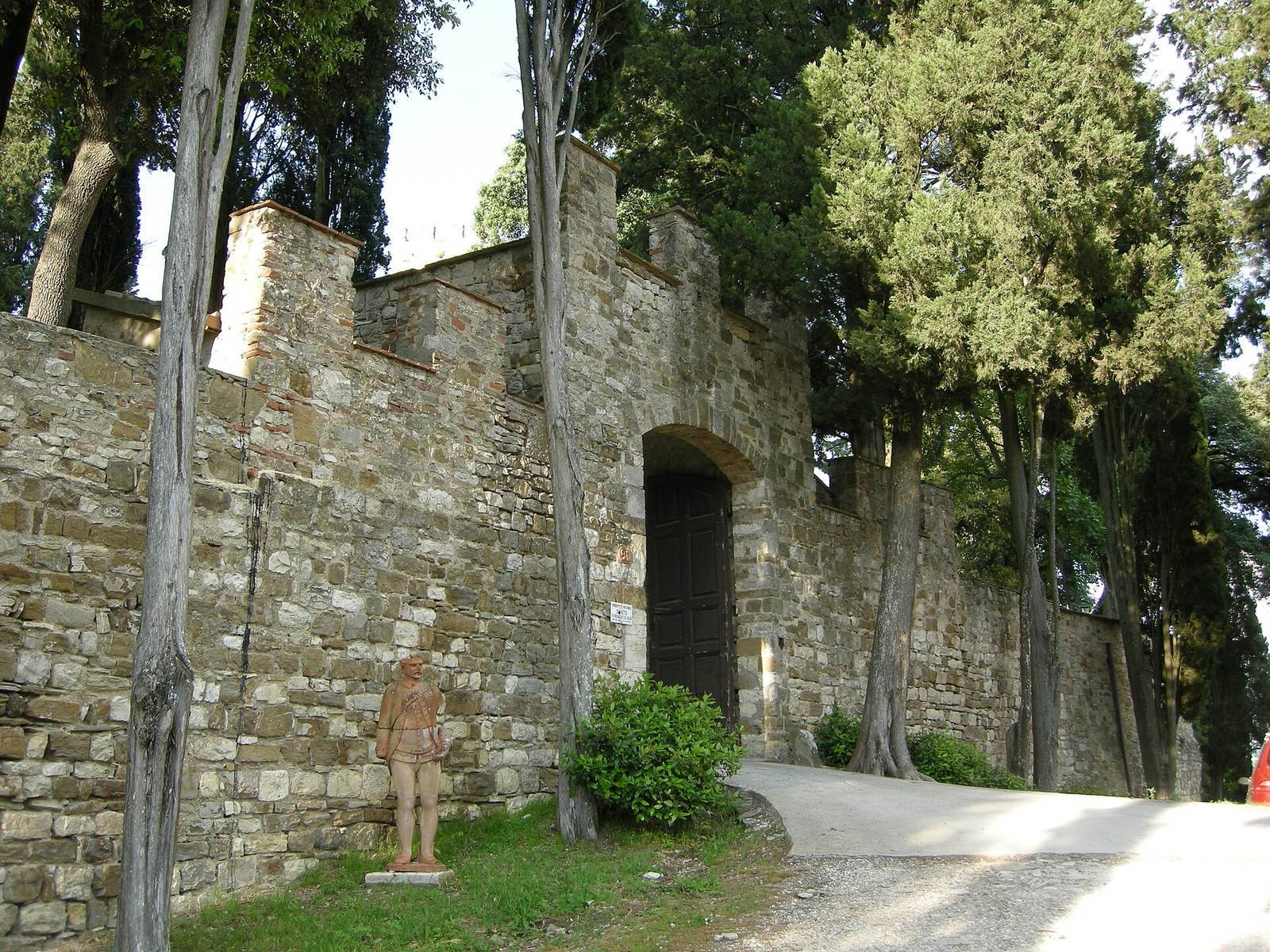
Montauto Castle is a fortified residence in Impruneta, Italy, built in 980 by the prominent Florentine Gherardini family for defense. Its name is a shortened form of Monte Acuto. Around the turn of the thirteenth and fourteenth centuries, the castle became a focus of disputes between Guelphs and Ghibellines, rival political factions in medieval Italy, and later between the White and Black Guelphs, competing groups within the Guelph movement.
Conversion into a villa
The property had earlier belonged to the Adimari family. Around 1550, Florentine merchant Bastiano Ciaìni enlarged the castle and transformed it into a suburban villa. He hired the Renaissance architect Domenico di Baccio d’Agnolo and owned Villa Il Cerretino opposite Montauto. Ciaìni also began calling himself “di Montaguto.”
After Ciaìni’s financial collapse, the Niccolini family acquired the complex a few years later and began building the west loggia.
Park and twentieth-century restoration
The Bellucci Mascagni family, which owned Montauto from 1892, had the surrounding park created. Following a period of neglect, publisher Enrico Vallecchi bought the castle after the Second World War, restored it, and made it his residence from 1957.
Remains
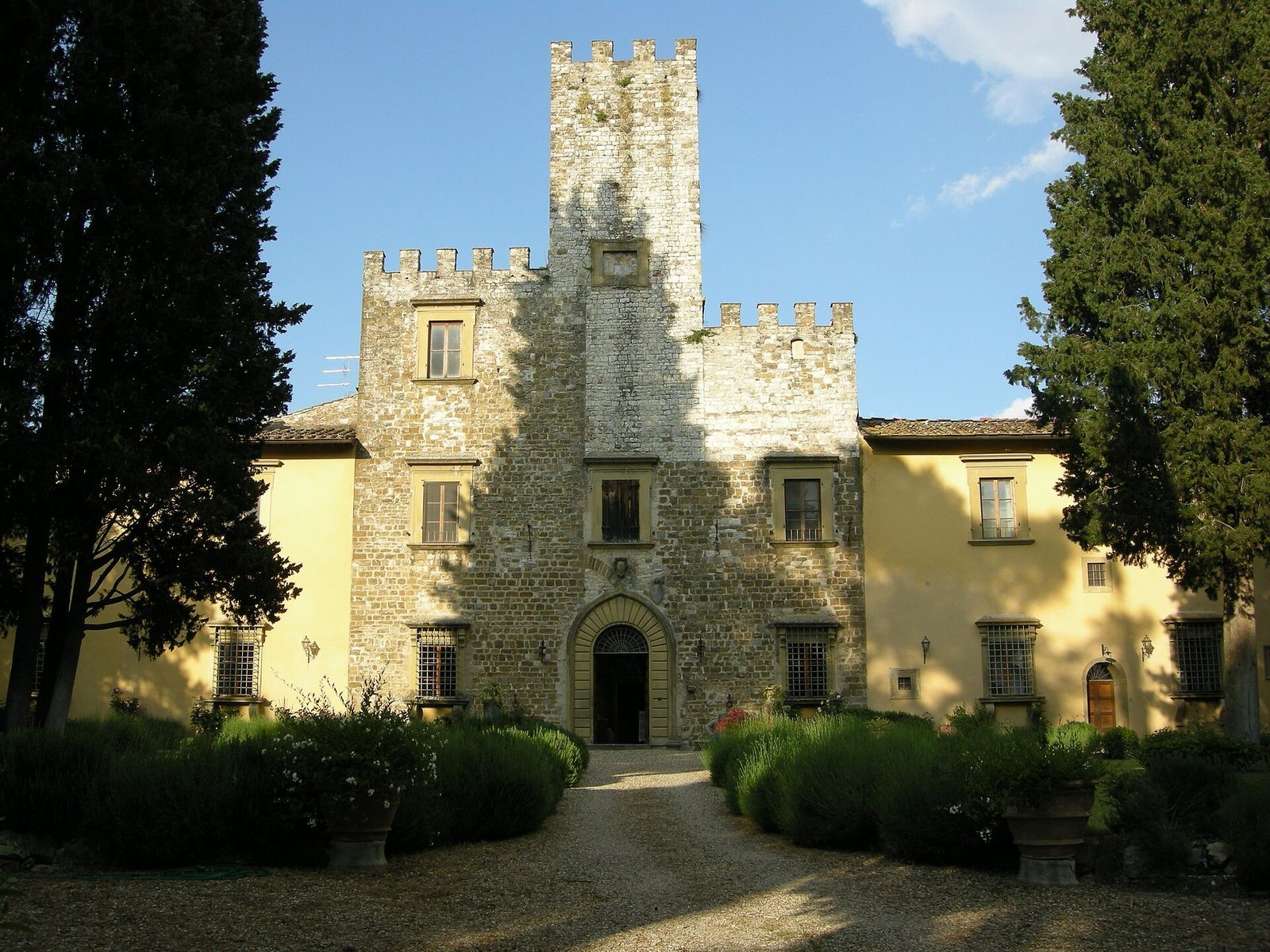
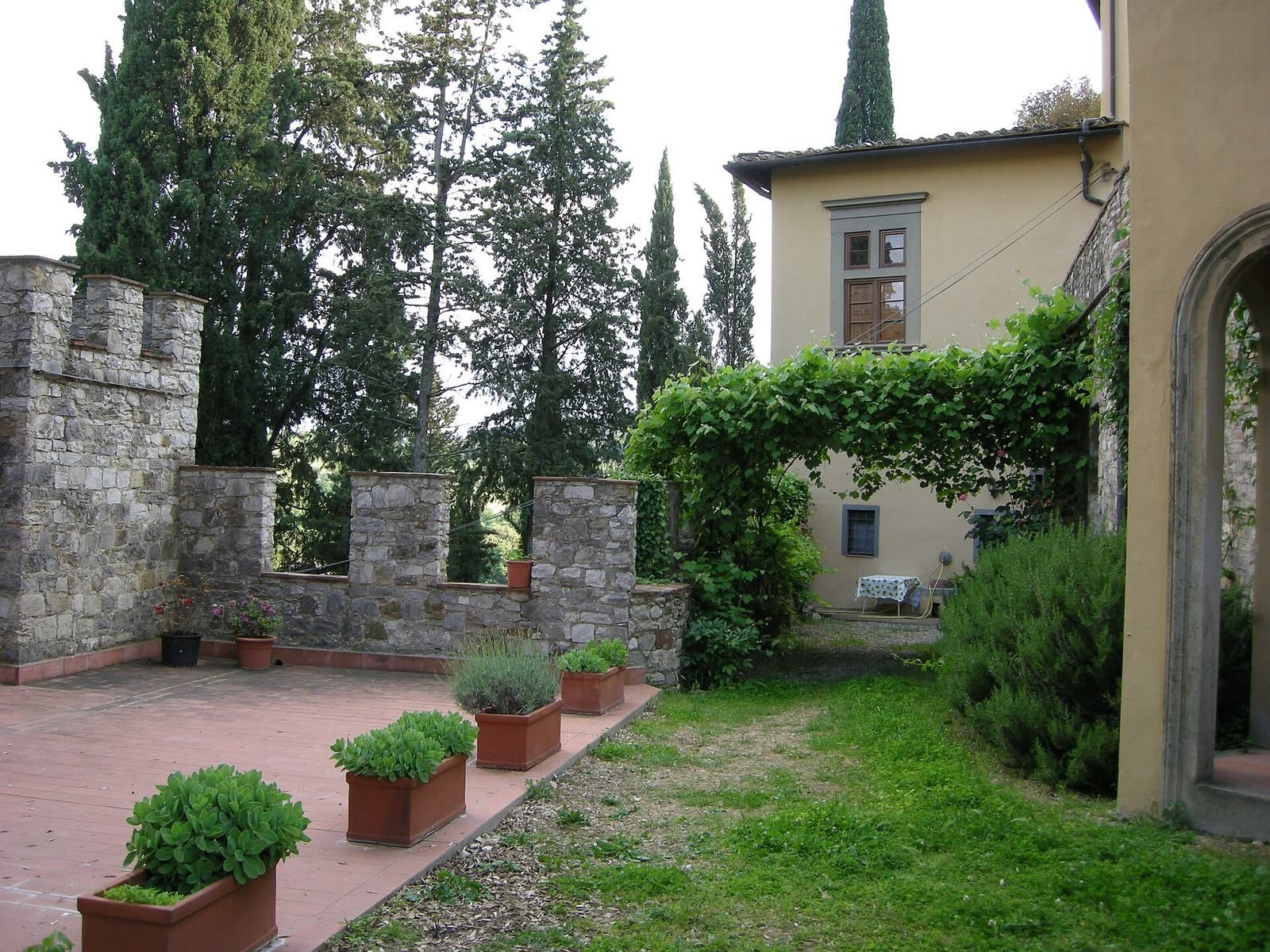
The castle occupies the summit of a conical hill at 168 metres, overlooking the Via Chiantigiana. At the centre of the property, a high tower is enclosed by a rustic, keep-like structure with exposed stone facing. Cypress trees and holm oaks form a park around the buildings, screening the property.
Castle core and loggias
Central tower and stone structure
The high tower at the heart of the property dates to the thirteenth century. It is surrounded by the rustic structure, whose exposed stone facing gives the core a fortress-like appearance.
Loggias and interior decoration
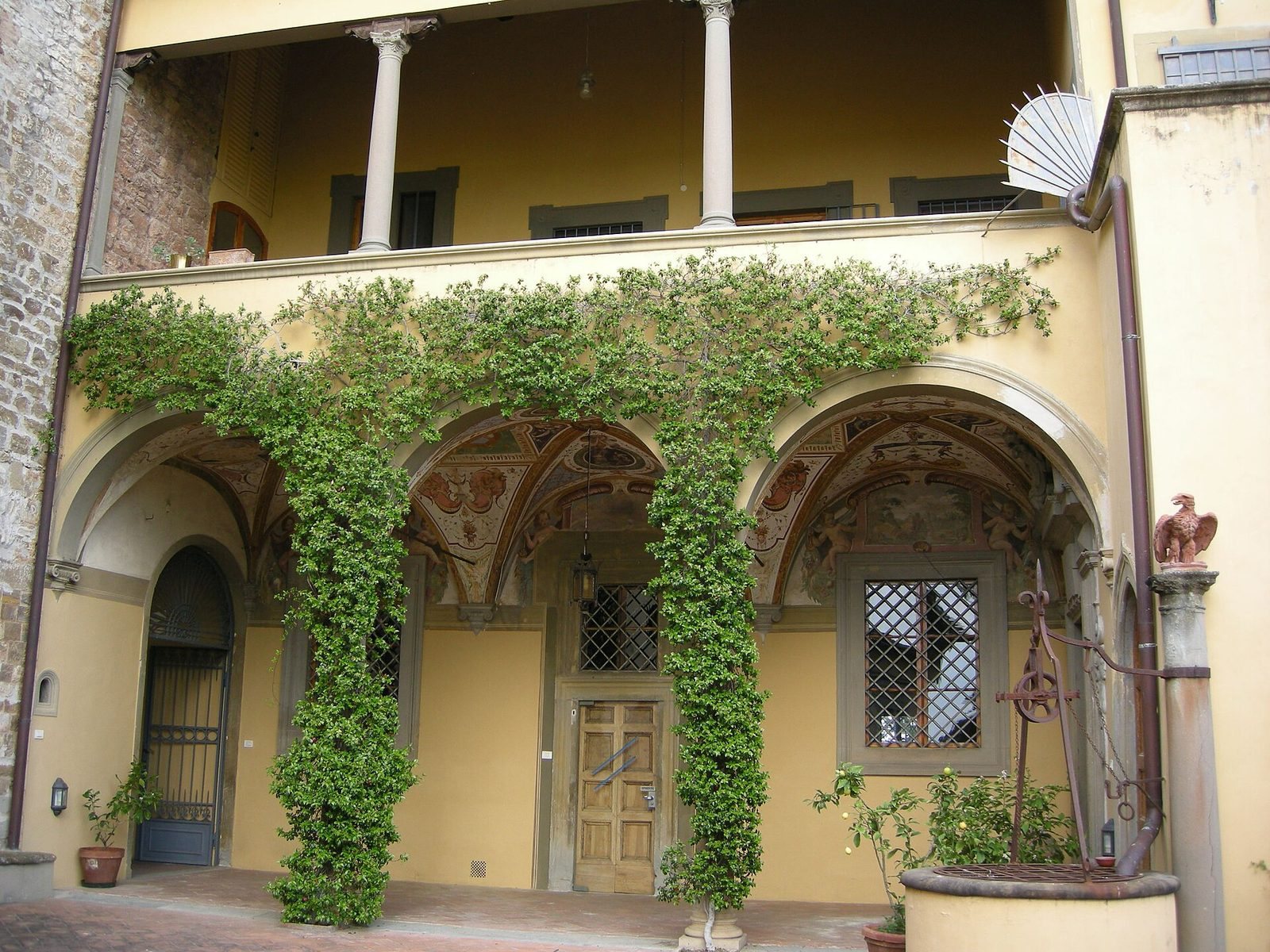
The enlargement around 1550 brought fanciful interior ornament combining human, animal, and plant forms, as well as a small loggia on the south side. The north loggia has columns and a central arched opening flanked by rectangular openings, framed in grey sandstone widely used in Tuscan architecture. The west loggia is also built of this sandstone.
Chapel and artworks
Chapel
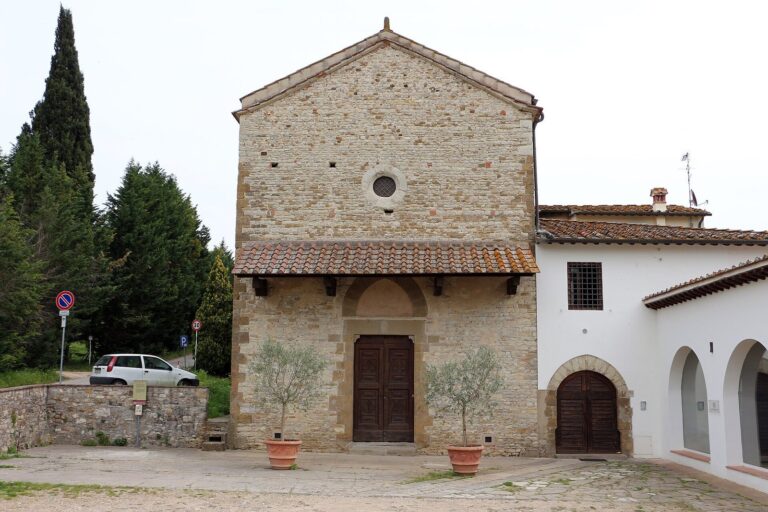
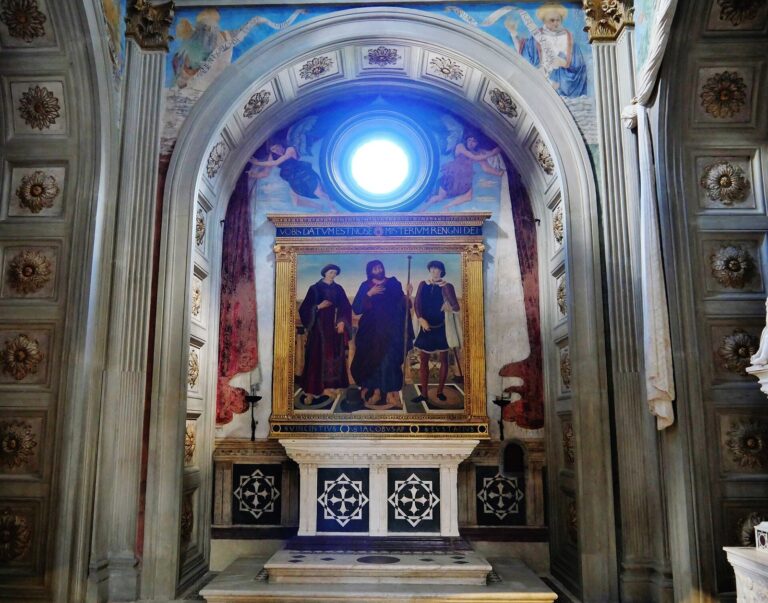
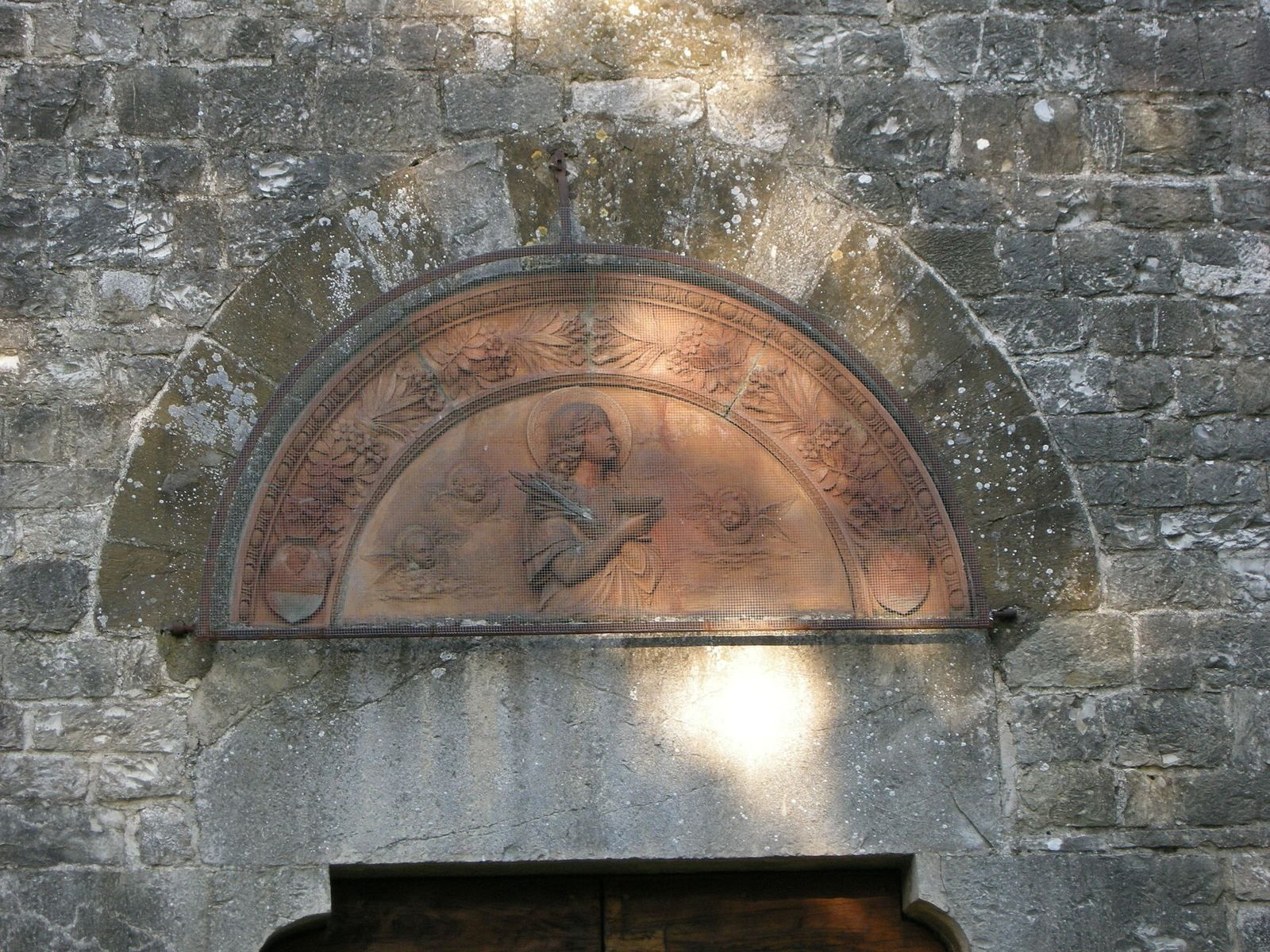
A small chapel stands beyond the property’s first ring of walls. Its exterior is simple, while the interior contains a fresco attributed to the school of Giorgio Vasari, an Italian painter, architect, and writer. A terracotta figure of Saint Lucy decorates the lunette and is attributed to the school of Luca della Robbia, a Renaissance sculptor known for terracotta works.
Art collection
Vallecchi and his wife, Maria Luigia Guaita, assembled a collection of twentieth-century Italian paintings, prints, and drawings at the castle. A Madonna and Child by Renaissance painter Filippo Lippi is listed among works formerly held at Montauto.