Castella de Saint-Sulpice: A Medieval Castle and Underground Passage
Site at a Glance
- Country
- France
- Primary era
- Medieval
- Eras represented
- Medieval
- Civilizations
- Unclassified
- Site type
- Military
- Remains
- Castle
On this page11 sections
History
Foundation and Alaman family
The Castella de Saint-Sulpice is a medieval castle site on a small promontory north of a village near the Agout in France. Around 1240, the lord Sicard Alaman established it as a raised castle mound. His family developed the site into a castle, with construction continuing into the late thirteenth century. In 1275, shortly before his death, Sicard gave a substantial sum to a chaplain to build a chapel for the lord’s household within the fortifications.
Late medieval ownership and Joan II
At the end of the fourteenth century, the castle belonged to Gaston Fébus, count of Foix. He began building the church of Notre-Dame de Saint-Sulpice. After Fébus died in 1391, his successor, John, Duke of Berry, limited the height of the church’s bell gable so it would not rise above his castle.
In 1418, Joan II of Boulogne took refuge at the Castella after her second husband, George I of La Trémoille, mistreated and dispossessed her. The dauphin Charles, heir to the French throne and later King Charles VII, had authorized her to leave her husband and seek refuge on her lands. At the castle, Joan was accused of making coins in its underground passageways, a right reserved to the king. She became known as “Joan the Counterfeiter.” The story claimed that she minted enough coins to amass a treasure. After Charles learned of the alleged minting, Joan was condemned for lèse-majesté, an offense against the sovereign, to a punishment involving a cauldron. Royal soldiers reportedly failed to find her and seized her possessions in Languedoc. With help from James II of Bourbon, she fled to Roquecourbe, where she died in 1424. The supposed treasure disappeared and has drawn searches for centuries.
Destruction during the Wars of Religion
In the sixteenth century, the lords of the Castella supported the Catholic side in the French Wars of Religion, conflicts between Catholics and Protestants in France. In 1562, Huguenot soldiers, French Protestants, captured the village and then the castle. They destroyed both and set the Castella on fire. Later, notables from Toulouse took bricks from the castle to rebuild village houses, adding to the fortress’s decline.
Later use and preservation
Even after the castle’s destruction, people used its underground passage to make gunpowder in the seventeenth century. Flooding of the Agout in 1930 filled much of the passage, which municipal action saved. The castle and its underground passage were registered as historic monuments on 14 April 1994.
Remains
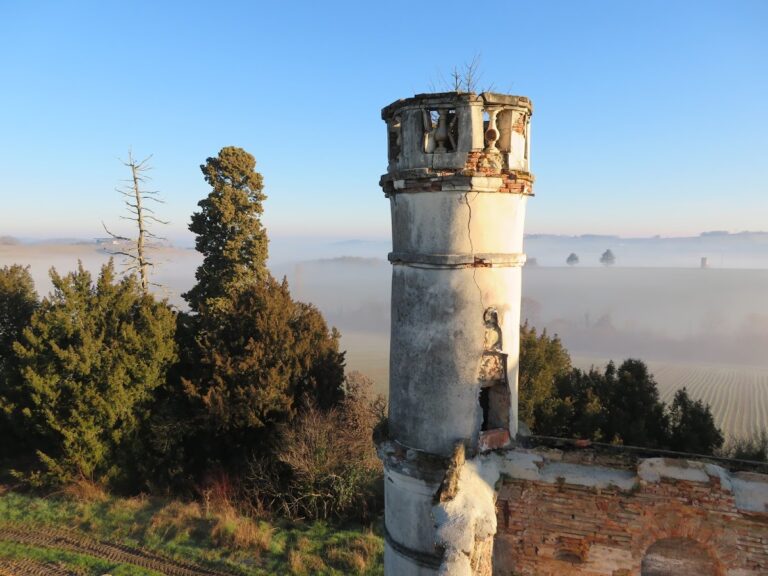
The castle mound occupies a small promontory north of the village, close to the Agout. A few ruined remains, chiefly brick, survive above ground. The castle complex developed to include a weapons hall, a lord’s residence, a keep, and a defensive wall-walk. Its surviving features include the chapel and the base of the keep, while an underground passage extends beneath the site.
Castle remains
Seigneurial chapel
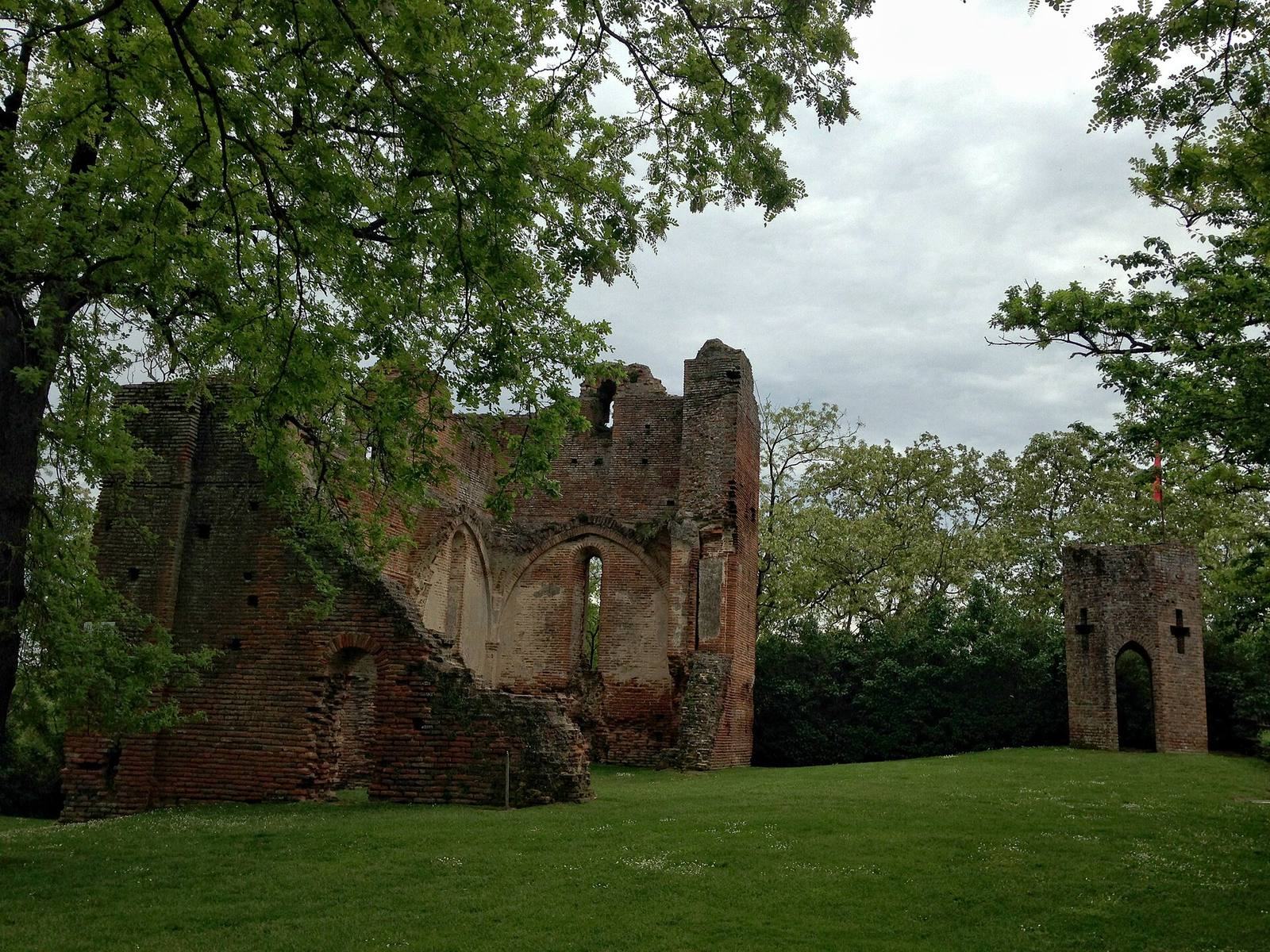
The chapel, built for the lord’s household, forms the largest part of the surviving castle remains. Several walls still stand, with Gothic arches and openings in the area thought to have held the apse, the rounded end of the chapel.
Keep
South of the chapel, the keep survives as a base. It has two small Gothic arches and four cross-shaped arrow slits, narrow openings used by defenders to aim weapons.
Underground passage
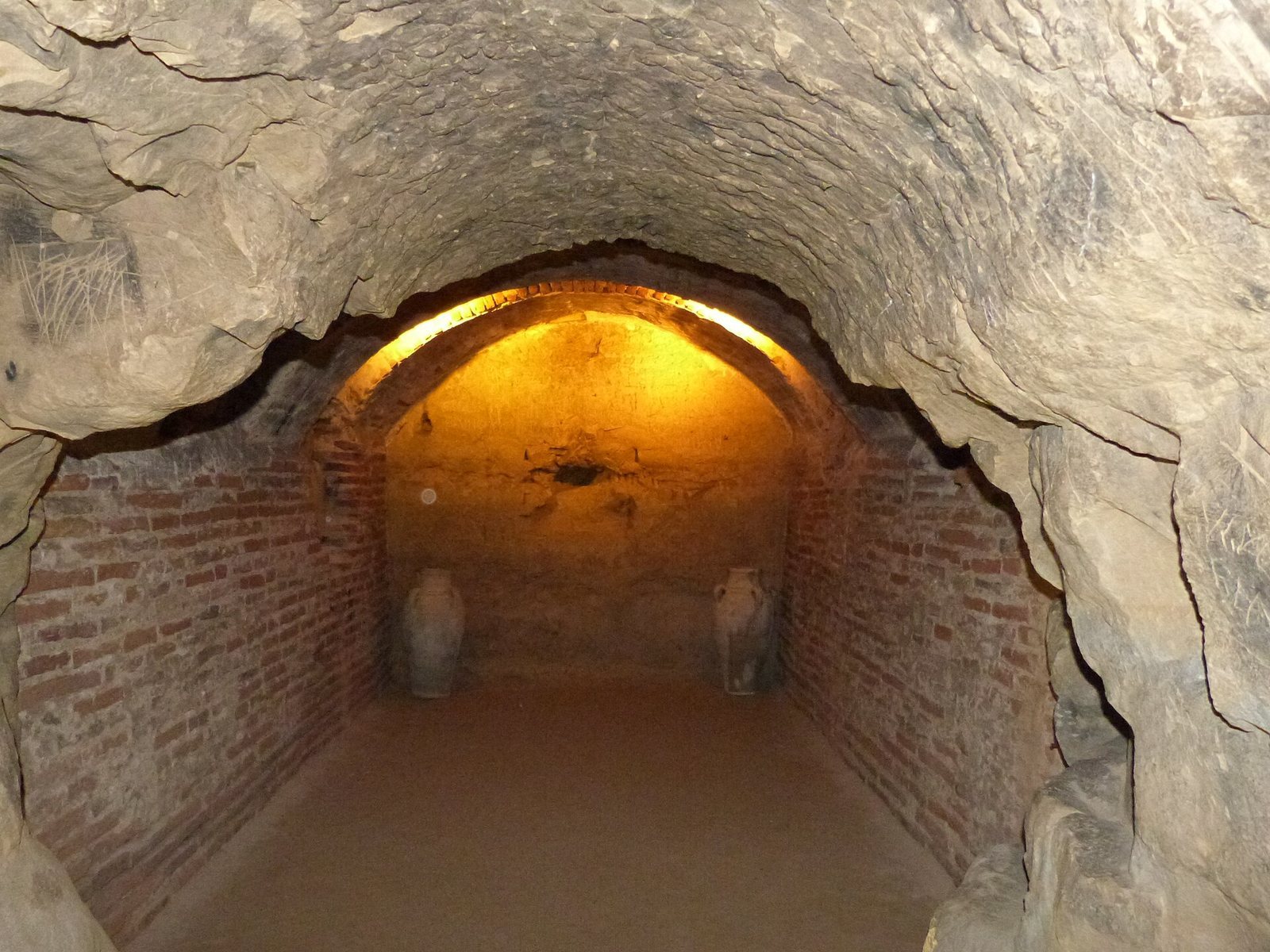
The passage runs for 142 metres through a sequence of rooms and corridors. It was cut into sandstone and marl with an iron pick, and probably predates the castle’s foundation around 1240; it may be more than 1,000 years old. Its rooms include silos, latrines, a well, and a small space that appears to have served as a chapel. These provisions supported survival during a siege. After the castle was built, the passage also offered an escape route from the fortress and served as storage. Its entrance lies above a defensive pit crossed by a metal bridge, and an old guardhouse is associated with the passage. It remains in usable condition.
Dovecote
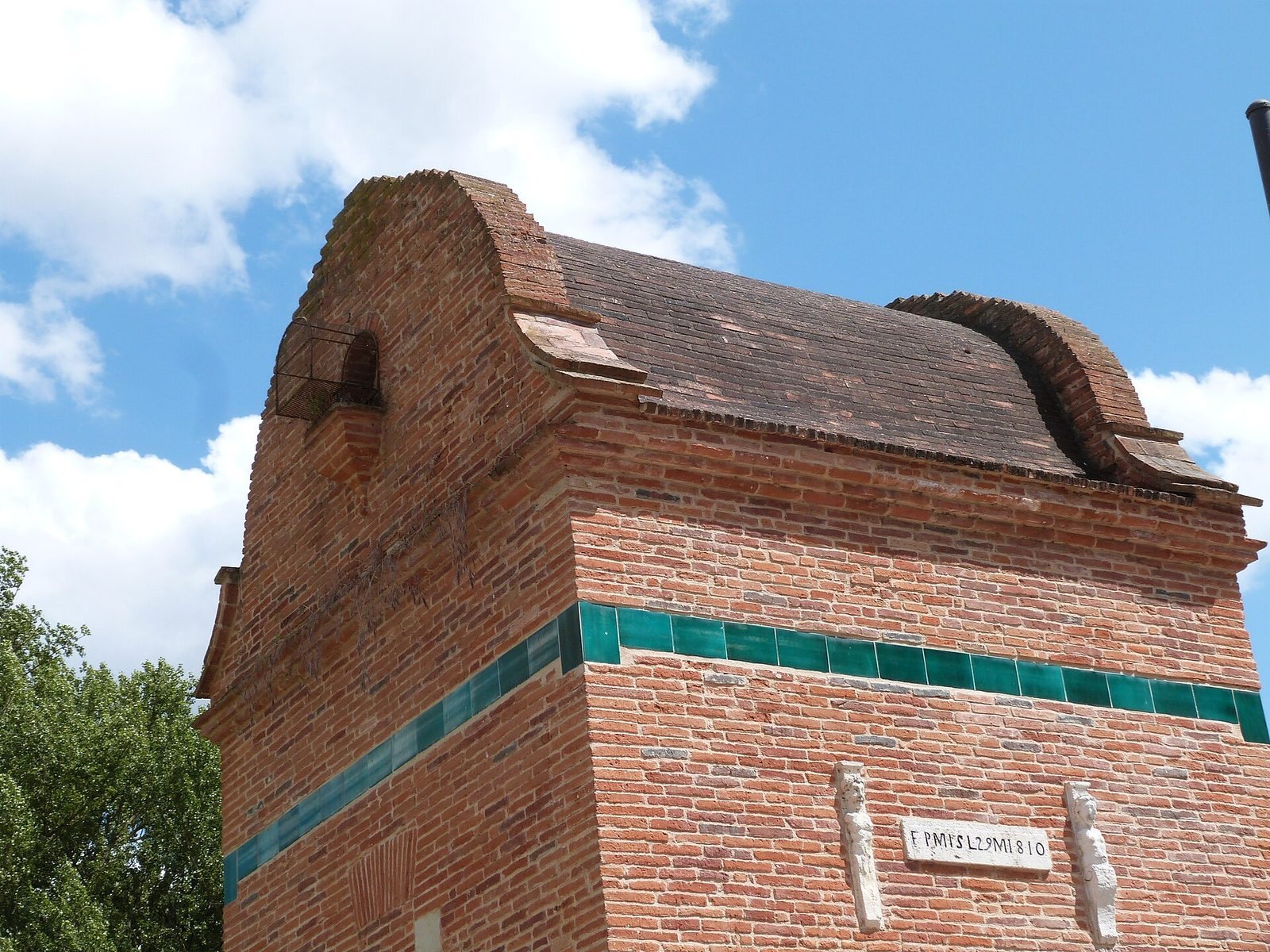
Below the castle stands a brick dovecote, a structure for housing pigeons, with a notable roof. It may have been an outbuilding of the castle.