Sarvjak Castle: An Ardalan Fortress and Baban Military Prison
Site at a Glance
- Country
- Iraq
- Primary era
- Medieval
- Eras represented
- Medieval
- Civilizations
- Unclassified
- Site type
- Military
- Remains
- Castle
History
Sarvjak Castle is a mountain fortress in the Barzinja area of Iraq, associated with the Ardalan principality, a Kurdish political house, and later with the Baban dynasty, another Kurdish house. Its construction date is uncertain. One dating places it in the Ardalan period before Mamun Beg’s rule (1457–1494), while another attributes its construction to Mamun Beg in the fifteenth century. A local archaeologist has proposed that it may be more than a thousand years old, linking its architecture to the era of Sultan Muzafar, a Muslim ruler whose identity is uncertain.
Under the Babans, the castle served as an important military prison. Several Baban kings were held there for periods during continuing disputes within the ruling family.
Several explanations have been proposed for the area’s name. One connects it with a queen who ruled the castle. Another traces it to a place in Syrian Kurdistan, from which tribes are said to have migrated to escape Ottoman rule and settled near the fortress. A third interprets the name as Turkish words for “water” and “a small trickling flow,” linking it to the castle’s spring.
A building tradition says the master builder was killed after completing the castle so that its construction methods and military features would not be revealed to an enemy.
Remains
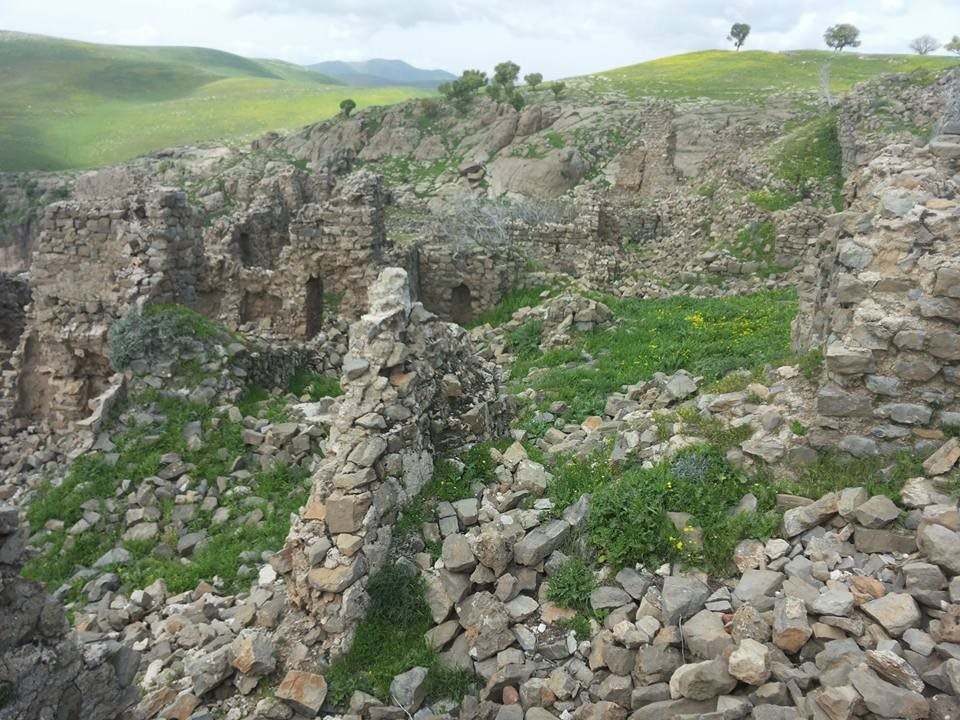
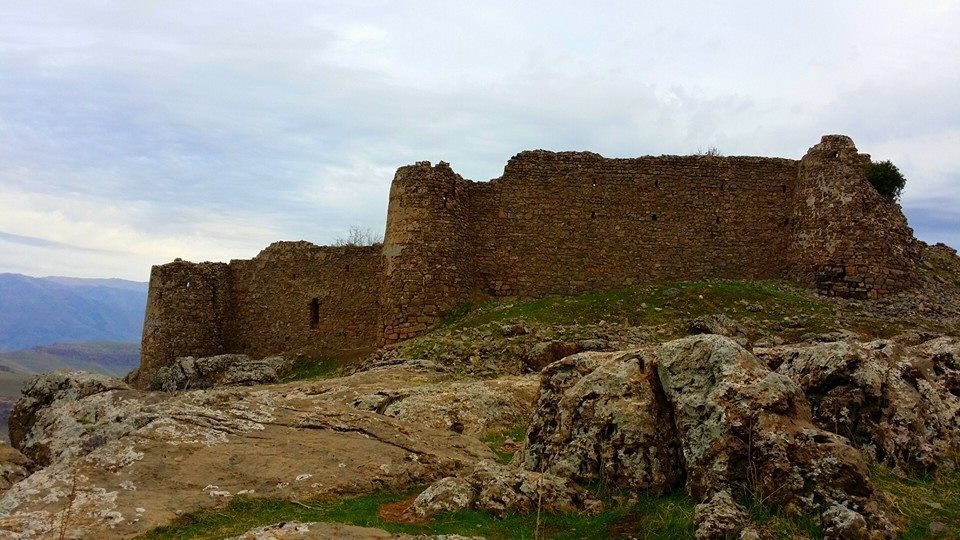
The castle occupies a steep, rugged mountain slope at about 1,101 metres above sea level. Its stone walls were built with lime and gypsum and were described as especially sturdy. A local rendering of its name is “Stone and Lime Castle.” Most of the walls have collapsed after neglect by the authorities responsible for the site.
The lower gate faces a village, and stone steps lead upward into the castle. A spring rises beneath the mountain rock and was enclosed within the fortress wall, concealing the water supply from enemies.
The castle’s interior features include vaults, rooms, halls, and decorative elements. A local archaeologist has warned that further collapse could make restoration more difficult.