Castle of Talteüll: A Romanesque Fortress in Massoteres, Spain
Site at a Glance
- Rating
- 5
- Popularity
- Very Low
- Country
- Spain
- Primary era
- Medieval
- Eras represented
- Medieval
- Civilizations
- Unclassified
- Site type
- Military
- Remains
- Castle
On this page9 sections
History
Origins and the Counts of Urgell
The Castle of Talteüll is a Romanesque fortress in Massoteres, Lleida, Spain. It probably dates to the first half of the eleventh century, when the counts and bishops of Urgell were conquering territory near Guissona and the Christian frontier had moved across the Llobregós River.
Talteüll appears in a record from 1024 concerning a dispute over land. Bishop Saint Ermengol of Urgell sought the return of property he said Guillem de Lavansa had taken unlawfully. By 1065, the castle also served as a reference point for nearby holdings. In her will, Ermengarda left her son Ponç houses, a dovecote, fields, vineyards, and a wine vat situated below it.
The counts of Urgell retained higher authority over the castle, which was probably held as a fief, or property granted in return for obligations, from the late eleventh century. In 1093, Bishop Arnau Guillem bequeathed the castle and its associated lands and rights to his brother Tedball, whose tenure was under Ramon Guerau, the count’s castellan, or castle officer. Guillem Dalmau de Cervera may have held that office in 1129. In 1131, Count Ermengol VI granted Talteüll and Lavansa castles as fiefs to Galceran de Pinós and his son. Count Ermengol VII later named his son Ermengol VIII as heir to Talteüll in a will of 1167.
Thirteenth-century transfers
By the early thirteenth century, Talteüll was a fief of Ramon de la Guàrdia, who left it to his son Guillem in 1205. During conflicts in the County of Urgell under James I, king of Aragon, the king took control of the territory and granted it to Galceran de Pinós the Elder. In 1277, Galceran left the castle to his daughter Berenguera, who was married to Ramon de Cervera.
Later lordship and recognition
The Pinós family held the lordship until 1377, when Pere Galceran de Pinós sold it to Arnau d’Erill. The transfer recognized that the Pinós held the territory as a fief from the counts of Urgell, who kept the higher authority. Around 1381, the community comprised 26 hearths, a historical count of households, and belonged to the Cervera administrative district. By 1487, the castle had passed from the Erill family to the Camporrells, lords of Biosca. In 1831, shortly before jurisdictional lordships were abolished, Felip de Buixons and N. Martí were named as Talteüll’s lords.
The castle is recognized as both a Cultural Asset of National Interest and a Spanish Asset of Cultural Interest, the latter designation dating from 1988. In 2019, a shared protection area was established for the castle and the Church of Saint Peter of Talteüll.
Remains
Setting and layout
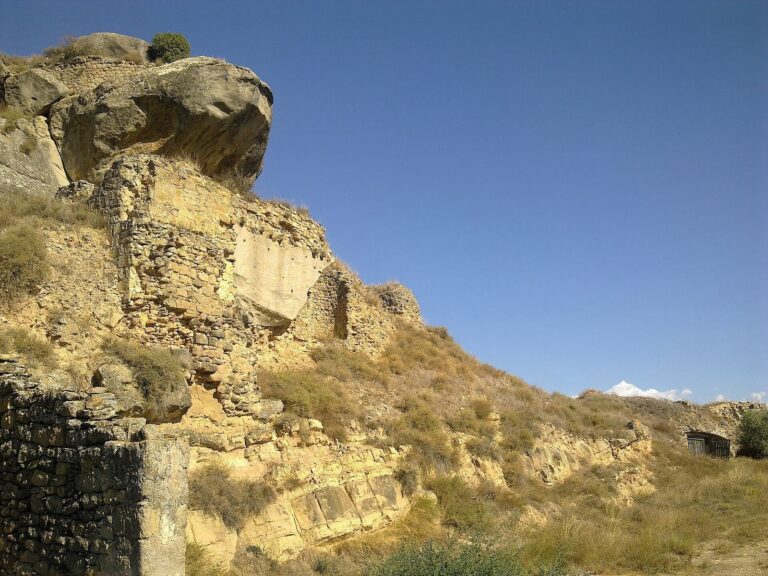
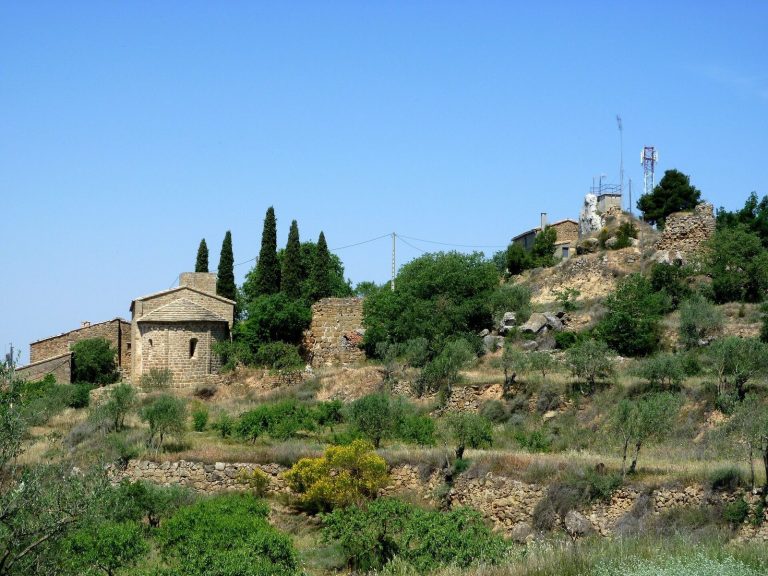
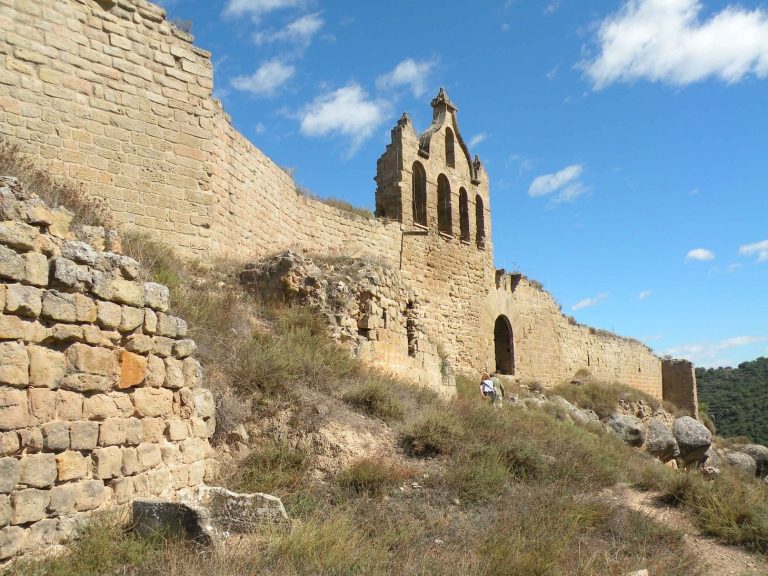
The ruins stand on a hill at Talteüll’s highest point, on the left bank of the Llobregós River, at an elevation of 488 metres. The surviving layout includes a cylindrical tower and walls that follow the hillside’s natural rock. Cut stone, rubble masonry, and mortar are visible in the remains.
Surviving fortifications
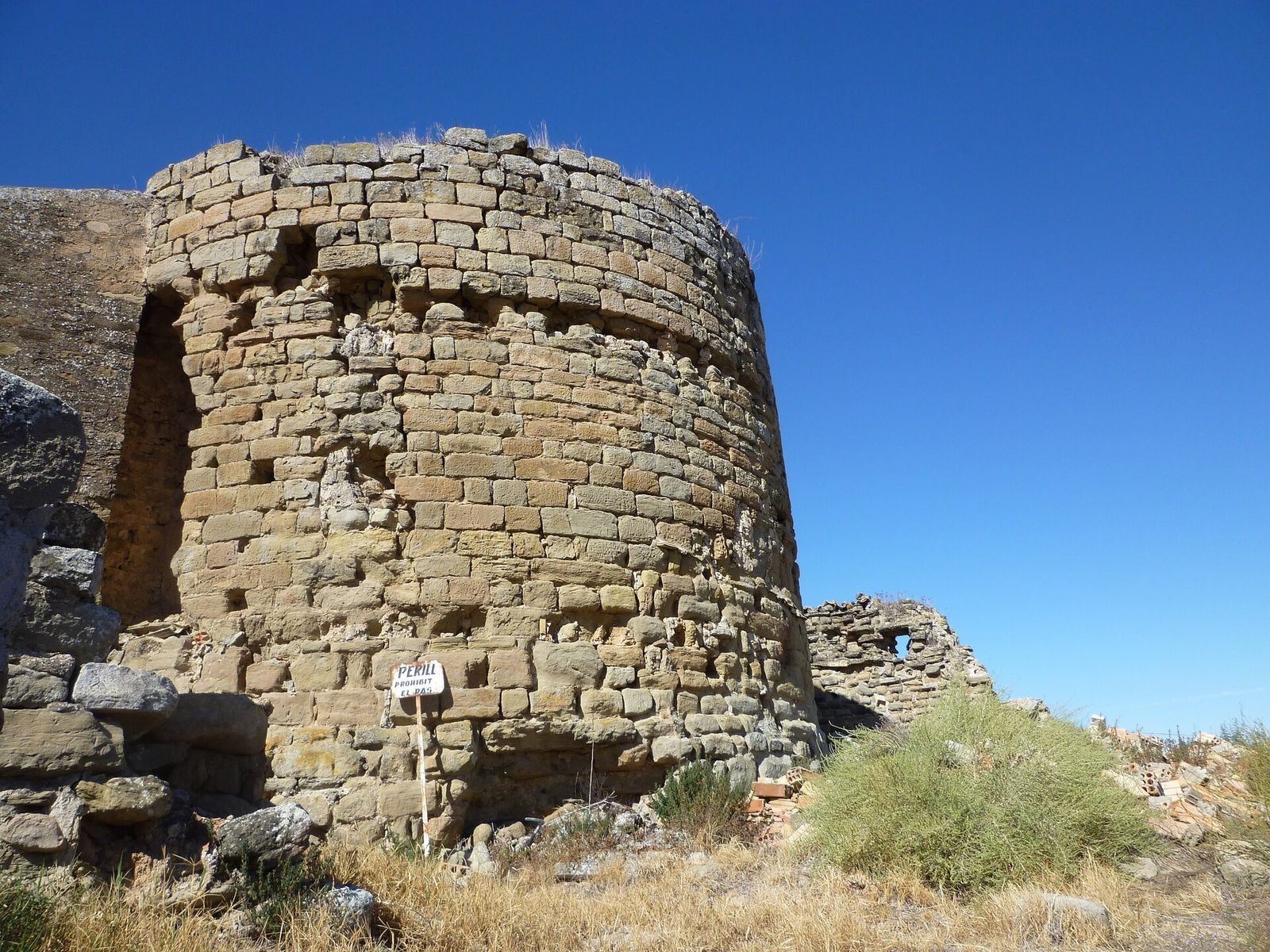
Cylindrical tower
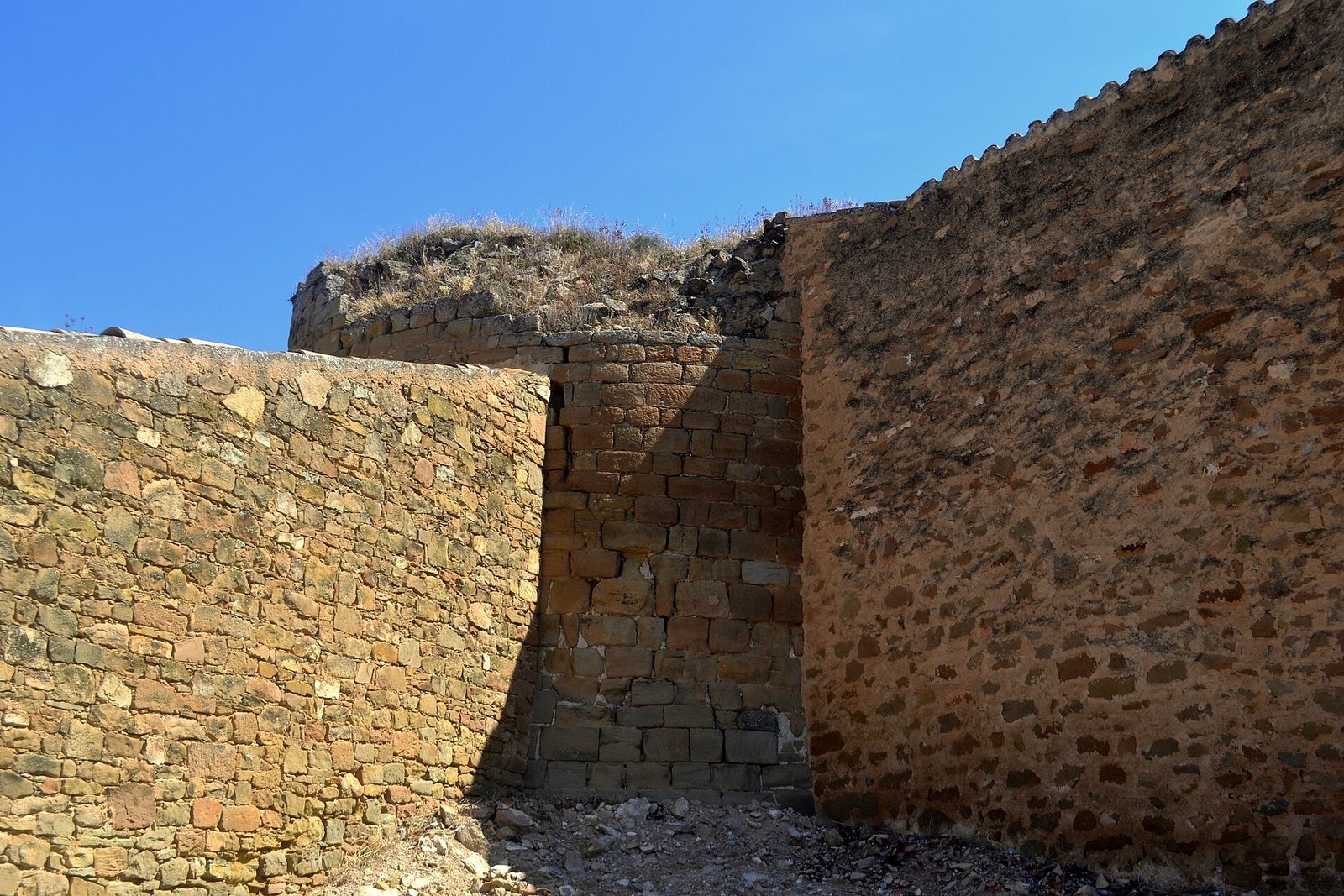
The lower part of the tower survives to a height of about five metres. Its rectangular cut-stone blocks are laid in regular courses and bonded with mortar. The lower courses are larger, extending to roughly two metres, while the courses above are smaller. The tower narrows gently as it rises, and its lowest courses form a small stepped base. On the lower north side, missing outer cut-stone blocks reveal a core of small masonry laid irregularly, with thick layers of mortar between courses.
Walls
A sloping wall on the north side follows the natural rock and may have formed part of an outer enclosure. Another wall abuts the tower, indicating that this fortification wall was built after the tower.