Callanish X: A Neolithic Stone Setting on Lewis
Site at a Glance
- Popularity
- Medium
- Country
- United Kingdom
- Primary era
- Stone Age
- Eras represented
- Stone Age
- Civilizations
- Unclassified
- Site type
- Religious
- Remains
- Sanctuary
On this page5 sections
History
Neolithic setting
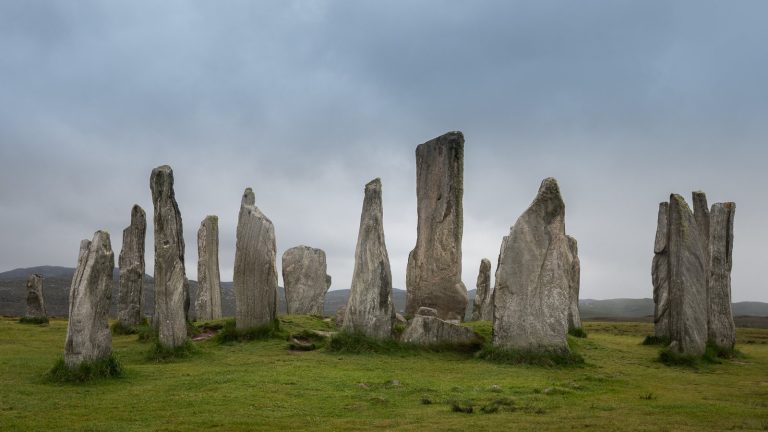
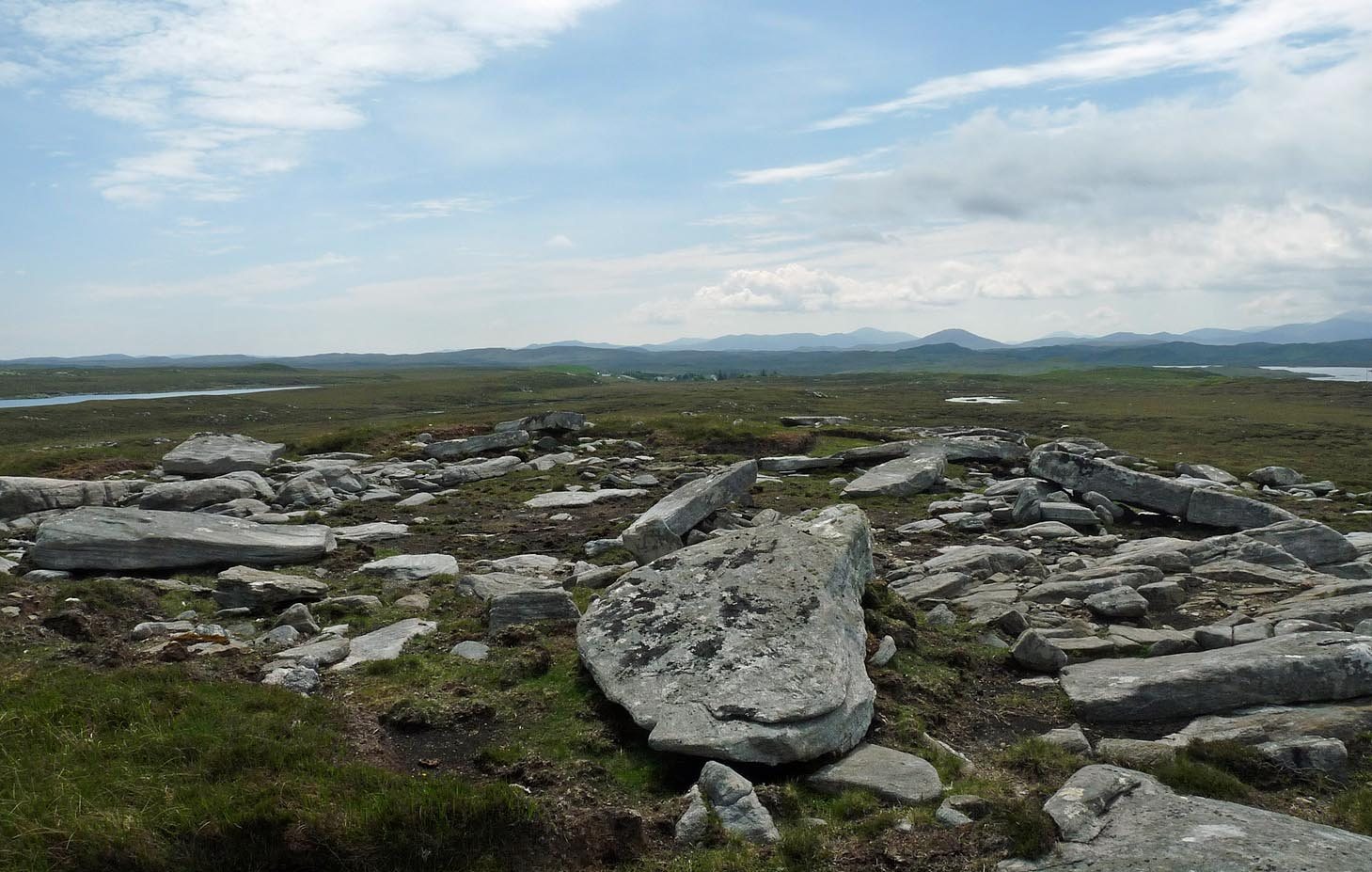
Callanish X is a prehistoric stone setting on the rocky ridge of Druim nan Eun, on western Lewis in the United Kingdom. Its likely construction dates to the Neolithic, the later part of the Stone Age before metal tools came into widespread use. The monument is estimated to fall within 3000–2500 BC, with about 2750 BC proposed as an approximate date. It has not been directly dated; its chronology is based on similarities to other settings in the Callanish group. Callanish X belongs to the wider episode of monument building on Lewis and is understood as part of a broader ceremonial landscape.
Modern examination
Between 2003 and 2006, the stones were examined and the peat covering them was removed, revealing the arrangement of the monument.
Remains
Stone setting
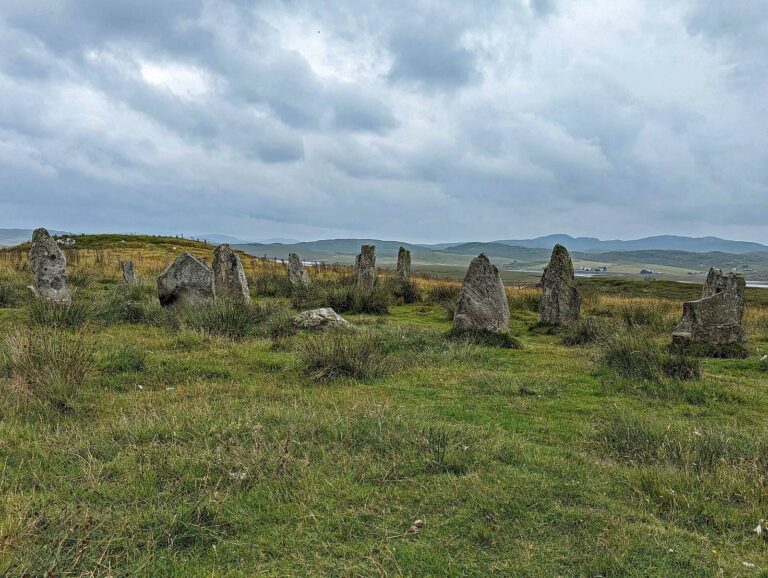
The collapsed monument stands on the summit of Druim nan Eun. Its outer ring contained 17 stones: two are missing, while the other 15 have fallen. Five more fallen stones within the ring formed an inner circle. One separate stone stood to the north, and two stood to the south. The southern stones, together with two naturally positioned erratics (rocks displaced from their geological source, often by ice), appear to have formed a short entrance or avenue rising uphill from the south. The stones are Lewisian gneiss, a hard metamorphic rock associated with Lewis’s ancient bedrock. They were placed directly on the rock, which was too hard for pits or sockets to be dug. Smaller stones wedged around their bases provided support, but most of the stones had fallen after several hundred years.