Callanish III: A Neolithic Stone Monument on Lewis
Site at a Glance
- Rating
- 4.5
- Popularity
- Very Low
- Country
- United Kingdom
- Primary era
- Stone Age
- Eras represented
- Stone Age
- Civilizations
- Unclassified
- Site type
- Religious
- Remains
- Sanctuary
On this page5 sections
History
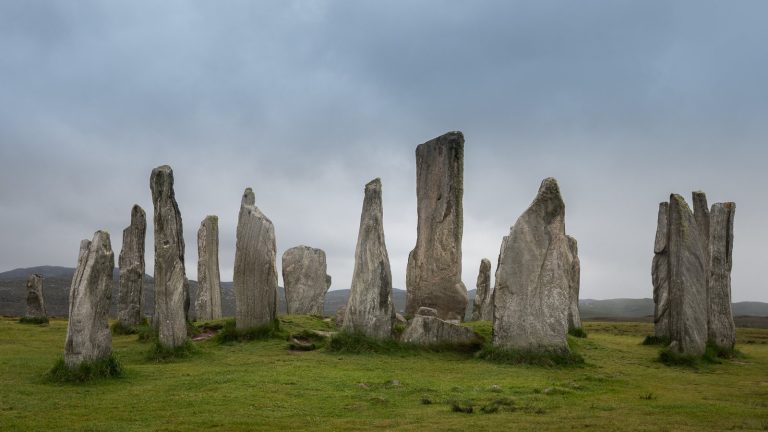
Callanish III is a late Neolithic stone monument on the west coast of Lewis in Scotland, United Kingdom. Built around 2750 BC, it belongs to the wider Callanish group of 21 prehistoric monuments, which date to around 3000 BC and form a concentrated ceremonial landscape.
Excavation in 1858 showed that the stone setting covered an earlier timber monument. The stones may have turned a place used for gatherings into a lasting structure, although gatherings or ceremonies at the earlier site remain an interpretation rather than a certainty.
Remains
Concentric stone settings
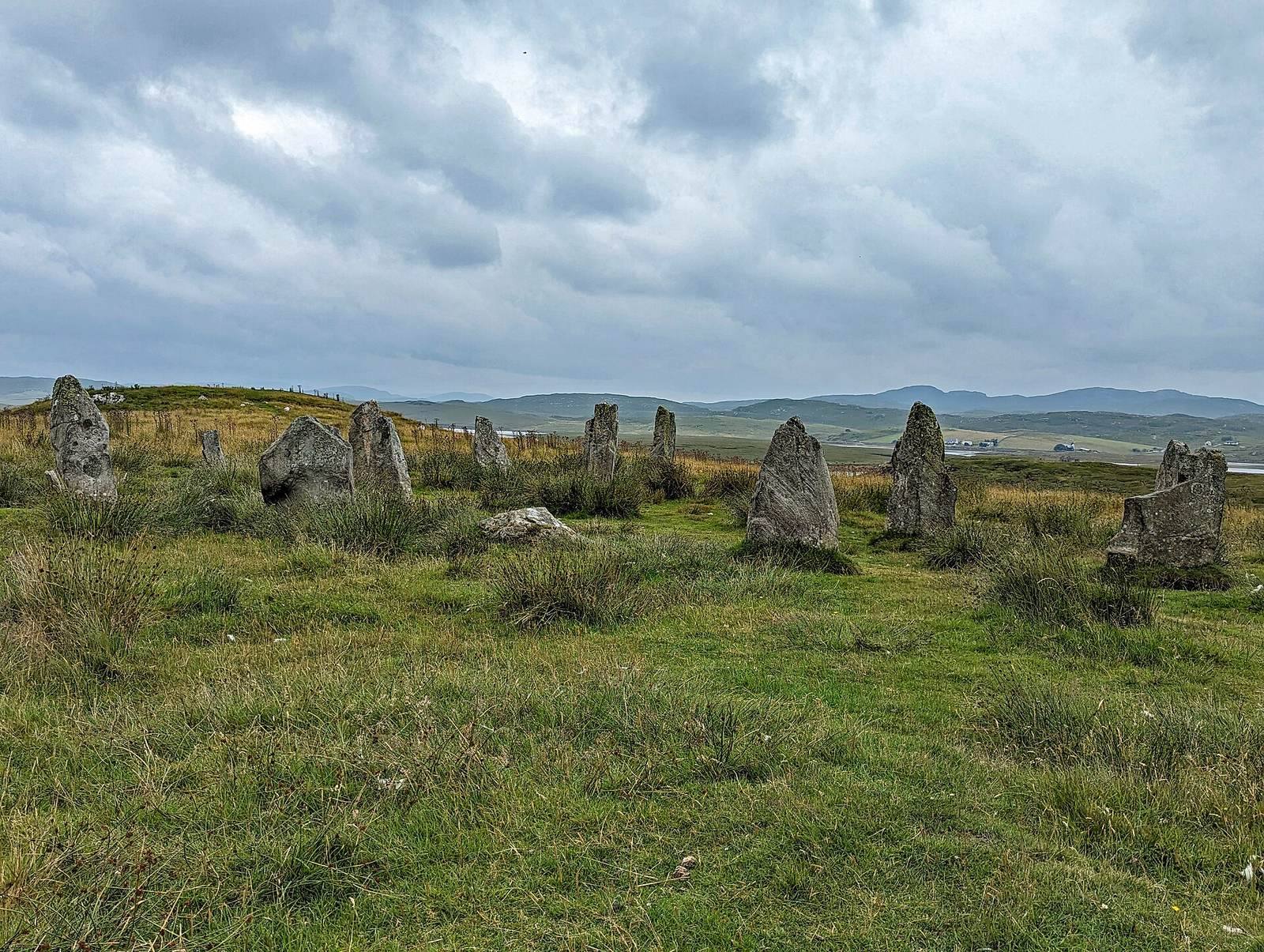
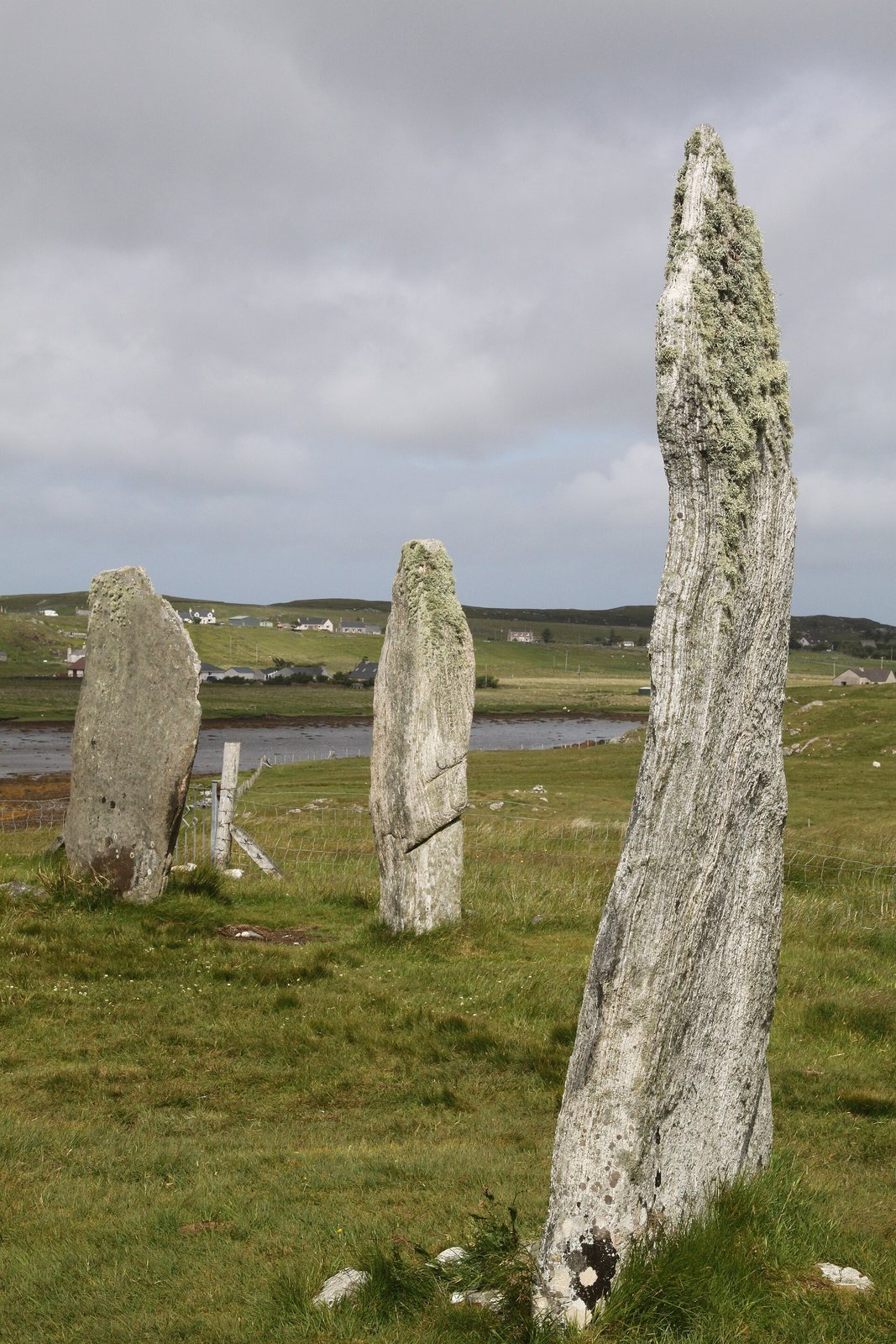
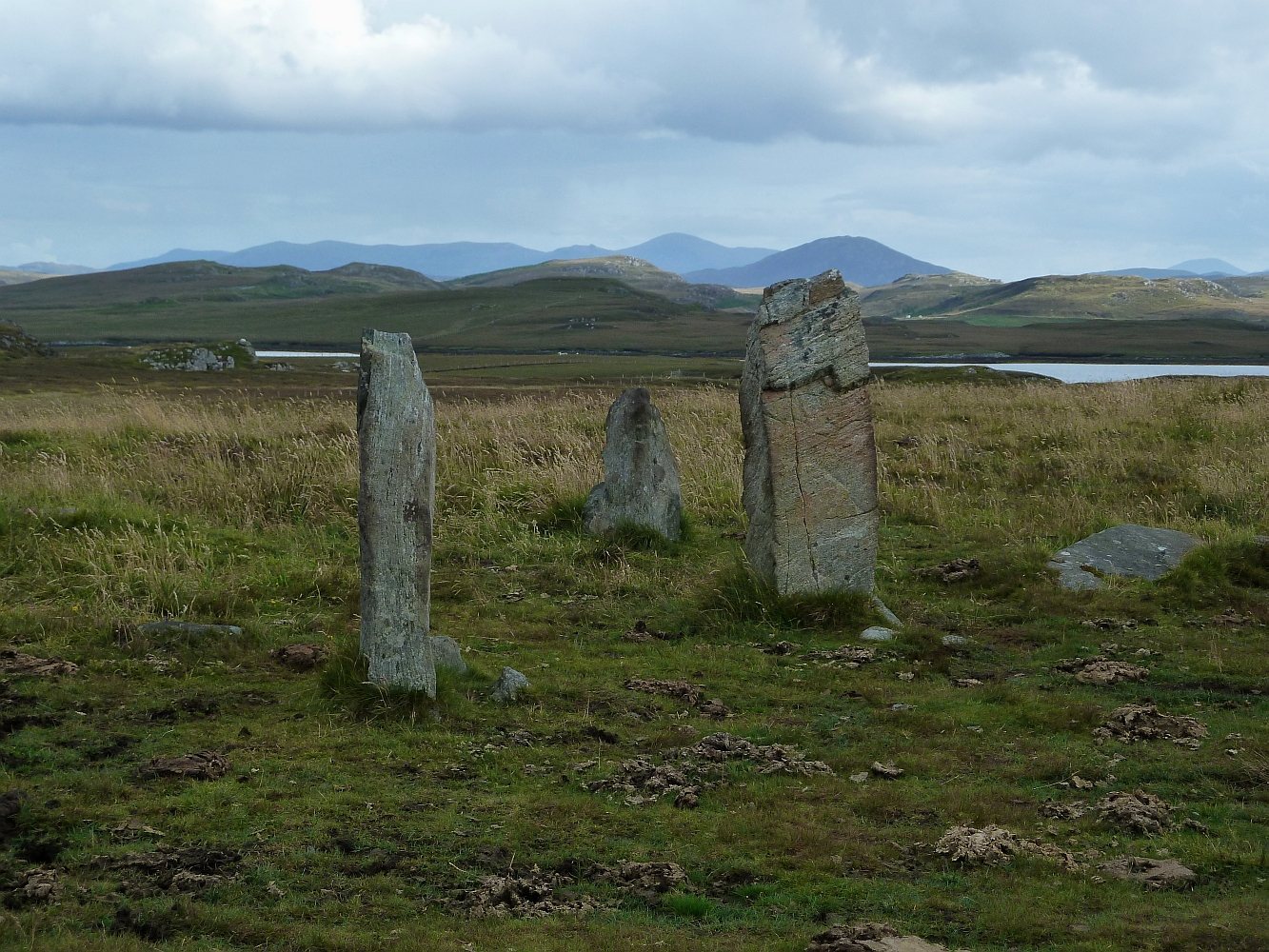
The monument stands on ridges above Loch Roag, about 1 km east of Callanish I and a few hundred metres from Callanish II. Its layout consists of two concentric elliptical settings, arranged across an area described as about 16 m in diameter.
Outer ring
The outer setting measures approximately 13.7 by 13.1 m. It has 13 stones, of which eight remain upright and five have fallen.
Inner setting
The inner setting is a pronounced oval measuring about 10.5 by 6.6 m. Four stones survive, with the tallest reaching 2.1 m; the arrangement has also been interpreted as a four-sided shape. Together, the two settings have also been described as circles with an inner loop.
The stones are slabs of Lewisian gneiss, an ancient metamorphic rock that forms the bedrock of Lewis. They were probably collected from nearby rock outcrops or glacial deposits and carried a short distance. Set into prepared pits, the slabs were steadied with smaller packing stones. Holes beneath the stones mark the positions of posts belonging to the earlier timber structure.