Byzantine Walls of Drama: Medieval Defensive Fortifications in Greece


Site at a Glance
- Rating
- 4.4
- Popularity
- Low
- Country
- Greece
- Primary era
- Medieval
- Eras represented
- Medieval
- Civilizations
- Byzantine, Crusader
- Site type
- Military
- Remains
- Wall
On this page6 sections
History
The Byzantine walls of Drama in Greece are medieval defensive fortifications built around the Macedonian city by the tenth century. They may incorporate earlier phases, but the surviving fragments belong to the medieval period. The walls enclosed the urban settlement and formed its principal defensive circuit.
Destruction and Rebuilding
In 1206, the Bulgarian tsar Kaloyan, whose reign lasted from 1197 to 1207, destroyed the walls. Boniface of Montferrat, a western European nobleman who became king of Thessalonica after the Fourth Crusade, rebuilt them from their foundations. This rebuilding created the fortifications that shaped the later medieval defensive enclosure.
Protection as a Monument
The Greek state classified the Byzantine walls of Drama as a protected historical monument in 1962. Their surviving sections and towers preserve evidence of the medieval city’s defensive boundaries, although the circuit is now only partially preserved.
Remains
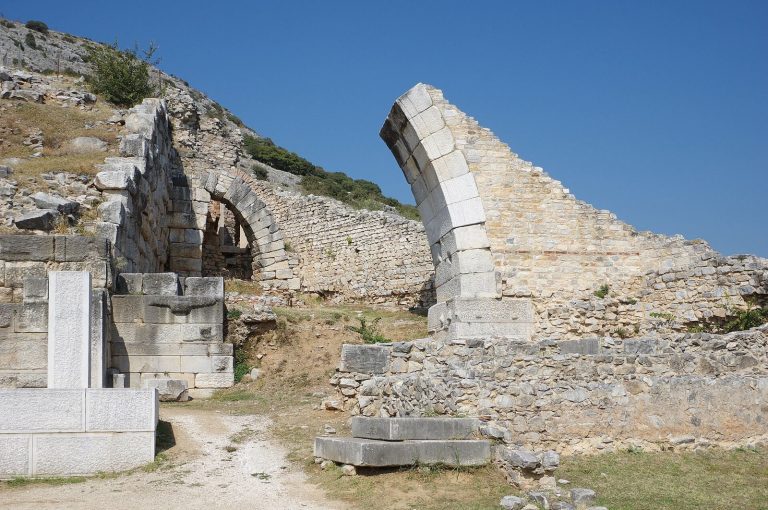
The fortifications enclosed approximately 60 dekare, or 60,000 square metres, within a perimeter of about 850 metres. Natural water barriers surrounded the enclosure on all sides. The circuit included two gates and square towers placed at intervals of roughly 60 to 80 metres. The wall thickness ranges from 1.70 to 3.30 metres. The southern and western sides used simpler single walls, while the northern and eastern sides had double walls.
Surviving Sections of the Circuit
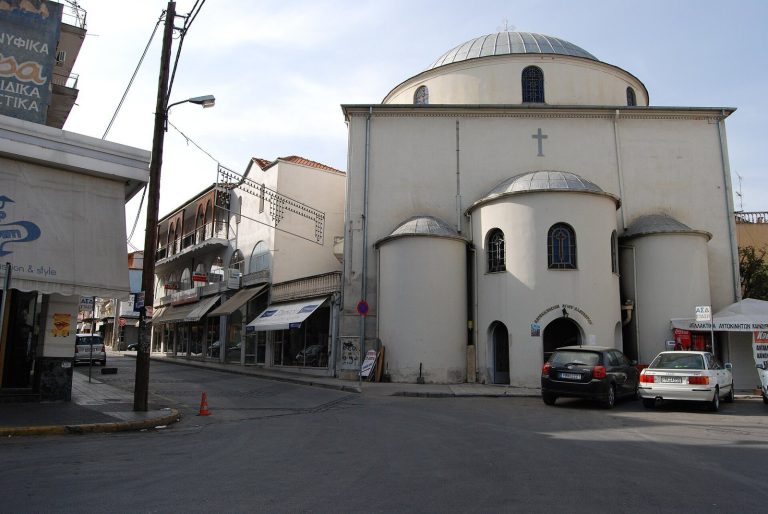
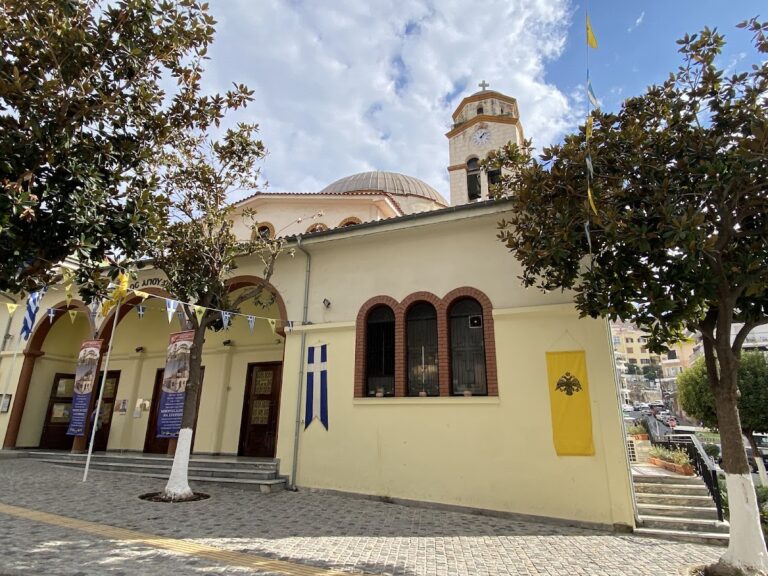
Several wall sections remain in northern Drama around the Church of Saint Sophia, while other fragments are distributed through the city. Some survive in house courtyards and serve as property boundaries. Part of the western wall stands on the eastern side of Kunduriotis Street. A large, well-preserved stretch of the northern wall lies between 25 May Street and 19 May Street.
Towers and Gates
Six surviving towers are identified: four on the eastern side, one on the northern side, and one at the northeastern corner. The northern tower is the best preserved. Sockets for wooden floors remain visible in its upper section, and the tower together with its fortifications reaches approximately 14 metres in height. A ruined eastern tower, accessible from 19 May Street and Solomos Street, contained a clock until 1945. At the southeastern corner, beside the medieval Church of the Holy Archangels, one of the two known gates remains visible.