Church of Saint Nicholas Orphanos: A Byzantine Monastery Church in Thessaloniki
Site at a Glance
- Popularity
- Medium
- Country
- Greece
- Primary era
- Medieval
- Eras represented
- Medieval
- Civilizations
- Byzantine
- Site type
- Religious
- Remains
- Church
On this page7 sections
History
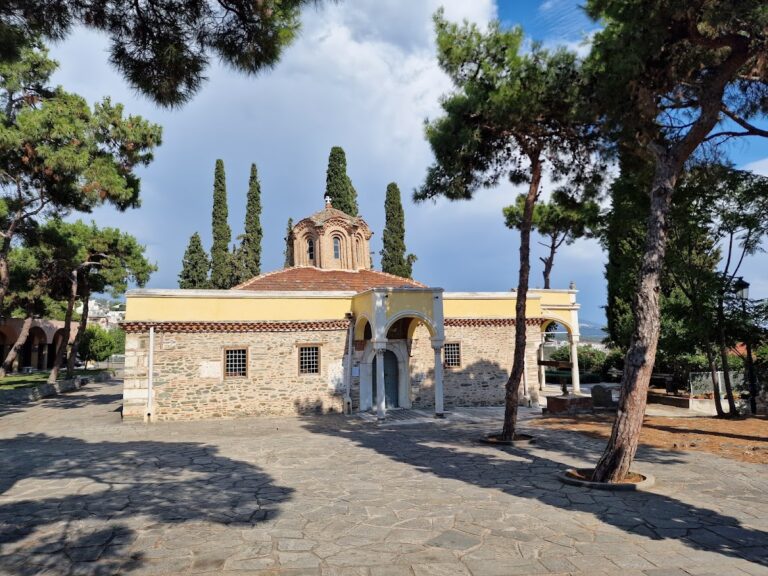
The Church of Saint Nicholas Orphanos is a Byzantine monastery church in Thessaloniki, Greece. Its construction is dated to 1310–1320 on the basis of its wall paintings, placing it in the early fourteenth century. It served as the principal church of a monastery and was also a dependency of Vlatades Monastery, about 400 metres to the northwest.
Monastic role and the name
The name Orphanos, Greek for “orphan,” appears in records from the seventeenth and eighteenth centuries. It may refer to a founder from the Orphanos family, an orphanage associated with the monastery, or Saint Nicholas’s traditional role as protector of widows and orphans. Serbian king Stephen Uroš II Milutin has also been proposed as the founder. He ruled from 1282 to 1321, and his marriage to Byzantine princess Simonida connected him with Thessaloniki, where he sponsored churches.
Ottoman rule and later status
The monastery remained in operation throughout Ottoman rule, the period when the Ottoman Empire governed the region. The church belongs to the Diocese of Thessaloniki, a district administered by a bishop, within the Patriarchate of Constantinople, an Eastern Orthodox ecclesiastical jurisdiction. Since 1988, it has formed part of the UNESCO World Heritage property “Early Christian and Byzantine Monuments of Thessaloniki.”
Remains
Layout and exterior
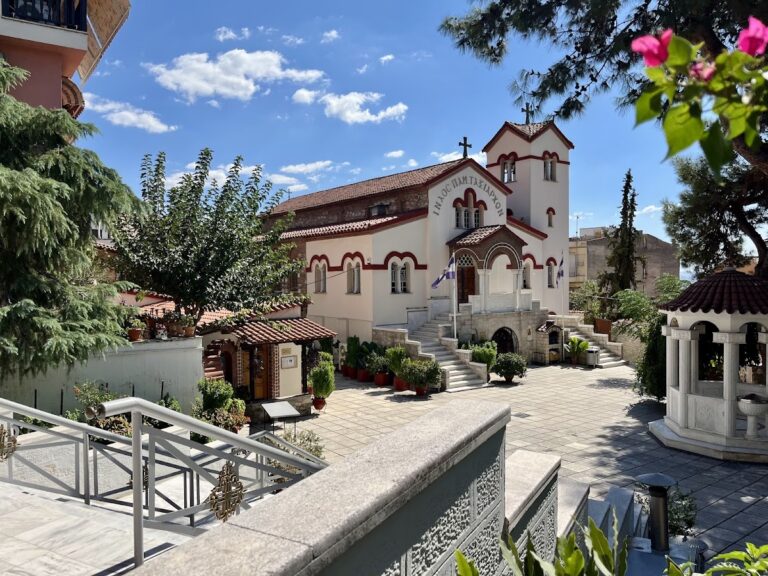
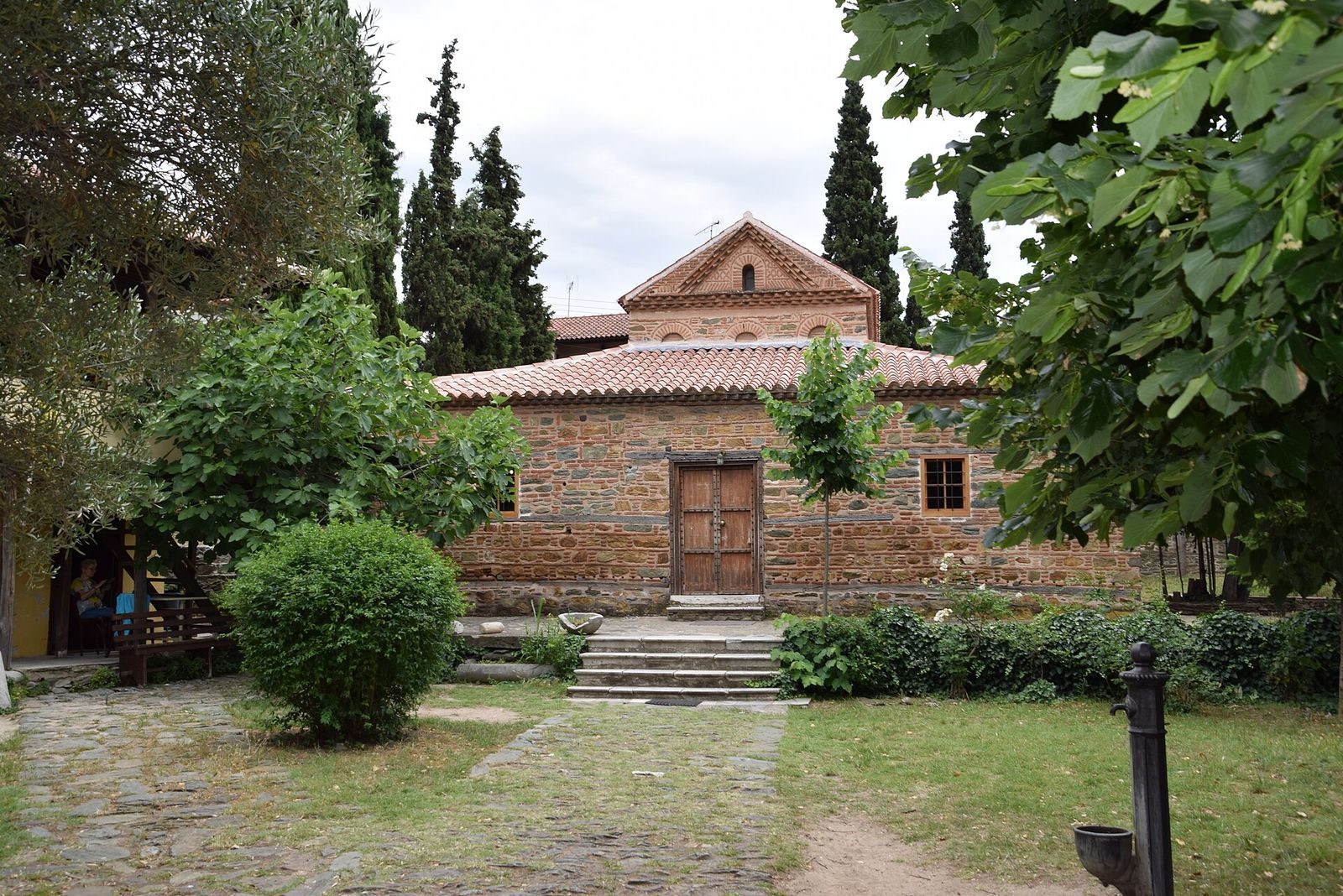
The church is a basilica, a long, hall-like building, with one central hall, a wooden gabled roof, and a colonnaded gallery around three sides. Two chapels stand at its eastern end, and the central space has a two-pitched roof. The church lies in Thessaloniki’s Upper Town, within the city walls, between Irodotou and Apostolou Pavlou streets and near the fortification wall. A garden is associated with the building. Its exterior masonry is made of irregular layers of brick and stone, with ceramic elements on the eastern side.
Central hall and sanctuary
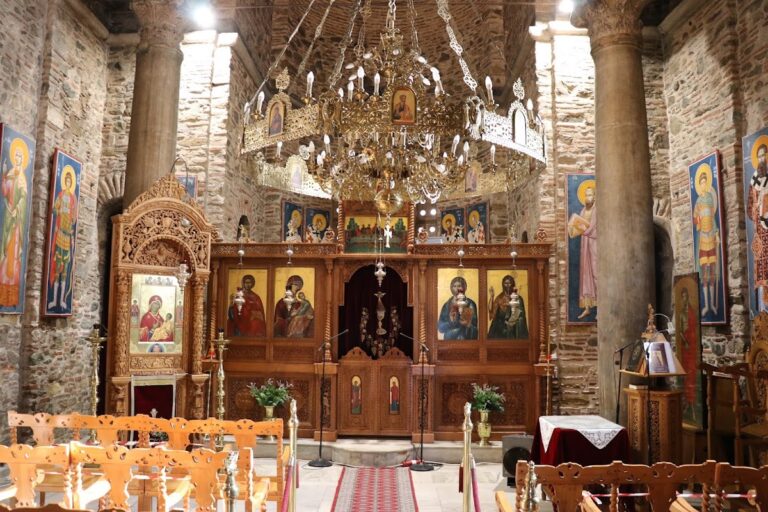
Paired rows of arches connect the central hall to side aisles along its north and south sides. The tops of the columns are reused ancient pieces and are painted. At the eastern end of the hall, the original marble screen separating the sanctuary survives.
Wall paintings
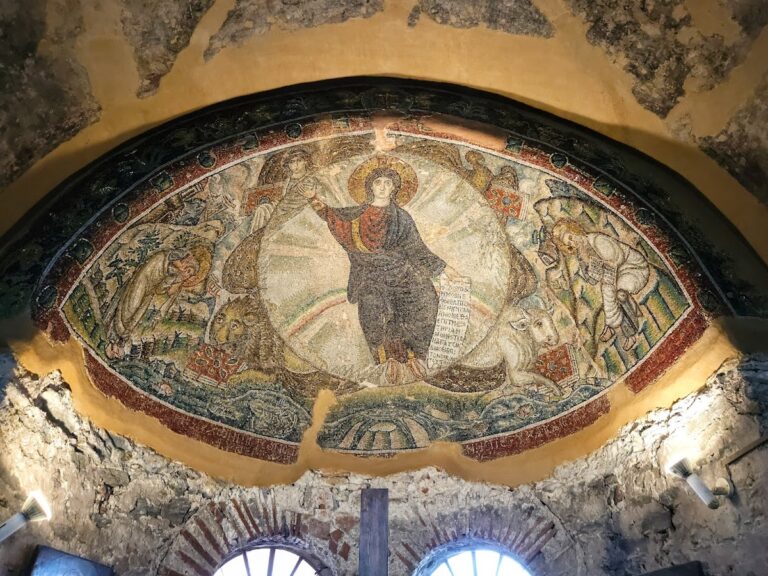
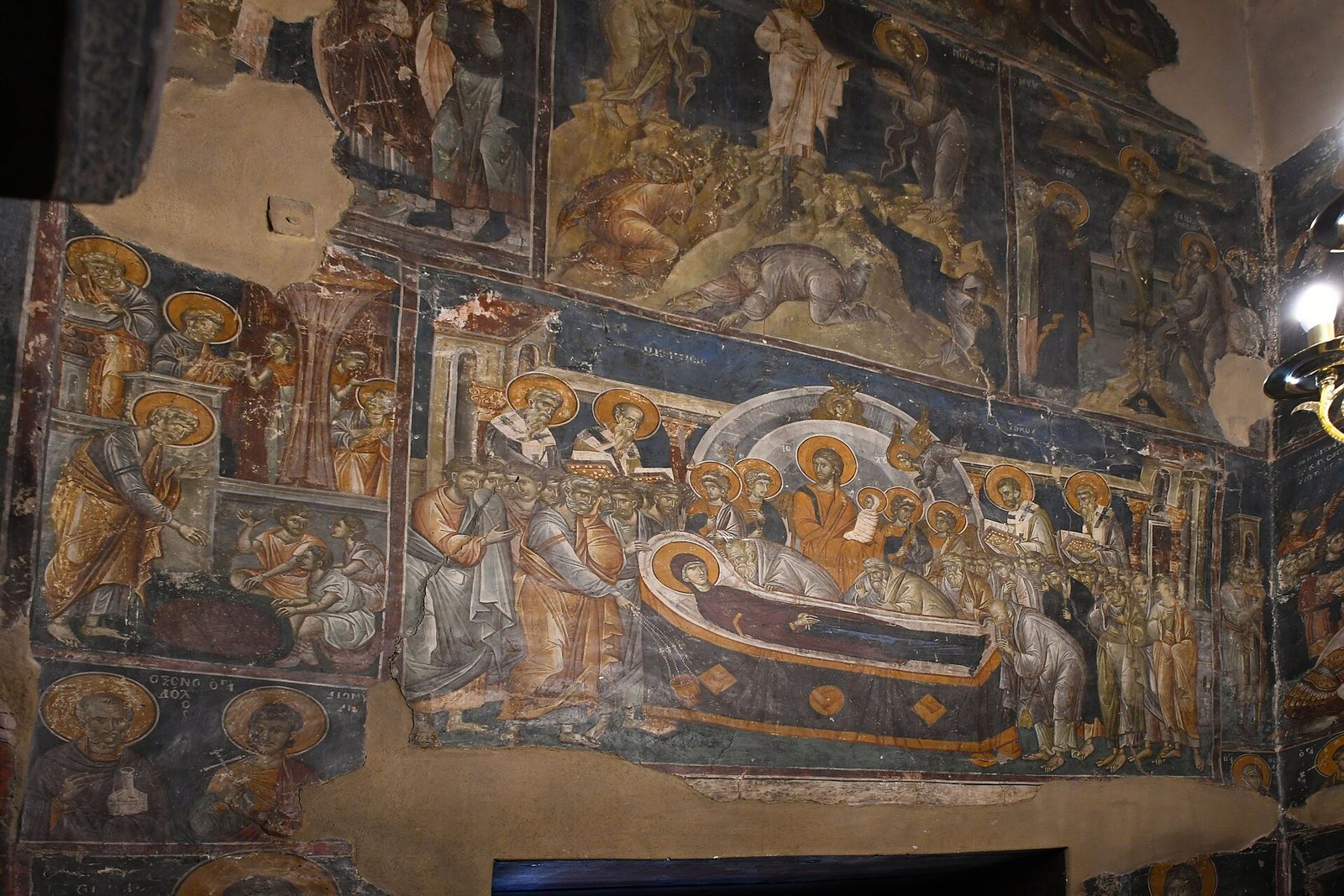
Wall paintings cover nearly the entire interior, including the central hall, entrance vestibule, and two side aisles. Restoration work between 1957 and 1960 exposed the paintings and removed plaster applied during Ottoman rule. The painted ensemble is among the most complete and best-preserved in Thessaloniki. Its subjects include the church’s worship cycle, Christ’s suffering, death, and Resurrection, episodes from his life and miracles such as the Wedding at Cana, the Virgin Mary, and the lives of saints, especially Saint Nicholas and Saint Gerasimus of Jordan. One scene shows Gerasimus using a small knife to remove a thorn from a lion’s paw. The western covered gallery contains scenes from Saint Nicholas’s life and month-by-month calendars of saints’ commemorations; the west wall depicts the Virgin Mary’s death. The paintings are associated with the Palaiologan Renaissance, a flourishing of Byzantine art under the Palaiologan dynasty, and the Thessalonian school, a regional Byzantine painting tradition centered in Thessaloniki. The painter may also have worked on the paintings at Hilandar, a Serbian Orthodox monastery on Mount Athos, in 1314.