Bury St Edmunds Guildhall: A Medieval Civic Building in Suffolk
Site at a Glance
- Rating
- 4.8
- Popularity
- Medium
- Country
- United Kingdom
- Primary era
- Medieval
- Eras represented
- Medieval, Early Modern, Modern
- Civilizations
- British, English
- Site type
- Civic
- Remains
- Town Hall
On this page8 sections
History
Medieval foundation
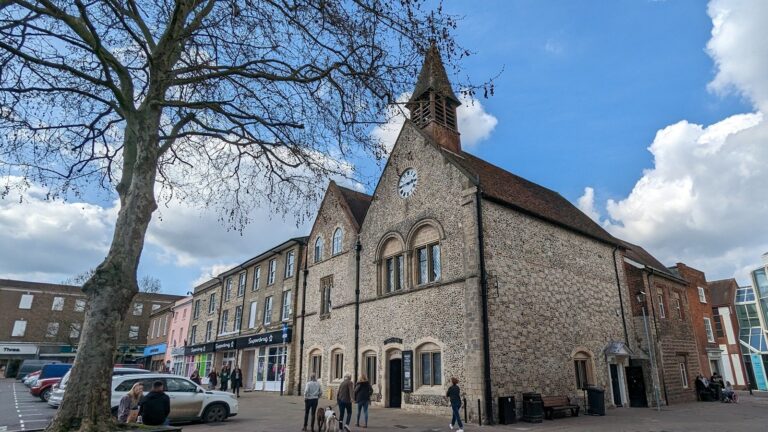
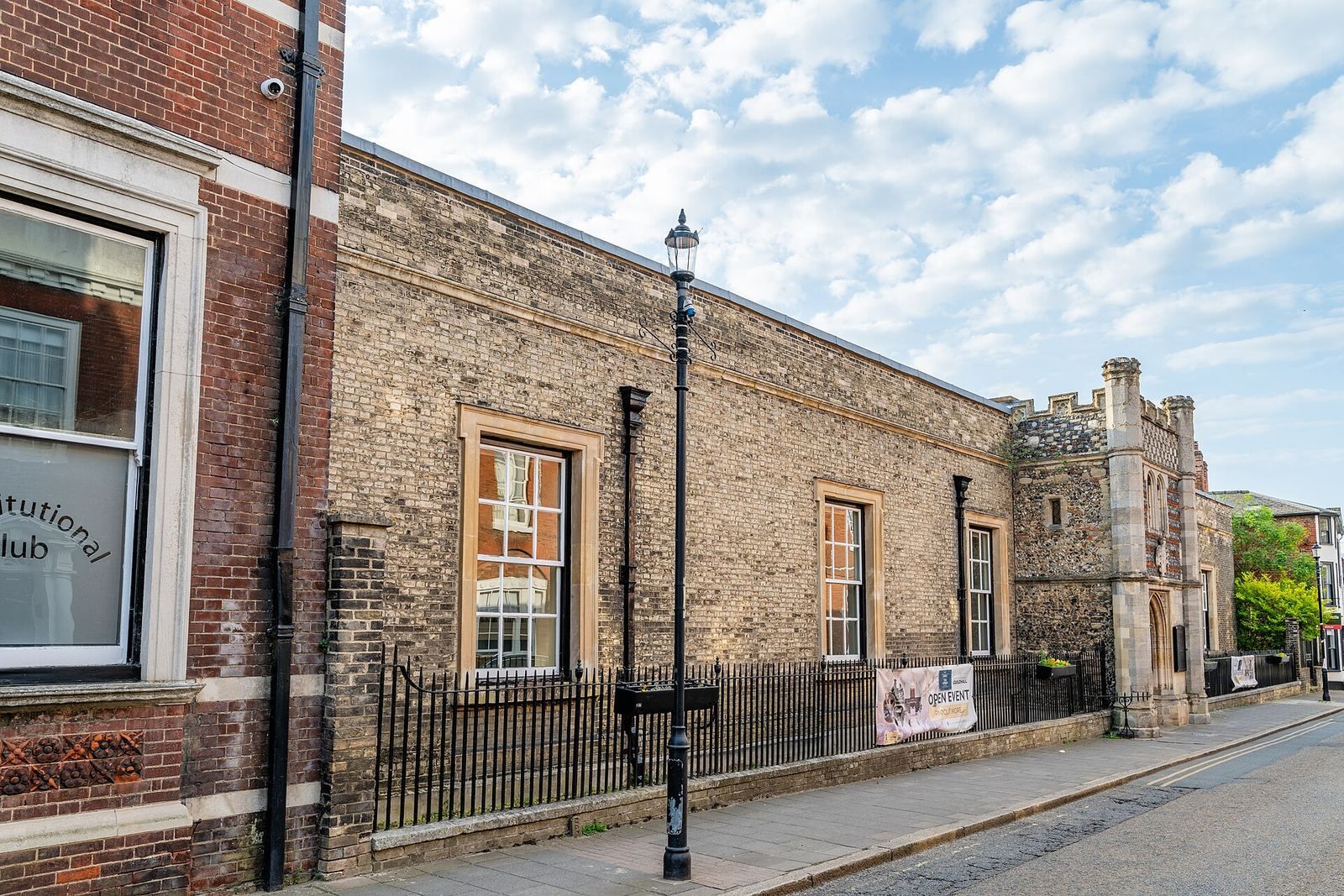
Bury St Edmunds Guildhall is a medieval civic building in Bury St Edmunds, Suffolk, United Kingdom, built in 1220 with financial support from Bury St Edmunds Abbey, a major medieval Benedictine monastery. It is a rare surviving civic building from the medieval period. The Bury Chronicle, a historical record arranged in chronological order, notes that John of Cobham and Walter de Heliun visited the Guildhall in 1279.
Town ownership and changing uses
In the late 1530s, Henry VIII’s Crown closed England’s monasteries in the Dissolution of the Monasteries. Control of the Guildhall then passed from the abbey to the town. During the nineteenth century, the building housed the West Suffolk Library. Its library room hosted the first Quarterly General Meeting of the Bury and West Suffolk Archaeological Institute in 1848.
The town council moved its administrative offices to Borough Offices at 7 Angel Hill in 1935 but continued to meet at the Guildhall. During the Second World War, the Royal Observer Corps, a British civilian organization that monitored aircraft, established a control centre there. Council meetings ended at the Guildhall in 1966, when a new chamber was built in an extension to Borough Offices.
Restoration and current use
After council meetings moved, the Guildhall’s condition declined, and it was added to the Heritage at Risk Register in the 1980s. The Bury St Edmunds Heritage Trust began a conversion project in July 2015, completing repairs to the roof, walls and ceilings in 2018. The work also improved access and added a lift. In 2019, Historic England requested dating of the roof and entrance door to guide further restoration. The Guildhall is Grade I listed, the highest category of listed-building protection in England, reserved for buildings of exceptional interest.
In 2020, the town council returned its meeting place to the Guildhall and moved its offices to the adjoining rear building at 79 Whiting Street. The council leases both buildings from the heritage centre. The Guildhall now operates as a heritage centre as well as a meeting place for the town council.
Remains
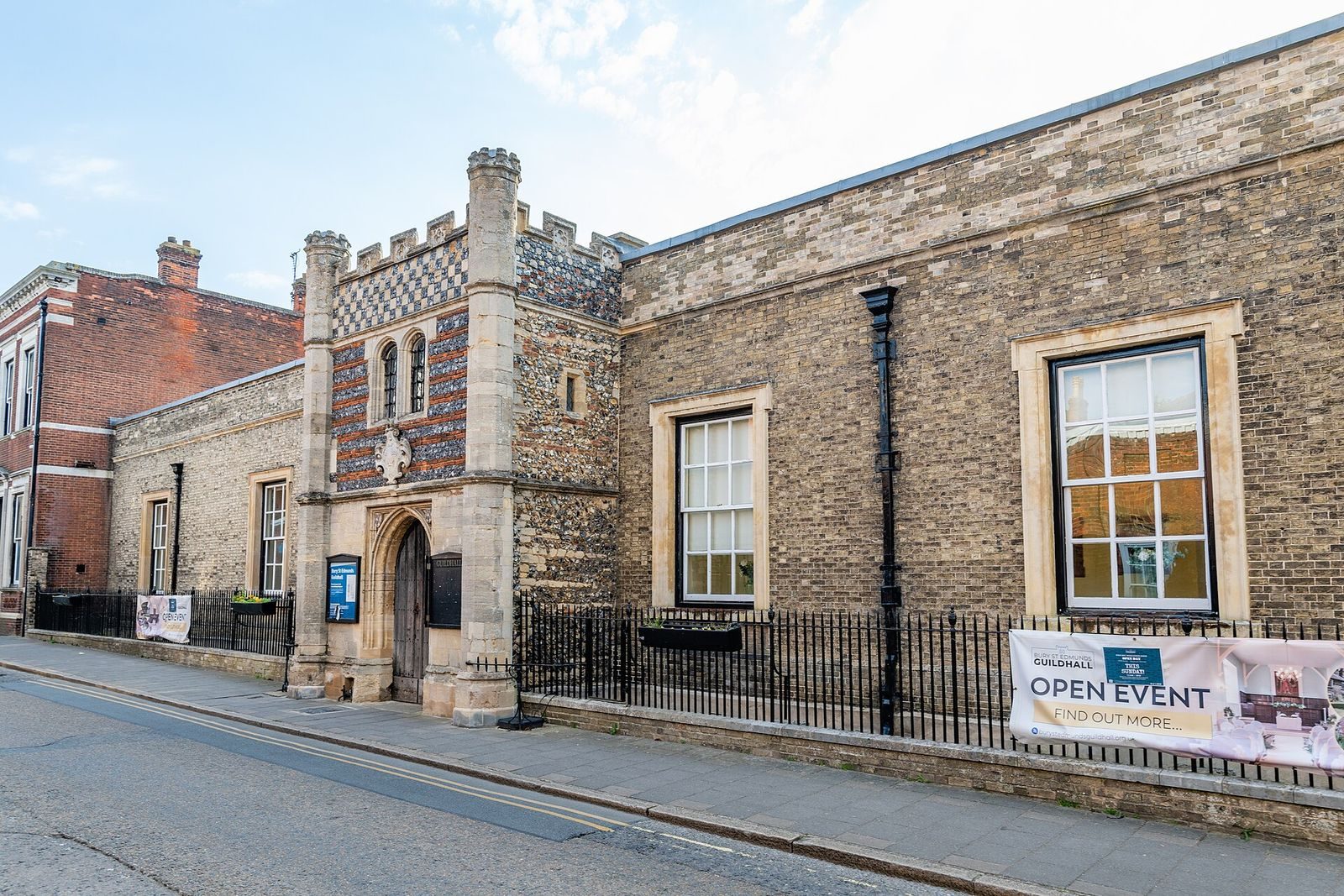
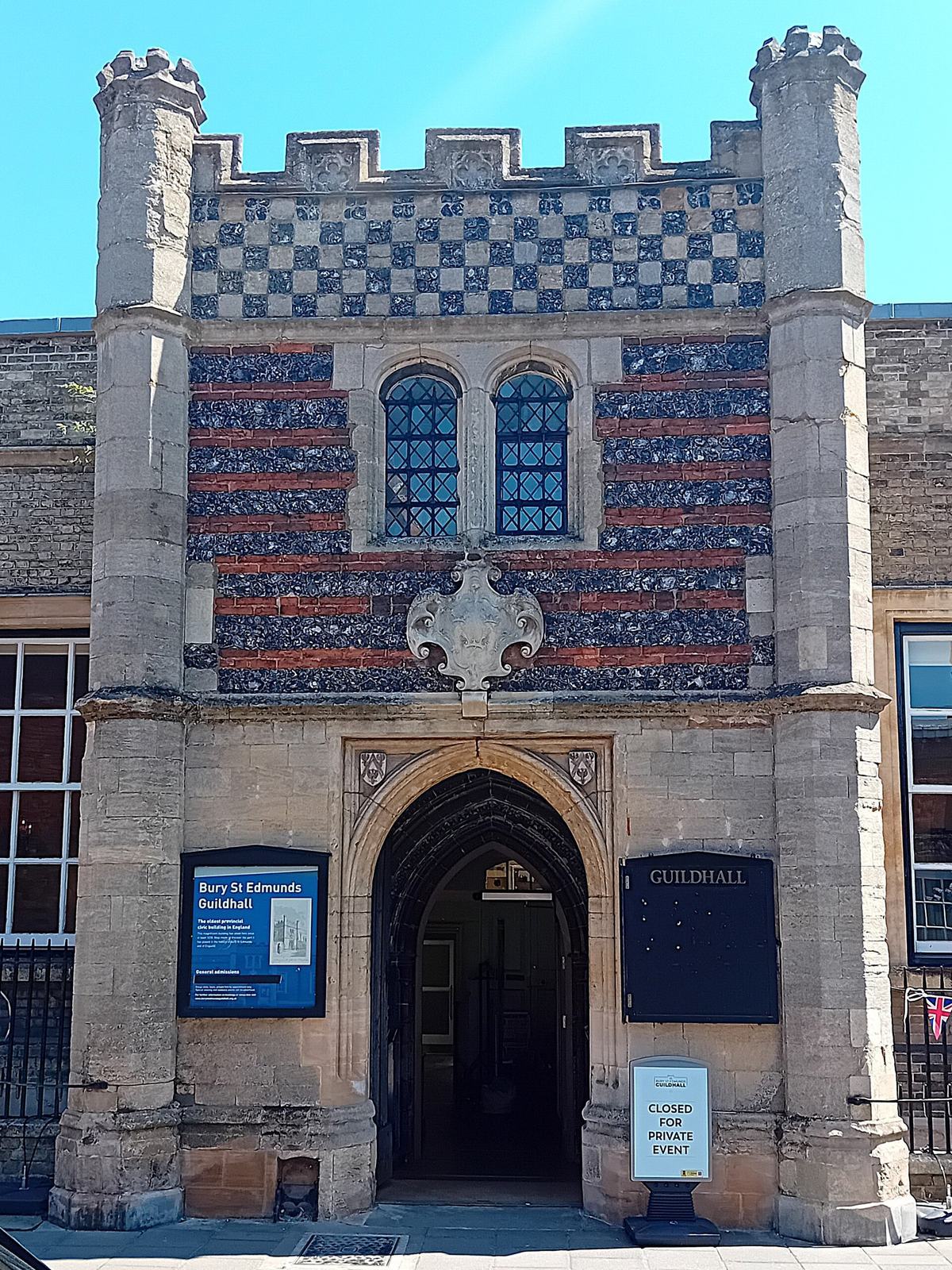
The Guildhall’s physical features include a stone entrance arch, a later decorative porch and a timber-framed roof. Its refurbished interior contains rooms associated with the building’s civic and public uses.
Entrance and door
The oldest part of the building is a stone entrance arch dating to the thirteenth century. A highly decorative porch was added in the late fifteenth century. The entrance door is made from oak brought from the Baltic region. Analysis of three door-board samples indicated tree-felling dates between 1253 and 1439, with 1461 as the latest possible date for the door.
Timber roof
The roof combines East Anglian queen-post framing, with two upright supports, and king-post framing, with a central upright support. Analysis of 18 timbers indicates that the roof was built in 1377 or soon afterward. Most samples gave likely felling dates between 1263 and 1376; two retained their full outer growth layer and came from trees felled in the winter of 1376/77. Many timbers have a yellow-ochre coating, a treatment usually associated with the sixteenth century.
Interior rooms
The refurbished interior includes the courtroom, banqueting hall and Royal Observer Corps operations room, as well as a kitchen associated with England’s Tudor period, generally dated from 1485 to 1603.