Bury Castle (Selworthy): An Iron Age Fort and Medieval Castle
Site at a Glance
- Popularity
- Low
- Country
- United Kingdom
- Primary era
- Iron Age
- Eras represented
- Iron Age, Medieval
- Civilizations
- English
- Site type
- Military
- Remains
- Castle
On this page7 sections
History
Bury Castle (Selworthy) is a hilltop fortification in the United Kingdom. It began as an Iron Age promontory fort, a defended enclosure on projecting high ground, and later had a 12th-century castle phase.
The Anarchy and Medieval Inheritance
The castle’s motte, a raised mound forming part of a medieval castle, was built during the Anarchy, a civil war over the English succession that began in the late 1130s. The conflict was fought between supporters of King Stephen and Empress Matilda, daughter of Henry I. The motte was probably raised by William des Say, an Anglo-Norman lord, on the earlier hillfort.
In 1198, King Richard I ruled that Brompton should be included in the inheritance of a Matilda whose identity is uncertain.
Bury Castle is a Scheduled Monument, a legally protected archaeological site, and is owned by the National Trust, a conservation organization. Scrub and tree growth threaten its condition, and it is included on the Heritage at Risk Register, which identifies vulnerable heritage sites.
Remains
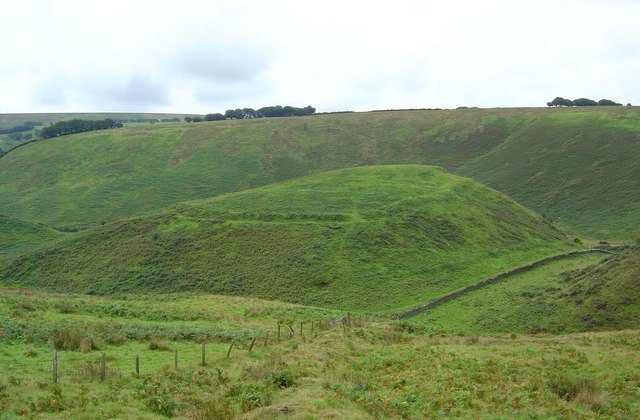
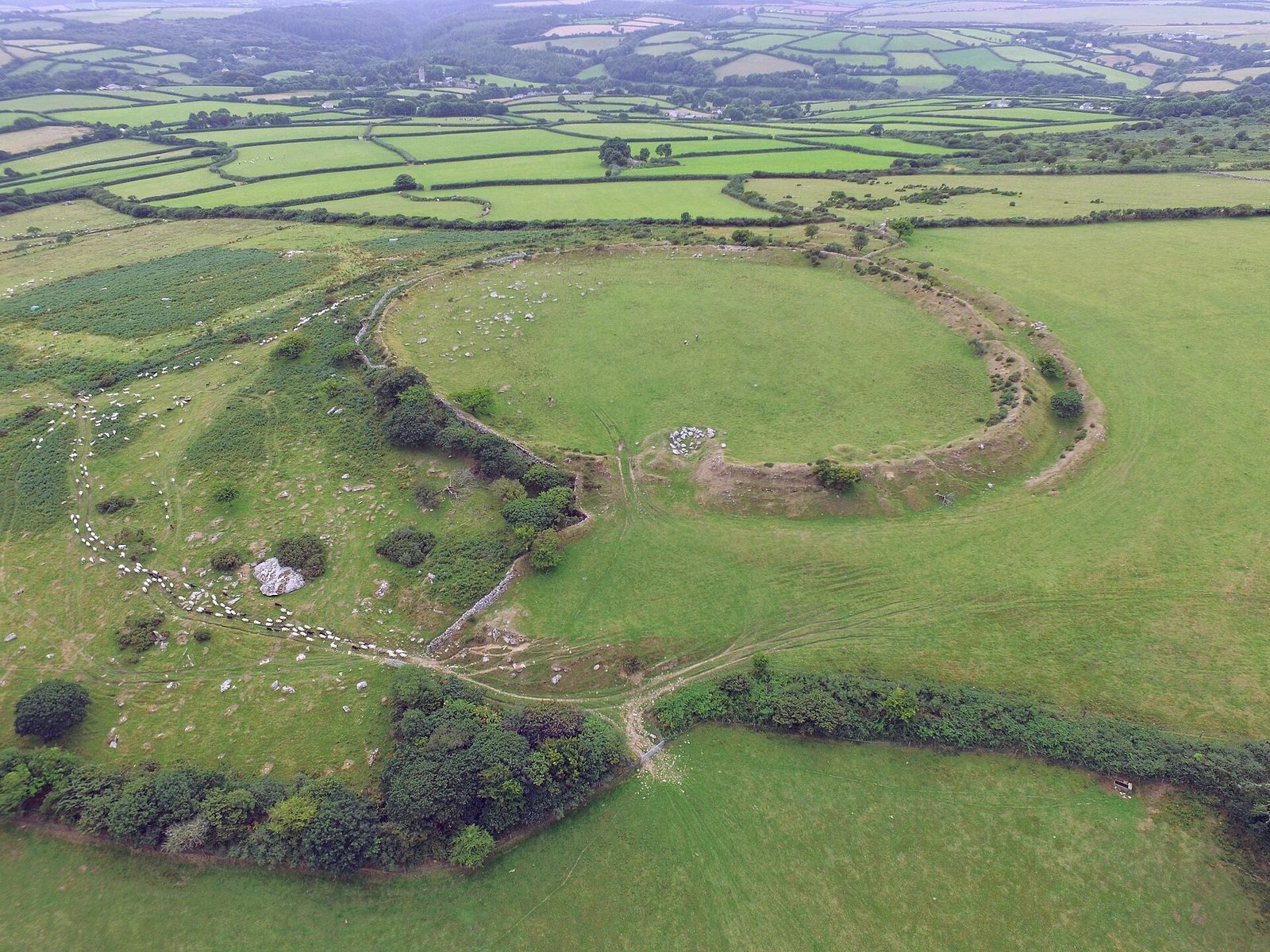
The fort occupies a spur above the confluence of the Exe and Haddeo rivers. Its remains combine a small enclosed area, earthwork defenses and surviving stone facing.
Iron Age Enclosure
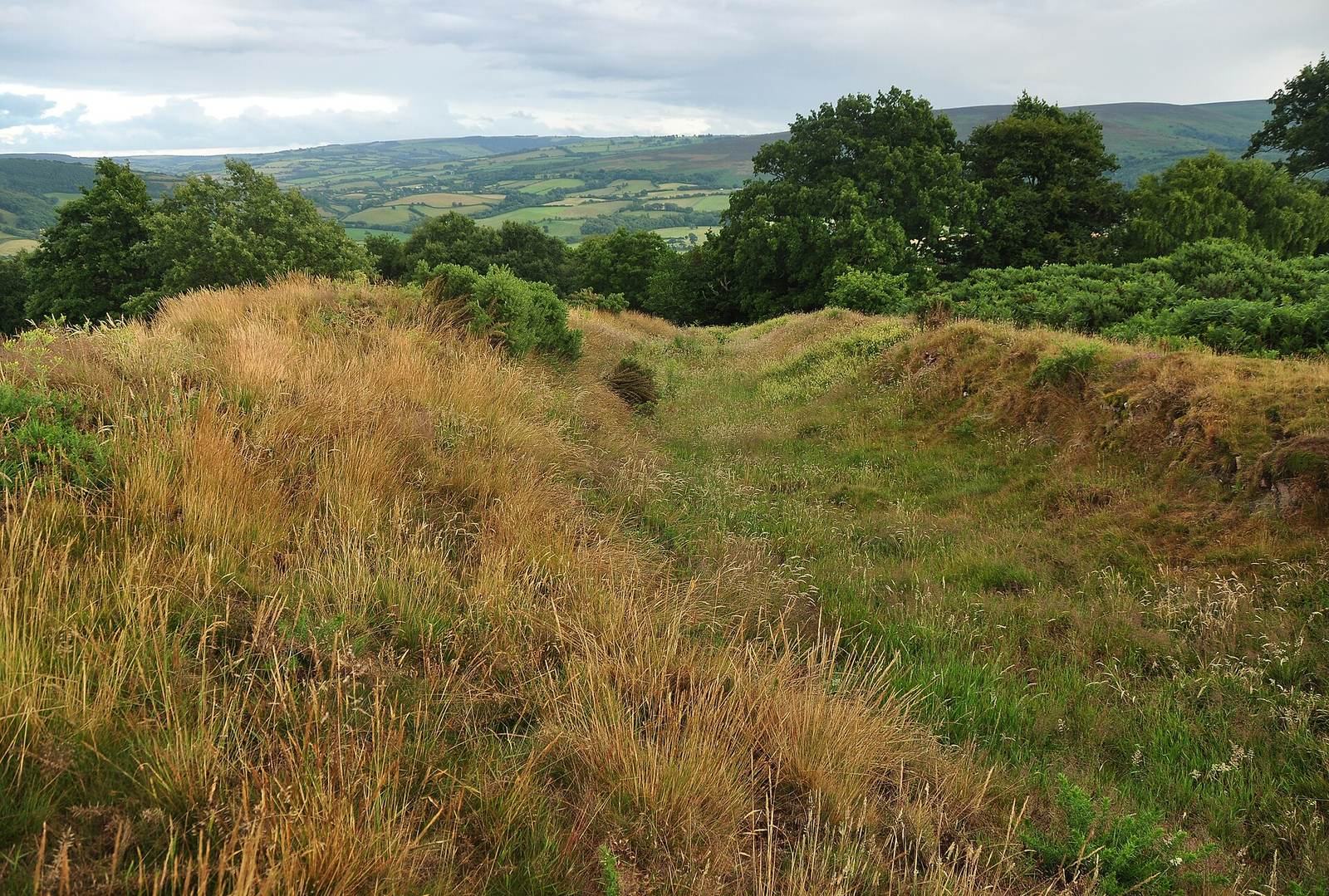
The main enclosure covers about 0.2 hectares. Steep slopes bound it to the north, east and south, while a single rampart and ditch form its defenses. Another rampart lies 30 metres to the west, beside a deep ditch. The bank rises to 1.6 metres, and the ditch is about 2 metres deep. Dry-stone walling faces the rampart.
Medieval Castle
Motte
At the southernmost end of the spur, the motte rises 23 metres.
Curtain Wall
The curtain wall, which enclosed the castle’s defended area, measures approximately 20 by 20 metres.