Rotenburg Castle Ruin: A Medieval Castle in Kleines Wiesental, Germany
Site at a Glance
- Popularity
- Low
- Country
- Germany
- Primary era
- Medieval
- External website
- Open
- Eras represented
- Medieval
- Civilizations
- Holy Roman Empire
- Site type
- Military
- Remains
- Castle
On this page8 sections
History
Rotenburg Castle Ruin is the remains of a medieval castle in Kleines Wiesental, Germany, with an early phase in the 11th century and a later one in the 13th. Its noble family belonged to the free nobility, a status distinct from that of ministerials, nobles who served a lord.
Early castle and Rötteln connection
Ceramic finds point to an 11th-century predecessor, which may have been built by the Lords of Waldeck. It was probably abandoned toward the end of that century and may then have passed by inheritance to the Lords of Rötteln. Masonry in the core castle suggests that a later building phase began around 1200.
In the mid-13th century, the brothers Konrad and Dietrich IV of Rötteln divided their property. Dietrich adopted the name Rotenberg, and the castle was probably occupied again only after the division. Donations were made there in 1259, 1270, and 1283.
Rotenberg line and later ownership
After two identifiable generations, the Rotenberg line ended with Dietrich V of Rötteln-Rotenburg around 1280. Before his death, he left his property to the Prince-Bishopric of Basel, an ecclesiastical territory whose bishop held both religious and secular authority, and to St. Blasien, a Benedictine monastery. Dietrich and his wife received the property back under a hereditary lease, a form of tenure that passed to heirs under agreed conditions rather than granting outright ownership. They joined a larger community of heirs, of which Mathias Reich von Reichenstein was the last surviving member and eventually the castle’s owner.
In the early 14th century, the castle probably passed by purchase to Konrad Münch von Münchenberg and Thüring von Ramstein. After a legal dispute, they sold it in 1311 for 250 marks of silver to Lüthold II of Rötteln and his heir, Rudolf of Sausenberg. The property thereby returned to the Rötteln, then passed to their Sausenberg heirs after the Rötteln line died out. The castle was probably abandoned soon afterward.
Remains
Hilltop enclosure and outer defenses
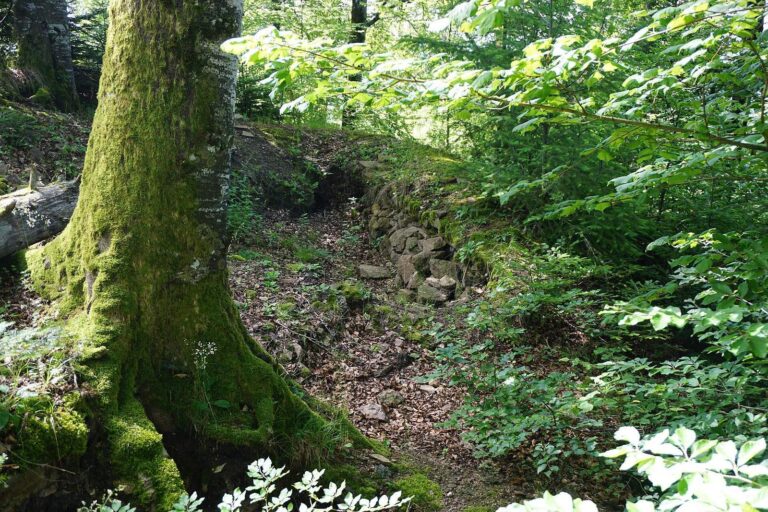
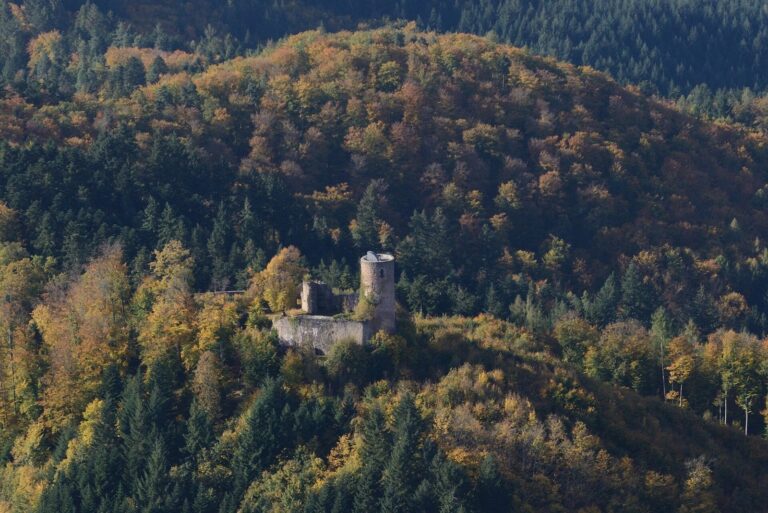
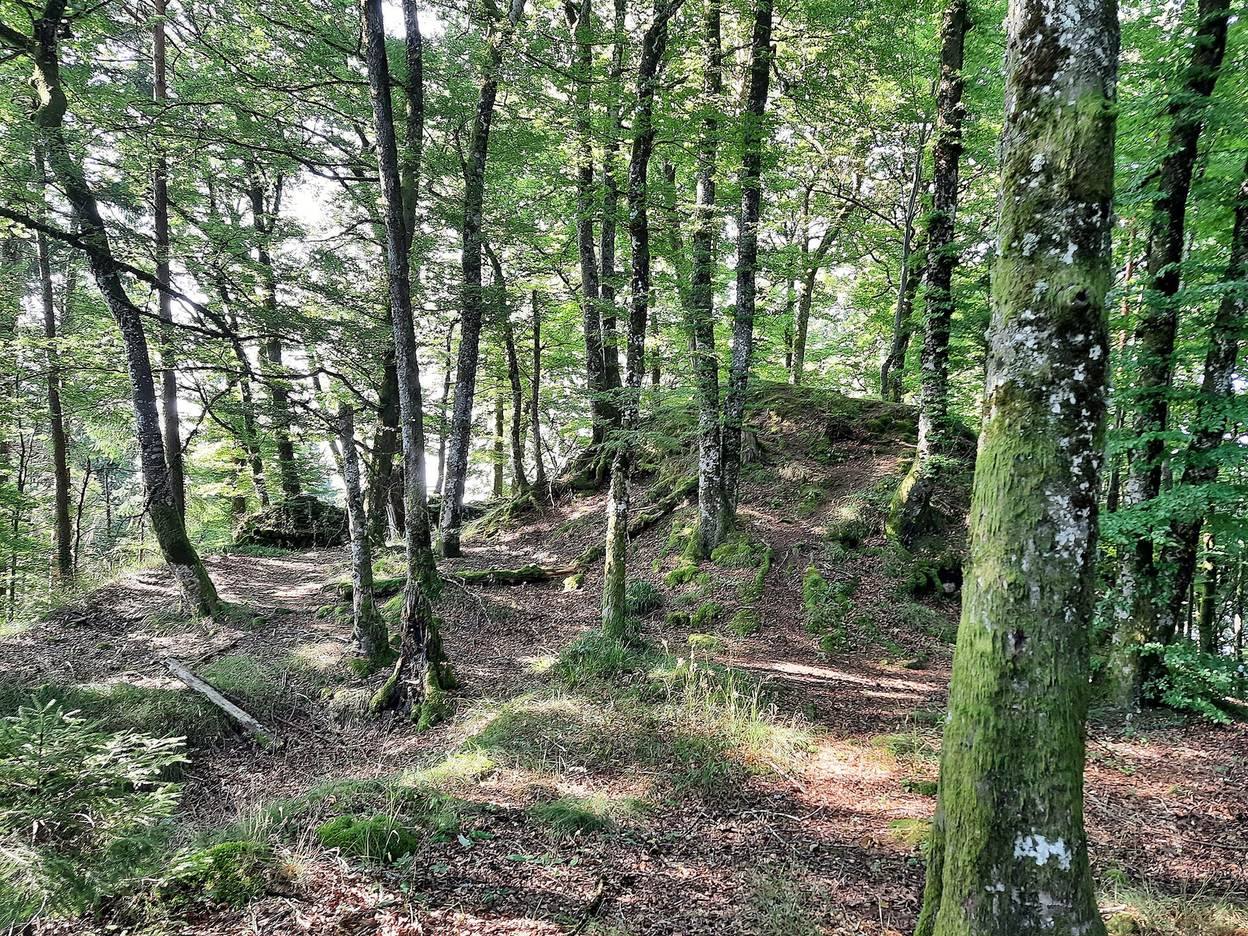
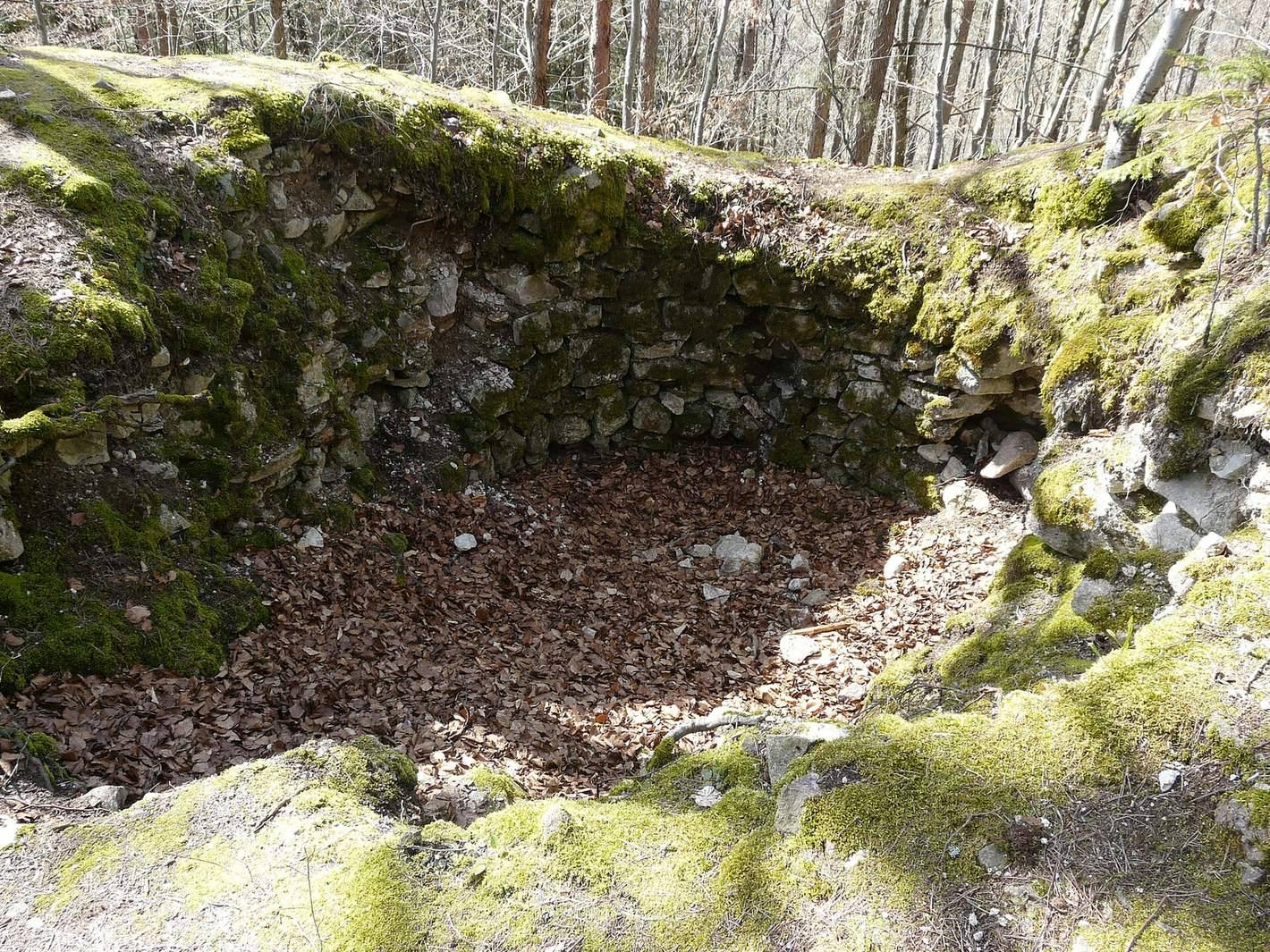
The ruin occupies a steep, conical rocky hill at 620.2 metres above sea level in the Kleine Wiese valley, between Niedertegernau and Wieslet. The hill drops sharply on every side. The castle had a core enclosure at the summit and may also have had an outer bailey to the southwest. An irregular oval ditch, cut into bedrock, circles the core-castle hill, with a ring rampart outside it. The hill rises several metres above the ditch. An oval enclosing wall, about 50 by 25 metres in area, was built against the rocky slope and survives particularly well on the east side. Farther southwest, another broad, curved ditch and an outer rampart may have enclosed the outer bailey.
Buildings within the core castle
Principal defensive tower
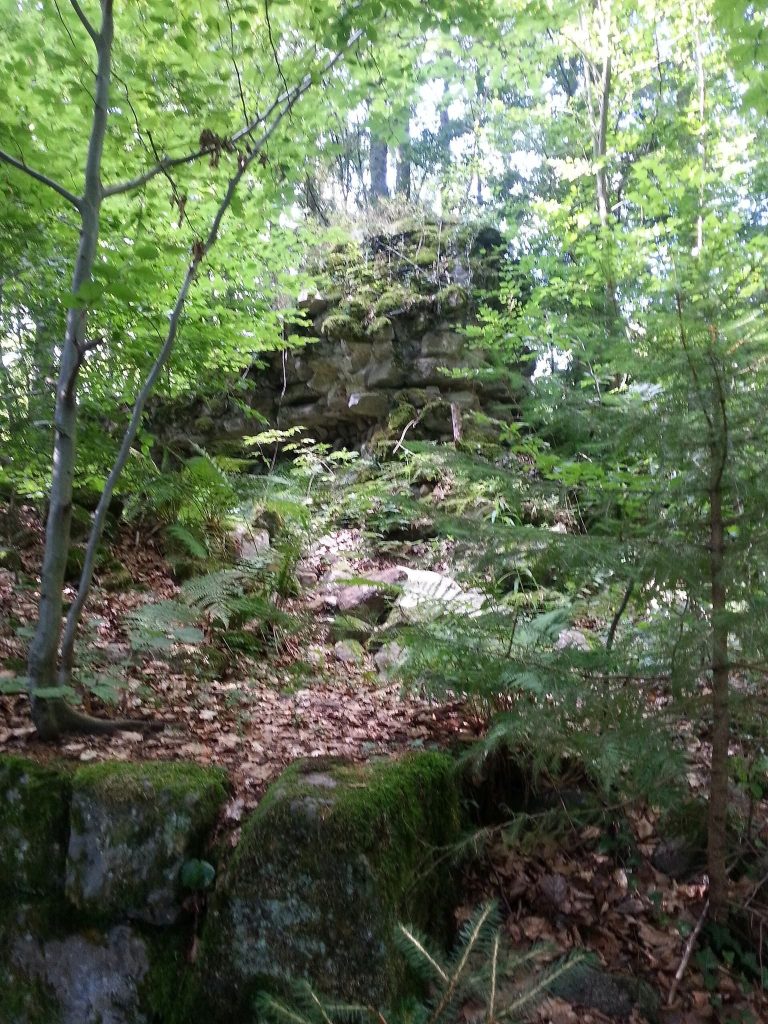
A round principal defensive tower stood near the middle of the castle’s western side. It measured about 9 metres across, with walls approximately 3 metres thick. Large blocks formed its outer face; smaller, lightly worked stones were laid in irregular courses on the inside. Only scant masonry survives.
Southern building
A larger building occupied the southern part of the enclosure. Its remains include a 15-metre stretch of wall made from regularly laid stone blocks, with a shallow arch beside it.