Burg Reitersdorf: A Medieval Castle in Bad Honnef, Germany
Site at a Glance
- Rating
- 4.6
- Popularity
- Very Low
- Country
- Germany
- Primary era
- Medieval
- External website
- Open
- Eras represented
- Medieval
- Civilizations
- Holy Roman Empire
- Site type
- Military
- Remains
- Castle
On this page7 sections
History
Burg Reitersdorf is the archaeological remains of a medieval castle in Bad Honnef, Germany. Built by the medieval nobleman Johann von Heinsberg around 1270, it formed part of the historic settlement of Reitersdorf, whose ninth-century remains are the oldest visible traces of the city.
Early settlement and the castle’s foundation
Reitersdorf appears in written records as villa rateresthorp in 866 and as Retersdorpht in 893. A copy of the Prüm Abbey land register from 1222 describes the place as a way station belonging to the abbey. These references point to an established settlement before the castle was built.
Construction began around 1270 under Johann von Heinsberg, probably as a replacement for Löwenburg after he had been expelled from that castle. A settlement near the Rhine, west of the new castle, and the church of St. Göddert developed during the same period.
Fief, expansion, and destruction
In 1288, the castle was recorded as Castrum Reyterstorp and became a fief of the Count of Jülich, the secular ruler of the County of Jülich in the medieval Rhineland. The count expanded the fortified property.
Conflict with the Archbishop of Cologne, a religious and political authority in the region, brought the castle’s destruction. In 1317, forces acting for the archbishop largely demolished both Burg Reitersdorf and the nearby settlement. The castle was mentioned for the last time in 1517 under the name Rettersdorf. Its surviving masonry was later reused in cellars and stables.
Excavation and preservation
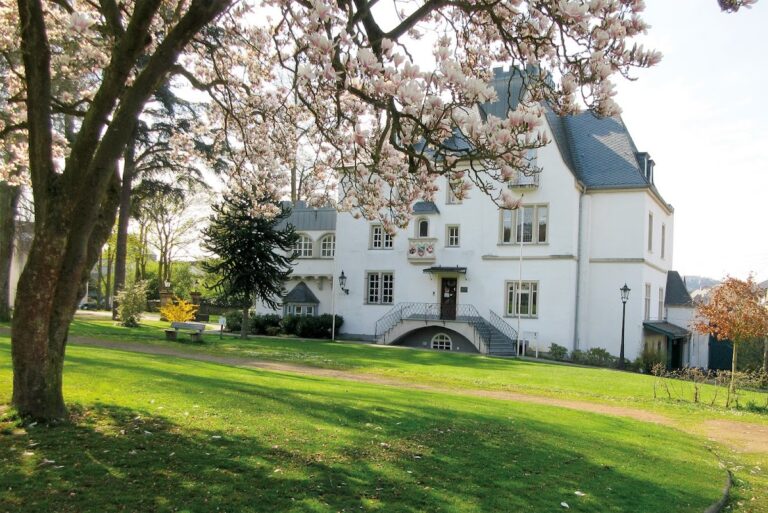
Buried parts of the castle were excavated again in 1872, when General von Seidlitz had a manor villa built on the site. The later Villa Bredt-Lipp and its surrounding property passed to the city of Bad Honnef. The villa was demolished in 1974 for a planned spa clinic that was never built.
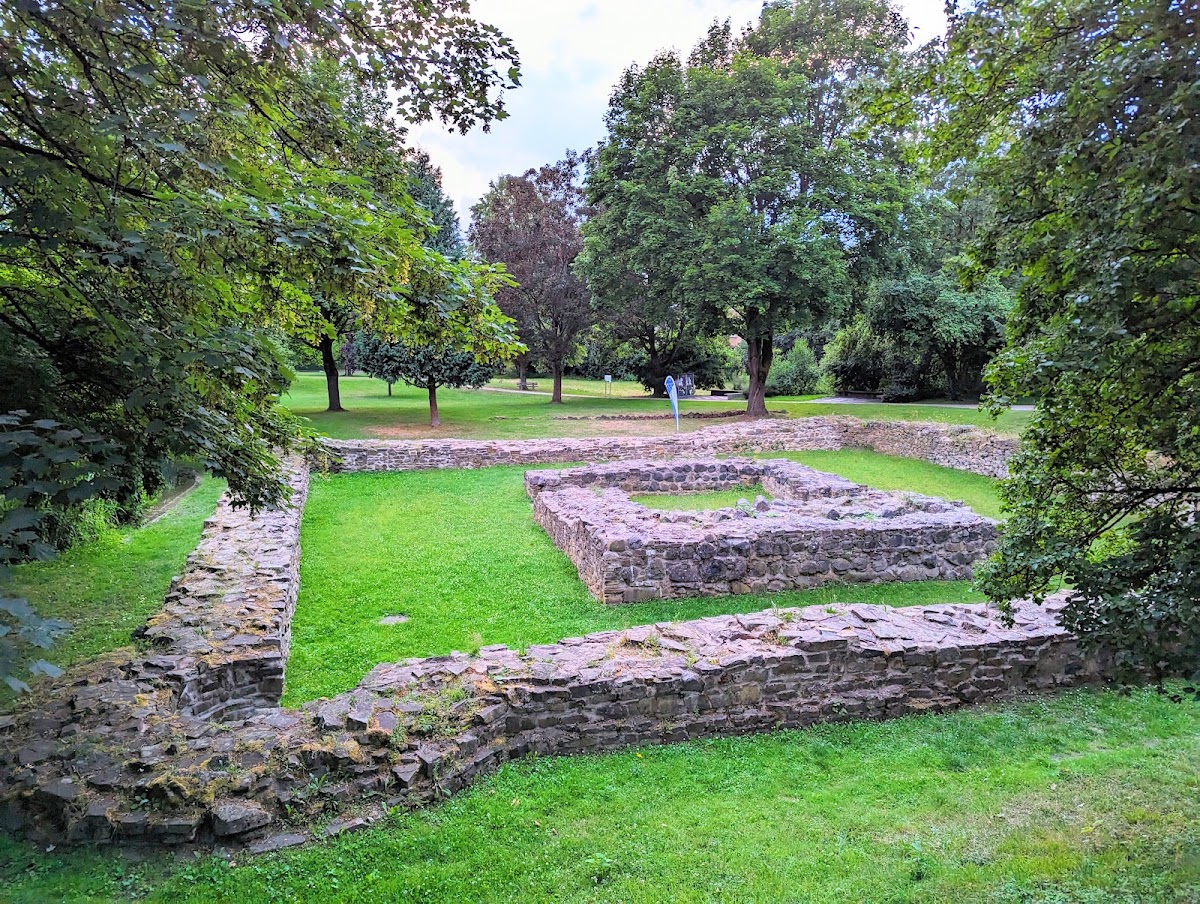
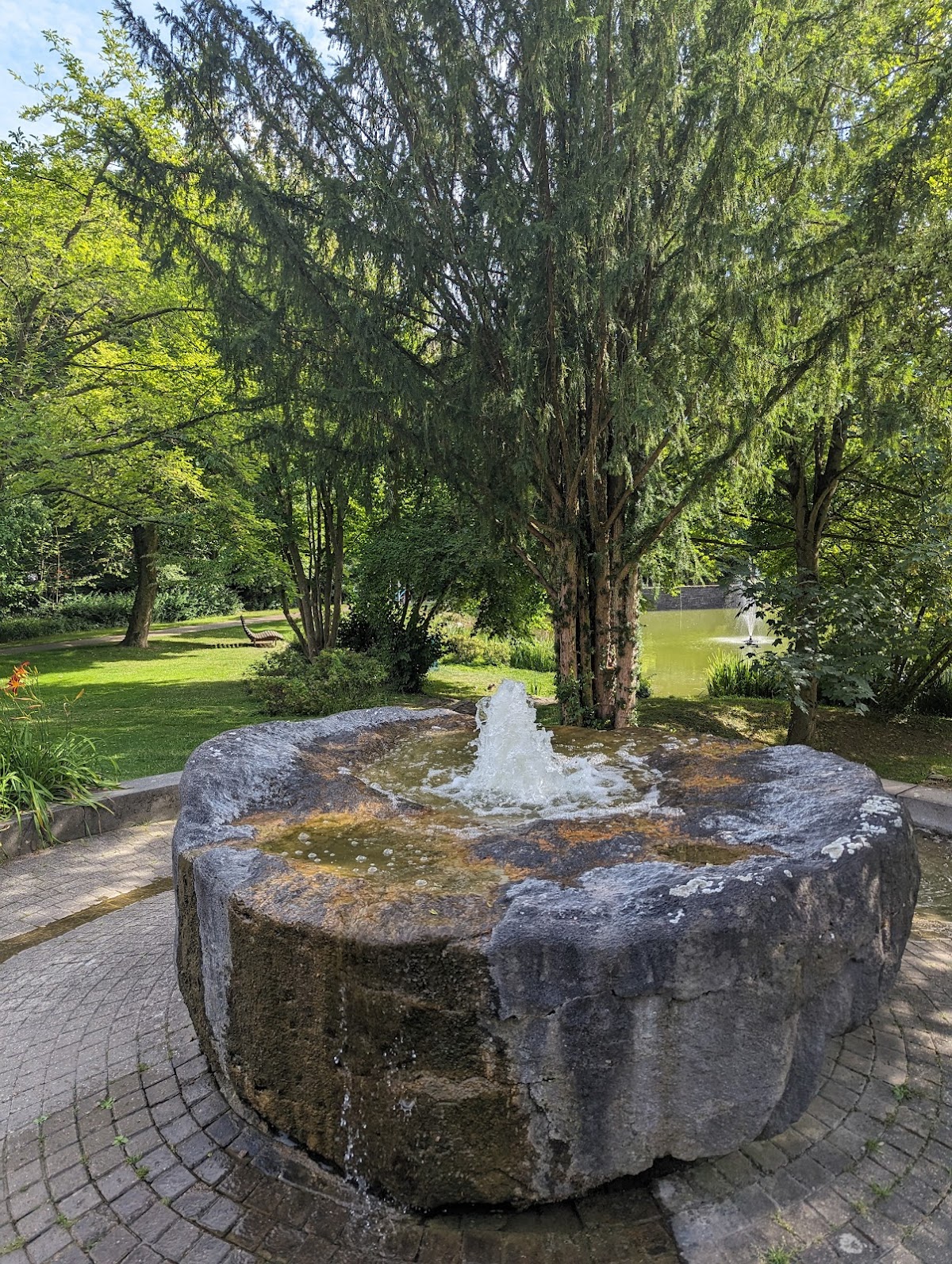
Further excavation took place in 1980, followed by restoration of the foundations. From 2009, renovation work in the park included the castle remains, a stone fountain, a pergola, and a pond. The pergola was renovated in 2012, and conservation of the castle ruins began in March 2017. The remains are protected as a Bodendenkmal, a legally protected archaeological monument preserved chiefly in or beneath the ground.
The former settlement is remembered in the names Reitersdorf Park, Reitersdorfer Straße, and An St. Göddert. An information plaque created by the Königswinter sculptor Sigrid Wenzel was inaugurated on 12 August 1994.
Remains
Castle enclosure
Burg Reitersdorf was a lowland castle, meaning a fortified site built in relatively level terrain rather than on a steep hill. It was designed as an enclosed stronghold surrounded by an unfinished water moat. The enclosing wall formed an approximately 25-by-25-metre square and had four round corner towers. The castle was probably built in two phases.
The first interior arrangement included a square stone residential tower, probably protected by a palisade fence. During the final phase, a rectangular building stood within the enclosure. An enclosed outer area, or bailey, is suspected on the eastern side and would have provided space for supporting activities and buildings.
Surviving fabric and park setting
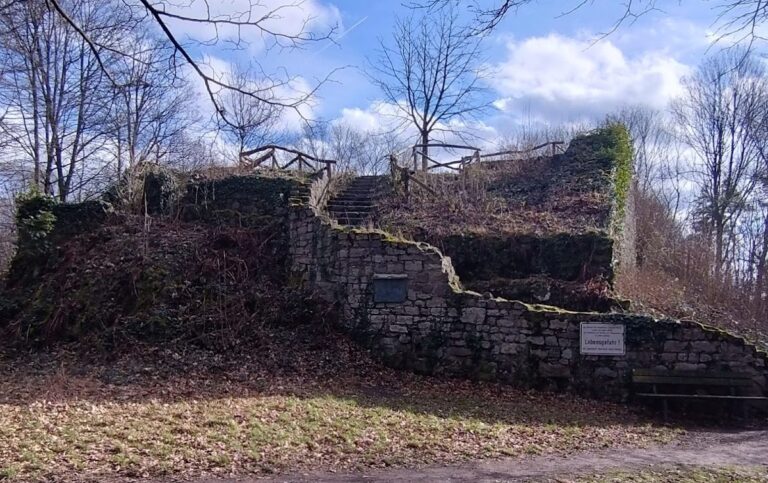
The site is now an archaeological castle site in Reitersdorf Park. Foundations and sections of the walls survive, especially where buried remains were excavated and restored. Other masonry was incorporated into later cellars and stables, preserving parts of the medieval structure in altered form.
The park also contains a stone fountain, a pergola, and a pond associated with the renovation works, together with a rare individual ginkgo tree. These features form part of the present park landscape around the restored castle foundations.
Nearby sites