Burg Rheinberg: A Medieval Spur Castle in Germany
Site at a Glance
- Rating
- 4.8
- Popularity
- Very Low
- Country
- Germany
- Primary era
- Medieval
- Eras represented
- Medieval
- Civilizations
- Electoral Palatinate, Holy Roman Empire
- Site type
- Military
- Remains
- Castle
On this page7 sections
History
Burg Rheinberg is the ruin of a medieval hilltop castle in Germany, above the Wisper Valley near Lorch. Its first fortification was probably established around 1165 by the Archbishop of Mainz, although the exact construction date remains disputed. In 1170, the castle was granted as a fief, meaning property held from a superior in return for service and allegiance, to the Rheingraves, a noble family associated with the Rhine region.
Rheingrave Rule and Mainz Conflict
From about 1250 until after 1300, the ministerials of Heppenheft served as the castle’s retainers. Ministerials were medieval service personnel who performed military, administrative, or courtly duties for a lord and could rise into the lower nobility. Their connection to the Rheingraves placed them within the castle’s system of local power.
In 1279, a feud between Archbishop Werner von Eppstein and Rheingrave Siegfrid von Rheinberg brought the castle into direct conflict with Mainz. Mainz forces built Burg Blideneck about 500 metres to the north, at a higher point on the same ridge, and the Aachener Schanze about 350 metres to the west, on the opposite slope near the meeting of the Herrnsbach and the Wisper. From these positions, they could bombard the lower-lying Burg Rheinberg.
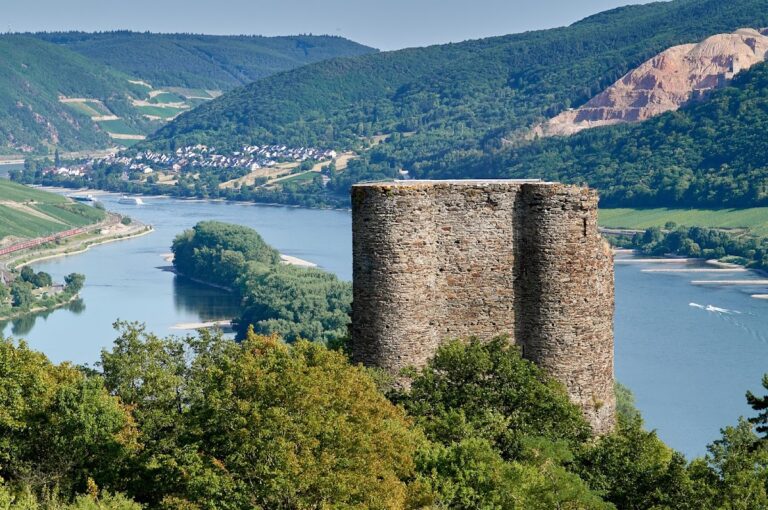
The Mainz forces captured Burg Rheinberg in 1280 and largely destroyed it. Reconstruction followed in 1315, when the present keep was also erected. A keep was the principal fortified tower of a medieval German castle, intended mainly as a strong defensive and refuge structure rather than an ordinary residence.
Later Ownership and Abandonment
In 1399, Burg Rheinberg became a fief of the Electoral Palatinate. From approximately this period, it was expanded into a jointly occupied castle, with several families holding and inhabiting different rights within the complex. This arrangement turned the site into a shared noble residence rather than a castle associated with a single household.
During the following centuries, Burg Rheinberg lost its strategic importance. It was not destroyed again in warfare, but neglect gradually damaged the complex. The castle was eventually abandoned and was uninhabited by the end of the eighteenth century.
The ruin is privately owned. Entry is prohibited because parts of the complex are at risk of collapse, and no safeguarding or conservation work is being carried out.
Remains
Burg Rheinberg occupies a rocky spur about 250 metres above sea level. Valleys formed by two small tributaries of the Wisper separate the spur from the adjacent ridges. The complex follows the narrow landform for approximately 60 metres, while its width is just over 20 metres. Its surviving layout extends from the approach and outer bailey in the north to the keep on a rock platform at the southern end.
Approach and Courtyards
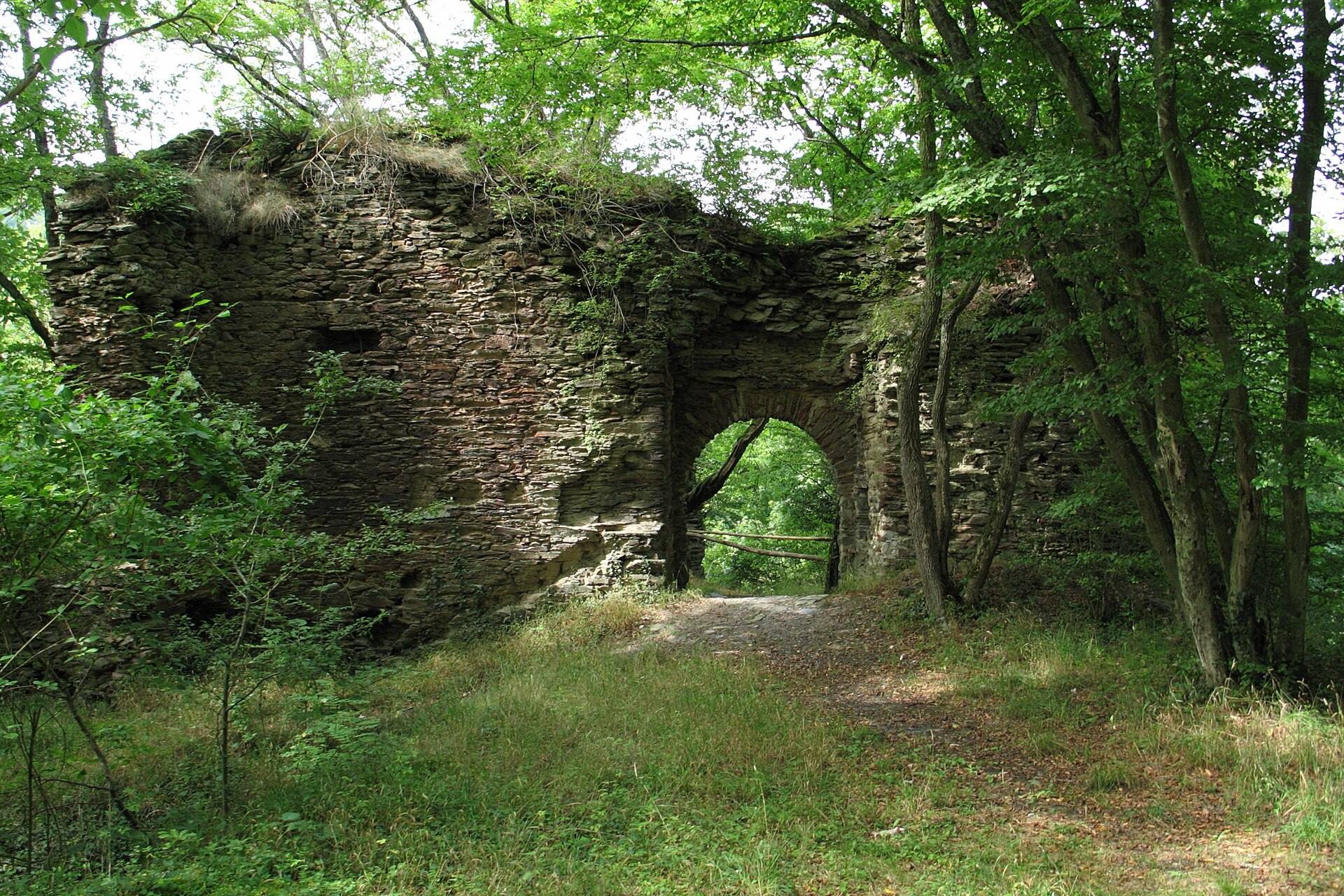
The northern approach crosses a neck ditch, a defensive ditch cut across the narrow connection between a spur and higher ground. It then passes through the castle gate into the outer bailey. From there, a route continues to the inner courtyard. The remains of the castle well lie slightly below the level of the outer bailey, providing evidence of the complex’s internal arrangement.
Keep and Enclosing Walls
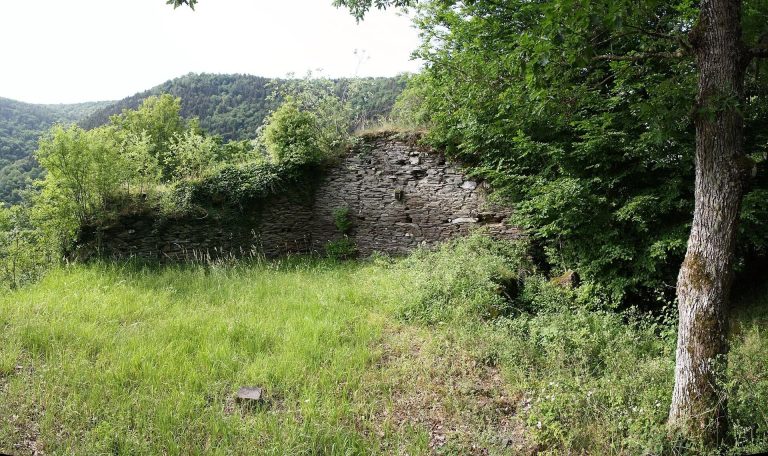
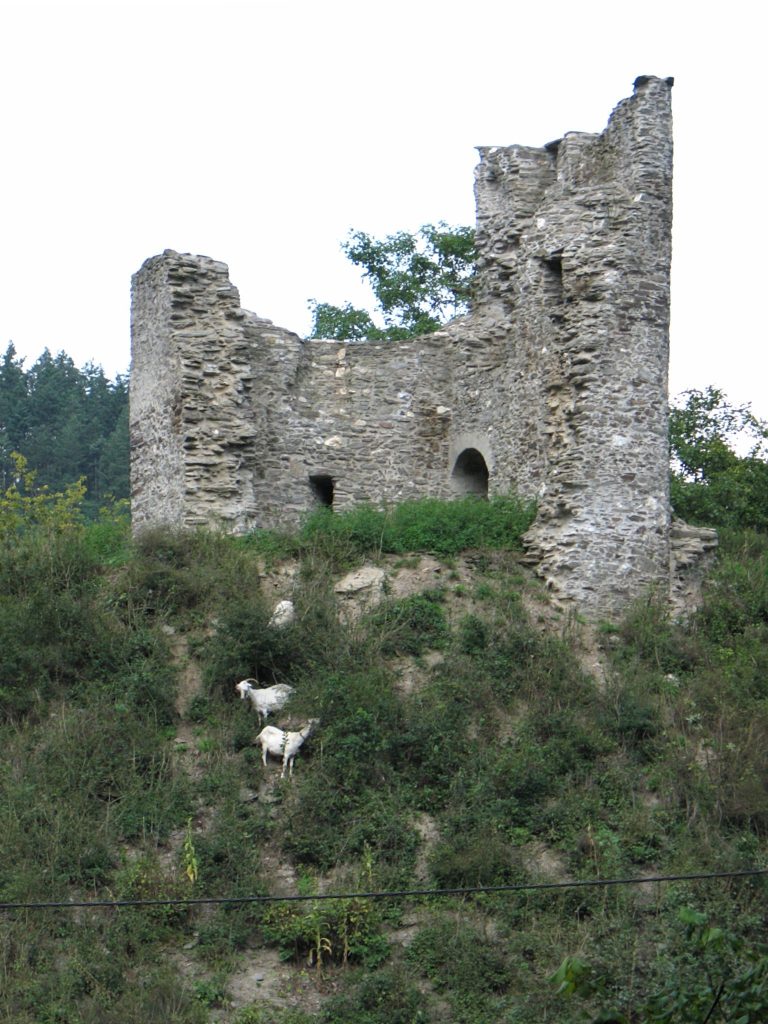
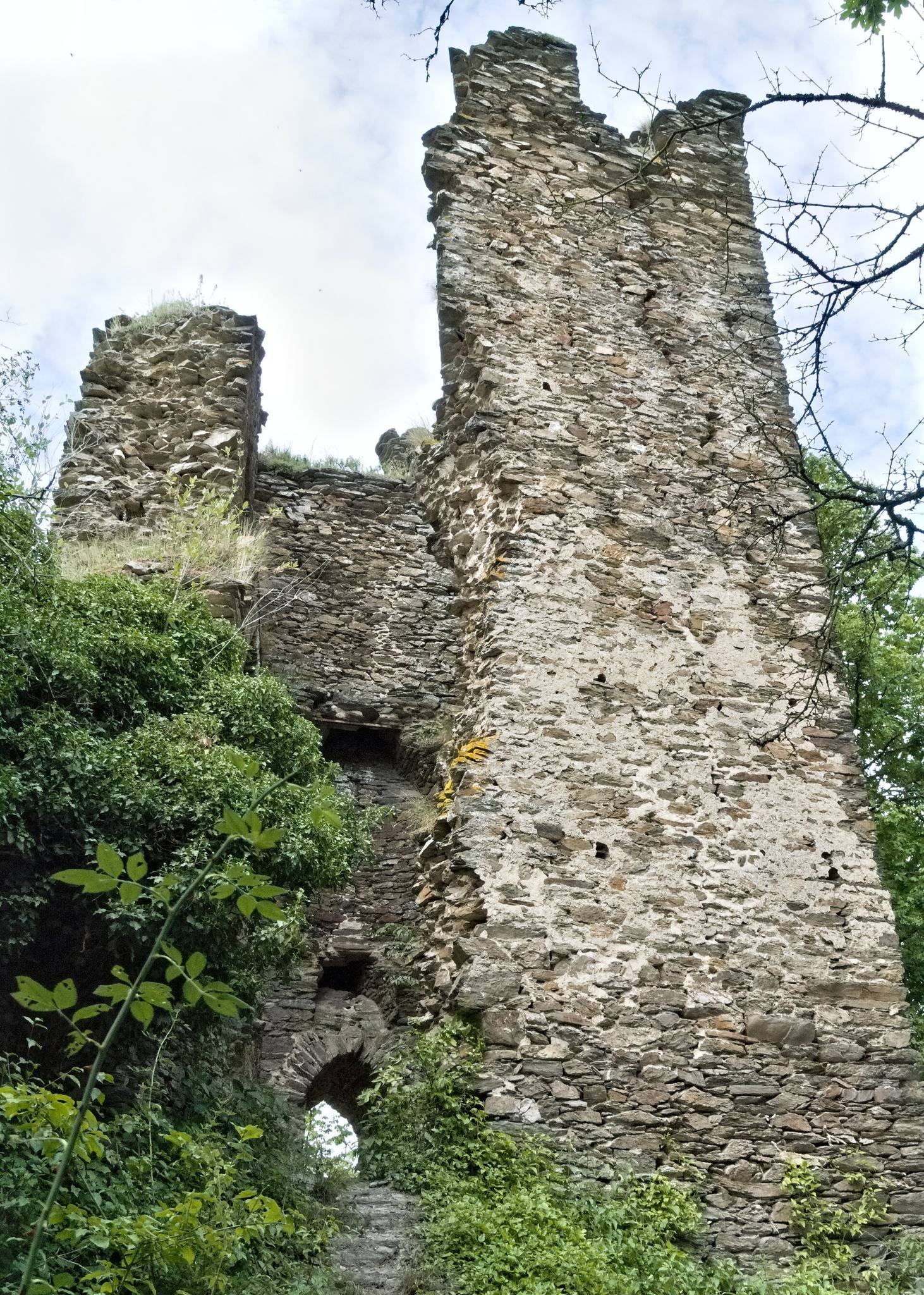
The keep stands on the southern rock platform and retains three storeys. It rises as much as 13 metres and forms the most substantial surviving structure. Sections of the enclosing wall also remain, preserving parts of the castle boundary. Apart from the keep and these wall fragments, scarcely any traces of the residential buildings can be seen.
Eastern Defenses and Plant Growth
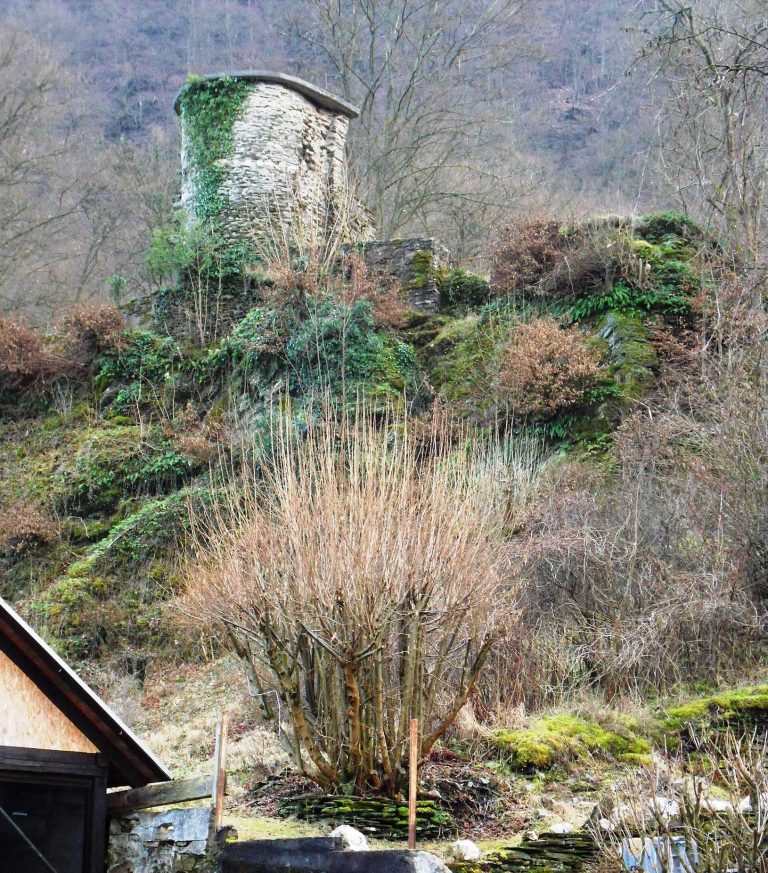
A battery tower secured the eastern flank. Built later than the keep, it was designed for artillery and is now in danger of collapse. Lesser periwinkle grows in the outer bailey. Its presence may relate to a planting made during the high Middle Ages, adding a possible trace of the castle’s former cultivated environment.