Kammerburg: A Medieval Spur Castle Ruin in Germany
Site at a Glance
- Rating
- 4.7
- Popularity
- Very Low
- Country
- Germany
- Primary era
- Medieval
- External website
- Open
- Eras represented
- Medieval
- Civilizations
- Holy Roman Empire
- Site type
- Military
- Remains
- Castle
On this page6 sections
History
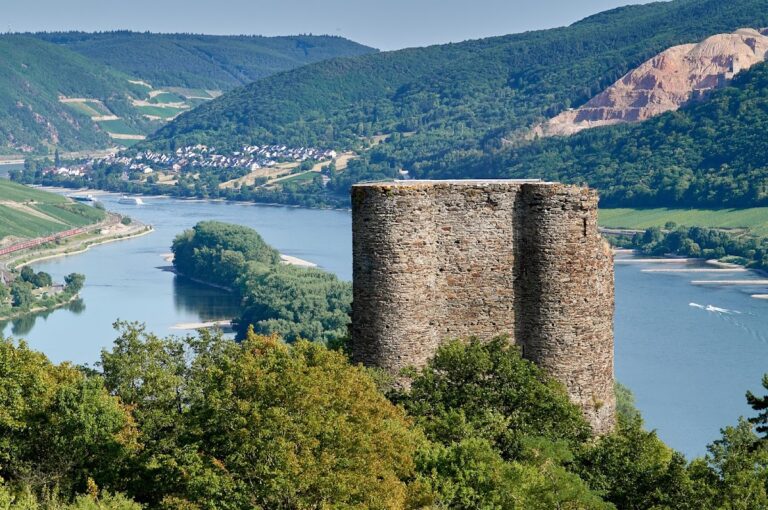
Kammerburg is the ruin of a medieval spur castle in Germany, northeast of Lorch in the Middle Rhine Valley. The Archbishopric of Mainz, a major ecclesiastical territory that also exercised political and territorial power in the medieval Holy Roman Empire, probably built it around 1295 as a siege castle directed against nearby Rheinberg Castle. Kammerburg was first mentioned in 1304.
Medieval fortress
From 1304, the knight Johann von Rheinberg served for eight years as the castle garrison knight on behalf of the Archbishopric of Trier. During the Late Middle Ages, the Archbishopric of Mainz frequently used Kammerburg as a pledged asset, making the castle part of the territory’s political and financial administration. It also protected the Rheingau Gebück, a defensive boundary made from interwoven or obstructing vegetation that crossed the Wisper Valley at this location.
Kammerburg lost its strategic importance during the fifteenth century. From 1483, only a single servant occupied the site, and the castle was abandoned as a fortification before 1500, probably after it had already become uninhabitable. During the sixteenth century, the ruined complex passed to the noble families of Rüdesheim and Blankenheim and to the Counts Palatine. From the beginning of the nineteenth century, it belonged to the von Zwierlein family of Geisenheim and later passed to the Haniel shipping family.
Later development
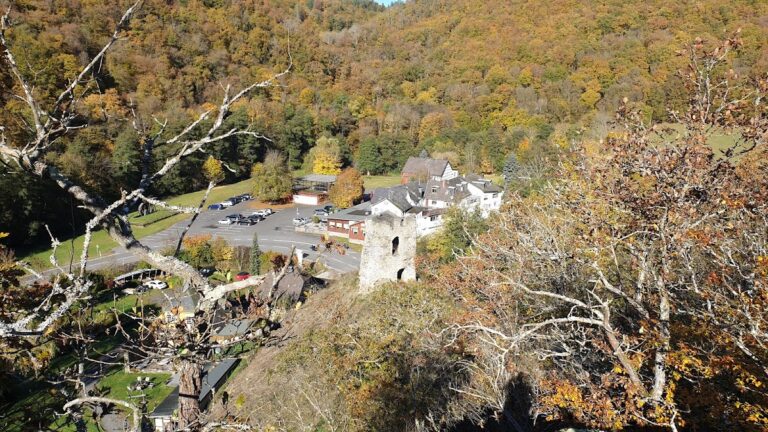
A residential building was constructed over the castle’s outer-bailey area during the 1960s. In 1912, the owning family had already established a separate country estate called Kammerburg in the Wisper loop near the medieval ruin. Its villa and manager’s residence are listed in Hesse’s register of cultural monuments under Section 2(1) of the Hessian Monument Protection Act for historical and artistic reasons.
Remains
Medieval castle ruin
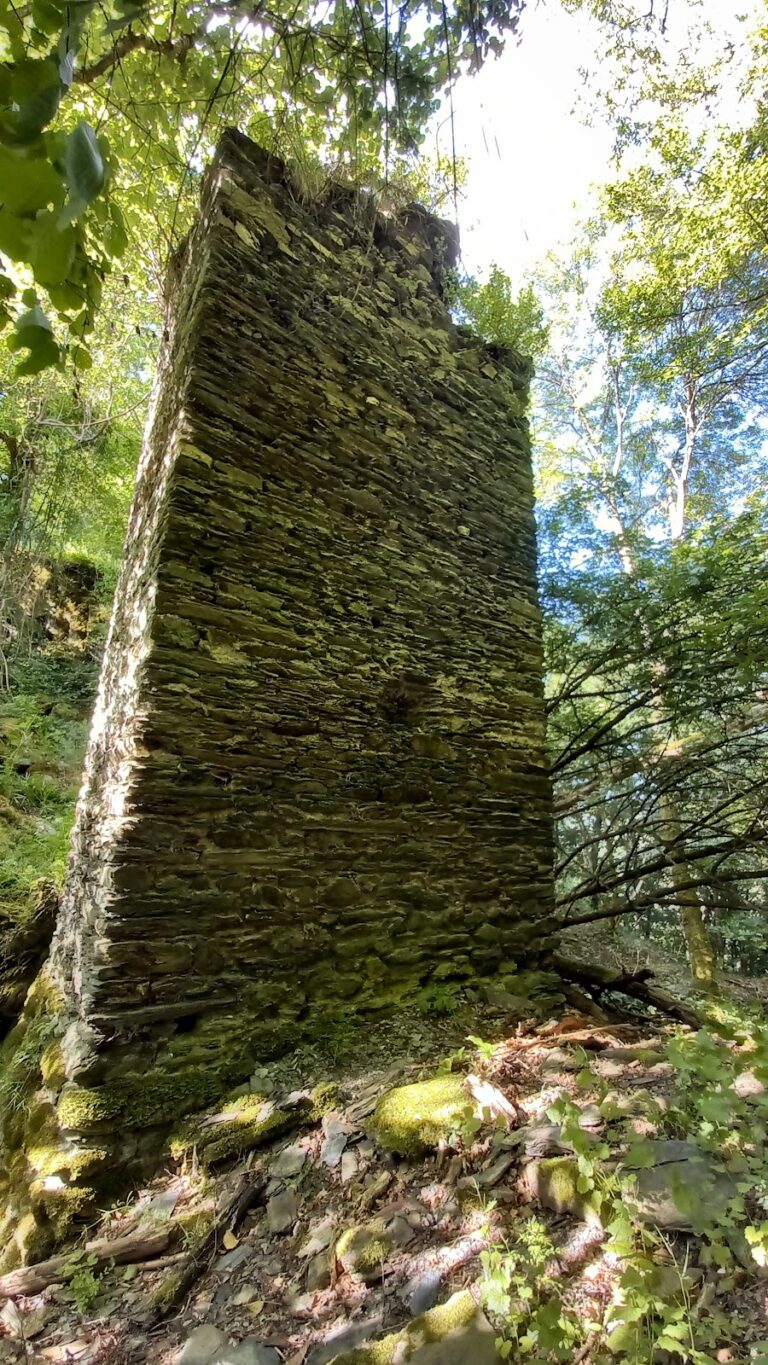
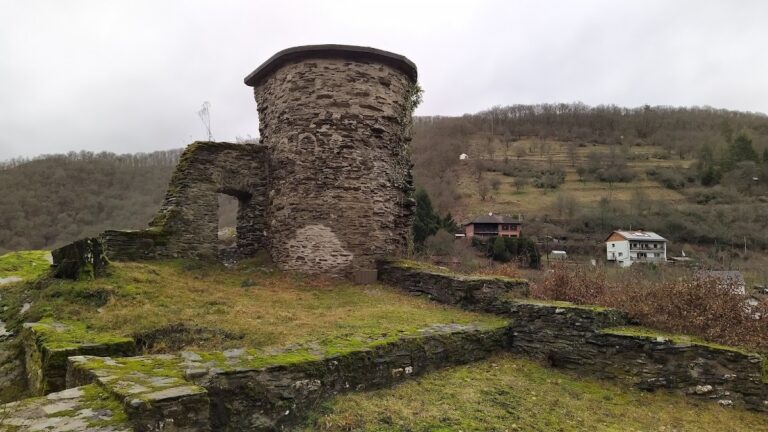
The ruin stands at about 192.8 metres above sea level on a southeast-facing ridge between the Wisper Valley and the Werkerbach Valley, above Wisperstrasse. Rheinberg Castle lies about 500 metres to the northwest and approximately 75 metres higher. The surviving masonry belongs to an inner enceinte, or enclosed main defensive area, measuring about 10 by 11 metres. Only limited sections of its walls remain.
On the north side, a shield wall, a particularly strong defensive wall placed on the side most exposed to attack, faced Rheinberg Castle. A keep, the principal fortified tower, stood within the enclosure beside a gate. In front of the enceinte on the west and south sides was an open outer defensive area, probably a zwinger, positioned between the main enclosure and an additional defensive boundary. Wall lizards formerly occurred at the castle.
1912 country estate
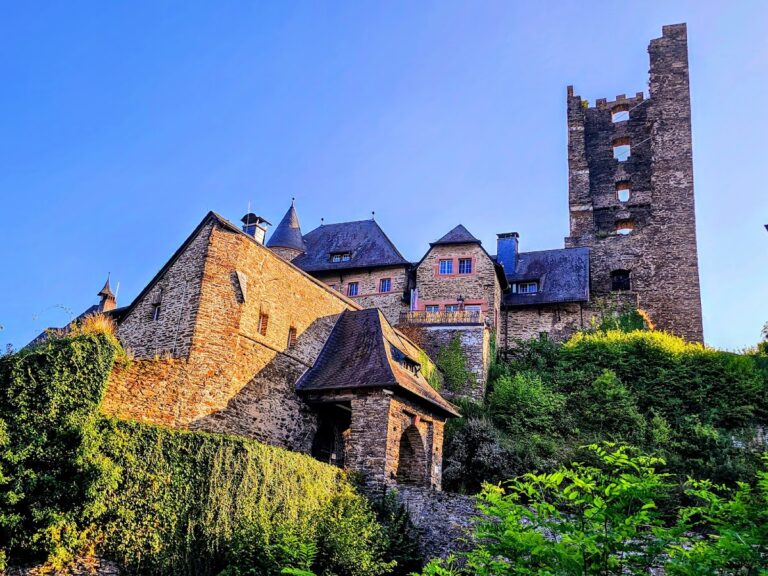
The separate Kammerburg country estate occupies an extensive park-like property in the Wisper loop. Its main building is known by several names, including Villa Kammerburg, Haus Kammerburg, Haus Rheinberg, and Neue Villa. A manager’s residence stands at the entrance, while a country house with a skittle alley lies farther inside the park.
Nearby sites