Burg Rappelstein: A Medieval Hilltop Castle in Germany


Site at a Glance
- Rating
- 4.8
- Popularity
- Very Low
- Country
- Germany
- Primary era
- Medieval
- External website
- Open
- Eras represented
- Medieval
- Civilizations
- Holy Roman Empire
- Site type
- Military
- Remains
- Castle
On this page6 sections
History
Burg Rappelstein is a medieval hilltop castle in Germany, in the Nordenau district of Schmallenberg, built by the noble lords of Grafschaft around 1200 beside the old Cologne–Kassel heath road. Formerly known as Burg Nordenau or Burg Norderna, it became the family’s principal seat after the move from Grafschaft. The Grascap family nevertheless retained its hereditary role as protectors and bailiffs of Grafschaft Abbey and the surrounding territory. The castle’s position was tactically important, and it was regarded as the highest castle in Westphalia.
Early seat and family rule
Local tradition holds that the Grascap family had already controlled a hillfort on the Wilzenberg near Grafschaft around 1000. That earlier fortification was separate from the later castle at Nordenau. The two sites therefore represent different stages in the family’s history rather than one continuously dated building.
On 14 February 1298, the Grascap brothers Kraft and Widekind sold the castle to Count Otto of Waldeck. Otto then granted it back to them as a fief, meaning property held from a superior lord in return for specified obligations. This arrangement began a period of partial Waldeck lordship over the castle and its possessions.
Conflict and decline
After Kraft’s widow, Agnes, faced the threat of being excluded from her share of the castle, Archbishop Walram of Cologne supported her. An archbishop was a senior bishop with authority over an ecclesiastical province, while a count such as Otto of Waldeck was a high-ranking territorial lord. Their competing interests led to prolonged disputes between Cologne and Waldeck from 1343, including important fighting around the castle and a temporary siege.
An agreement in 1364 made the castle the joint property of the Archbishop of Cologne and the Count of Waldeck. The Grascap family later acquired a castle at Ober-Ense in 1471, after which Burg Nordenau began to decline. The Grascap line died out in 1572.
Excavation and protection
Initial excavation of the ruin began in 1919, followed by efforts to protect the surviving tower remains from further deterioration. The municipality and monument-protection authorities carried out additional archaeological investigations and stabilization in 1967–1968. During this work, the keep was partly rebuilt. The ruin is now protected as an architectural heritage monument.
Remains
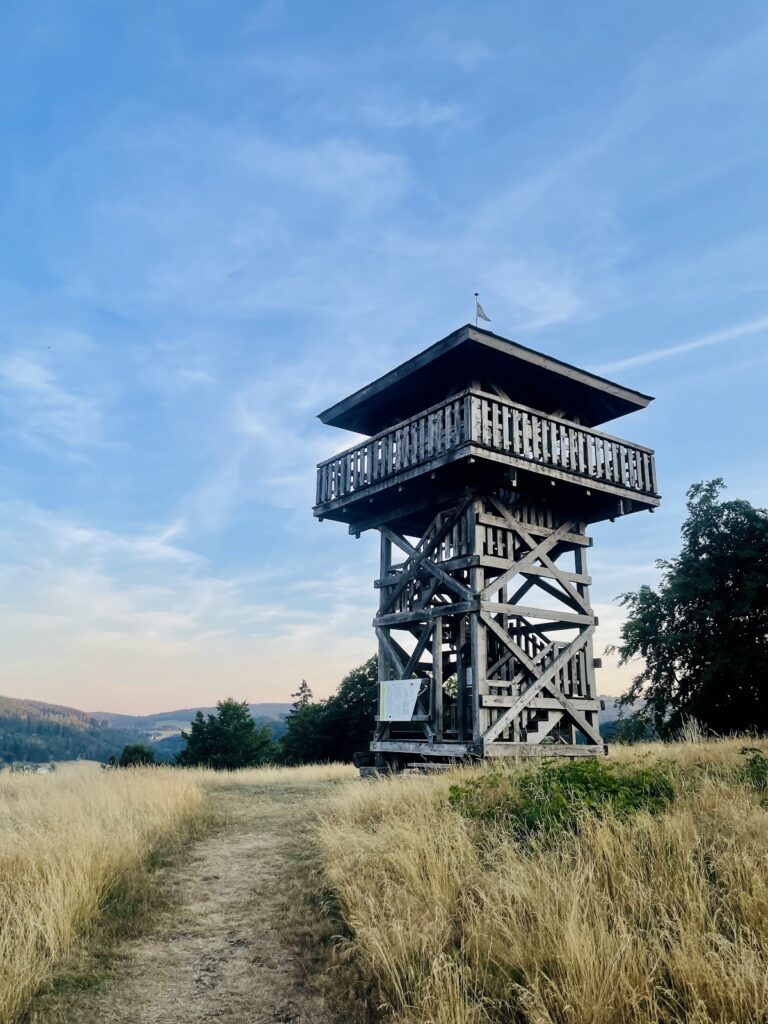
Burg Rappelstein occupies the Rappelstein rock in the center of Nordenau. It was a hilltop castle, and its principal surviving element is the remains of the keep. Timber from the keep was dated by dendrochronology, a method that compares annual growth rings, to between 1085 and 1110. The keep was partly reconstructed in 1967–1968 and now functions as a viewing platform overlooking Nordenau, the Nesselbach valley, and the surrounding Sauerland mountains.
Archaeological finds
Excavations at the ruin produced vessel sherds, a crossbow, and a coin of the Duchy of Westphalia dating from the fourteenth century. These finds provide material evidence for activity at the castle during its medieval period.
The excavations also uncovered the Nordenau Hanseschale, a shallow bronze bowl approximately 25 centimeters wide. Its center carries the inscription “SUR ERBIA” and an image of a crowned female figure. Since 1927, the bowl has been held by the LWL Museum of Art and Cultural History in Münster.
Nearby sites