Neuenberg Castle: A Medieval Border Fortress in Germany
Site at a Glance
- Rating
- 4.4
- Popularity
- Medium
- Country
- Germany
- Primary era
- Medieval
- Eras represented
- Medieval
- Civilizations
- Holy Roman Empire
- Site type
- Military
- Remains
- Castle
On this page4 sections
History
Origins and border role
Neuenberg Castle is a medieval hilltop ruin near Scheel, in Lindlar, North Rhine-Westphalia, Germany. Architectural evidence places its origins in the 12th century, although its first recorded mention dates to 1433. It belonged to the domain estates of the Counts of Berg, the territorial rulers.
In 1273, the Counts of Berg pledged the Gummersbach bailiwick, a territorial jurisdiction administered by a reeve or advocate, to the Counts of Mark. The pledged territory included Gimborn Castle. The Leppe River consequently became the boundary between Berg and Mark, and Neuenberg served as a border fortress.
Destruction
During the Thirty Years’ War, a European conflict fought from 1618 to 1648, Swedish forces captured and destroyed Neuenberg around 1640. At the time, the castle was the seat of the Steinbach administrative office, a local unit of territorial government. The damage was so severe that the castle was razed around 1662.
Remains
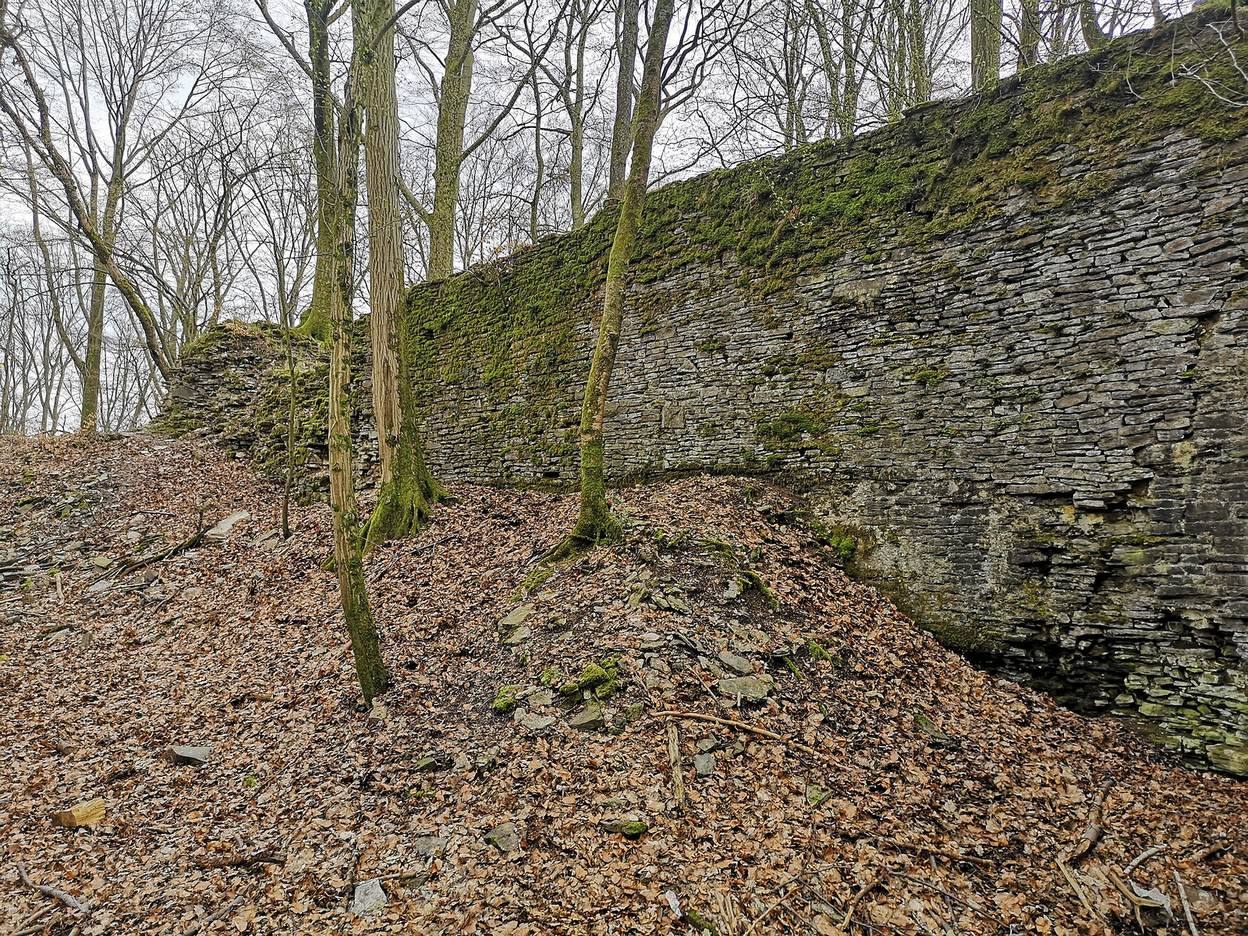
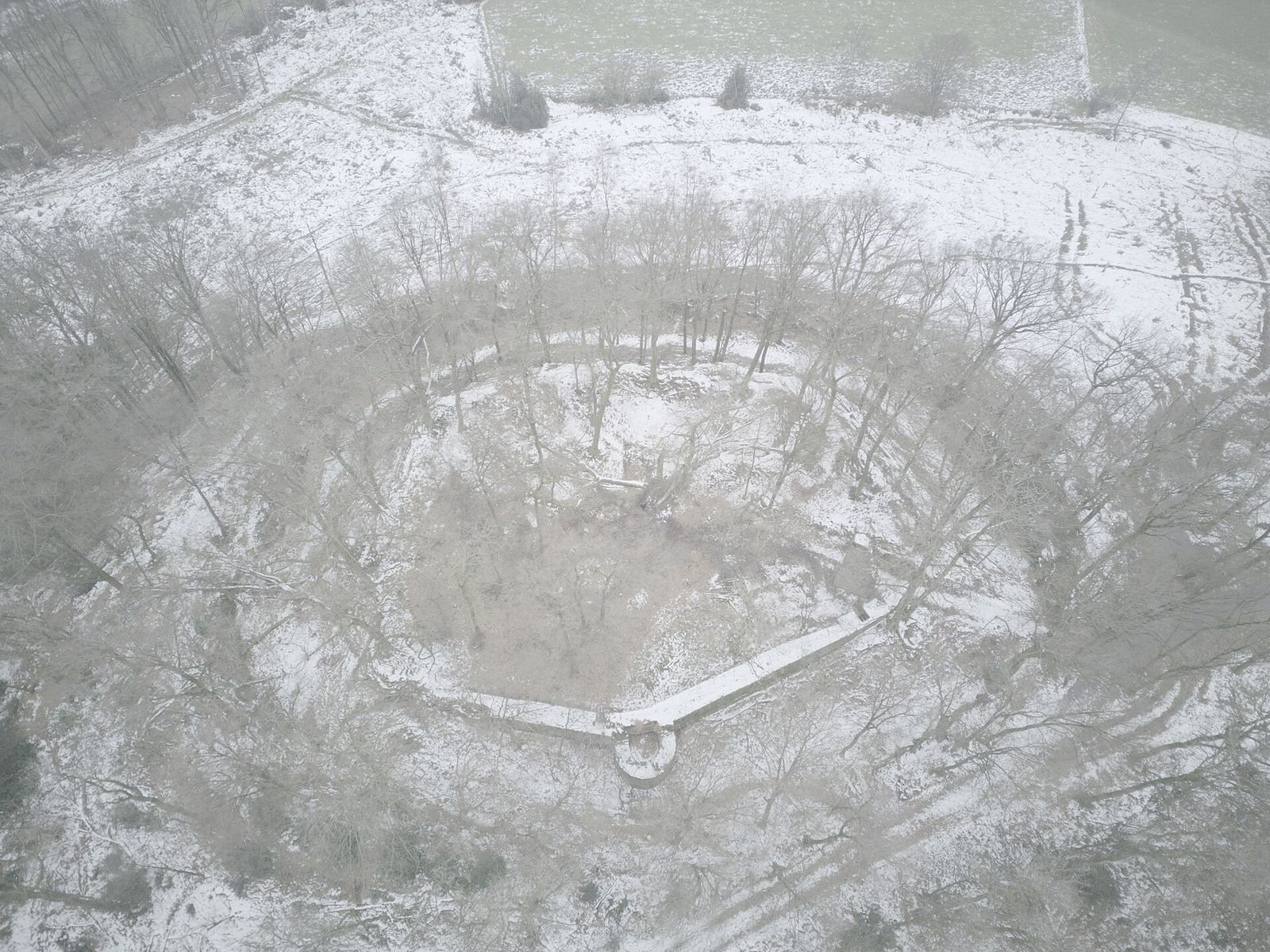
The ruin stands on elevated ground at 250 metres above sea level. Parts of its outer walls, the entrance, and a defensive ditch survive. A short footpath leads to the Zwergenloch, a limestone cave with dripstone formations, measuring 12 metres long and 7 metres wide.