Lichtenstein Castle: A Ruined Hill Fortress in Germany


Site at a Glance
- Rating
- 4.2
- Popularity
- Very Low
- Country
- Germany
- Primary era
- Medieval
- Eras represented
- Medieval
- Civilizations
- Holy Roman Empire
- Site type
- Military
- Remains
- Castle
On this page10 sections
History
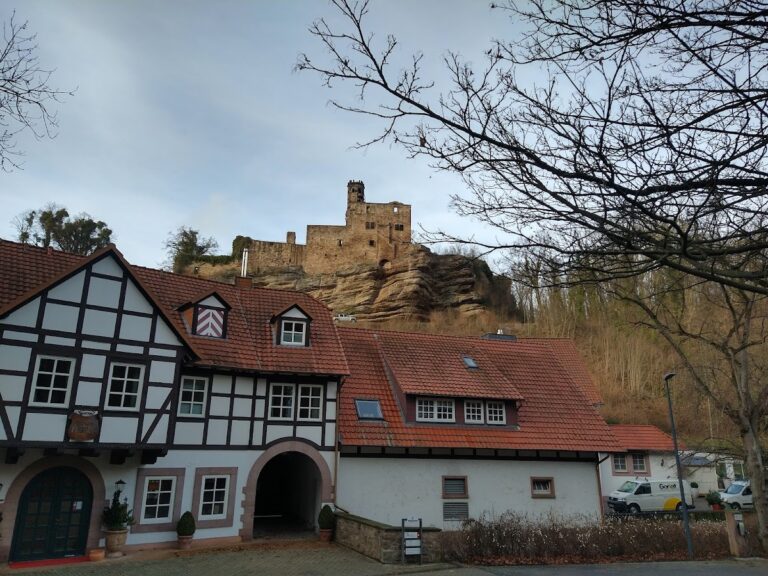
Lichtenstein Castle is a ruined hill castle in Germany, situated between Förste and Dorste west of the Harz in Lower Saxony. Built as a medieval fortified settlement on elevated ground, it stood on the wooded summit of the 260.9-metre-high Lichtenstein and belonged to the Dukes of Grubenhagen, a branch of the House of Welf. The castle existed before 1404, when it was first recorded in connection with Duke Erich I of Grubenhagen.
Origins and the Grubenhagen dukes
Traditions place Lichtenstein Castle as early as the mid-thirteenth century, when members of the Letgast noble family are said to have served there as castle guards. The site is also linked by tradition with the castles of Duke Heinrich the Wondrous. According to the same tradition, Lichtenstein was destroyed in 1365 during the war between Landgrave Friedrich III of Thuringia, a territorial ruler with a rank broadly comparable to a prince, and Albrecht I of Grubenhagen. These early associations remain traditional rather than firmly established.
The castle’s first clear historical references date from 1404 and 1406, when Duke Erich I was identified as its owner. During the fifteenth century, the Grubenhagen rulers repeatedly pledged Lichtenstein to knights. A pledge temporarily transferred control or revenue from property to a creditor as security for a debt, making the castle part of changing networks of noble possession.
War, burning, and disputed possession
One pledge-holder was Herwig von Utze, a member of an old noble family from Lüneburg. After von Utze raided Goslar in 1438, a military campaign was directed against him. Lichtenstein was reportedly captured and burned on 24 October 1439, although it was rebuilt soon afterward.
The campaign created a dispute over the castle’s control. Although Lichtenstein belonged to the Dukes of Grubenhagen, the city of Goslar temporarily held it as a consequence of the action against von Utze. The disagreement was settled on 7 April 1442 through arbitration by the city of Osterode.
Later pledges and decline
In 1481, Lichtenstein was pledged to Ludolf von der Linde, a knight of Grubenhagen. By 25 November 1507, it had been pledged to Ludolf and his nephew Joachim von der Linde. Later that year, Elisabeth, the widow of Duke Albrecht II, and her sons Philipp and Erich transferred the pledge to Hans and Albrecht von Leuthorst, also known as Lauthorst, for 400 gulden, a gold or later currency unit used in German territories.
Lichtenstein was mentioned for the last time in 1567, when Duke Wolfgang of Grubenhagen made firewood from the Lichtenstein forest available to his brother Philipp as required. Because this reference concerns the forest rather than the fortress itself, the castle probably no longer existed by that date.
Later traditions and investigation
After the Thirty Years’ War, the ruins were associated with Hans Warnecke of Eisdorf, a robber who attacked uniformed men in the Harz foreland. According to legend, he was captured in Osterode and sentenced to death by quartering. The story explains his turn to an outlaw’s life by claiming that soldiers killed his family after the Battle of Lutter. In 1972, three local researchers from Osterode searched beneath the castle for a secret passage or escape tunnel. Several hundred metres downhill, they discovered a narrow underground passage about 50 metres long, which proved to be a natural cave rather than a castle tunnel.
Remains
Lichtenstein Castle occupied a wooded summit and was organized around an approximately circular, probably artificial mound. A ring moat and an additional bank in front of it formed a defensive complex measuring about 90 metres across. The surviving remains include the mound, the surrounding moat, and part of the enclosing ring wall.
Castle mound and defenses
Mound and moat
The castle mound measures about 50 metres in diameter and is roughly circular in plan. Its elevated position formed the core of the hill castle, while the surrounding ring moat and the outer bank strengthened the enclosure. Together, these earthworks defined the main extent of the fortified site.
Ring wall
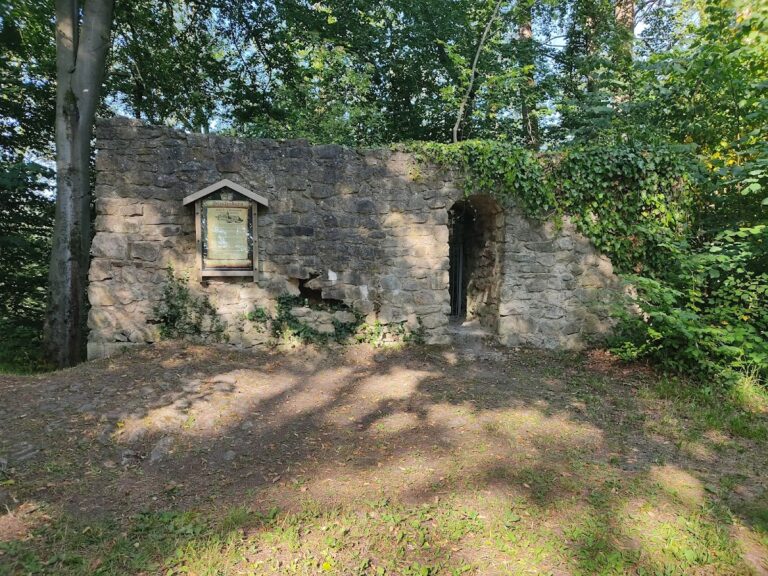
A section of the enclosing ring wall survives on the northern side of the mound. Built from light-coloured gypsum stone, the surviving stretch is 9 metres long, 4.5 metres high, and 1 metre thick. Wall foundations show that it belonged to a ring wall encircling the mound. The pale stone gave the castle the former additional name Silver Castle.
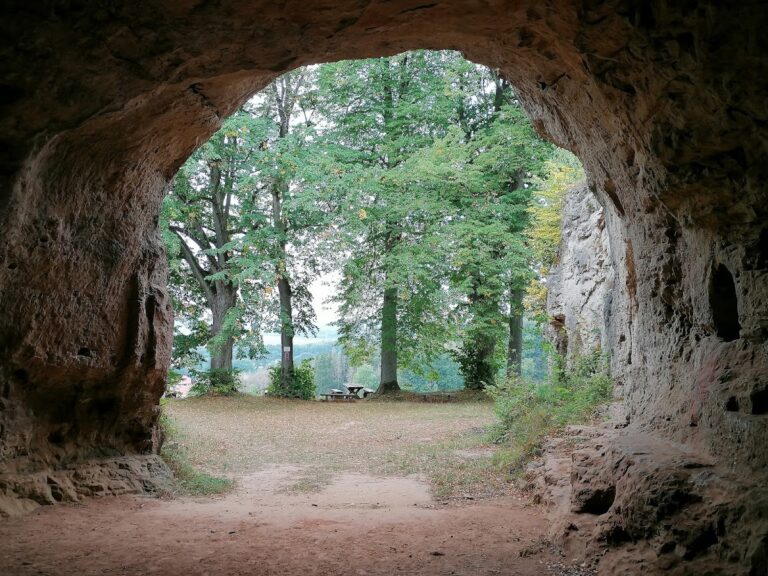
Natural cave
The underground passage found downhill from the castle is a narrow natural cave approximately 50 metres long. It was initially called Rotkamp Cave and was later renamed Lichtenstein Cave. Its discovery in 1972 followed the search for a possible castle passage, but its natural origin distinguishes it from the fortress remains.
Nearby sites