Burg Hermülheim: A Medieval Water Castle in Hürth, Germany


Site at a Glance
- Rating
- 4
- Popularity
- Very Low
- Country
- Germany
- Primary era
- Medieval
- External website
- Open
- Eras represented
- Medieval
- Civilizations
- Holy Roman Empire
- Site type
- Military
- Remains
- Castle
On this page12 sections
History
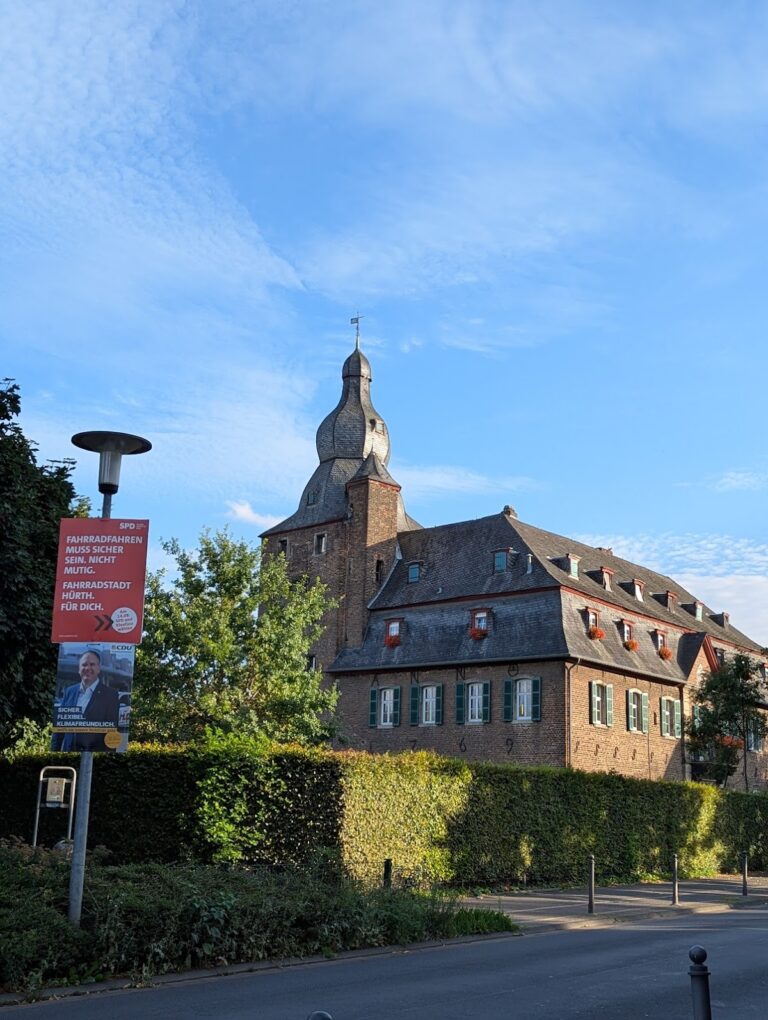
Burg Hermülheim is a medieval lowland water castle in Hürth, Germany, whose construction dates to around 1166. It stood on the edge of the village of Hermülheim, near Cologne, and developed beside waterways associated with the Roman water supply to Cologne and the later Duffesbach watercourse.
Origins beside the Waterways
Hermülheim grew beside the former Roman conduit running from the Eifel to Cologne and the later artificial channel of the Duffesbach. The castle occupied a supposed collection point where earlier conduits carrying water from springs near the Villerand, captured during the Roman period, may have joined the later Eifel aqueduct leading to Roman Cologne. This collection point has not been demonstrated.
Landowners with special rights probably guarded the water-collection point and its conduit. After the conduit fell out of use, a mill was built at the outlet of the Hürth valley, where most of the water emerged. The settlement’s name developed from its position between the mill and the castle. Its lords adopted related forms of the place-name, including de Molenhem, de Mulenheim, von Rizemolheim, and von Richemülnheim.
Rizo de Mulenheim, a ministerial, meaning a medieval service noble who carried out administrative, military, or court duties for a ruler or ecclesiastical lord, appears in a document from 1166.
The Teutonic Order Lordship
In 1256, Dietrich von Richzemulenheim, son of the knight Wilhelm von Richzemulenheim, exchanged the lordship of Hermülheim and the castle with the Teutonic Order for a farm at Erp. The transfer included the farm and its buildings, church tithes, an annuity, 271 Morgen of arable land, 50 Morgen of woodland, four Morgen of vineyard, a fishpond with meadows, and jurisdiction over Richzemulenheim property in the village. A Morgen was a traditional Central European unit of land area whose size varied by region.
The Teutonic Order was a Catholic religious and military order that also held land, exercised lordship, and administered estates. Hermülheim belonged to the order’s house at Koblenz, as did Cologne. Under its new lords, the settlement was called Herrenmülheim before the form Hermülheim became established.
Damage, Rebuilding, and Conversion
The castle and its associated buildings were damaged and rebuilt repeatedly. Troops from Berg attacked the complex in 1416 during the regency of Duke Adolf. The residential building was restored after a fire in 1447, while the barn and house burned again around 1498. The seven-storey tower appears at times to have been used for storing grain.
After 1762, under Ignaz Felix von Roll, the last Teutonic Order commander to reside at the castle for periods, the building was converted into a three-storey manor house. It was intended as a summer residence for the commanders of the Koblenz bailiwick, a regional administrative district of the order. Von Roll was a confidant of the order’s master, Clemens August, who frequently stayed at nearby Brühl Palace.
Secularization and Later Ownership
In 1802, during secularization, the transfer of religious property into secular or state administration during the political upheavals surrounding the Napoleonic period, the French domain administration took over the castle as former ecclesiastical property. The French Senate used the Hermülheim estate to reward members of the Legion of Honour, a French national order of merit established during the Napoleonic era.
Around 1810, the castle passed to Marshal Louis-Alexandre Berthier, Prince of Wagram. Johann Phillipp Heimann of Cologne bought it from him in 1818 and sold it to Josef Honnecker in 1822. Honnecker transferred it to Everhard von Groote in 1834. Von Groote’s sister lived at Burg Kendenich.
Everhard von Groote rebuilt the manor house, which had probably been destroyed during the Coalition Wars, the conflicts between revolutionary and Napoleonic France and changing European alliances from 1792 to 1815. The rebuilt house remained inhabited until 1959.
Demolition and Surviving Evidence
After the Second World War, Burg Hermülheim fell into decay. In 1955, the von Groote family exchanged it with the municipality of Hürth for land belonging to the Bell and Horbell estates between Sielsdorf and Marsdorf. The municipality demolished the castle courtyard in 1964. The castle itself was then destroyed by controlled burning, after firefighters placed hay bales inside and set them alight.
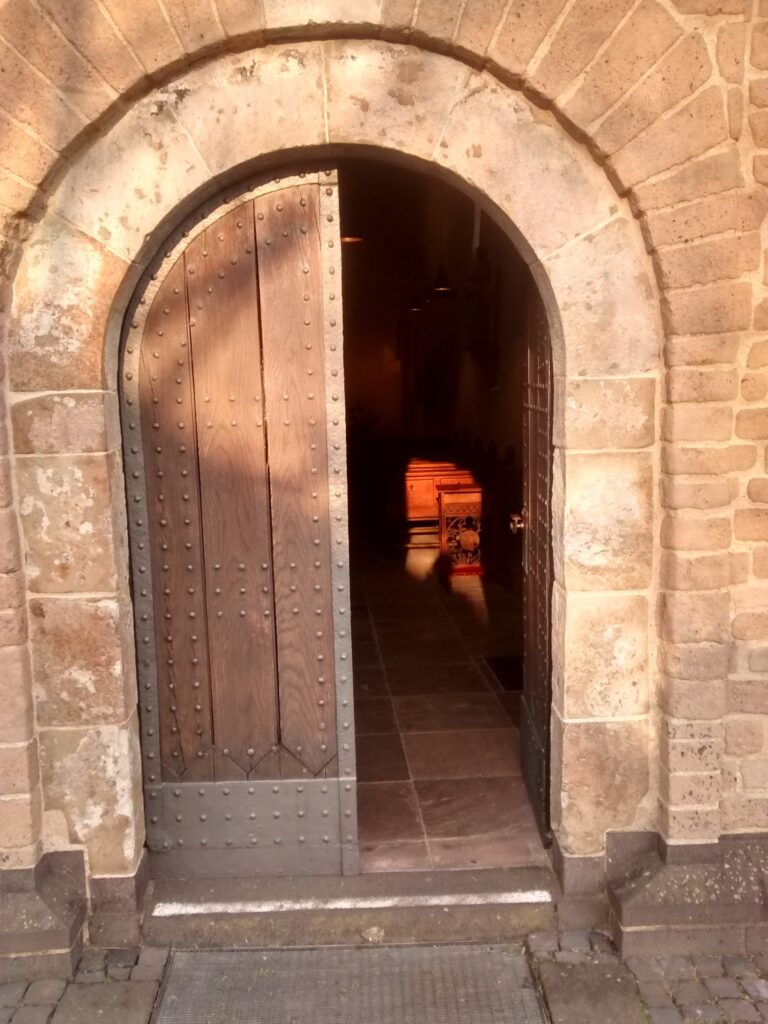
The entrance arch remains protected as a historic monument. The castle’s appearance in 1762 is also preserved in a drawing by Matthias Ehmanns, an eighteenth-century artist and draughtsman.
Remains
Layout and Setting
Burg Hermülheim was a two-part lowland water castle surrounded by a broad moat. The complex occupied a castle island, with swampy ground or a pond probably extending to its north. It began as a substantial knight’s castle, while extensive farm buildings supported the administration of the surrounding estate. By 1659, that estate included 583 Morgen of land and 180 Morgen of woodland or scrub in the Hermülheim district, along with a further 33 Morgen of meadows at Balkhausen, Lindlar, and Türnich. Building materials from decayed Roman structures and water conduits in the area may have been reused in the castle.
Surviving Features
Entrance Arch
The entrance arch to the castle grounds survives in the former castle-park area. It is the most prominent surviving element of the demolished complex and is protected as a historic monument.
Wall Remains
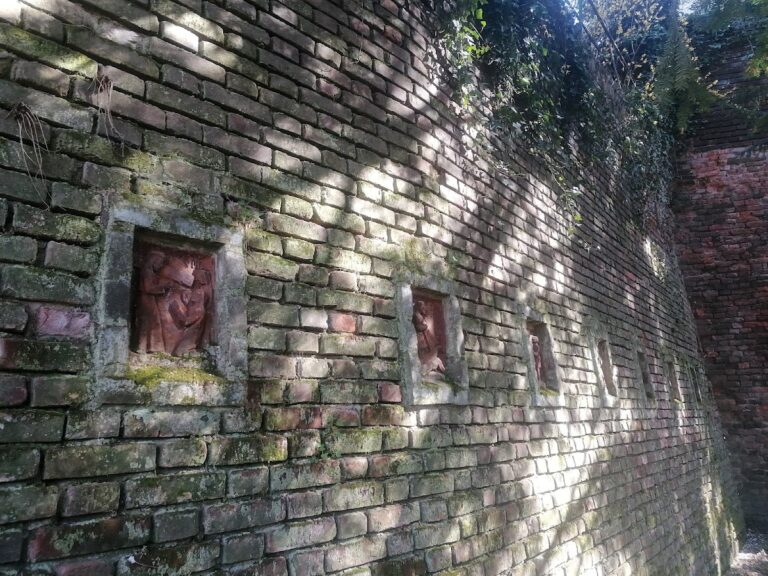
Sections of the castle walls also remain. Together with the entrance arch, they provide the surviving physical fabric of Burg Hermülheim after the courtyard and main castle were demolished in the twentieth century.
Teutonic Order Coat of Arms
A stone bearing the coat of arms of the Teutonic Order, dating from around 1760, survives at the parish house rather than at the castle site. It preserves a material link with the period when the order controlled Hermülheim.
Nearby sites