Granegg Castle: A Medieval Hill Castle in Waldstetten, Germany
Site at a Glance
- Rating
- 3.5
- Popularity
- Very Low
- Country
- Germany
- Primary era
- Medieval
- Eras represented
- Medieval
- Civilizations
- Holy Roman Empire
- Site type
- Military
- Remains
- Castle
On this page4 sections
History
Granegg Castle is a ruined medieval hill castle in the Wißgoldingen district of Waldstetten, Germany. Its construction is dated to around 1230, in the 13th century, on the basis of bossed ashlar, dressed stone blocks with rough or projecting outer faces. The exact building date is unknown.
The builders and owners have not been identified. The Lords of Stoffeln, who came from nearby Weilerstoffel, and the Lords of Holtz have both been proposed as possible lords, but neither family’s control of Granegg is established. The Holtz were ministerials, retainers often of knightly standing who served lords in military or administrative roles and could hold land in return. They served the Rechberg family and held estates in Tannweiler, Wißgoldingen, Winzingen, and Christental.
Granegg is generally thought to have had a brief period of use and to have been abandoned by the 14th century at the latest. It is not known whether the castle was destroyed or simply deserted. In 1674, Friedrich Vogt, a chronicler from Schwäbisch Gmünd, mentioned the ruins.
Remains
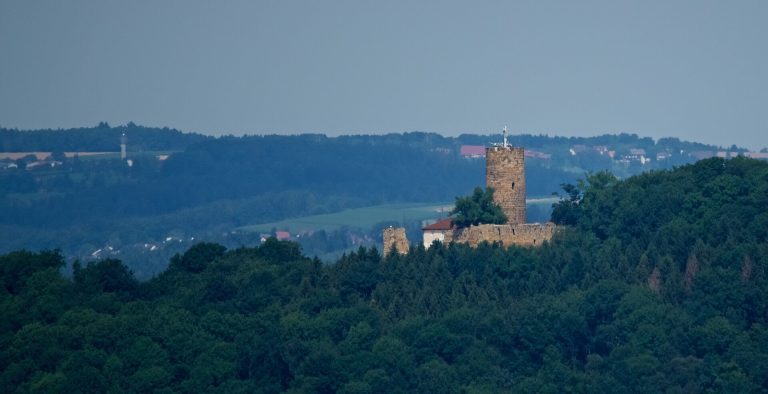
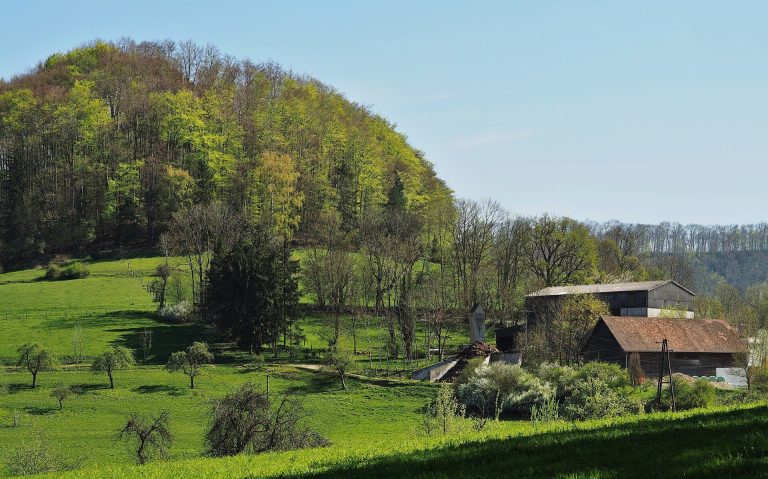
The wooded remains occupy a west-facing spur extending about 200 metres from Kaltes Feld, at an elevation of 688 metres. The enclosure measured 60 by 22 metres and was separated from the adjoining high ground by a ditch cut across the spur, 4 metres deep. The castle’s position commanded the pass summit in Christental, about 100 metres away, near the present-day Reiterles Chapel.
Round defensive tower
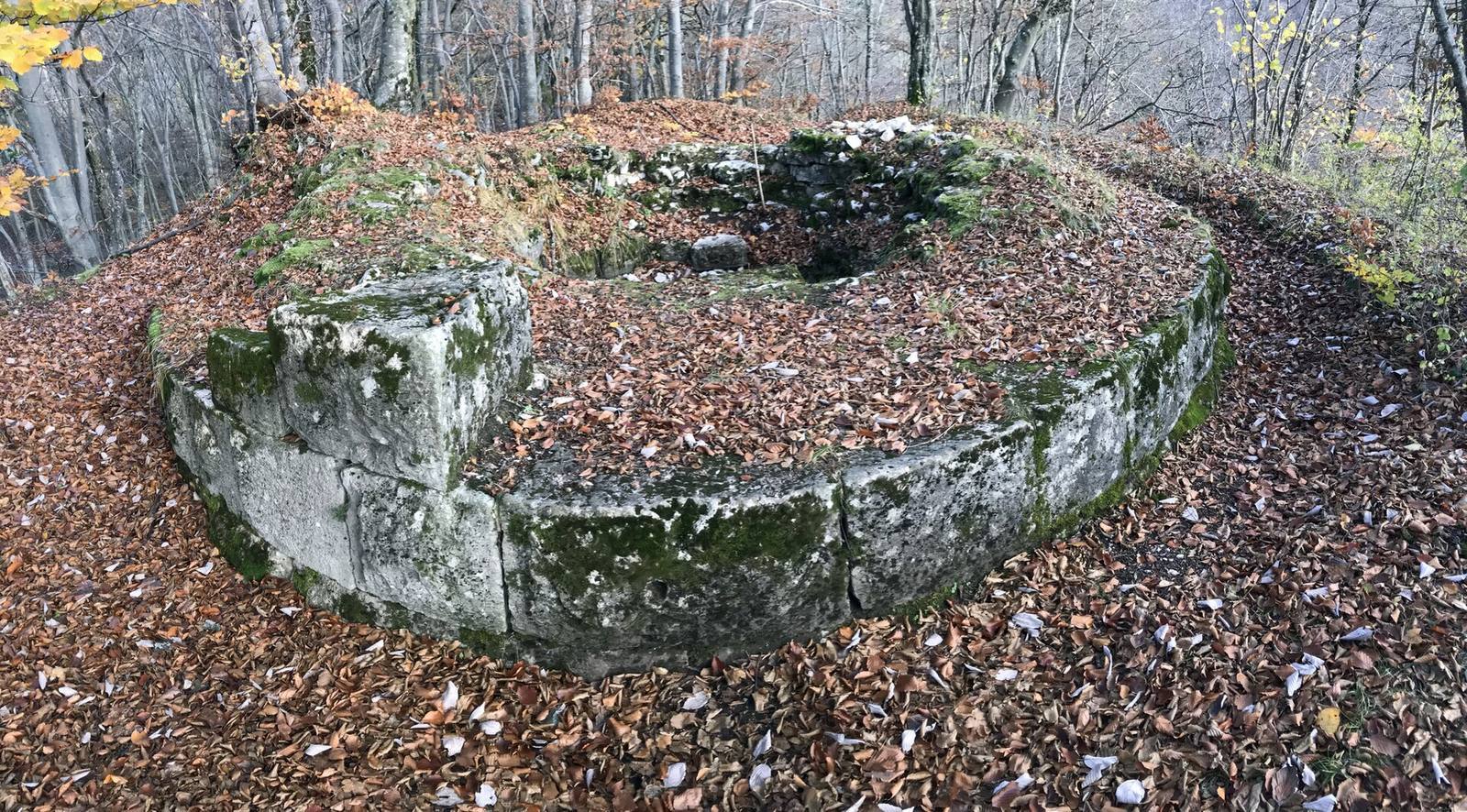
Scattered masonry survives around the site, with the foundation remains of a round defensive tower especially visible. The tower was faced with bossed ashlar and measured 8.62 metres across externally and 3.62 metres internally, with walls 2.50 metres thick. Its blocks were made of White Jurassic stone and may have been reused as building material in nearby settlements.
Cellar remains
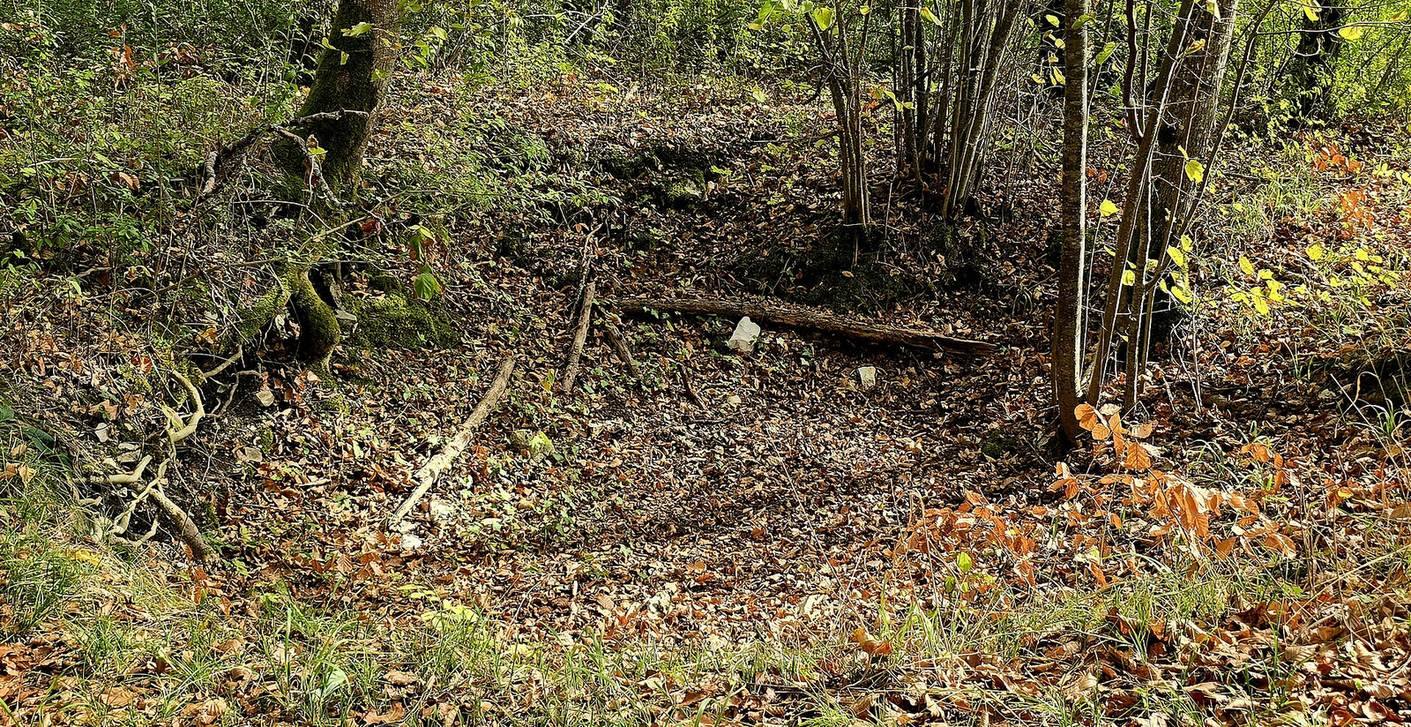
Around 1885, remains of a vaulted cellar and its steps may still have been visible.