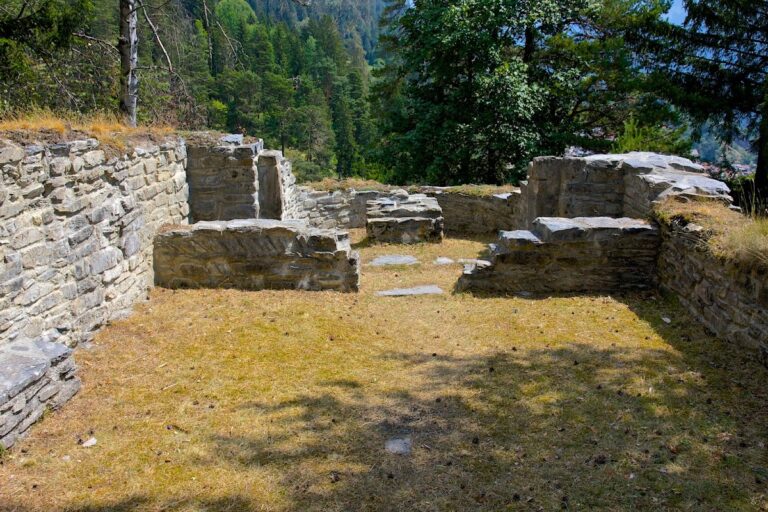
Friberg Castle (Siat): Centre of a Medieval Lordship


Site at a Glance
- Rating
- 5
- Popularity
- Very Low
- Country
- Switzerland
- Primary era
- Medieval
- Eras represented
- Medieval
- Civilizations
- Holy Roman Empire
- Site type
- Military
- Remains
- Castle
On this page7 sections
History
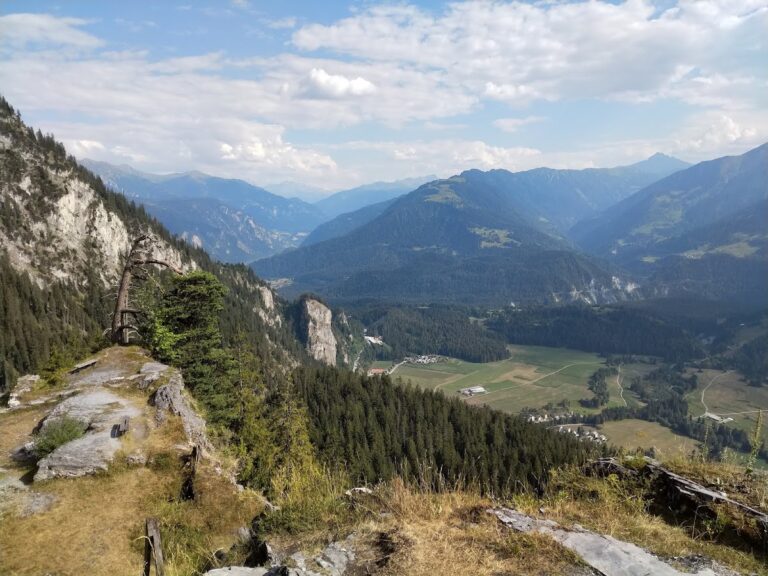
Friberg Castle is a ruined medieval hill castle above Siat in Switzerland and was the centre of the lordship held by the Lords of Friberg, high-status nobles who held land directly rather than as subordinate vassals. The family belonged to the Edelfreie of the Vorderrhein Valley, and the castle’s history reflects the contested feudal relationships of the region.
The Lords of Friberg
Friedrich von Friberg is recorded between 1255 and 1289. In 1255, he joined other lords from the Rhaetian region in fighting the bishopric of Chur at Domat/Ems. Chur’s bishopric was both an ecclesiastical institution and a territorial power whose lands and rights could be contested or transferred through feudal arrangements.
Rainger is the only other known member of the family. He was recorded as deceased by 1343 and apparently transferred the lordship of Friberg to Austria before receiving it back as an Austrian fief, meaning a lordship granted in return for feudal service. The Friberg family died out around 1330, after which the castle’s ownership and feudal status became uncertain.
Disputed succession
One possibility is that Donat von Vaz received Friberg as a fief and that, after his death around 1337, it passed to his daughter Ursula and her husband, Rudolf von Werdenberg. Another is that Donat merely claimed the castle, while Ursula was unable to enforce the claim and renounced it in 1342 in exchange for receiving Friberg from Austria as a fief.
Following a feud with the Lords of Rhäzüns, Ursula and Rudolf had to surrender Friberg and Jörgenberg. Both castles passed to the Rhäzüns family in 1343. In 1458, an inheritance dispute between Georg von Rhäzüns and Jos Niclaus von Zollern resulted in Jos Niclaus receiving the lordships of Friberg and Jörgenberg, along with the villages of Waltensburg, Andiast, Siat, Rueun, and Schlans. Ursula von Vaz had transferred her rights to Niclaus von Zollern, her son from her first marriage.
Transfer to Chur and Disentis
On 1 June 1472, an agreement transferred the lordships of Jörgenberg and Friberg to Ortlieb, Bishop of Chur. The reason for this transaction is unknown. Five days later, on 6 June, Jos Niclaus sold both castles to Disentis Abbey, a Benedictine monastery that also held territorial and lordship rights in the Swiss Alps. Friberg Castle was probably abandoned during the fifteenth century.
Remains
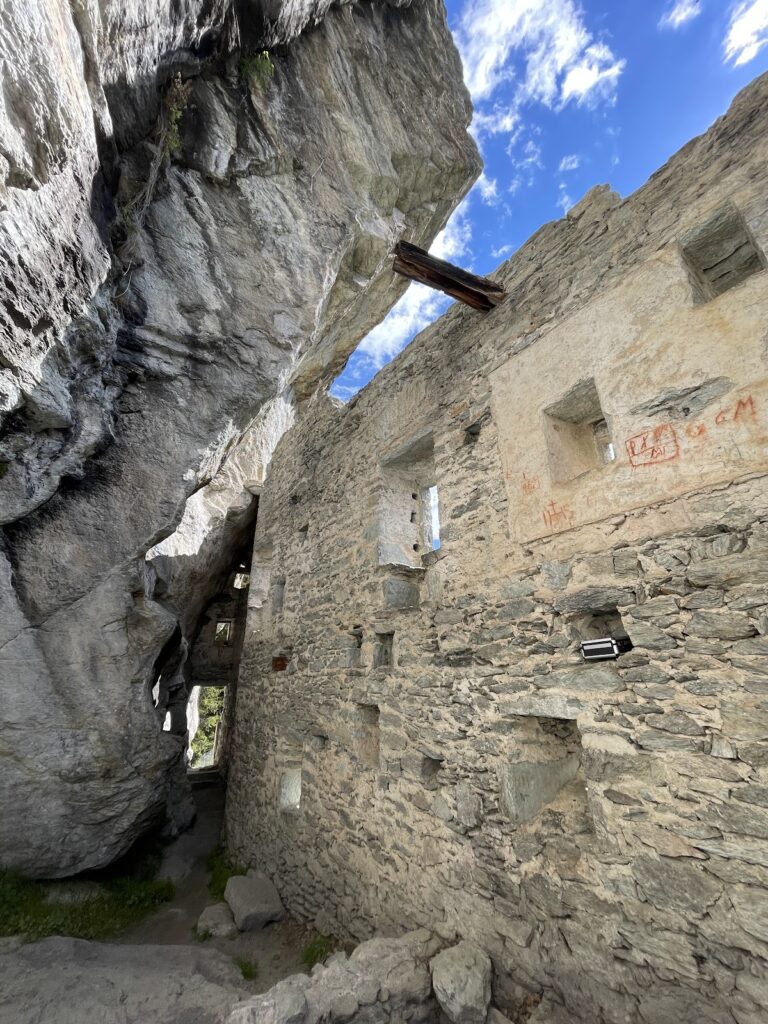
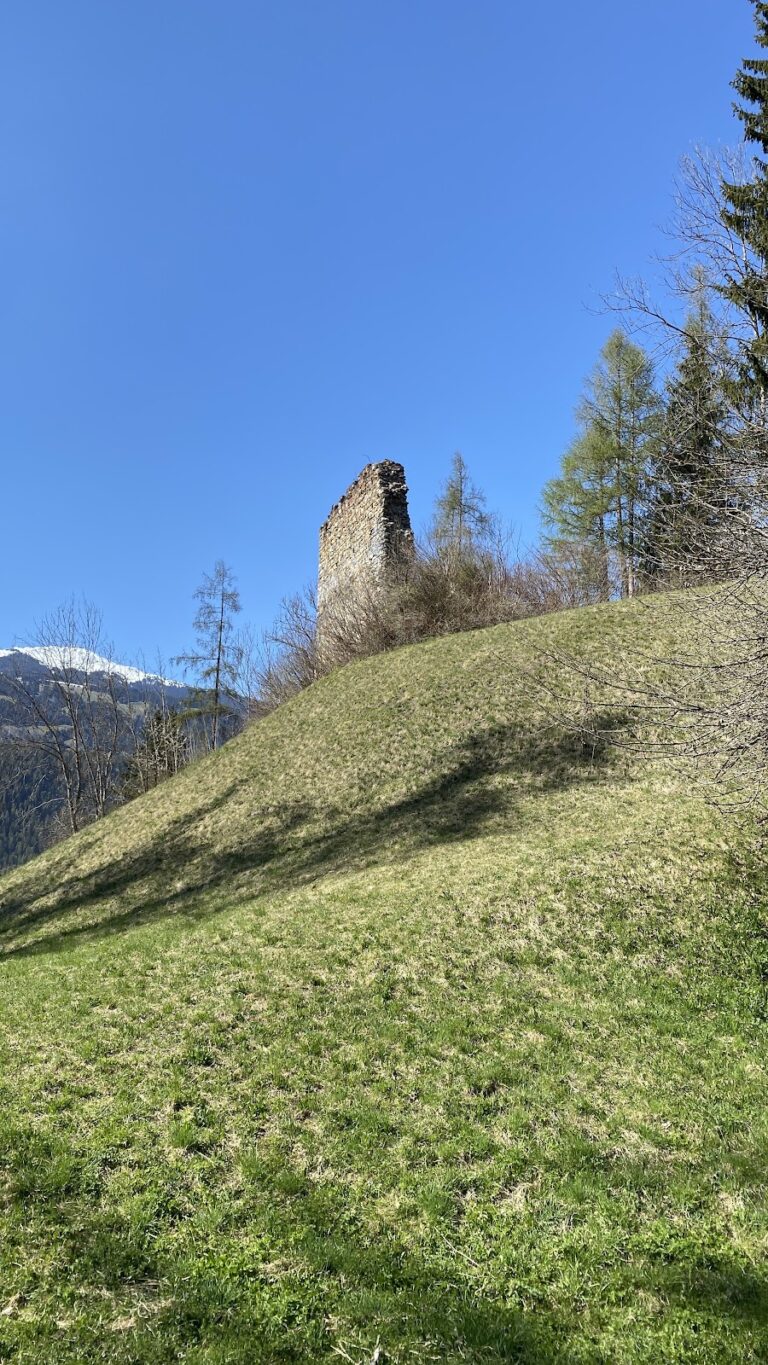
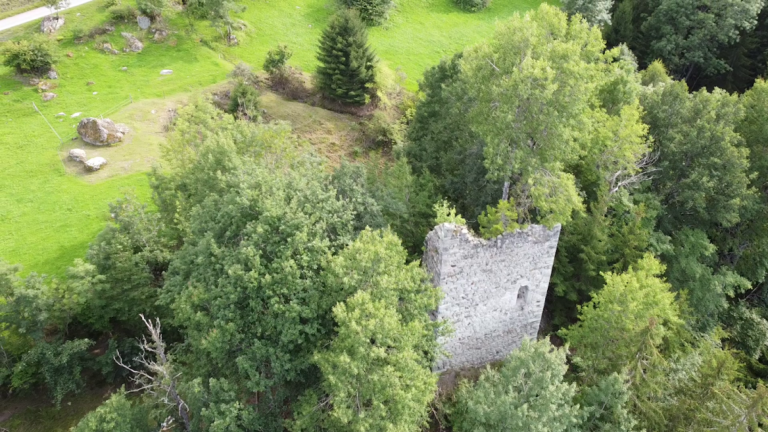
The ruined hill castle stands at an elevation of 1,340 metres on a substantial rocky outcrop above Siat. The surviving remains consist chiefly of part of a tower or fortified residential hall, together with a ring wall following the edge of the terrain. About seven metres lower to the southeast, a broad plateau forms a separate part of the site.
Castle building
The principal surviving structure occupied a ground plan of approximately 11 by 18 metres. Its walls were about 1.5 metres thick and were built from roughly layered rubble stone. Only a few remains of the tower or fortified residential hall survive. A transverse division within the former building was observed by the architectural historian Erwin Poeschel, but that internal arrangement can no longer be identified.
Lower plateau and ring wall
The broad plateau southeast of the main building lies about seven metres lower than the rocky outcrop. It retains remains of a ring wall that follows the edge of the terrain. The plateau shows no traces of additional construction, leaving the surviving wall as its principal visible feature.
Nearby sites