Castle in Nowogrodzie Wołyńskim: A Volhynian Fortress
Site at a Glance
- Popularity
- Medium
- Country
- Ukraine
- Primary era
- Early Modern
- Eras represented
- Early Modern, Modern
- Civilizations
- Grand Duchy of Lithuania, Polish–Lithuanian Commonwealth, Russian
- Site type
- Military
- Remains
- Castle
On this page7 sections
History
The Castle in Nowogrodzie Wołyńskim, in present-day Ukraine, was a fortress begun by Prince Konstanty Ostrogski in 1507 and completed in 1510. The Ostrogski princes built it on their Volhynian lands, and the town of Zwiahel grew around it. The castle later became a military frontier position between Cossack-held territory and the Polish-Lithuanian Commonwealth.
Foundation and ownership
Konstanty Ostrogski personally laid the first stone. In 1600, Zwiahel became part of the Polish-Lithuanian Commonwealth. After the Ostrogski family, ownership passed through Anna Alojza, daughter of Aleksander Ostrogski, to her husband Jan Karol Chodkiewicz. When Anna Alojza died without children, the Lubomirski family inherited the castle. Owners named in the succession also included Konstanty Wasyl Ostrogski, Jerzy and Kacper Lubomirski, and the Potocki family. The Lubomirskis held Zwiahel until 1796.
Capture and military use
In 1648, during the Cossack uprising led by Bohdan Khmelnytsky, Cossacks commanded by Colonel Maksym Kryvonos captured the castle. The assault destroyed several towers and part of a wall. Cossack forces held the fortress for several years, with a garrison of 4,000 men. The castle was rebuilt during the seventeenth century. By 1675, after wars had devastated the town, its population was only 200 to 250. The lands later returned to Poland.
Conversion and destruction
In 1731, Prince Jerzy Lubomirski ordered local craftsmen to keep a serviceable musket each for the castle’s defence. In 1738, Stanisław Lubomirski changed the fortification into a hunting castle. Castle stone was used to build a Catholic church in 1753. During the mid-eighteenth century, sections of the walls were also taken for church construction. In December 1765, Prince Lubomirski, Bracław’s provincial governor, authorized the parish priest to remove part of the walls for a newly built church.
The castle’s final destruction occurred in 1864–1865, when masons were working on an Orthodox church in the former courtyard.
Remains
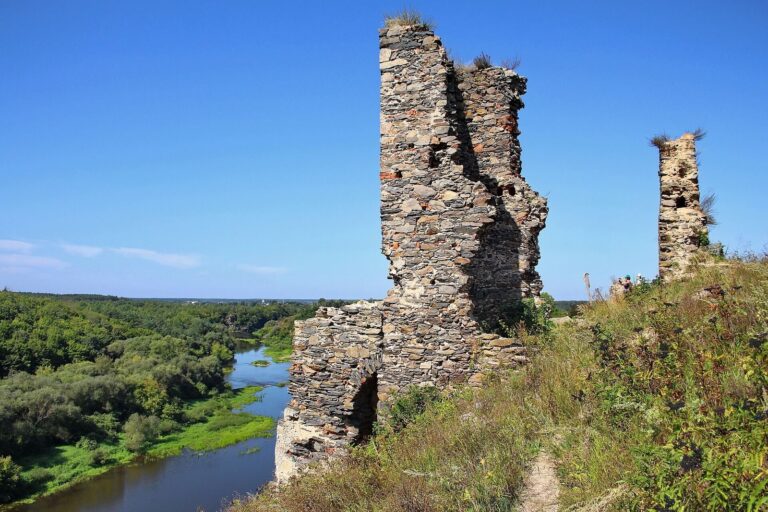
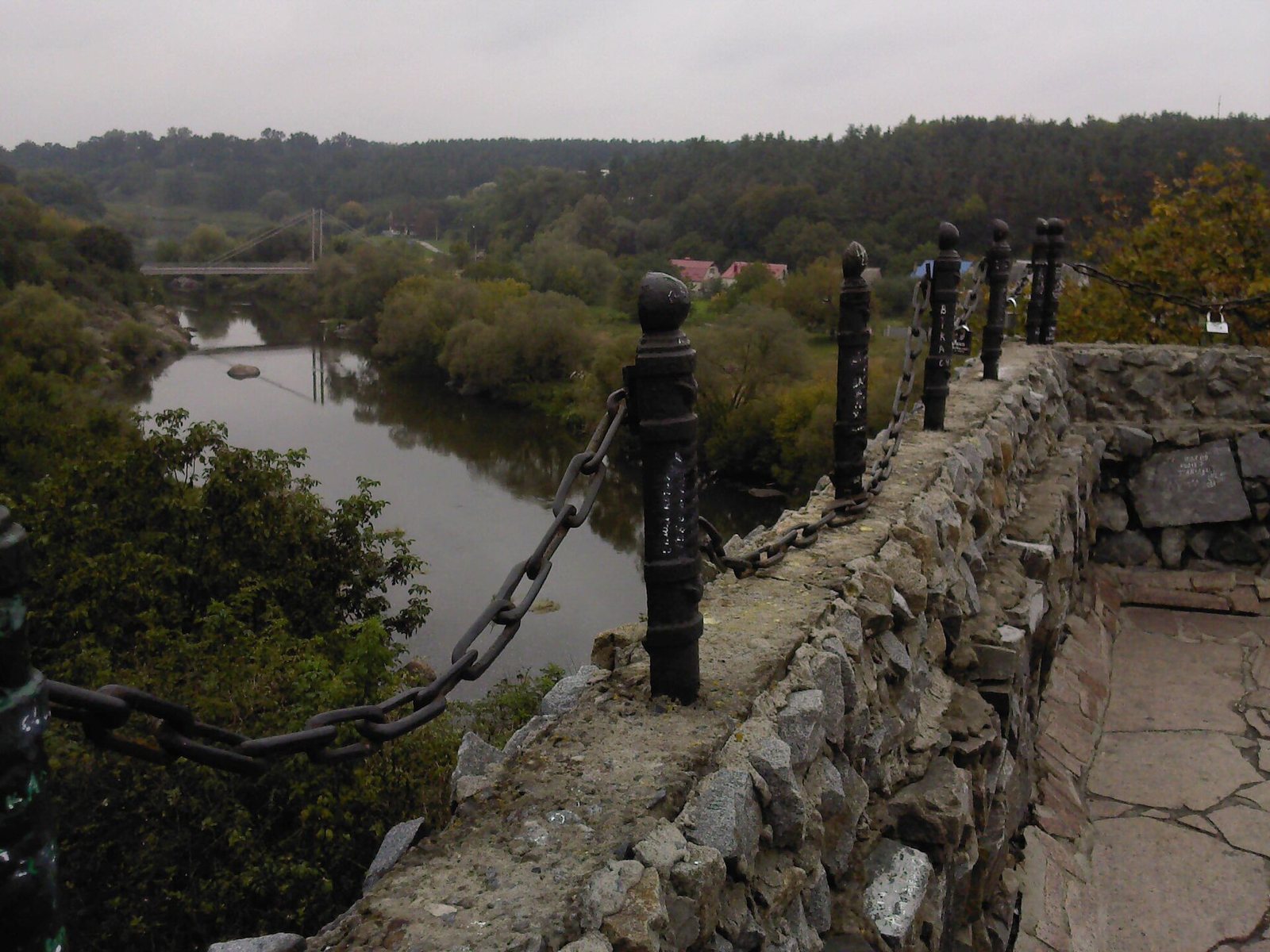
The castle stood on a high rocky cliff above the Sluch River, where the steep riverbank strengthened its defensive position. By 1766, a perimeter wall enclosed the complex, which included three bastions, or projecting defensive sections, as well as residential buildings and a courtyard.
Church in the former courtyard
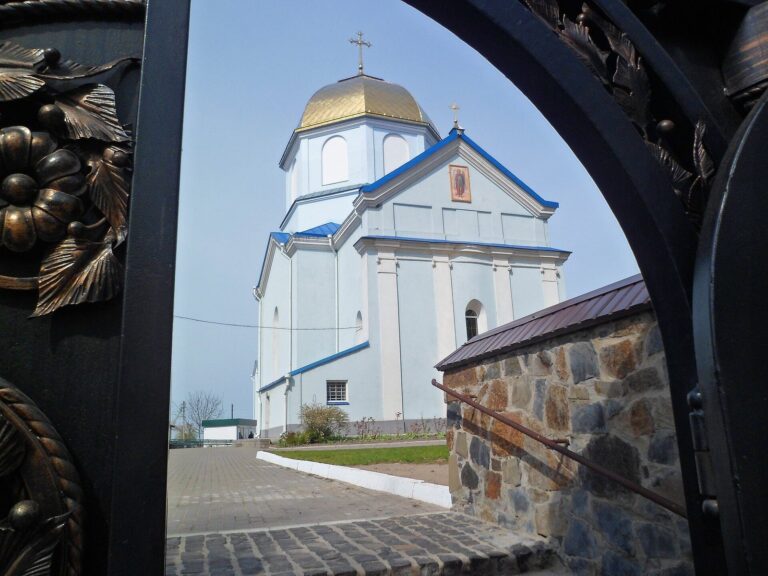
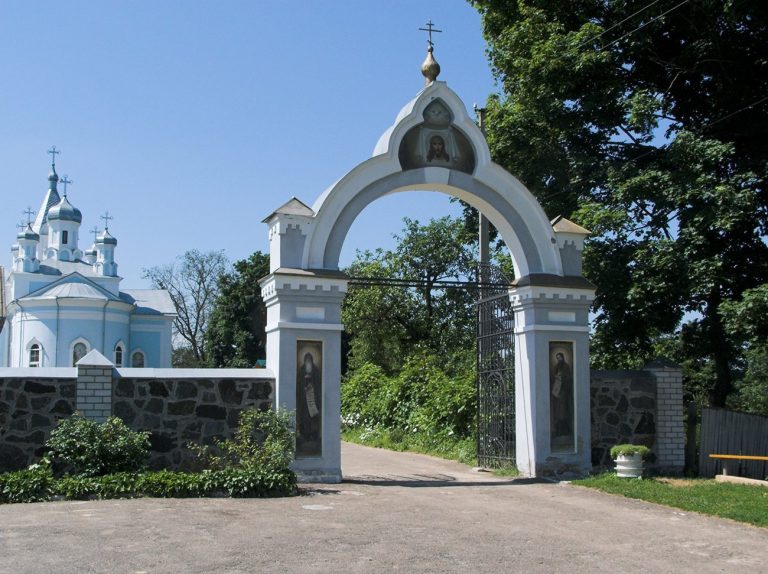
An Orthodox church was built in the former castle courtyard, beside the steep edge above the Sluch River. It occupies part of the space once enclosed by the fortress.
Walls and later restoration
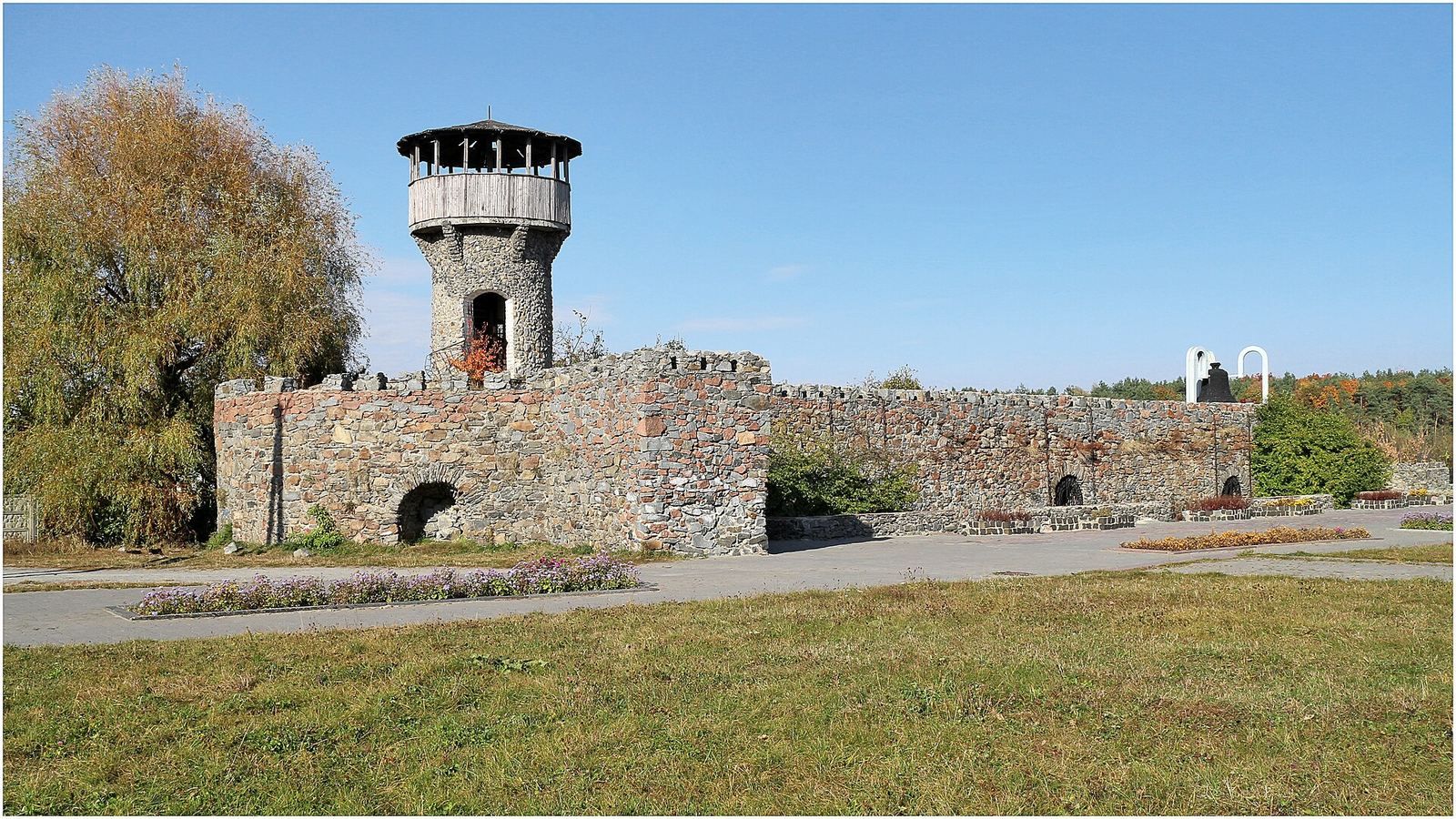
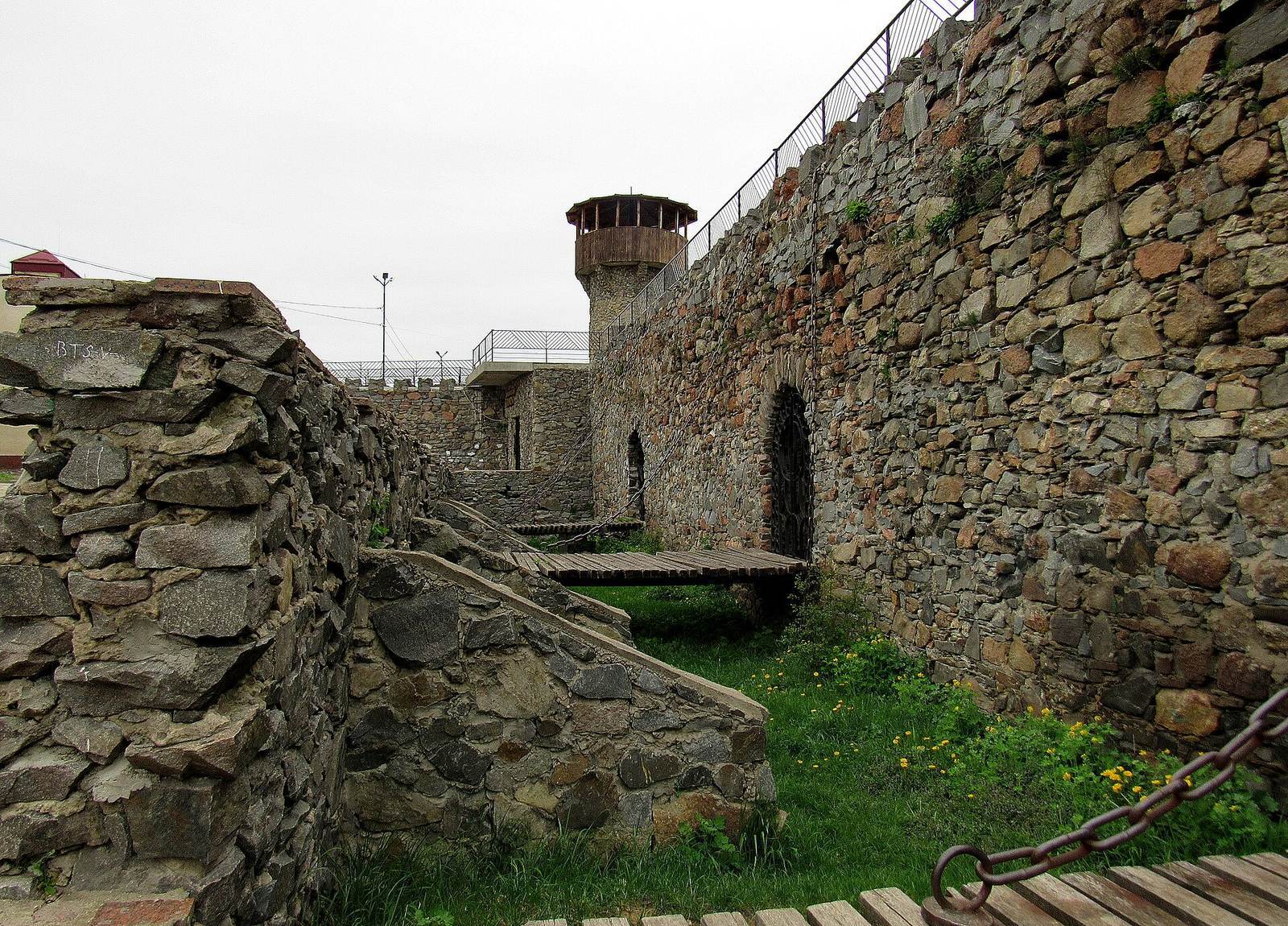
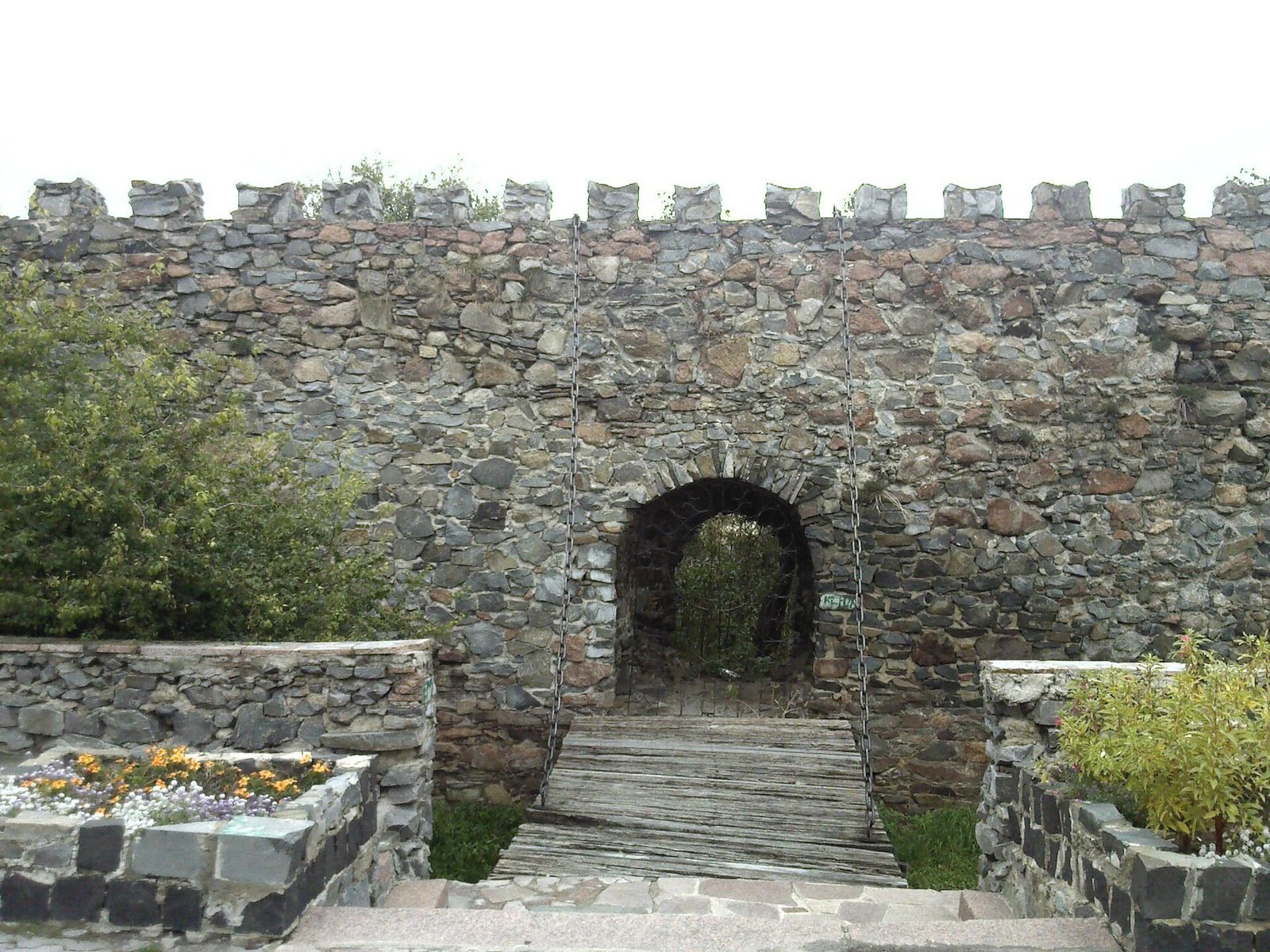
By the late nineteenth century, fragments of the perimeter wall and one ruined bastion remained. During the Soviet period, a tower and wall sections were reconstructed as a memorial, but these were not faithful reproductions of the historic structures. In the late 1980s, a section of fortress wall and a defensive tower were restored. The adjoining grounds were landscaped as a recreation area, and a memorial sign was installed.