Burg Blauenstein: A Medieval Spur Castle above Blaubeuren

Site at a Glance
- Rating
- 3
- Popularity
- Very Low
- Country
- Germany
- Primary era
- Medieval
- Eras represented
- Medieval
- Civilizations
- Holy Roman Empire
- Site type
- Military
- Remains
- Castle
On this page4 sections
History
Burg Blauenstein is a medieval spur castle in Germany, situated above Blaubeuren on the Blaufelsen. Probably built by the Counts of Helfenstein in the thirteenth century, it helped monitor the Swabian Alb plateau to the north and the road approaching from that direction.
Helfenstein Ownership and Transfer
The castle appears in written records in 1303, when Count Ulrich VIII of Helfenstein sold it to the Dukes of Austria and received it back as a fief, a stronghold granted in return for allegiance and service. In 1384, Countess Anna of Helfenstein pledged Blauenstein to the knight Lutz of Landau. By 1397, the city of Ulm held the castle.
Siege and Decline
In 1519, Duke Ulrich of Württemberg attacked Blauenstein, Blaubeuren, and Ruck Castle with 300 men. His forces shelled the sites, but strong resistance led him to withdraw.
From 1553 onward, Blauenstein was repeatedly described as dilapidated. Newer buildings also stood on the site, including a small structure called the Blauhäuslein, mentioned in 1616. Repairs undertaken in 1628 did not halt the castle’s decline. In 1699, Blauenstein was described as completely gone, although a blockhouse had remained visible shortly before. From 1773, the city of Blaubeuren sold the surviving remains for demolition.
Remains
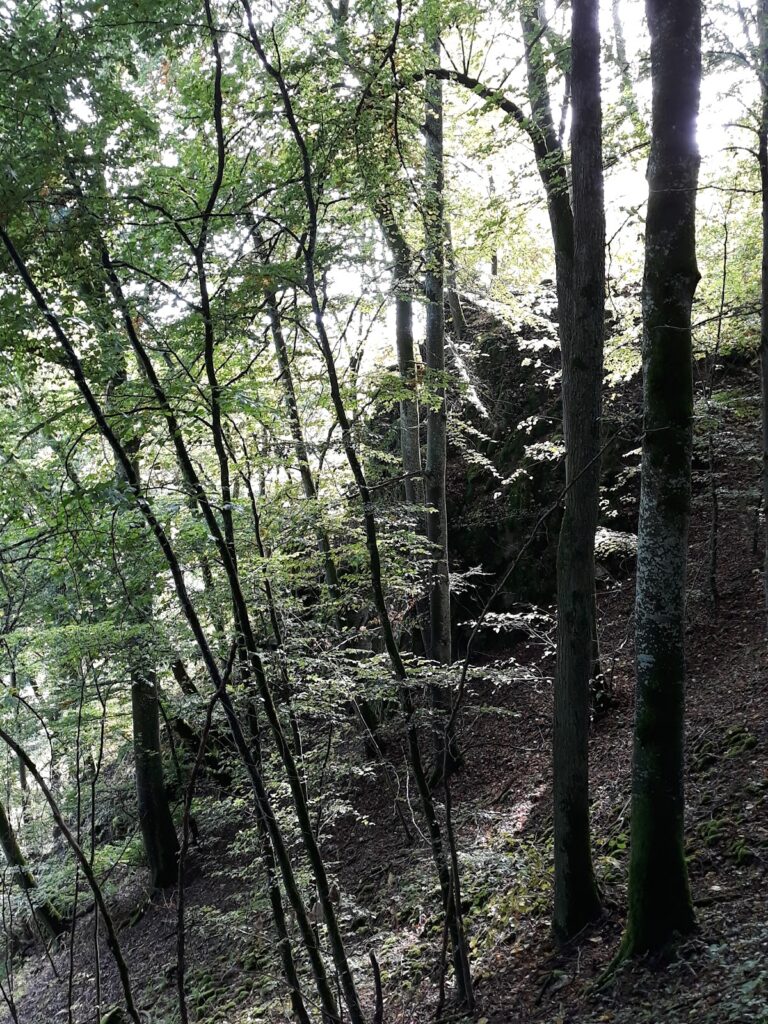
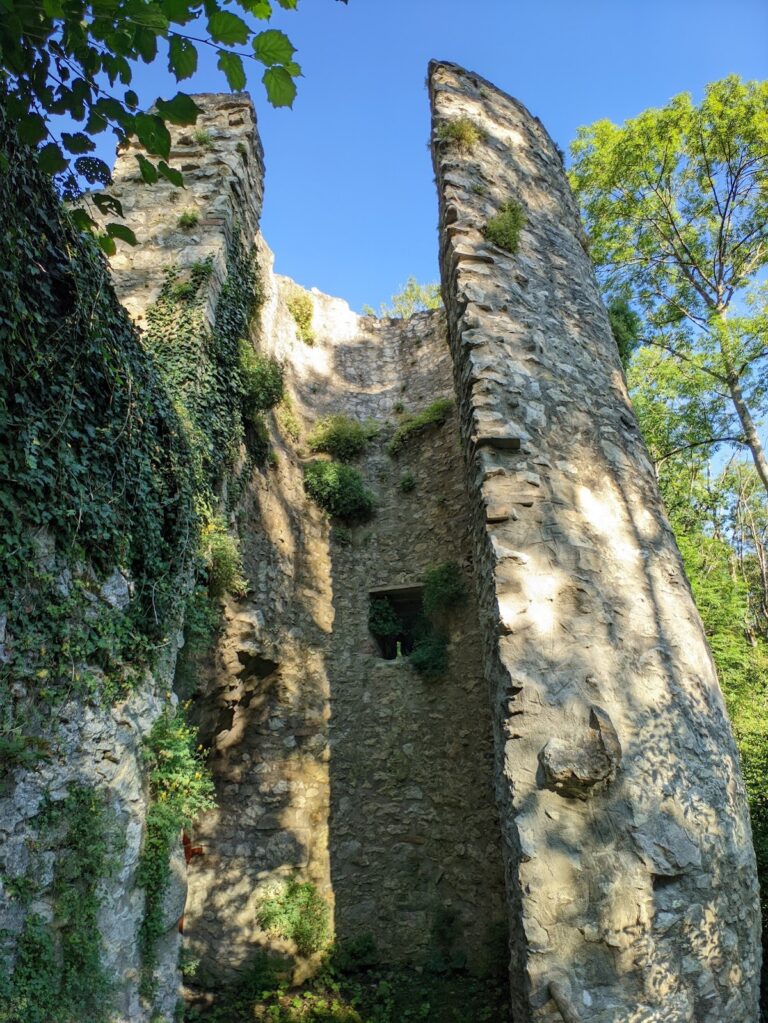
Burg Blauenstein occupied a narrow hilltop spur on the 654-metre Blaufelsen in the Alb-Donau district of Baden-Württemberg. The rocky ridge now forms an observation point above Blaubeuren. The fortified area measured approximately 32 by 10 metres and probably held only a stone tower. The surviving physical evidence consists of part of a neck ditch, a defensive trench cut across the narrow connection between a spur and the surrounding ground, together with a cross ditch across the approach or fortified area. The castle is therefore preserved as a castle site without standing remains, with its former buildings largely vanished.