Broome Park: A Jacobean Country House in Kent
Site at a Glance
- Popularity
- High
- Country
- United Kingdom
- Primary era
- Early Modern
- Eras represented
- Early Modern, Modern
- Civilizations
- British, English
- Site type
- Domestic
- Remains
- Elite Residence
On this page8 sections
History
Foundation and the Dixwell estate
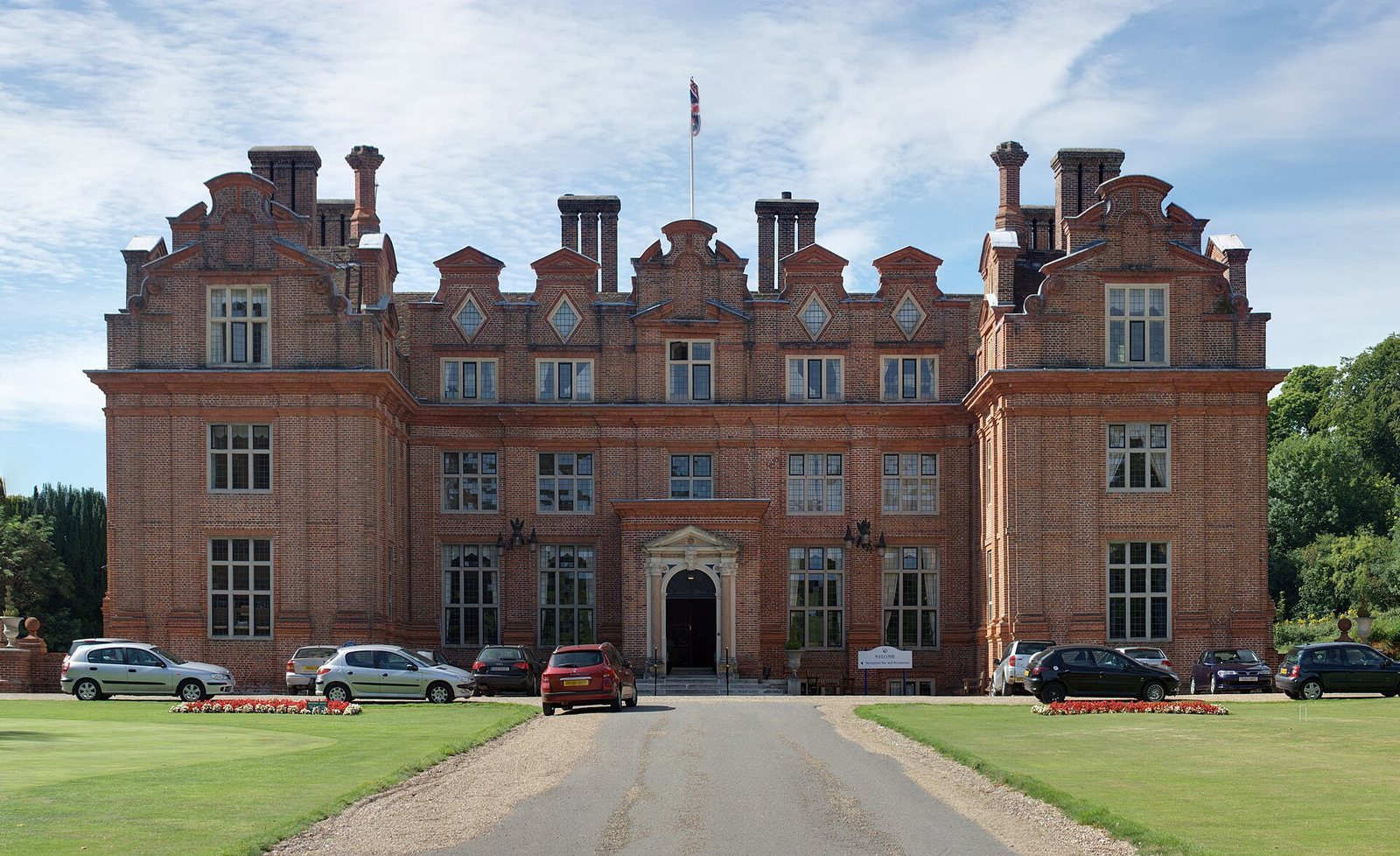
Broome Park is a country house in Barham, Kent, United Kingdom, built for Sir Basil Dixwell between 1635 and 1638 in the Jacobean style, an English architectural style associated with the reign of James I and the decades around it. Dixwell, who represented Hythe in Parliament, was the first baronet of his family. A baronet holds a hereditary British title below the rank of baron.
The estate passed through generations of Dixwell baronets before Sir George Oxenden, 5th Baronet, inherited it. In 1751, a private Act of Parliament allowed him to adopt his mother’s surname, Dixwell. The estate later passed through the Oxenden baronets, including Sir Henry Oxenden, 7th Baronet, and eventually to Sir Percy Dixwell Nowell Dixwell-Oxenden.
Kitchener’s remodelling
Sir Percy sold Broome Park to Herbert Kitchener, 1st Earl Kitchener, in 1911. Kitchener, a British military commander and statesman, was 61 and had been passed over for appointment as Viceroy of India, the monarch’s representative there. He viewed the large property as a possible retirement home and welcomed the work needed to make it comfortable.
Kitchener commissioned architects Detmar Blow and Fernand Billerey to remodel the house and create formal gardens and a formal carriage approach. His duties as Sirdar, the commander-in-chief of the Egyptian army, and later as Secretary of State for War in London kept him away for much of the time. He spent six weeks at Broome Park on home leave shortly before the First World War and planned to live there full-time after retiring. Between 1914 and 1916, he followed the building work when his commitments allowed; his aide-de-camp described this as his principal relaxation.
Kitchener died by drowning in June 1916. His nephew and heir, Toby, Viscount Broome, completed the renovations before selling the estate in 1928. A viscount is a rank in the British peerage below an earl.
Hotel, wartime use, and later ownership
G. C. Jell bought Broome Park in the early 1930s and converted the house into a country-house hotel. During the Second World War, the Ministry of Defence requisitioned the estate, which served for a time as a base for a Canadian armoured regiment.
Gulf Shipping had acquired the property by 1979, or earlier, and planned a timeshare and leisure complex. The resulting development led to litigation that reached the UK Supreme Court in 2018. Broome Park now operates as a timeshare hotel and a clubhouse for a golf course.
The main house, listed as Broome Park Hotel, received Grade I status in 1952, a category for buildings of exceptional interest in England. The Steward’s House was listed Grade II* in 1967, a category for particularly important buildings of more than special interest. Grade II, for buildings of special interest, applies to Broome Cottage, listed in 1980, as well as the stables, loggia, and associated garden features.
Remains
The estate’s documented features include the Jacobean country house, an Italian Garden, and separate buildings such as the Steward’s House, stables, and Broome Cottage. The Italian Garden contains a range of built and decorative elements.
Main house and interiors
Interior work commissioned by Kitchener included wood panelling by Cowtan & Sons and heaters supplied by Shanks. Maples of London contributed panelling and a table design, while George P. Bankart was among the contractors. Work associated with W. Bainbridge Reynolds included wall-mounted lights, or sconces, made in silver copper.
Italian Garden
The Italian Garden includes a loggia, a covered, open-sided gallery, with attached walls. Niches in the walls hold statues; other features include a fountain, stone garden ornaments, a statue, and an urn.
Other estate buildings
The estate also includes the Steward’s House, the stables, and Broome Cottage.