Brocavum: A Roman Fort near Penrith in Cumbria
Site at a Glance
- Rating
- 5
- Popularity
- Very Low
- Country
- United Kingdom
- Primary era
- Classical
- Eras represented
- Classical
- Civilizations
- Roman
- Site type
- Military
- Remains
- Fort
On this page8 sections
History
Brocavum was a Roman fort at Brougham, near Penrith in Cumbria, United Kingdom. Its precise foundation date is uncertain. It may have been established shortly after Venutius, a British leader who rebelled against Roman rule in northern Britain, led a revolt in the early 70s AD. Occupation in the Flavian period, the Roman dynasty that ruled from AD 69 to 96, is considered probable, and the fort likely held an important role from early in its history.
Early Roman setting
Nearby Clifton Dykes may have been a centre of the Carvetii, a people of pre-Roman and Roman Britain. This may have been one factor in the fort’s location after the Roman conquest.
Settlement and worship
A civilian settlement was associated with the fort. Part of it was excavated in 2008 during work on a pipeline between Hackthorpe and Penrith. Excavation of a cemetery in the 1960s yielded objects dating to the second and third centuries AD. These finds suggest that a group from the Danube region of eastern Europe lived in the settlement.
Six dedications to Belatucadros, a local deity worshipped in Roman Britain, were found at Brougham. They may indicate that worship of the deity was centred there.
Brougham Castle and protection
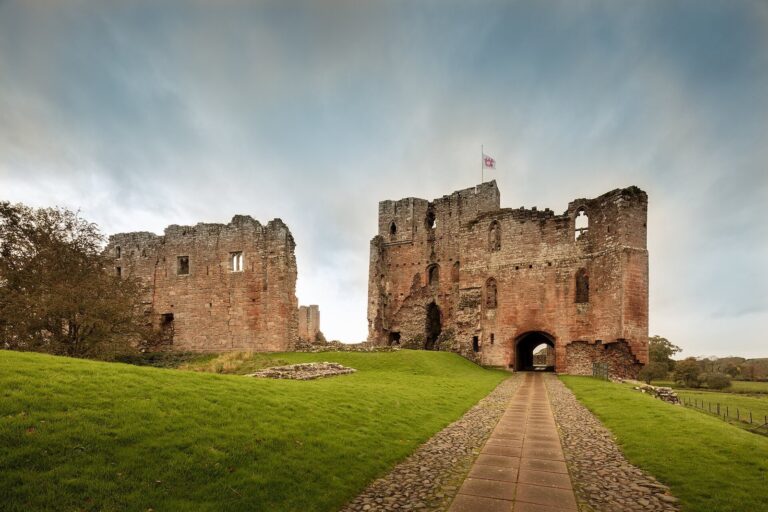
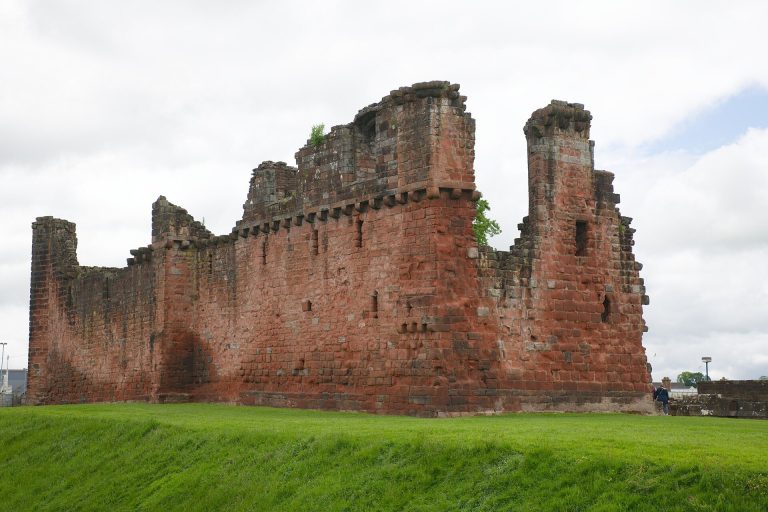
Medieval Brougham Castle later occupied part of the fort site. The fort and castle are cared for by English Heritage, a charitable organization responsible for historic sites in England, and protected together as a scheduled monument, a legally protected archaeological or historic site in England.
Remains
The surviving evidence combines earthworks, a setting shaped by rivers and Roman routes, and Roman material reused in later construction.
Earthworks and rivers
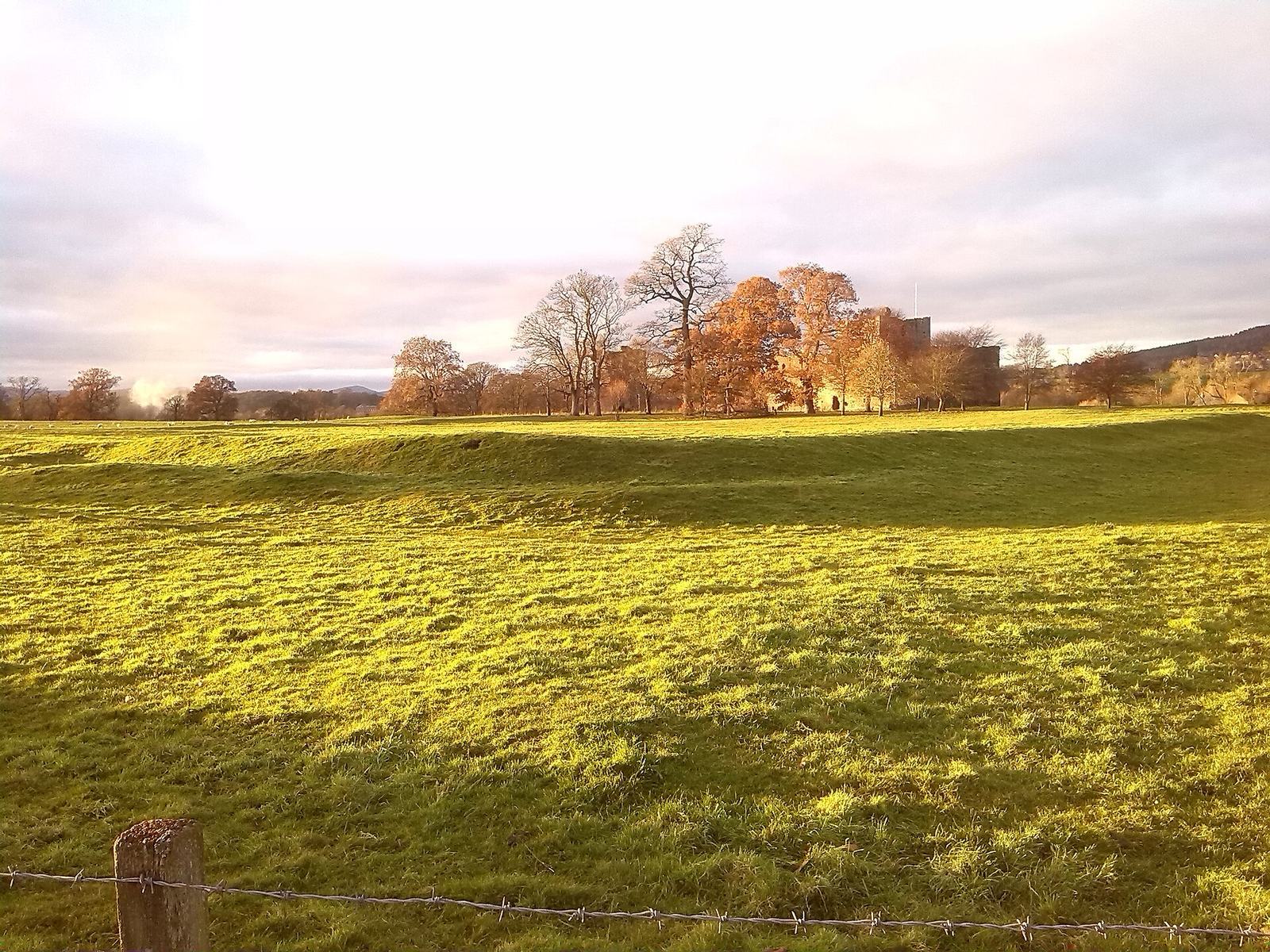
The fort survives as earthworks, ground-shaped remains such as banks or ditches. The rivers Eamont and Lowther flow near the site and meet to its west, creating a natural defensive feature.
Roman roads
Three Roman roads converged at Brocavum. One came from York by way of Scotch Corner, Stainmore Pass, Brough under Stainmore and Kirkby Thore, following the line of today’s A66. Another approached from Manchester and/or Lancaster through Burrow-in-Lonsdale, Middleton and Low Borrow Bridge near Tebay, along the route of the present West Coast railway. A third linked the Roman port of Glannoventa (Ravenglass) to Brocavum by way of Hardknott, Galava (Ambleside) and High Street. A road also ran north through Old Penrith to Luguvallium (Carlisle), along the line of the present A6. From the 80s AD, a further westbound route may have connected Old Penrith or Brocavum with Alauna (Maryport), passing through Troutbeck, a fort at Papcastle and an undiscovered fort at Keswick.
Roman stone in Brougham Castle
Stone from the Roman fort was used to build Brougham Castle. A Roman tombstone was also reused as a ceiling slab in a passage in the castle’s main tower.