Bremetennacum: A Roman Fort at Ribchester
Site at a Glance
- Popularity
- Medium
- Country
- United Kingdom
- Primary era
- Classical
- Eras represented
- Classical
- Civilizations
- Roman
- Site type
- Military
- Remains
- Fort
On this page12 sections
History
Bremetennacum, also known as Bremetennacum Veteranorum, was a Roman fort at present-day Ribchester in Lancashire, United Kingdom. A timber fort was built around AD 72–73 by the Roman legion Legio XX Valeria Victrix during campaigns led by the commander Quintus Petillius Cerialis. It guarded a crossing of the River Ribble and formed part of a chain of Roman forts across northern Britain, while its garrison also controlled the surrounding area and population.
Foundation and garrison
The fort was renovated in the late first century and rebuilt in stone in the early second. Cavalry served there. The Ala II Asturum, a unit linked to Roman Spain, may have been an early garrison, although this is uncertain. For much of the fort’s history, Sarmatian auxiliaries were stationed at Ribchester. Sarmatians came from lands north of the Black and Caspian Seas, and the emperor Marcus Aurelius had sent them to Britain in AD 175.
Civilian settlement and late Roman occupation
A civilian settlement grew around the fort, supplying both soldiers and other inhabitants. Local craftspeople worked metal and leather and produced military equipment. Pottery indicates that the fort remained occupied during most of the fourth century, as Roman rule in Britain came to an end.
Excavation and protection
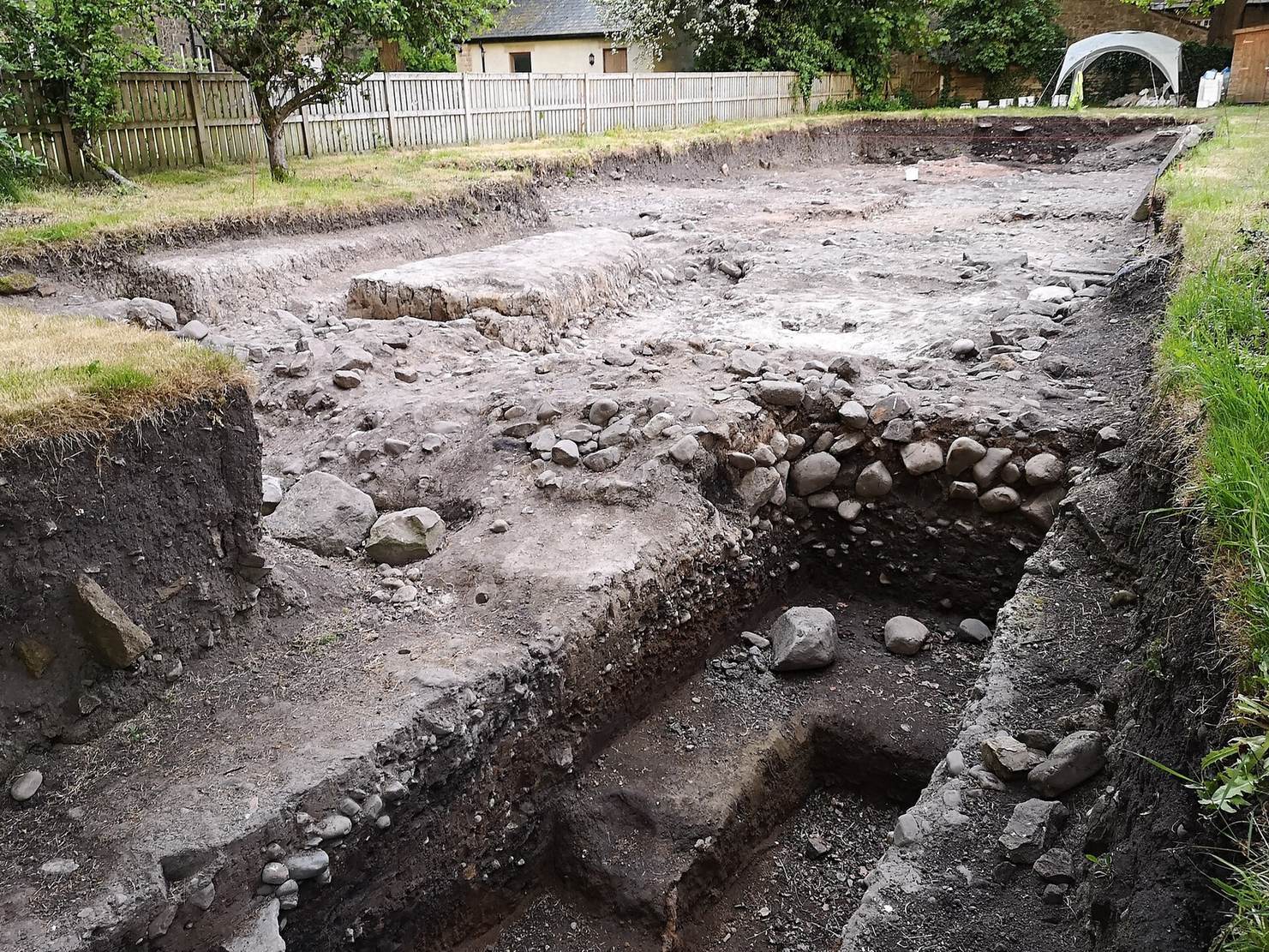
Antiquarian Thomas May and archaeologist Donald Atkinson recovered the fort’s outline during nineteenth-century excavations. Around 1905, Miss Greenall noticed remains exposed by builders near a school. Excavations in 1906–07 produced an inaccurate plan, with the extent of the work uncertain. Excavation of the granaries in 1908 uncovered charred grain. After a school building partly covering the headquarters was demolished, the Manchester Classical Association examined part of that building in 1913. W. B. Anderson and D. Atkinson carried out the work, and Francis Haverfield published an account in 1914. Later investigations included a bathhouse excavation in 1967, work in the civilian settlement in 1980, a dig in the garden of 2 Church Street in 1993, and University of Central Lancashire excavations near the north gate during the 2010s. Ribchester is a Scheduled Monument, a legal designation that protects the archaeological site from unauthorized changes.
Remains
The fort covered about 2.4 hectares, and its remains extend around the present village. Its physical layout includes a north-to-south main street, gates at either end, and buildings constructed in timber and stone.
Main street
The main street ran between the north and south gates. Its surface consisted of gravel laid over cobbles, forming the central route through the fort.
Headquarters building
The headquarters faced the main street and had a frontage with a covered colonnade, or walkway supported by columns, about 2.4 metres wide. A proposed plan gives the building dimensions of 81 by 112 feet, with the latter measurement including the colonnade. Beyond it, an outer court enclosed by another colonnade contained two wells. The colonnade appears to have been rebuilt twice. Most of the inner court lies beneath a churchyard. Its clearest identified feature is a room on the right, with five office rooms thought to have stood behind it. A proposed extension of about 20 feet would place the rear of the headquarters in line with the ends of the granaries.
Civilian settlement
Plots, houses, and workshops
The settlement spread over a wider area than modern Ribchester. Narrow plots were arranged at right angles to the main Roman road. Excavations revealed rectangular timber houses and workshops. Food remains include smelt, salmon, eel, grey mullet, and plaice or flounder, as well as cattle, sheep or goats, and pigs. Coriander and dill also formed part of the diet.
Baths and temples
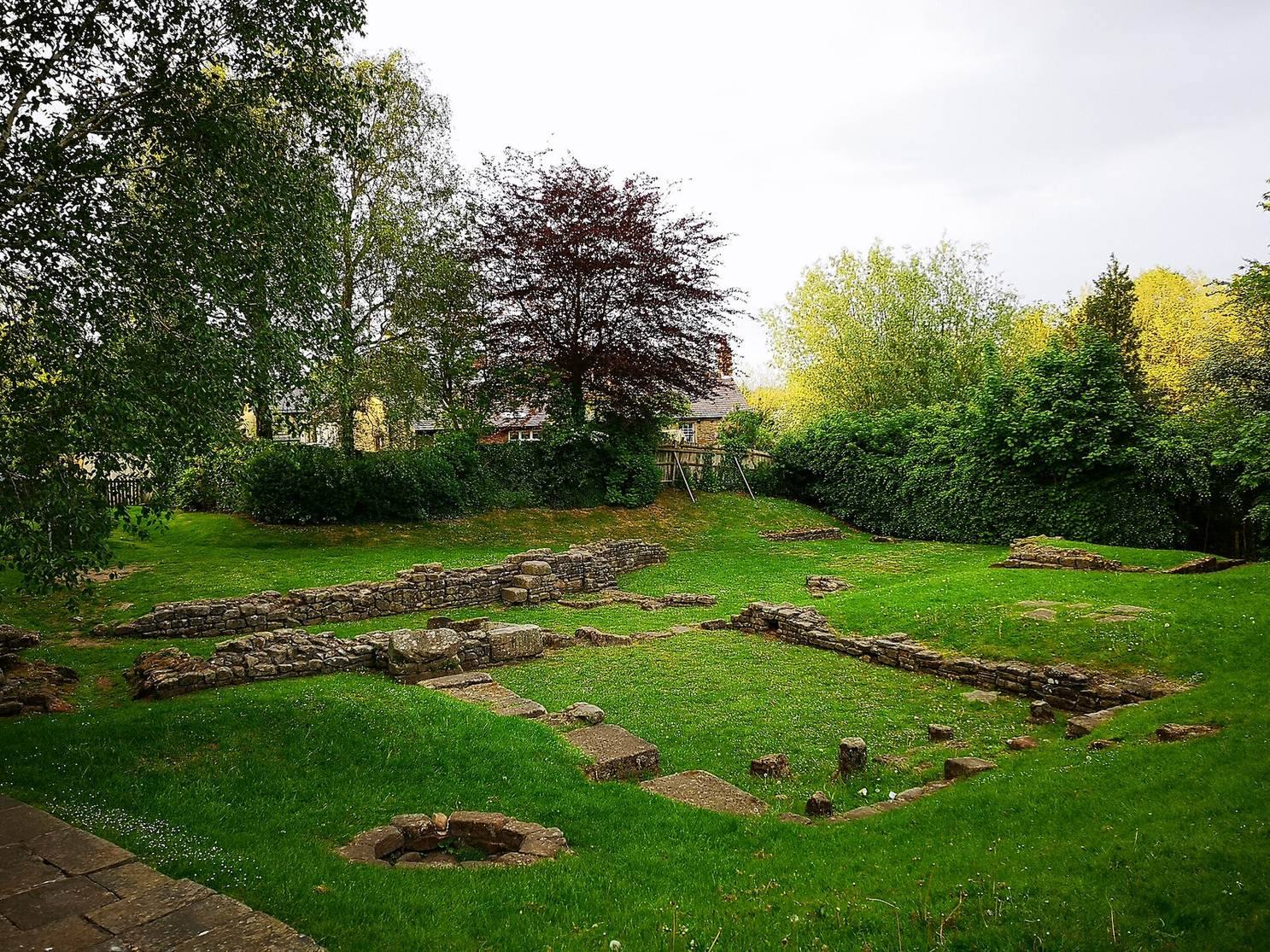
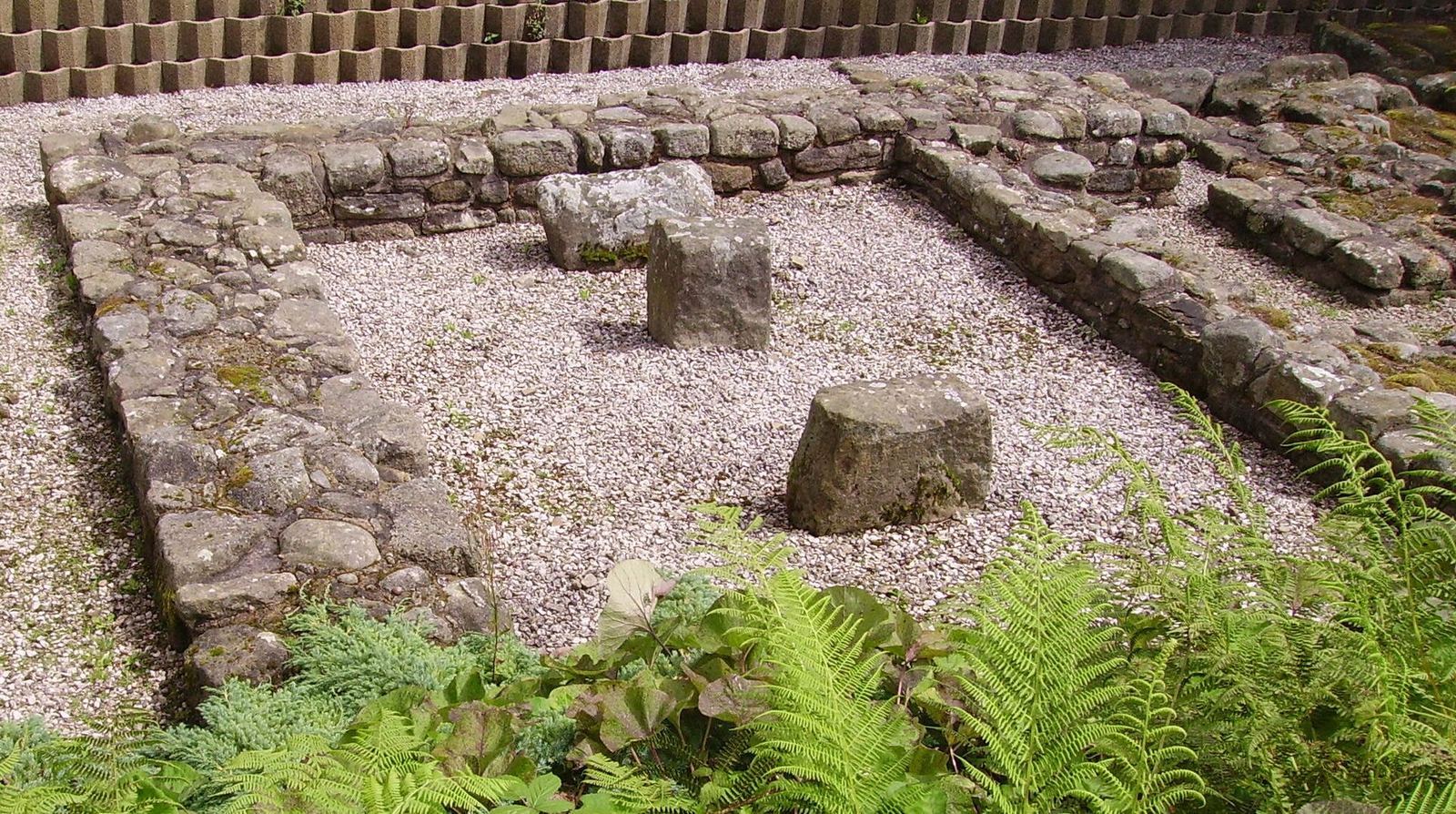
Roman baths stood in the settlement, in its largest stone building outside the fort, and a bathhouse is among the visible remains. The settlement also had at least two temples.
Altars and funerary inscriptions
Altars from the fort were dedicated to the Matres, mother goddesses worshipped in parts of the Roman world, and Moguns, a deity worshipped in Roman Britain. Funerary inscriptions include one commemorating a decurion, a member of a local governing council.
Ribchester Helmet and associated objects
In 1796, Joseph Walton’s son found the Ribchester Helmet and other objects in a hollow about three metres below ground. The findspot was waste ground beside a road to St Wilfrid’s Church, near a riverbed. The objects were thought to have survived well because they had been covered by sand. The helmet is an elaborate bronze ceremonial cavalry helmet. Its face mask has detailed decoration and a triangular visor above it, while the remaining raised ornament is less finely worked. This difference has prompted the suggestion that two groups of artists contributed to its decoration. Other objects found with it included shallow dishes used in Roman religious rites, pieces of a vase, a bust of Minerva, a Roman goddess associated with wisdom, crafts, and warfare, fragments of two basins, plates, and a sphinx statue. Antiquarian Townley considered that some of these objects may have had religious uses.