Brahesborg: A Danish Estate and Historic Manor House
Site at a Glance
- Popularity
- Medium
- Country
- Denmark
- Primary era
- Early Modern
- Eras represented
- Early Modern, Modern
- Civilizations
- Danish
- Site type
- Domestic
- Remains
- Manor House
On this page8 sections
History
Bisbo and the Brahes family
Brahesborg is an estate in Assens, Denmark, whose principal house was built for Jørgen Brahe in the mid-seventeenth century. Originally called Bisbo, the estate belonged to the bishops of Odense during the Middle Ages, including from 1400 to 1530. It later passed to their fiefholder, Verner Berthelsen Svale, an official who administered land on behalf of a superior. After Svale died in 1560, his son Christen inherited the property. It later came into the hands of Ove Bille.
In 1618, Bille’s unmarried daughters exchanged Bisbo for Skovgaard, transferring the estate to Jørgen Brahe. He gave it the name Brahesborg and was one of Funen’s largest landowners. He also held a leading position in the Council of the Realm, a body of Danish nobles that advised the monarchy. After Brahe’s death, his widow, Anne Gyldenstierne, kept the estate until 1677, when it passed to their granddaughters Anne and Sophie Brahe.
Gøye and Rantzau ownership
Sophie’s daughter, Jytte Dorothea Brahe, married Marcus Gøye, headmaster of Gerlufsholm School. Gøye became Brahesborg’s sole owner in 1693 and soon began refurbishing its main house. As he had no sons, the estate passed to his daughter Charlotte Amalie Gøye.
Charlotte Amalie married Christian Rantzau, a prominent statesman who came to own Brahesborg. He served as governor-general of Norway during the 1730s, a senior official governing a territory on behalf of its ruler. In 1740 he became county governor of Odense and several other counties, overseeing their administration. He resigned in 1760 after 20 years in office and died at Brahesborg in 1771. He also established a substantial library at the estate.
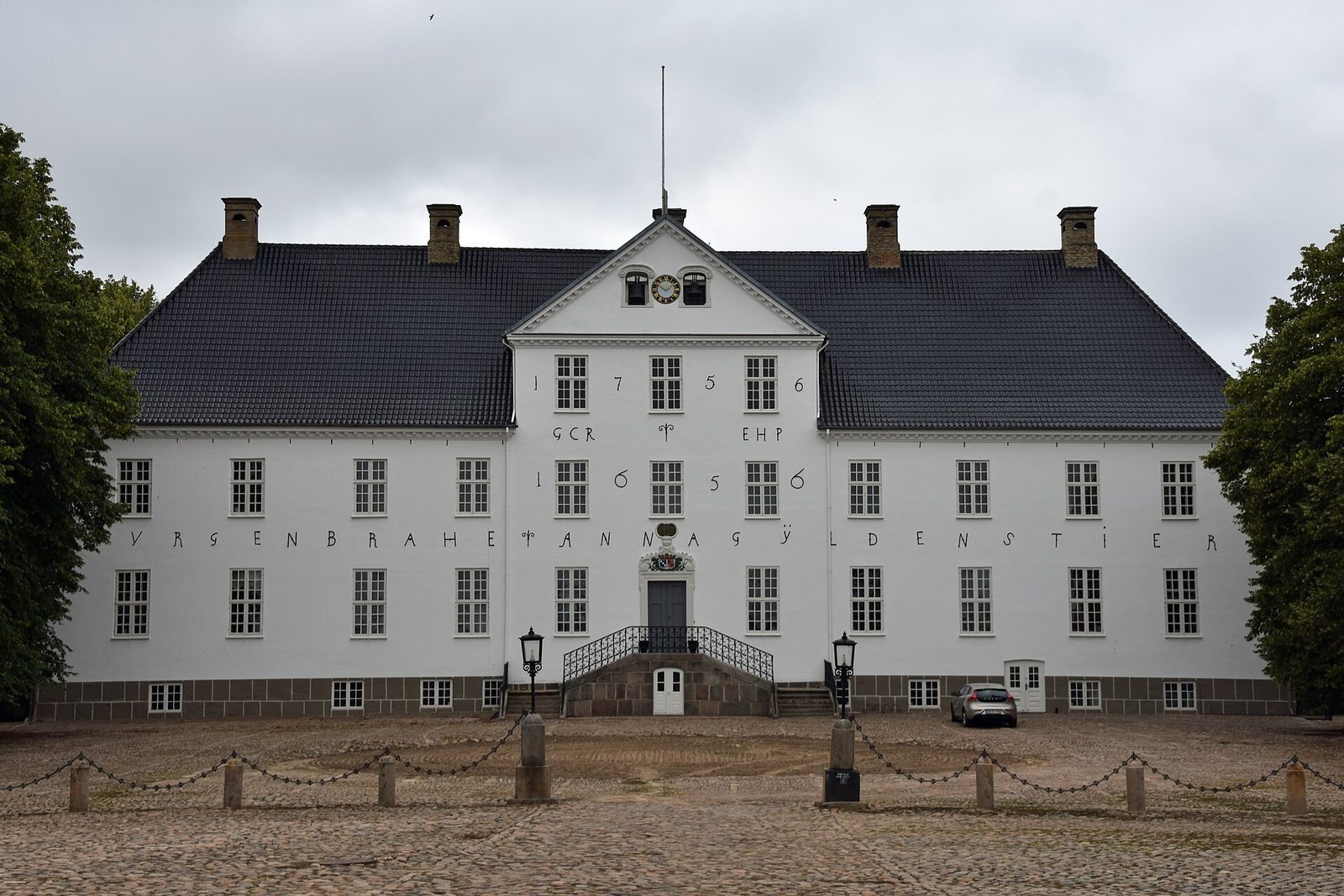
Rantzau renovated the main house in 1756. After his death, his son inherited the estate, introduced major agrarian reforms, and carried out another extensive refurbishment. A later Rantzau heir left Brahesborg to his nephew, Christian Adolf Rantzau. Christian Adolf went bankrupt in 1822, after which the government took over the estate.
Treschow and later ownership
In 1828, the estate was sold to Frederik Wilhelm Treschow, an attorney at the Supreme Court. He refurbished the building and improved the estate’s management. In 1854 he divided his estates between his two sons, and Brahesborg went to his adopted son, Frederik Wilhelm Rosenkilde Treschow. Officially, Frederik Wilhelm Rosenkilde Treschow was his wife’s son from her first marriage, though he was believed to be Treschow’s biological son.
Brahesborg remained in the Treschow family until 1951, when Carl Adolf Cederfeld de Simonsen inherited it from his aunt, a sister of Frederik Wilhelm Treschow. Ownership passed to Ivar Brorsen Cederfeld de Simonsen in 1963 and to Peter Cederfeld de Simonsen in 1981. The main building was added to Denmark’s register of protected buildings and places in 1918.
Remains
The estate covers 1,407 hectares, including Wilhelmsborg. Its principal house is a manor building, and a cast-iron suspension bridge is also associated with Brahesborg.
Estate structures
Main building
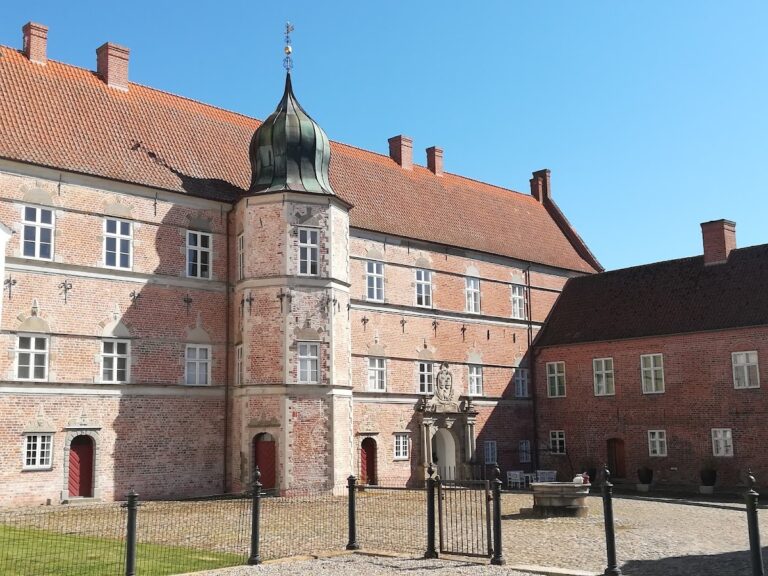
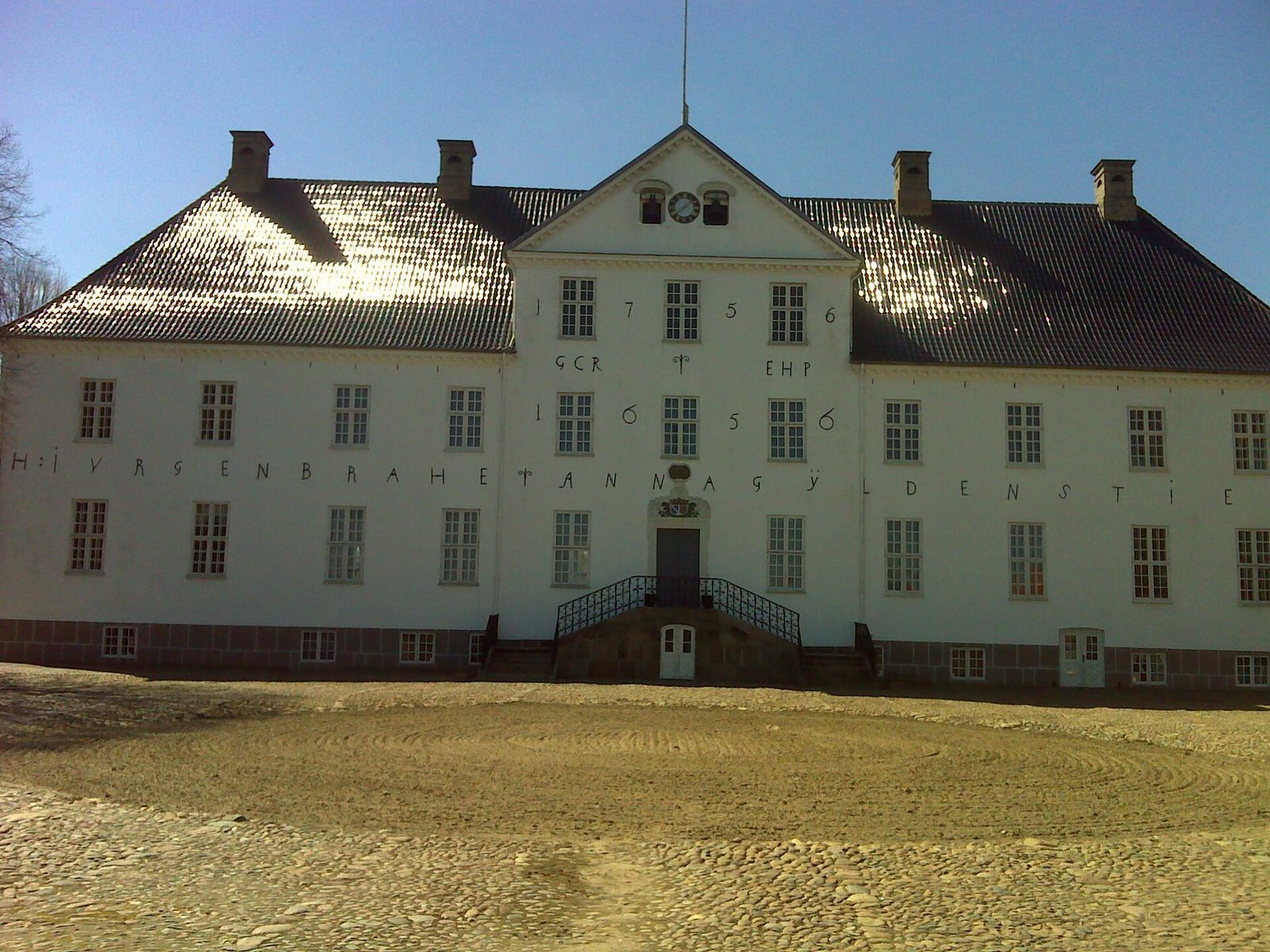
The simple, two-storey house has a red-tiled roof with sloping sides at each end. A projecting section at the center rises to three storeys and is topped by a triangular pediment.
Suspension bridge
A cast-iron suspension bridge associated with the estate was made at Treschow’s ironworks in Norway during the 1870s.