Borre Mound Cemetery: An Early Medieval Burial Ground in Norway
Site at a Glance
- Popularity
- Medium
- Country
- Norway
- Primary era
- Medieval
- Eras represented
- Medieval
- Civilizations
- Norse
- Site type
- Burial
- Remains
- Necropolis
On this page9 sections
History
Borre Mound Cemetery is an early medieval burial ground at Kirkebakken in Horten Municipality, Norway, where large mounds began to be raised around AD 600. The cemetery developed through the Merovingian period, an early medieval Scandinavian era before the Viking Age, and into the Viking Age. It is interpreted as evidence of a local centre of power.
From farm burials to elite monuments
The burial field grew from two small farm cemeteries that may have begun during the Roman period, an era of Roman influence in Europe, although Norway was not part of the Roman Empire. From about AD 600, large mounds were raised at a pace that appears to have followed generations. The youngest major mound is a ship burial dated to around AD 900. During the tenth century, people also placed new burials within older mounds.
Excavations and the Yngling tradition
In 1852, local road builders took gravel from a large mound between the present park and the Midgard centre, damaging much of a richly furnished ship burial. The grave became known as the Borre find. Smaller stone cairns examined in the 1920s contained straightforward cremation burials, in which a body had been burned before burial.
In the nineteenth century, antiquarian Nicolay Nicolaysen proposed that one of the mounds might contain the grave of Øystein Halvdansson, a legendary petty king in Norse tradition. He excavated the mound at the northeastern end of the field, nearest the fjord, and found unburned horse bones and a small amount of charcoal. The proposed identification drew on Ynglingatal, an Old Norse poem about the deaths of early rulers of the legendary Yngling dynasty. The poem preserves a literary tradition but does not establish the location of a particular grave. Nicolaysen’s interpretation, alongside historian P.A. Munch’s account, nevertheless helped make Borre widely understood as a burial place of the Yngling kings. That view remained largely unchallenged in Norwegian history and archaeology for nearly 140 years.
Protection and public use
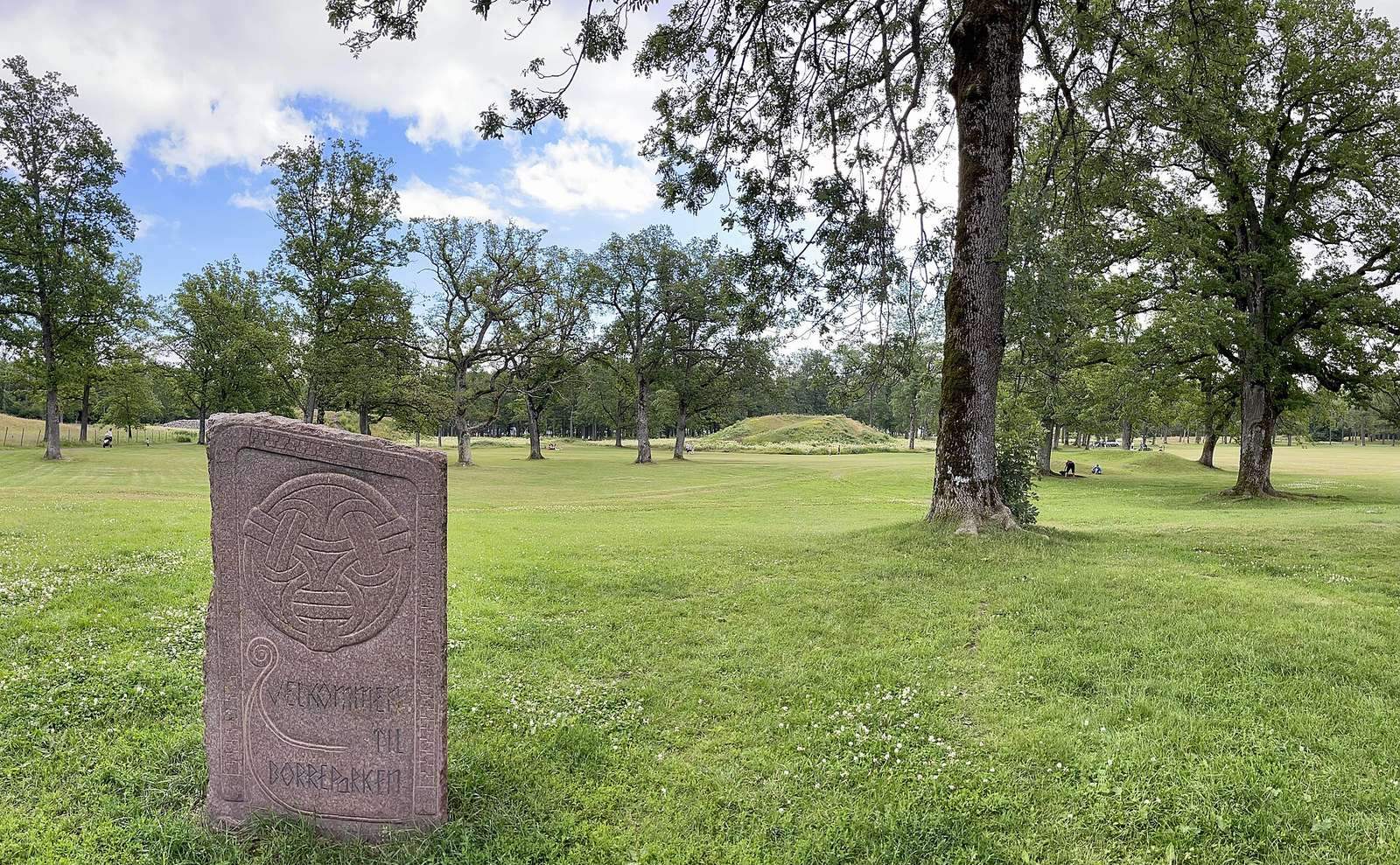
Archaeologist A.W. Brøgger began campaigning to protect the mounds. In the 1920s, landowner Sam Eyde agreed to make the northern part of the field available for a national monument if the Church Ministry’s Educational Fund contributed its land as well. The agreement, completed in 1927, covered 180,000 square metres. King Haakon VII opened Borre Park on 19 June 1932 before a crowd of about 6,000. Brøgger had proposed calling it the National Park, but it never received formal national-park status. Norway introduced that official designation in 1970. Responsibility for managing the area was assigned to Vestfold County in 1937.
Political associations and renewed research
Nasjonal Samling, the Norwegian Nazi party founded by fascist politician Vidkun Quisling, held its first Pentecost gathering at Borre in 1935 and continued the practice through 1944. The party used the site and stories about Norway’s past to promote Quisling’s political vision. This association left the cemetery stigmatized after the war. Amid shortages, the park became overgrown, although its gathering ground and paths remained clear. Constitution Day celebrations for Horten and Borre continued there, and later information material repeated the claim that the mounds belonged to Yngling kings.
An interdisciplinary research project led by archaeologist Bjørn Myhre began in 1988 to investigate the cemetery’s chronology and its cultural, economic, and political setting. Wider investigations continued through 1992, with excavations dated to 1989–1991. Borre has also been proposed as a Viking Age royal seat, an interpretation that draws on evidence for elite settlement and maritime activity around the burial ground. A 2015 study of landforms suggested that a prehistoric harbour was likely to have been located there.
Remains
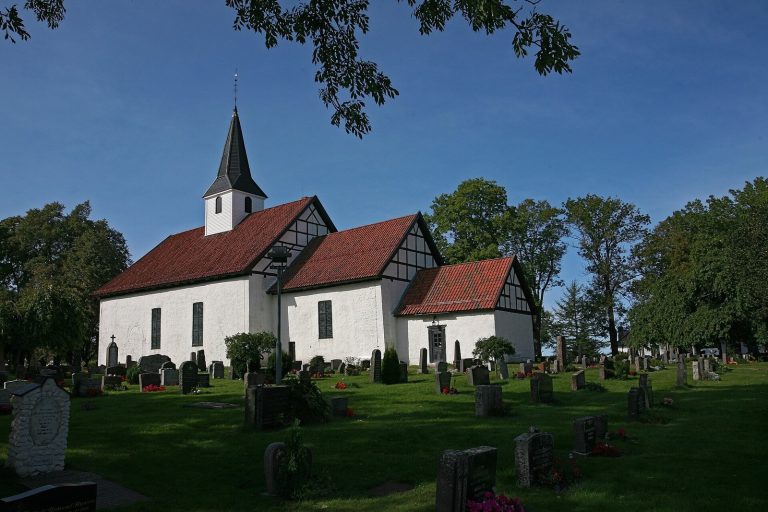
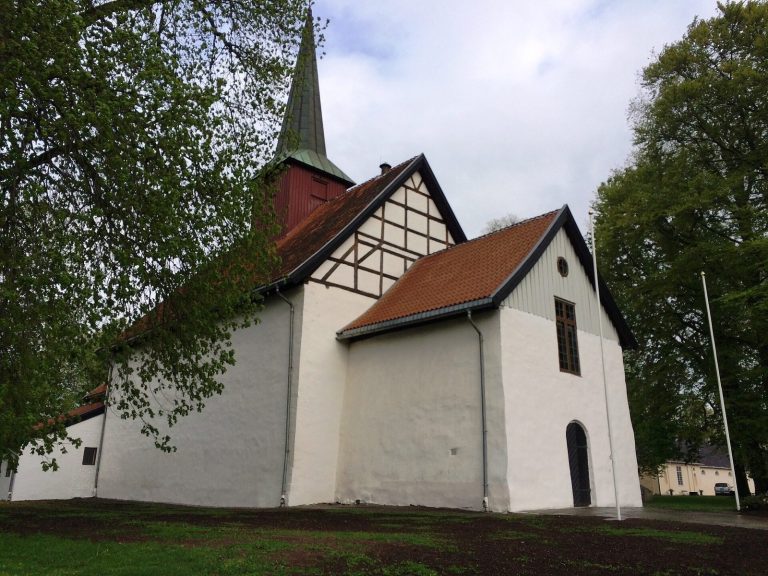
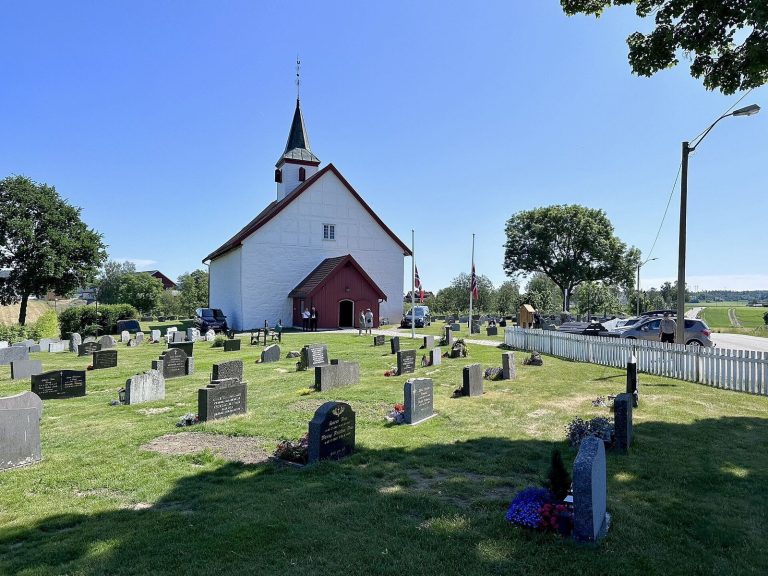
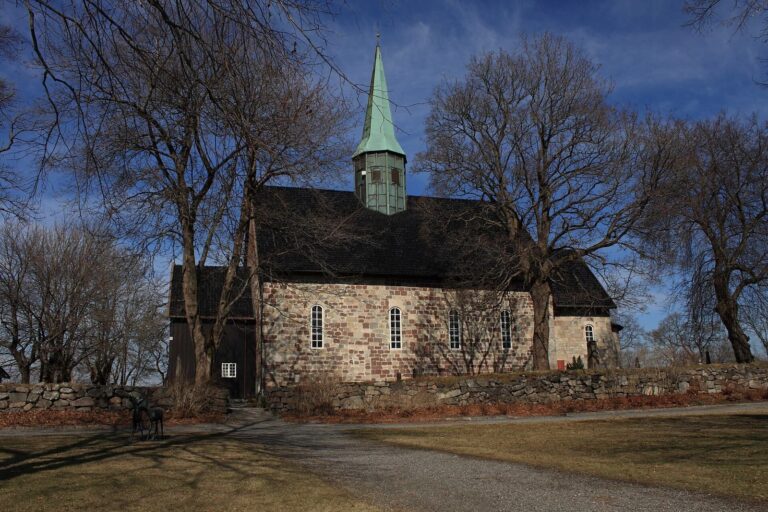
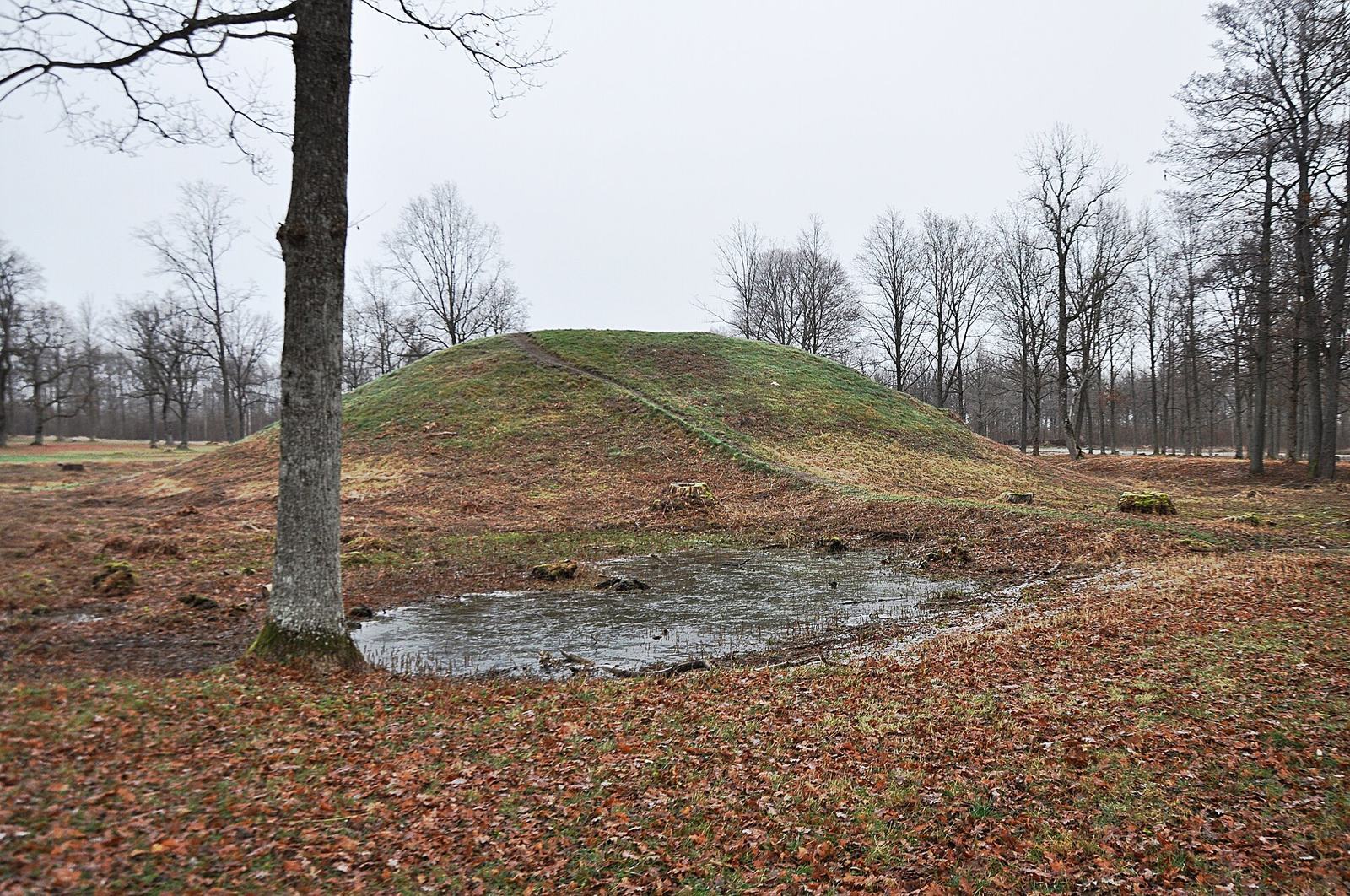
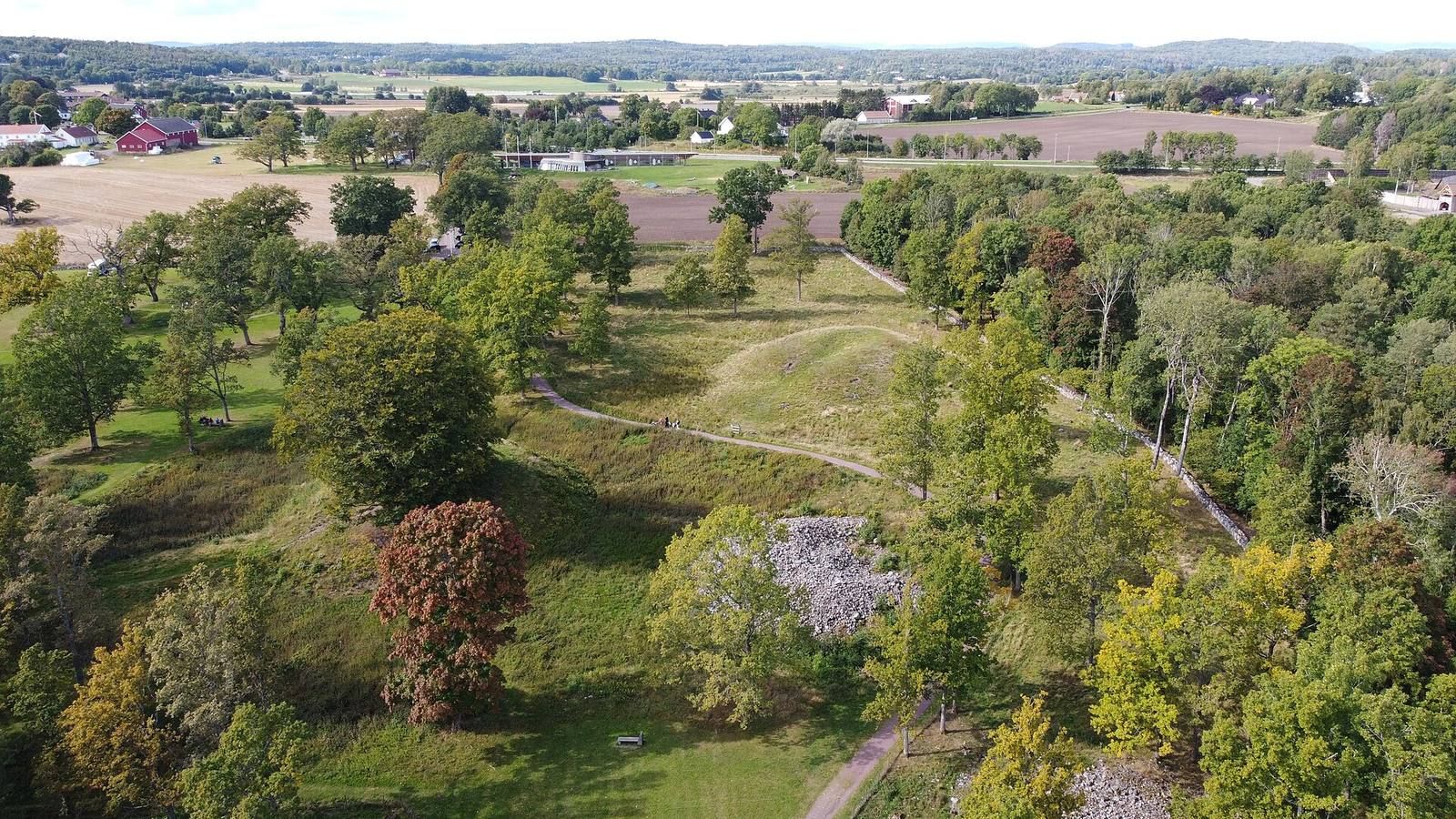
The cemetery occupies a park of about 182,000 square metres on the western side of the Oslofjord, below Borre Church, which dates to the twelfth century. The ground lies where the Raet, a major glacial moraine ridge in southeastern Norway, descends into the fjord. The burial field includes seven large mounds and one visible cairn, along with smaller mounds and cairns. Some large monuments exceed 45 metres across and reach up to 6 metres high. At least two original mounds and one cairn have been destroyed in modern times, and the cemetery may once have covered a larger area.
Skipshaugen and the Borre find
The large mound known as Skipshaugen stands outside the park wall, between the park and the Midgard centre. It is the only large mound in the cemetery to have been fully excavated. Its ship grave contained weapons, riding equipment, and a notably fine collection of craftwork. Much of that craftwork is now displayed at the Viking Ship Museum in Oslo.
Buried halls and evidence of a harbour
Buried remains of two prehistoric halls were located beneath cultivated land immediately west of the cemetery, beyond its stone wall. Radar surveys identified them in 2007. A further large hall was detected in 2013 between Borre rectory and the main burial field. Remains of a large farm lie outside the park, while substantial wharf foundations are located by the sea. Landforms in the area have also been interpreted as pointing to a likely prehistoric harbour. In 2019, archaeologists found what is believed to be a buried Viking-era ship, possibly a ship burial.
Gildehallen and the park landscape
Gildehallen, a modern reconstruction of a chieftain’s feasting hall, was completed beside the Midgard centre northwest of the cemetery in 2013. It stands 13 metres high and draws on Norse building traditions; it is distinct from the prehistoric halls detected underground. The park’s old, large deciduous trees support threatened species, and its birdlife is rich. Several woodpecker species make nesting sites that can be used by other birds, including the now-uncommon stock dove.