Borj El Kebir: A Hafsid Coastal Fortress in Tunisia
Site at a Glance
- Rating
- 4.4
- Popularity
- Low
- Country
- Tunisia
- Primary era
- Medieval
- Eras represented
- Medieval, Early Modern
- Civilizations
- Hafsid, Ottoman, Spanish
- Site type
- Military
- Remains
- Fort
On this page12 sections
History
Borj El Kebir is a large coastal fortress in Tunisia, located beside the fishing port of Houmt Souk on Djerba. Built by the Hafsids, the medieval dynasty that ruled Tunis and much of Ifriqiya, it was established in the late fourteenth or early fifteenth century on the remains of the ancient Roman city of Girba. The fortress served as a garrison and later became a naval stronghold, reflecting Djerba’s strategic position in the Mediterranean.
Hafsid Foundation and Expansion
The fortress was planned around 1392, although another chronology places the order for its construction in 1432. It was built after the soldiers of Alfonso V of Aragon had been expelled from Djerba. Hafsid sultan Abū Fāris ʿAbd al-ʿAzīz al-Mutawakkil ordered the work so that a garrison could be housed at the coastal site. The earlier Roman remains were reused in the construction.
Borj El Kebir was enlarged around 1450. Further expansion and consolidation during the sixteenth century gave the fortress much of its present character. Its later name, Borj El Ghazi Mustapha, comes from Ghazi Mustapha Bey, the caid, or provincial military-administrative governor, installed on Djerba by Turgut Reis in 1559 or 1560.
The 1560 Conflict
The fortress became involved in the struggle for control of Djerba during the sixteenth century. On 11 March 1560, following a defeat, Sheikh Messaoud, then the island’s leader, offered Borj El Kebir to Juan de la Cerda y Silva, the Spanish viceroy of Sicily. The occupation was brief. After the Battle of Djerba, the fortress was besieged and conquered by Turgut Reis, an Ottoman corsair and naval commander, with support from Piyale Pasha, an Ottoman admiral, between 11 May and 29 July 1560. Approximately 5,000 to 6,000 defenders died in the assault.
Between 1560 and 1567, Ghazi Mustapha Bey completed alterations begun during Juan de la Cerda’s occupation. Apartments and a small mosque were added as Djerba was developed as a naval base. Corsairs and pirates subsequently used Borj El Kebir as a base for several centuries.
French Occupation and Preservation
During the French protectorate of Tunisia, French troops occupied the fortress on 28 July 1881 after taking control of Djerba. The site passed to the Tunisian authorities in 1903. It received historical-monument status on 15 March 1904 and was later restored and converted into a museum. A further designation in 1915 classified and protected it as a Tunisian historical monument. Extensive restoration work has continued since 1968.
Excavations in 1975 revealed the earlier fortress and recovered historical objects from several periods. These finds are displayed in an antiquarium, a space for archaeological and historical antiquities, within the fort. Two zaouias, or North African religious foundations associated with saints, mausoleums, and devotional communities, remain within the complex. They are dedicated to Sidi Saad and Ghazi Mustapha. A marble stele connected with Ghazi Mustapha’s building works was originally sealed into an interior wall at the entrance; it is now preserved at the Bardo National Museum in Tunis.
Remains
Fortifications and Layout
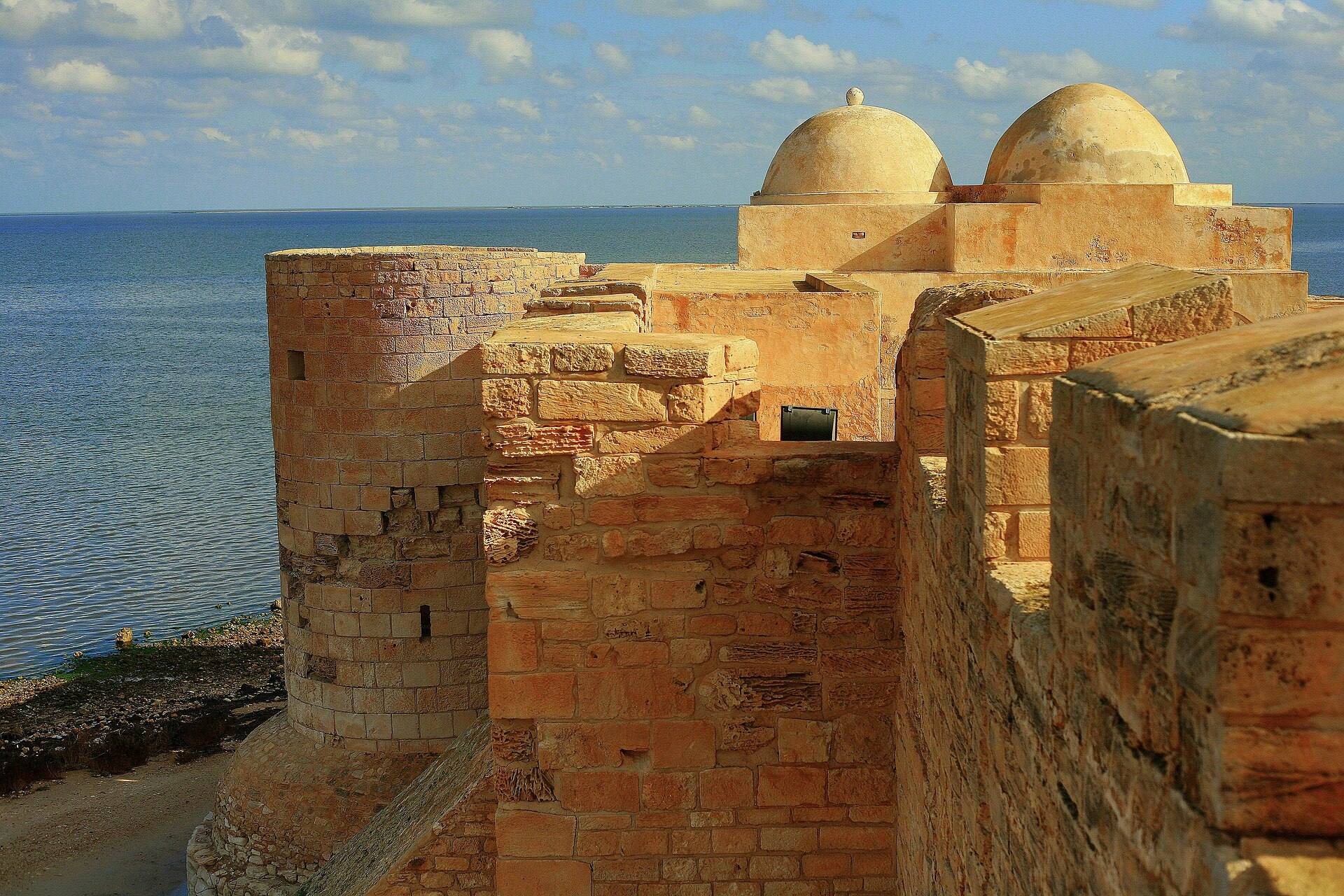
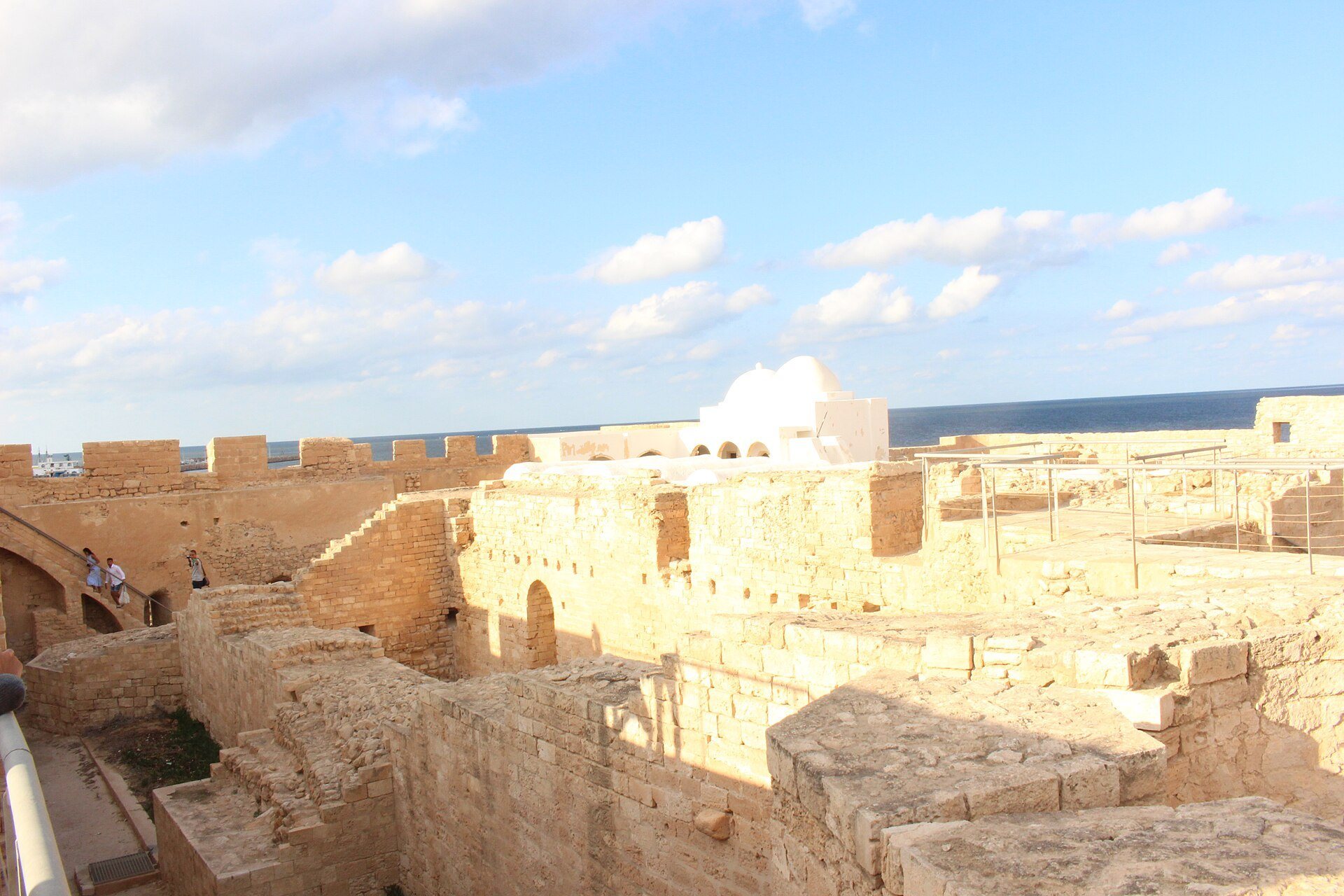
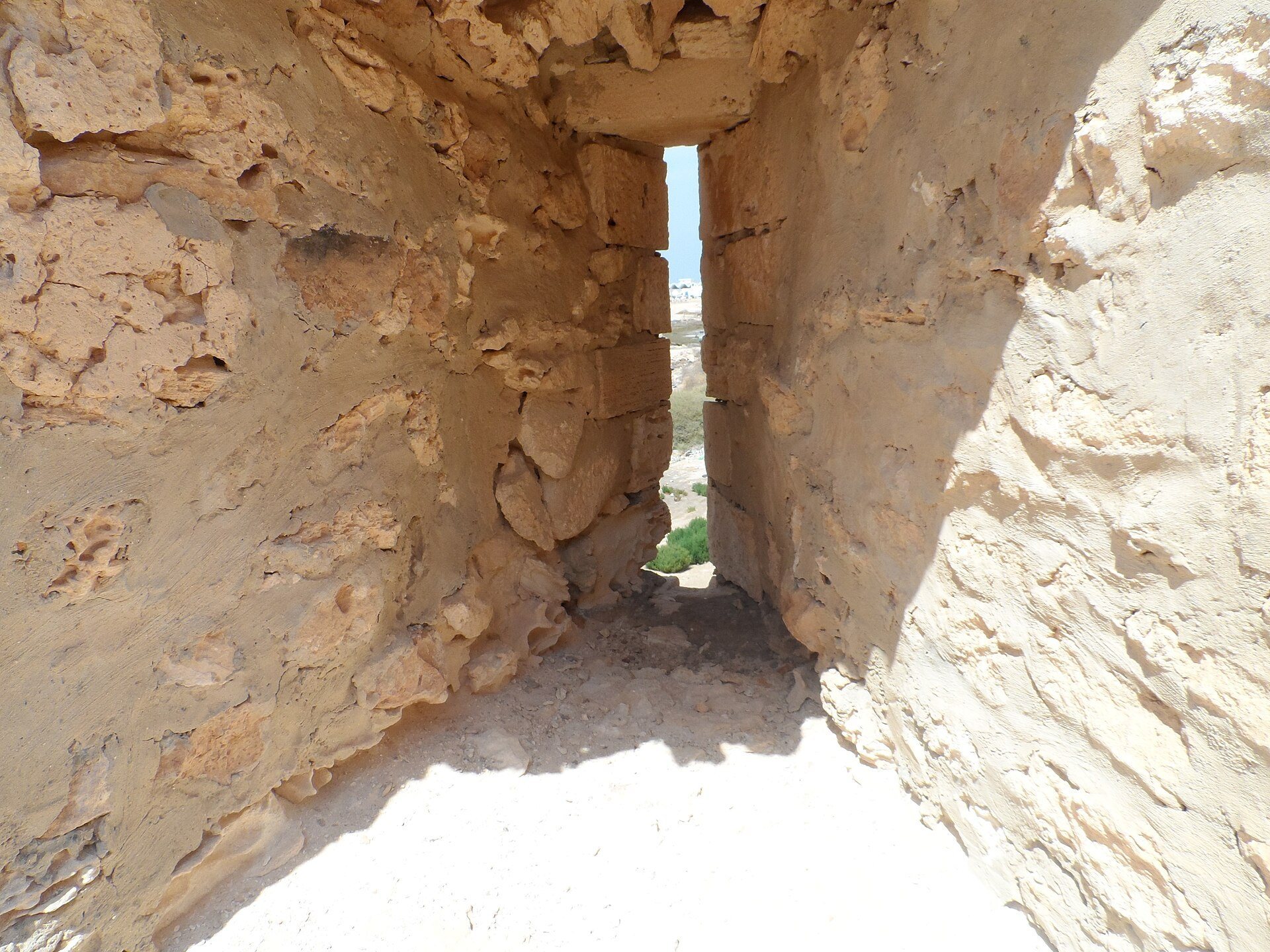
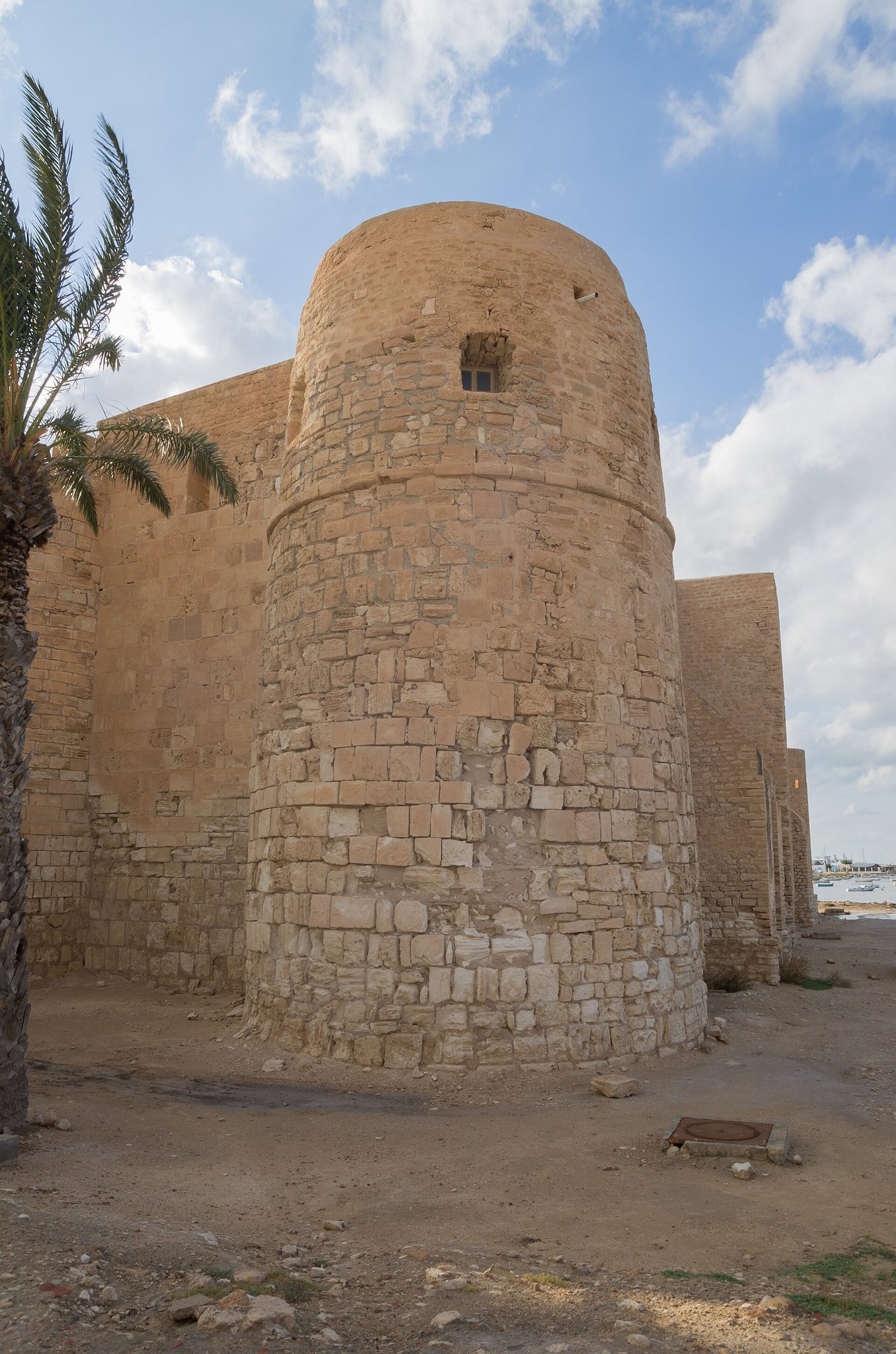
Borj El Kebir is a rectangular fortress on the seafront, immediately beside the fishing port north of Houmt El Souk. It measures approximately 68 metres from north to south and 53 metres from east to west. Its walls rise about 10 metres and are between 1.20 and 1.50 metres thick. Round and square towers form part of the defensive enclosure, which is regarded as a prominent example of Djerba’s defensive architecture.
Entrance and Moat
The entrance was reached by a drawbridge over a moat that was originally about 12 metres wide. The drawbridge remained the fortress’s entrance until the nineteenth century. Beyond it, the passage leads into a vestibule and then opens onto the inner courtyard.
Ramparts and Coastal Setting
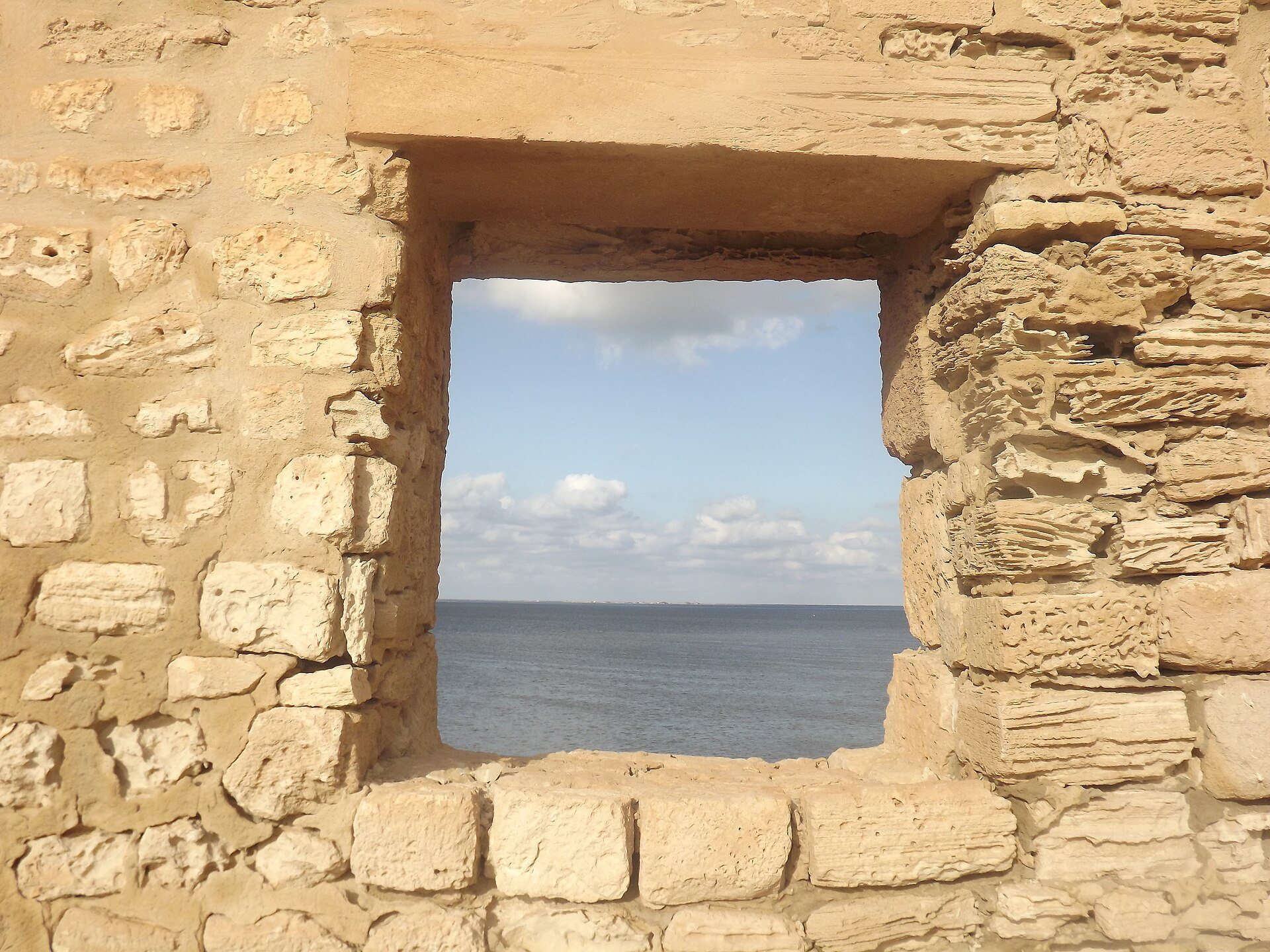
The ramparts overlook the surrounding area and the sea, including the fishing port. A nine-metre-high obelisk stands to the west and marks the location of Borj-er-Rous. The fortress occupies the site of Roman Girba, and architectural remains from the earlier city were incorporated into the later defensive complex.
Courtyard and Religious Buildings
Inner Courtyard
The inner courtyard contains remains associated with the successive garrisons that occupied the enclosure from antiquity onward. The courtyard forms the central space reached from the entrance vestibule and connects the defensive and residential parts of the fort.
Zaouias, Apartments, and Mosque
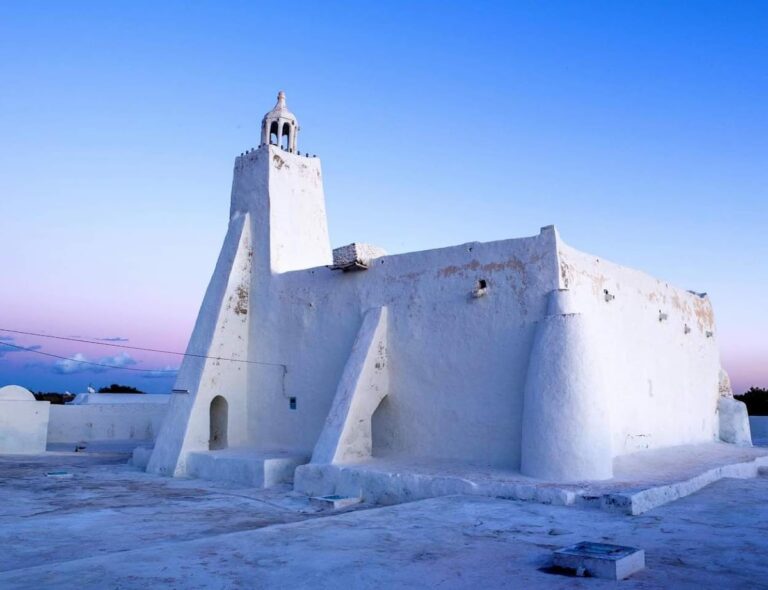
The complex contains the domed zaouias of Sidi Saad and Ghazi Mustapha, both preserved as mausoleum or religious structures within the fortress. Apartments and a small mosque were added during the sixteenth-century remodeling. The Ghazi Mustapha zaouia is dedicated to the governor whose works contributed to the fort’s transformation during the years after 1560.
Archaeological Collections
The 1975 excavations uncovered the earlier fortress beneath and within the later complex. Historical objects recovered during the work are arranged in an antiquarium with explanatory panels. Together with the incorporated remains of Roman Girba, these finds provide material evidence for the succession of occupations represented at Borj El Kebir.