Bølareinen Rock Carvings of Steinkjer: Neolithic Hunting Art
Site at a Glance
- Popularity
- Medium
- Country
- Norway
- Primary era
- Stone Age
- Eras represented
- Stone Age
- Civilizations
- Unclassified
- Site type
- Civic
- Remains
- Rock Art
On this page11 sections
History
The Bølareinen rock carvings of Steinkjer are prehistoric images beside the Bøla River near Stod, Norway, made between 3400 and 3200 BCE. Their style and weathering place them in the Neolithic, the later part of the Stone Age. They belong to a hunting-related tradition of rock art, rather than agricultural imagery, though that classification does not establish why the figures were made. At the time, the Snåsa Lake basin was still part of the Trondheim Fjord. Land uplift after the last glacial period gradually separated it from the fjord.
Discovery and study
Farmer Benjamin Vikran found the principal reindeer figure in 1842. The earliest drawing, attributed to journalist David Habel, was made around 1870. Trondheim rector Knut Henrik Lossius published short notices about the site in 1896, 1897, and 1898. Swedish archaeologist Gustaf Hallström surveyed it in 1907, and researcher Agnes Schulz examined it in 1934. Her observations were later incorporated into archaeologist Gutorm Gjessing’s 1936 overview.
Further figures came to light from 1969 onward. Amateur archaeologist Hans Midbøe found an animal figure that year, and a bear was discovered around 1970. Archaeologist Kalle Sognnes recorded additional marks in 1980, while archaeology students found an elk in the 1990s. In 2001, Jens Bjarne Mohrsen discovered the skier figure, and a seabird was also found. Sognnes carried out research campaigns from 1979 into the 2000s. In 2007, he described the collection as one of Trøndelag’s largest groups of hunting carvings. He considered the skier exceptional for its size, since skier figures are rare and comparable examples are known at Alta in Norway and Zalavrunga in northwestern Russia. Proposed examples on the Rødøy peninsula remain disputed.
Changing landscape and interpretations
Construction of the Nordland Line in the 1920s placed a railway embankment beside the rock face, cutting off its former visual connection with Snåsa Lake. Later work on County Road 763 lowered the river by 1–2 metres where it passes beneath the road. The faster current increased erosion along the stream. From 2017, interpretation of the carvings has also addressed the history of Sámi people in the area.
The figures are commonly classified as hunting art, but their purpose remains open to interpretation. Suggestions include hunting magic, meaning ritual intended to influence the success of a hunt, or the marking of hunting territory. Sognnes proposed that hunters travelling by boat between hunting places around Snåsa Lake made the carvings. Another interpretation connects the river setting with rock art near waterfalls: the sound of rushing water may have helped a ritual specialist, perhaps a Sámi noaidi (a ritual practitioner often described as a shaman), enter a trance. In Sámi religion, the flowing-water deity Tjatseolmai may be relevant, and the bear figure could represent it. Swedish ethnographer Ernst Manker considered that prominent landscape features could be sacred within Sámi animistic thought, a worldview in which places and natural features may have spiritual meaning. Sognnes also suggested that the large female reindeer might relate to a fertility cult, or beliefs and practices concerned with reproduction.
Remains
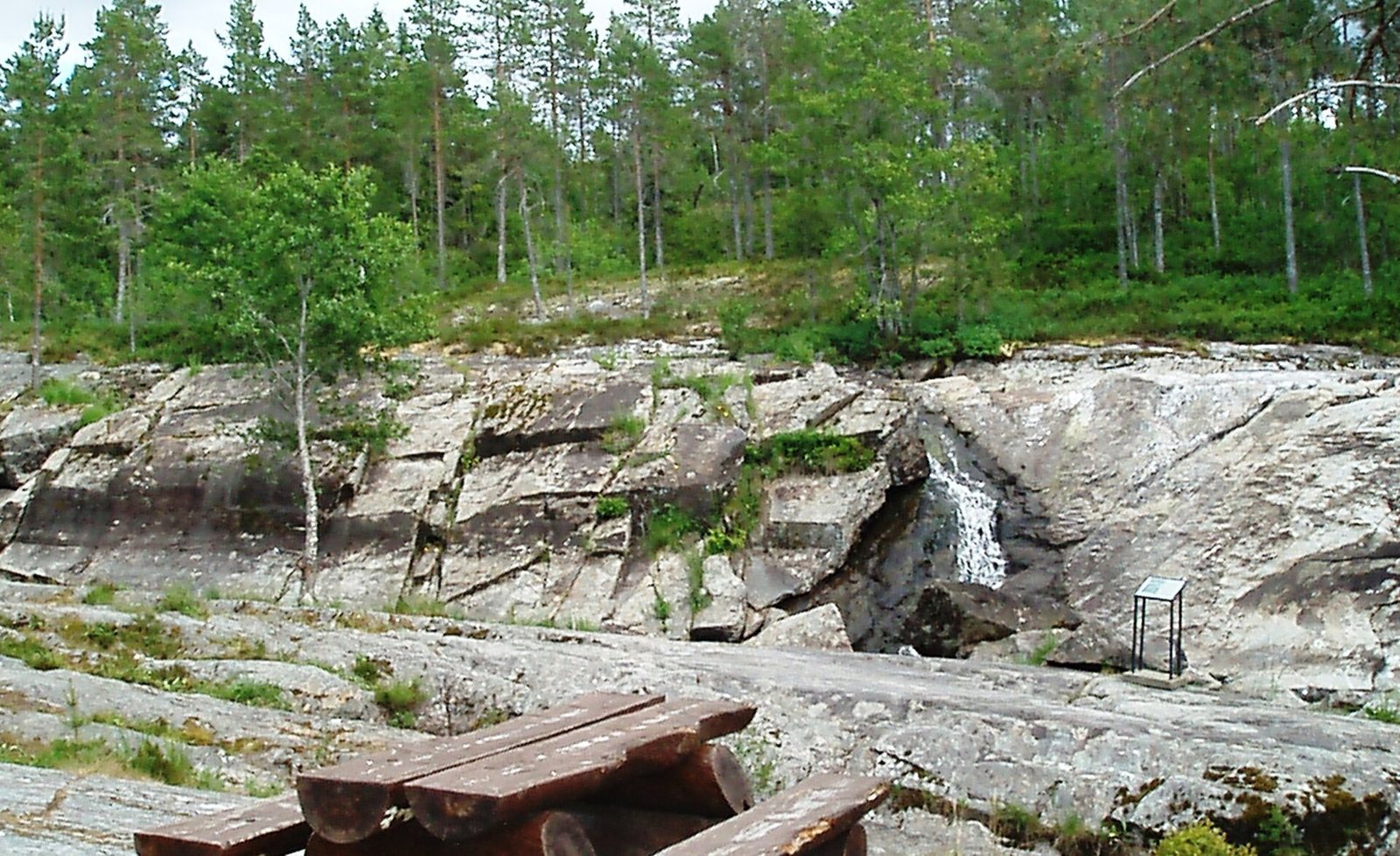
The carvings lie on the southern side of Snåsa Lake, where the Bøla River enters it. Around 30 figures are arranged in four groups across the rock surfaces. Many are close to life-size and rendered naturalistically. The rock face was once a low headland extending into the fjord. When the carvings were made, water stood 35–40 metres higher than today, just below the images. Water, ice, frost, weathering, and human activity, including timber transport, have worn the figures; some are now difficult to recognize.
Principal figures and marks
The reindeer
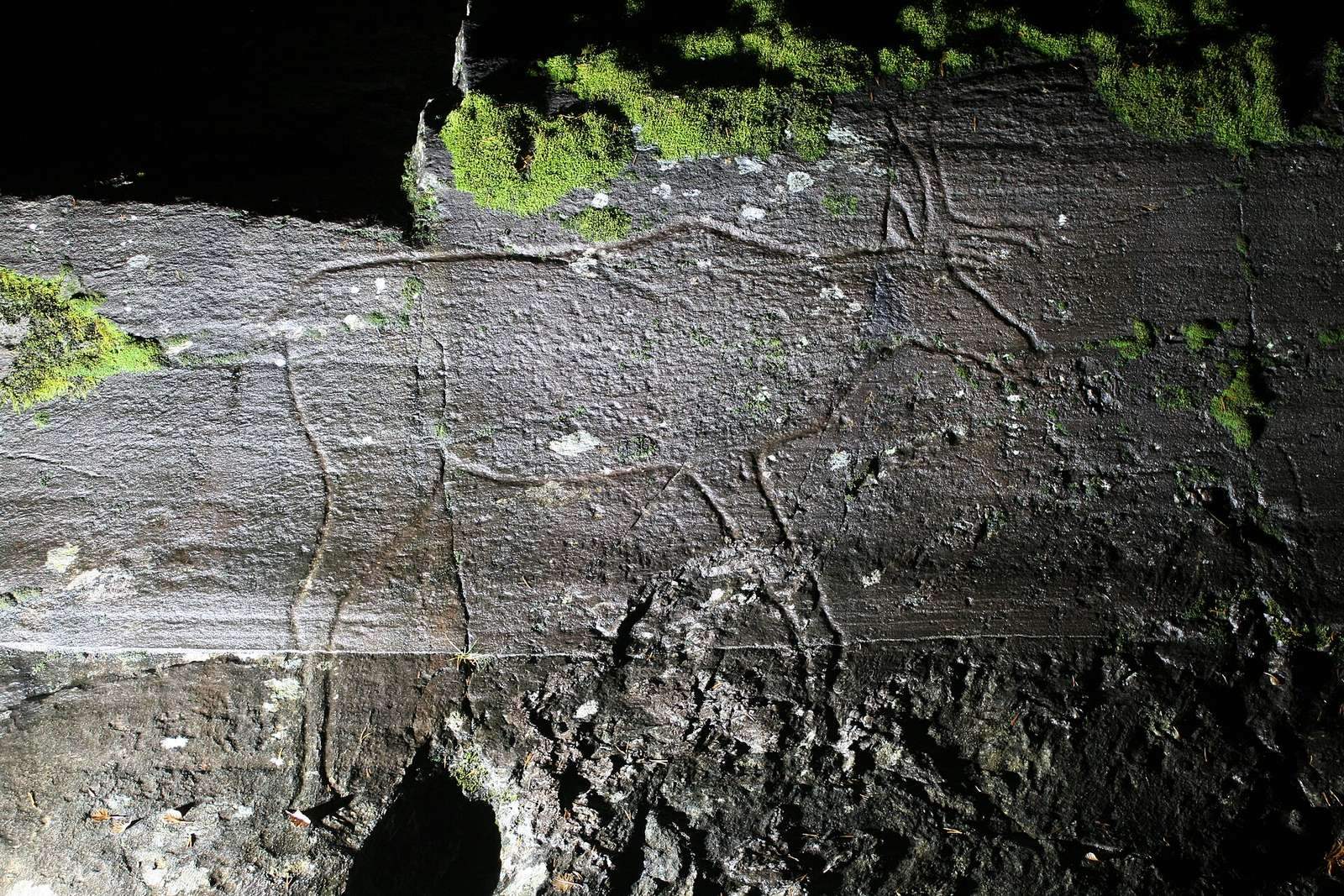
The main reindeer is pecked into a vertical rock face beside the river, with its head turned toward Snåsa Lake. It measures 180 by 136 cm and depicts the whole animal. Weathering has affected the lower contour of one foreleg. The figure’s outline, about eight metres long, consists of U-shaped grooves roughly 2 cm wide, probably made with a pointed stone tool. Pecked dots fill the outline and may represent fur. In Sámi interpretation, the animal may be an aaltoe, or reindeer cow, or a staajne, an infertile female reindeer with some physical traits associated with males.
The bear
About 20 metres from the reindeer, a bear is carved into another vertical rock face. It measures approximately 50 cm high and 1 metre wide. Its shallow grooves survive in a frost-split, fragmentary outline, with breaks at the neck and tail.
The elk
The elk appears on sloping rock roughly 50 metres upstream from the reindeer. It measures 41 cm long and 36 cm high.
The skier
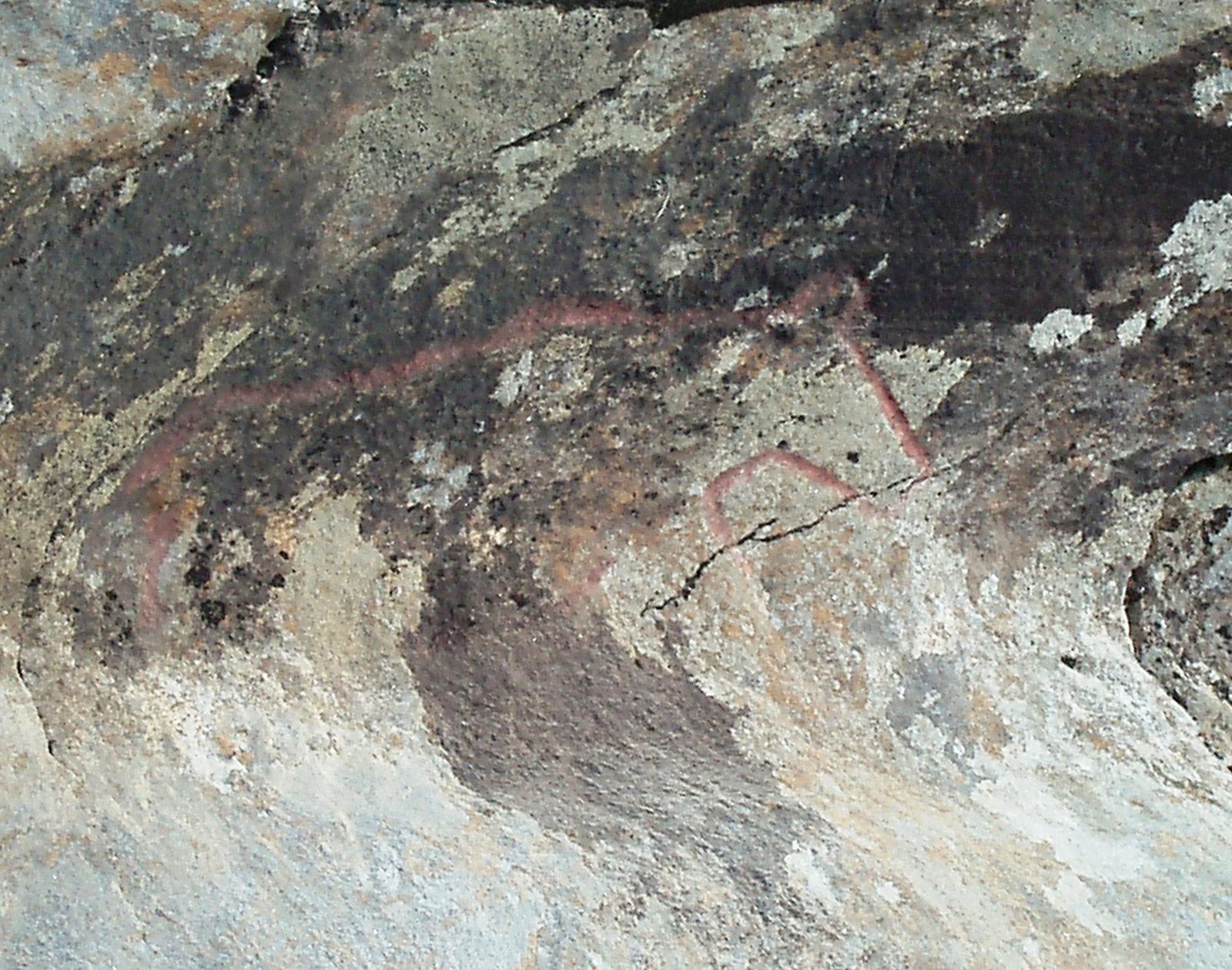
Also known as the Bøla man, the skier is carved in profile on a mostly flat rock surface. The figure is 148 cm high, and the possible ski measures 127 cm. It appears to stand on a boat, short skis, or snowshoes; zigzag marks around the foot make skis or snowshoes the more likely reading. A single continuous line outlines the figure, which holds a thick staff. Heavy weathering has made the carving difficult to distinguish.
The seabird and other marks
The long-necked seabird measures about 50 cm. Traces of several further bird figures may lie nearby. Another animal figure, located about 6 metres above the reindeer, measures approximately 60 cm wide and 55 cm high. About half a metre to the reindeer’s right, a separate area of marks measures 50 by 55 cm and may form part of a deer’s thigh.
River and rock face
The river once flowed over the carved rock and, at ordinary water levels, reached the reindeer’s hindquarters. A concrete guide wall now directs the current away from the rock and was installed to protect the railway from erosion. In some winters, ice on the Bøla River covers some of the figures.